
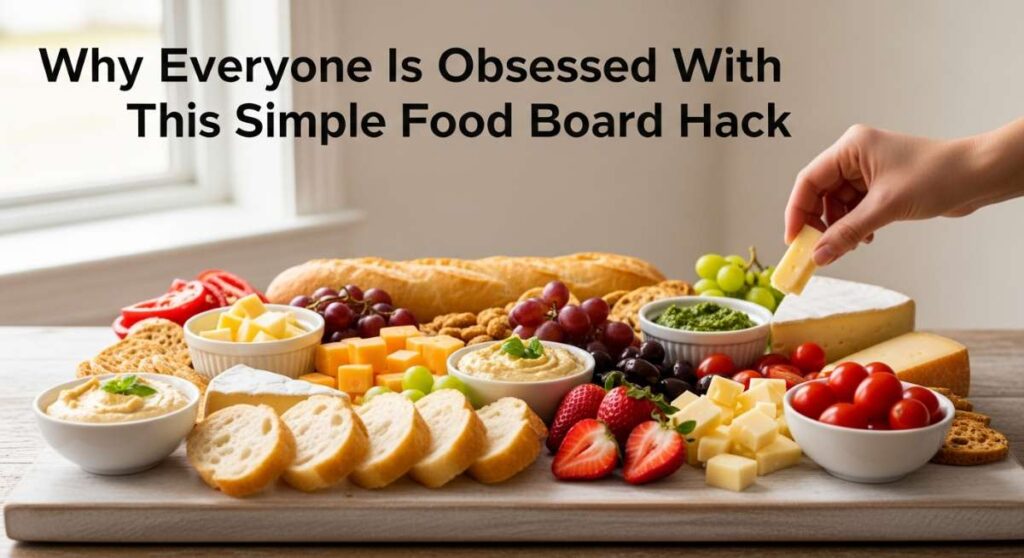
Why Everyone is Obsessed With This Simple Food Board Hack
There is something inherently magical about gathering friends around a table, but let’s be honest: the stress of hosting can sometimes take the joy out of the moment. We’ve all been there, frantically checking the oven while guests arrive, feeling more like a line cook than a host. That’s exactly why the ‘Salmon Board’ hack has completely taken over my social feeds—and my heart. It’s the ultimate evolution of the charcuterie trend, trading cured meats for the buttery, flaky goodness of perfectly prepared salmon, artfully arranged for everyone to dig in.
Imagine a centerpiece that is as vibrant as it is delicious—a rustic wooden board overflowing with different textures of salmon, zesty lemons, sprigs of fresh dill, and crunchy crackers. It’s not just a meal; it’s an experience that encourages conversation and slow grazing. Whether you’re celebrating a milestone or just making a Tuesday night feel a little more special, this simple food board hack brings a sense of effortless elegance to the table that your guests won’t stop talking about.
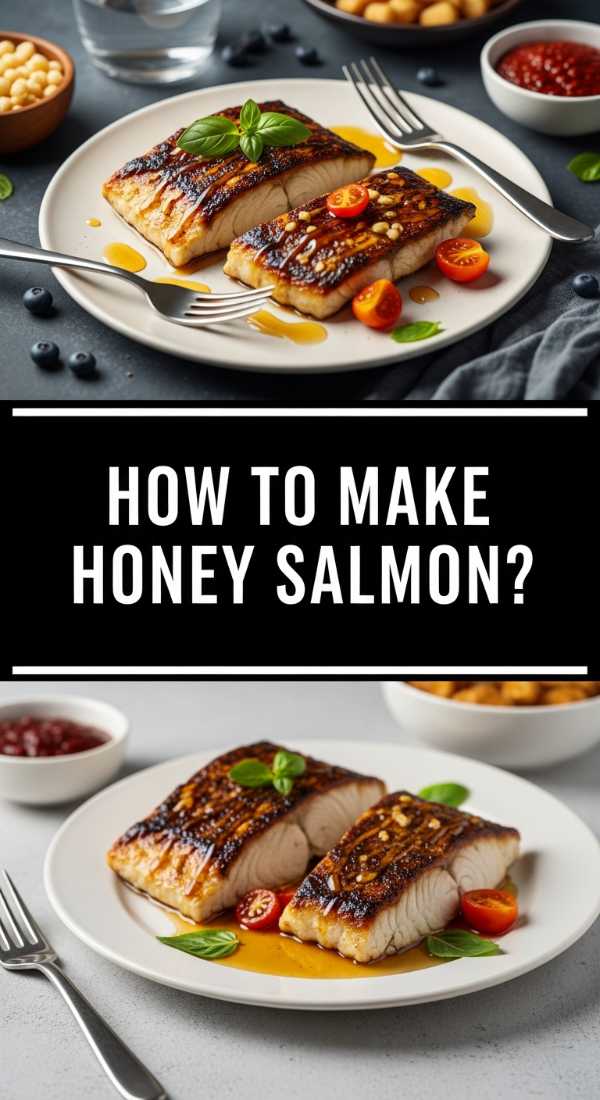
How to make honey salmon?
Why we love this
This honey-kissed preparation is the golden child of the salmon world, offering a sticky, caramelized exterior that yields to a tender, melt-in-your-mouth center. The aroma of wild honey bubbling against the heat of the pan creates a sweet, floral fragrance that permeates the kitchen, while the natural sugars create a stunning lacquer that glimmers under the dining room lights. It’s that perfect balance of sweetness and saltiness that feels deeply indulgent yet remarkably fresh, making it the undisputed star of any grazing board.
Ingredients
- 2 large salmon fillets (skin-on)
- 3 tablespoons organic wildflower honey
- 2 tablespoons soy sauce
- 1 tablespoon fresh lemon juice
- 2 cloves garlic, minced
- 1 tablespoon olive oil
- Pinch of red pepper flakes
- Fresh parsley for garnish
How to make it
- Begin by patting your salmon fillets completely dry with a paper towel; this is the secret to getting a proper sear rather than steaming the fish.
- In a small bowl, whisk together the honey, soy sauce, lemon juice, minced garlic, and red pepper flakes until the honey is fully incorporated into a smooth syrup.
- Heat the olive oil in a non-stick or cast-iron skillet over medium-high heat. You’ll know it’s ready when the oil shimmers and a tiny drop of water sizzles instantly.
- Place the salmon fillets skin-side up in the pan. Sear for about 3-4 minutes without moving them to develop a deep, golden-brown crust.
- Flip the fillets carefully using a wide spatula. Lower the heat to medium and pour the honey mixture directly over the fish.
- Allow the sauce to bubble and reduce for another 3-5 minutes. Use a spoon to continuously baste the salmon with the thickening glaze until the fish is opaque and the sauce is a thick, amber coating.
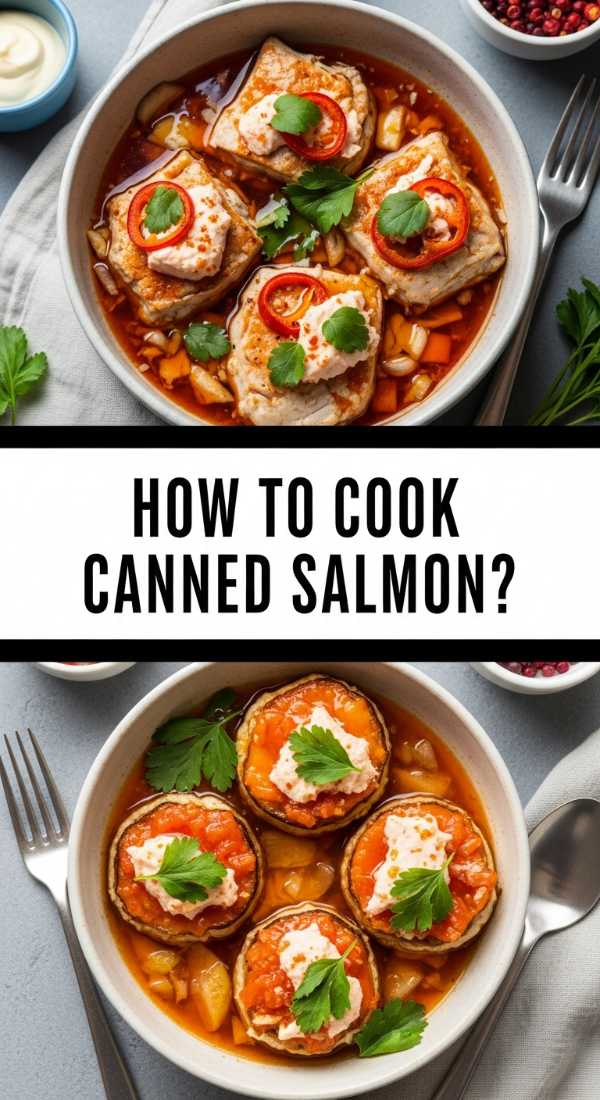
How to cook canned salmon?
Why we love this
Don’t sleep on the humble pantry staple; canned salmon can be transformed into crispy, golden croquettes that add a delightful crunch to your food board. These patties offer a nostalgic, savory depth with a satisfyingly firm texture that contrasts beautifully with soft cheeses or creamy dips. When pan-fried to perfection, they release a comforting, toasted aroma that reminds you of seaside kitchens and simple, honest cooking, providing a rustic touch that makes your board feel approachable and hearty.
Ingredients
- 1 can (14.75 oz) pink salmon, drained and flaked
- 1/2 cup panko breadcrumbs
- 1 large egg, lightly beaten
- 2 tablespoons mayonnaise
- 1 tablespoon Dijon mustard
- 2 green onions, thinly sliced
- 1 teaspoon Old Bay seasoning
- 2 tablespoons vegetable oil for frying
How to make it
- In a large mixing bowl, carefully flake the drained salmon with a fork, removing any large bones or skin if present (though these are often edible and soft).
- Add the breadcrumbs, beaten egg, mayonnaise, mustard, sliced green onions, and Old Bay seasoning to the salmon.
- Gently fold the ingredients together until just combined; avoid over-mixing to ensure the patties remain light and airy rather than dense.
- Shape the mixture into small, slider-sized patties (about 2 inches wide), pressing them firmly so they hold their shape during the cooking process.
- Heat the vegetable oil in a large skillet over medium heat. You want enough oil to lightly coat the bottom of the pan to ensure even browning.
- Place the patties in the pan, leaving space between them. Fry for 4 minutes per side until they develop a deep, crispy golden-brown crust and are heated through to the center.
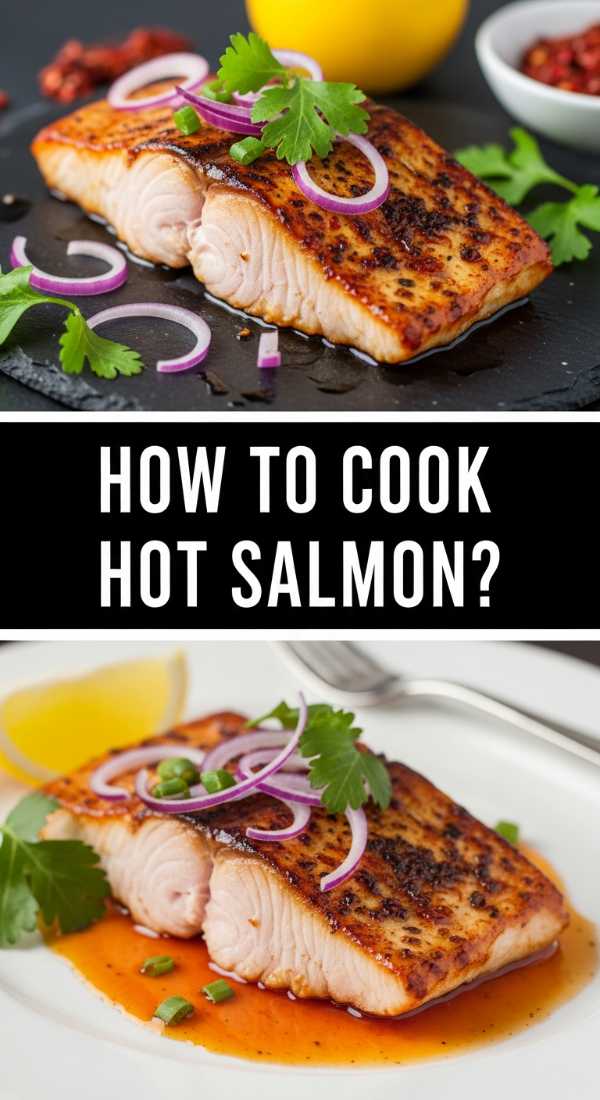
How to cook hot salmon?
Why we love this
For those who crave a bit of a kick, ‘hot’ salmon brings a vibrant, fiery energy to your spread that wakes up the palate. The heat comes from a blend of smoked paprika and cayenne, creating a complex, spicy profile that lingers pleasantly without overpowering the delicate flavor of the fish. As it cooks, the spices toast and release their oils, filling the air with a bold, peppery scent that promises a bold culinary adventure, especially when paired with a cool cucumber yogurt dip on the side.
Ingredients
- 1 lb salmon side
- 1 tablespoon smoked paprika
- 1/2 teaspoon cayenne pepper
- 1 teaspoon garlic powder
- 1/2 teaspoon onion powder
- Salt and cracked black pepper to taste
- 1 tablespoon butter, melted
How to make it
- Preheat your oven to 425°F (220°C). Line a baking sheet with parchment paper for easy cleanup and to prevent sticking.
- In a small ramekin, mix together the smoked paprika, cayenne, garlic powder, onion powder, salt, and black pepper to create your ‘hot’ spice rub.
- Brush the top of the salmon fillet with the melted butter, ensuring every inch is coated to help the spices adhere.
- Generously sprinkle the spice rub over the salmon, pressing it slightly with your fingers to create a thick, even crust.
- Bake the salmon for 12-15 minutes. Use a fork to check the thickest part; the salmon should be just starting to flake but still remain moist and tender inside.
- For an extra ‘hot’ finish, switch the oven to broil for the last 60 seconds to slightly char the spice layer, creating a smoky, blackened effect.
How to bake easy salmon?
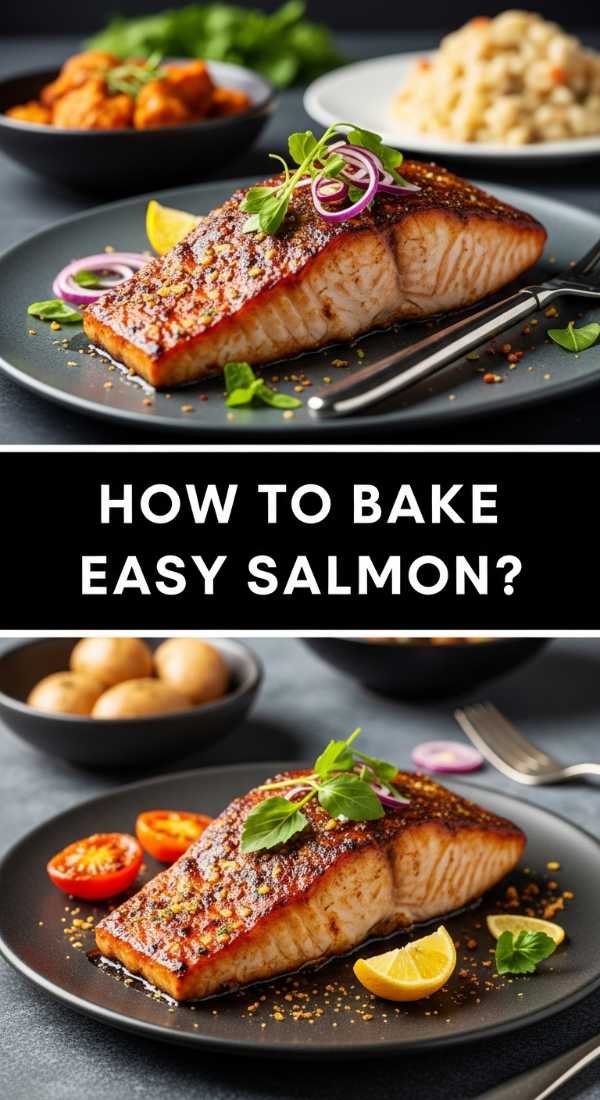
Why we love this
Sometimes the most beautiful things are the simplest, and this easy baked salmon is the epitome of effortless grace. Infused with the bright, citrusy notes of fresh lemon and the earthy fragrance of rosemary and thyme, this dish smells like a summer garden in full bloom. The slow, gentle heat of the oven ensures the salmon stays incredibly moist and succulent, with a texture so soft it practically flakes at the mere suggestion of a fork. It’s the reliable, elegant anchor every food board needs.
Ingredients
- 1.5 lbs salmon fillet
- 2 tablespoons extra virgin olive oil
- 1 organic lemon, thinly sliced into rounds
- 3 sprigs fresh thyme
- 2 sprigs fresh rosemary
- Sea salt to taste
How to make it
- Start by preheating your oven to 375°F (190°C). This lower temperature allows for a more gentle cook, preserving the fish’s natural moisture.
- Place a large piece of aluminum foil or parchment paper on a baking sheet, large enough to fold over the salmon.
- Drizzle a little olive oil on the paper, place the salmon fillet in the center, and season generously with sea salt.
- Layer the lemon rounds across the top of the salmon, then tuck the fresh thyme and rosemary sprigs under and around the fish.
- Drizzle the remaining olive oil over the lemons and herbs. Fold the edges of the foil or parchment up and over the salmon to create a loose but sealed packet.
- Bake for 15-20 minutes. The steam trapped inside the packet will cook the salmon perfectly. Open carefully to avoid the steam, and serve immediately.
How to make creamy salmon?
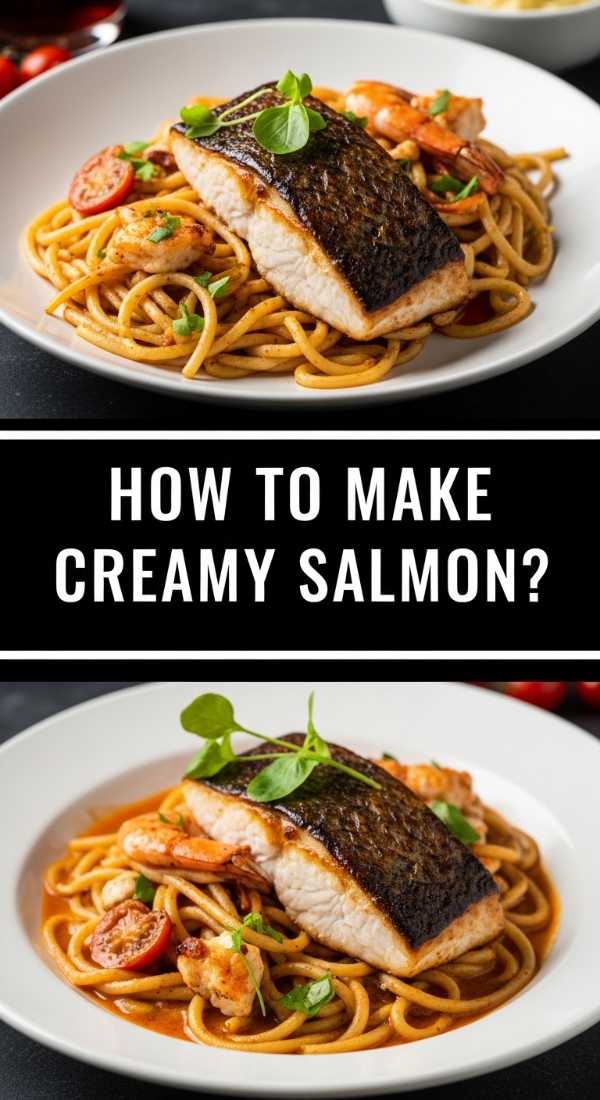
Why we love this
This preparation is pure comfort in a dish, featuring a velvety, ivory sauce that blankets the salmon in a decadent embrace. The richness of heavy cream is balanced by the sharp, salty punch of parmesan and the tang of sun-dried tomatoes, creating a flavor profile that is deeply sophisticated yet profoundly satisfying. The aroma is heavenly—a mix of toasted garlic and simmering cream—making this the kind of dish that people will be dipping their crusty bread into long after the salmon is gone.
Ingredients
- 2 salmon fillets
- 1/2 cup heavy cream
- 1/4 cup grated Parmesan cheese
- 1/2 cup fresh spinach
- 2 tablespoons sun-dried tomatoes, chopped
- 2 cloves garlic, minced
- 1 tablespoon butter
How to make it
- Season your salmon fillets with salt and pepper. In a large skillet over medium-high heat, melt the butter and sear the salmon for 4 minutes per side until golden. Remove salmon and set aside.
- In the same pan, reduce the heat to medium and add the minced garlic. Sauté for about 30 seconds until fragrant but not browned.
- Pour in the heavy cream and bring to a gentle simmer. Do not let it boil vigorously, or the cream might break.
- Whisk in the Parmesan cheese until the sauce starts to thicken, then stir in the sun-dried tomatoes and fresh spinach.
- Continue to stir until the spinach has wilted and the sauce has reached a silky, coating consistency.
- Nestle the salmon fillets back into the pan, spooning the creamy sauce over them, and simmer for another 2 minutes to let the flavors meld together.
How to use leftover salmon?
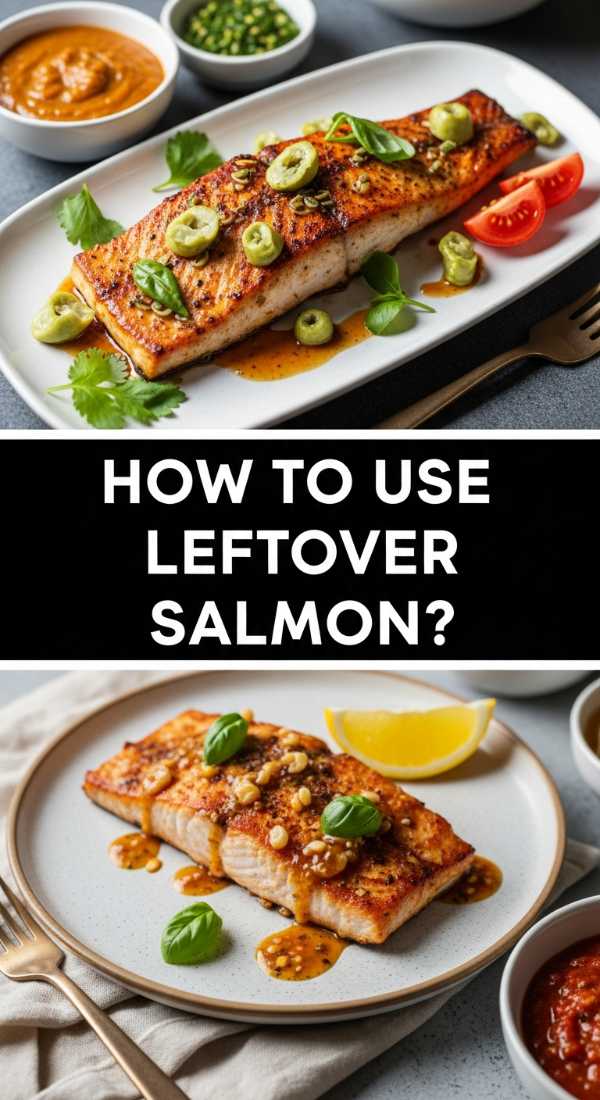
Why we love this
Transforming last night’s dinner into today’s showstopper is the ultimate kitchen hack, and leftover salmon makes for the most incredible chilled spread. By flaking the cold, firm fish and mixing it with bright herbs and creamy binders, you create a texture that is light, airy, and perfect for piling onto a toasted baguette. It has a clean, refreshing taste with a subtle hint of smoke and dill, proving that second-day salmon can often be even more flavorful than the first.
Ingredients
- 2 cups cooked salmon, chilled and flaked
- 1/4 cup Greek yogurt or sour cream
- 1 tablespoon fresh dill, chopped
- 1 teaspoon capers, drained
- 1/2 red onion, finely diced
- Squeeze of lemon juice
How to make it
- In a medium mixing bowl, use a fork to break your cold, leftover salmon into small, bite-sized flakes. Ensure you remove any skin or bones that might have been missed.
- Add the Greek yogurt (or sour cream), chopped dill, capers, and finely diced red onion to the bowl.
- Add a fresh squeeze of lemon juice to brighten the fats in the salmon and dairy.
- Fold the ingredients together gently using a spatula. You want to keep some of the salmon chunks intact for texture, so don’t over-mix into a paste.
- Taste and adjust the seasoning with salt or more lemon if needed. The flavors will develop more if you let it sit for 10 minutes.
- Serve chilled on your food board in a beautiful ceramic bowl, surrounded by cucumber slices and artisanal crackers.
How to make maple salmon?
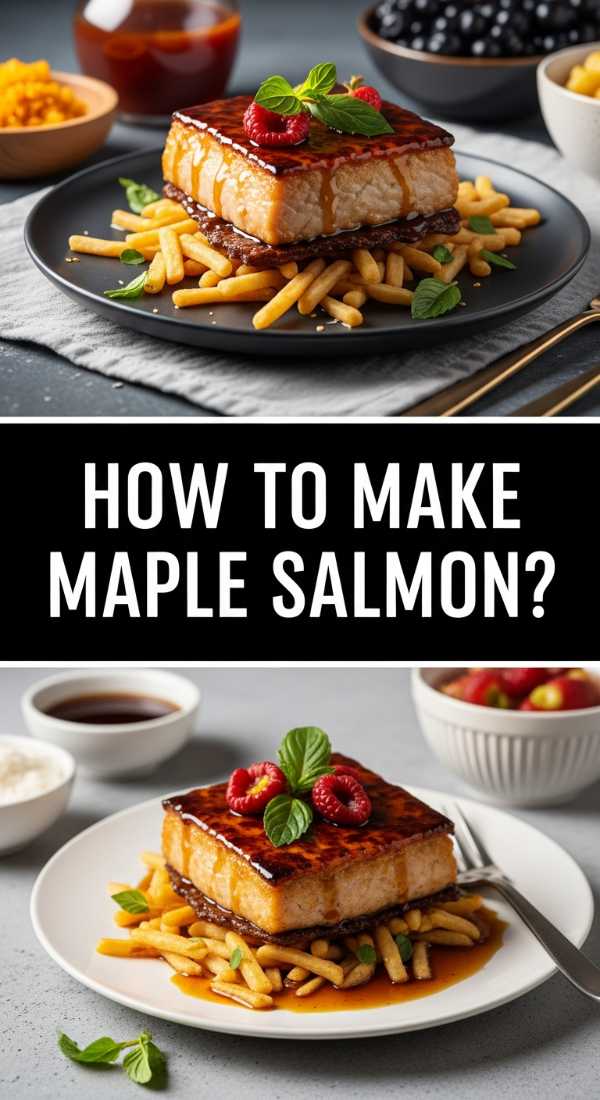
Why we love this
Maple salmon brings a rustic, forest-inspired sweetness to the table that feels perfectly suited for a cozy autumn gathering. The maple syrup reduces into a thick, woody glaze that highlights the salmon’s natural richness, while a touch of grainy mustard adds a textured, vinegary bite. The scent of maple sugar caramelizing in the oven is intoxicating, creating a warm, inviting atmosphere that makes everyone want to pull their chairs in just a little bit closer.
Ingredients
- 1 lb salmon fillet
- 3 tablespoons pure maple syrup
- 1 tablespoon whole grain mustard
- 1 tablespoon soy sauce
- 1/2 teaspoon ground ginger
- Toasted walnuts for garnish
How to make it
- Preheat your oven to 400°F (200°C). Line a shallow baking dish with parchment paper.
- In a small bowl, whisk together the pure maple syrup, whole grain mustard, soy sauce, and ground ginger until the mixture is uniform.
- Place the salmon fillet in the prepared baking dish and pour the maple mixture over the top, using a brush to ensure the sides are coated.
- Let the salmon marinate at room temperature for about 10 minutes while the oven finishes heating; this allows the ginger and maple to penetrate the flesh.
- Bake for 12-15 minutes. Halfway through the cooking time, take a spoon and baste the salmon with the juices from the bottom of the pan.
- Remove from the oven and top with a handful of crushed, toasted walnuts for a contrasting crunch that completes the dish.
How to make glazed salmon?
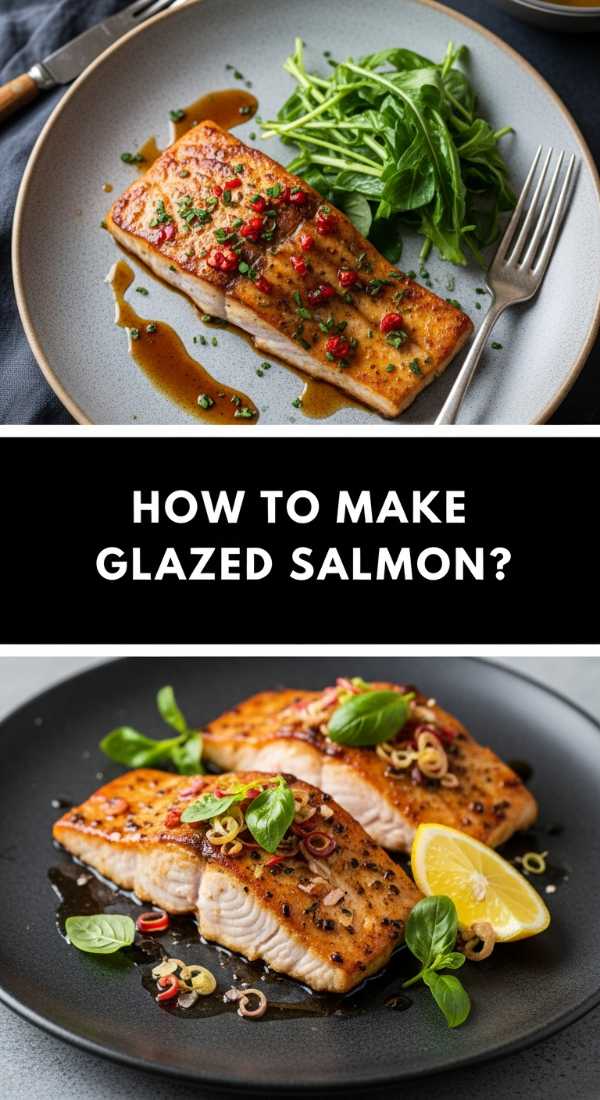
Why we love this
There is nothing quite as visually stunning as a perfectly glazed piece of fish, its surface reflecting the light with a high-gloss finish. This version uses an umami-rich soy and balsamic reduction that coats the salmon in a savory, dark mahogany cloak. The texture is sublime—a slightly tacky exterior that gives way to juicy, pink flakes. It smells of reduced vinegar and fermented soy, a sophisticated aroma that promises a complex, chef-quality experience right at home.
Ingredients
- 2 salmon fillets
- 2 tablespoons balsamic vinegar
- 2 tablespoons soy sauce
- 1 tablespoon honey
- 1 teaspoon toasted sesame oil
- Sesame seeds for garnish
How to make it
- In a small saucepan over medium heat, combine the balsamic vinegar, soy sauce, honey, and sesame oil.
- Bring the mixture to a simmer and let it reduce by half, stirring occasionally. You’re looking for a consistency that is thick enough to coat the back of a spoon.
- Season your salmon fillets lightly with salt and pepper (remembering the soy sauce is already salty).
- Heat a skillet over medium heat and sear the salmon for 3 minutes on each side.
- During the last 2 minutes of cooking, pour the reduced glaze over the salmon in the pan.
- Turn the heat to low and continue to flip the salmon carefully in the glaze until it is fully coated and the glaze has become a sticky, dark syrup. Garnish with sesame seeds.
How to cook brown sugar salmon?
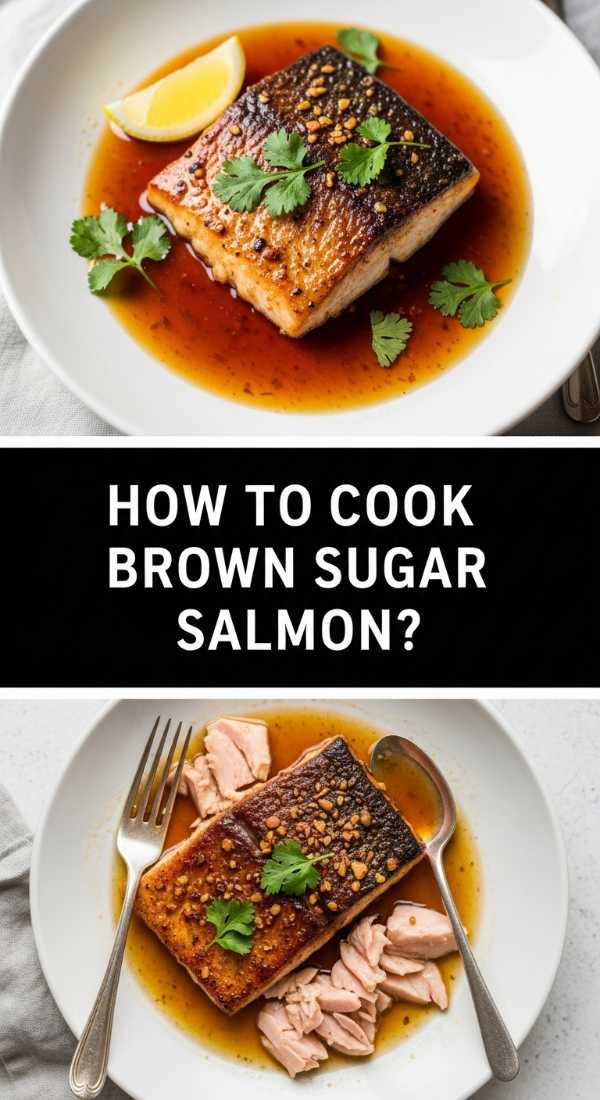
Why we love this
This is the ultimate ‘candy’ of the seafood world, where the brown sugar melts into the salmon’s natural oils to create a crisp, brûléed crust. The deep molasses notes of the sugar pair beautifully with the fatty salmon, creating a dish that is both savory and dessert-like in its decadence. When you break through that sweet, crackly exterior, you’re met with the most tender, steaming flakes of fish—a sensory contrast that makes every bite feel like a celebration.
Ingredients
- 1.5 lbs salmon fillet
- 1/4 cup packed light brown sugar
- 1 teaspoon chili powder
- 1 teaspoon garlic salt
- 1/2 teaspoon black pepper
- 1 tablespoon olive oil
How to make it
- Preheat your oven to 425°F (220°C). This high heat is essential for caramelizing the sugar quickly without overcooking the fish.
- In a small bowl, combine the brown sugar, chili powder, garlic salt, and black pepper. Use your fingers to break up any lumps in the sugar.
- Rub the salmon fillet with olive oil, then pack the brown sugar mixture onto the top of the salmon in a thick, even layer.
- Place the salmon on a foil-lined baking sheet. The foil is non-negotiable here, as the melting sugar will become very sticky.
- Bake for 10-12 minutes. The sugar should be bubbling and forming a dark, caramelized crust.
- If the sugar hasn’t quite bubbled enough, pop it under the broiler for 1-2 minutes, watching very closely to prevent the sugar from burning.
How to make salmon glaze?
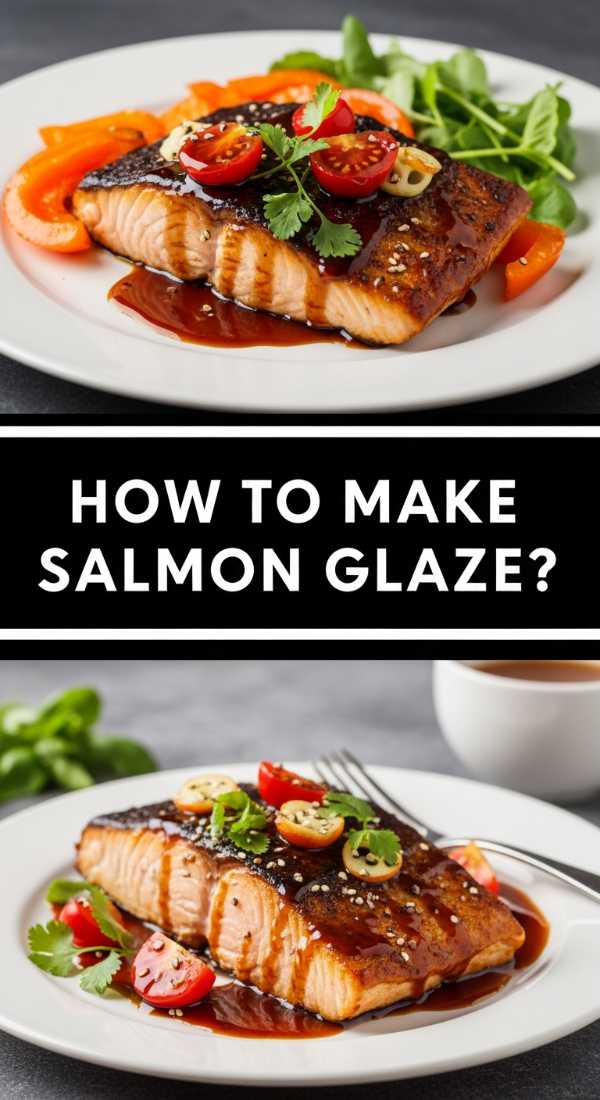
Why we love this
The glaze is the secret weapon of the food board, the magic potion that can tie all the disparate elements together. This specific glaze is a bright, zesty reduction of citrus and ginger that cuts through the richness of the fish like a ray of sunshine. It has a thick, syrupy consistency that clings beautifully to whatever it touches, offering a burst of acidity and spice that makes the flavors of the salmon pop. It’s the finishing touch that transforms a simple meal into a viral sensation.
Ingredients
- 1/2 cup orange juice
- 2 tablespoons rice vinegar
- 1 tablespoon grated fresh ginger
- 1 tablespoon brown sugar
- 1 teaspoon cornstarch mixed with 1 teaspoon cold water
How to make it
- In a small saucepan, combine the orange juice, rice vinegar, grated ginger, and brown sugar.
- Whisk the mixture over medium heat until the sugar has completely dissolved and the liquid begins to bubble.
- Simmer the mixture for about 5 minutes, allowing the volume to reduce and the ginger flavor to infuse deeply into the liquid.
- Whisk your cornstarch slurry (the cornstarch and water mixture) one more time, then slowly pour it into the simmering sauce.
- Continue to whisk constantly for 1-2 minutes as the sauce miraculously thickens into a clear, glossy glaze.
- Remove from heat and let it cool slightly before drizzling over cooked salmon or serving in a small dipping bowl on your board.
Conclusion
Creating a salmon food board isn’t just about the recipe; it’s about the joy of sharing a beautiful, communal meal with the people you love. By mastering these different techniques—from the sweet crunch of brown sugar to the silky richness of a cream sauce—you can customize your board to suit any mood or occasion. So grab your biggest wooden board, round up your favorite garnishes, and get ready to see why this simple hack has captured everyone’s imagination. Happy hosting!