
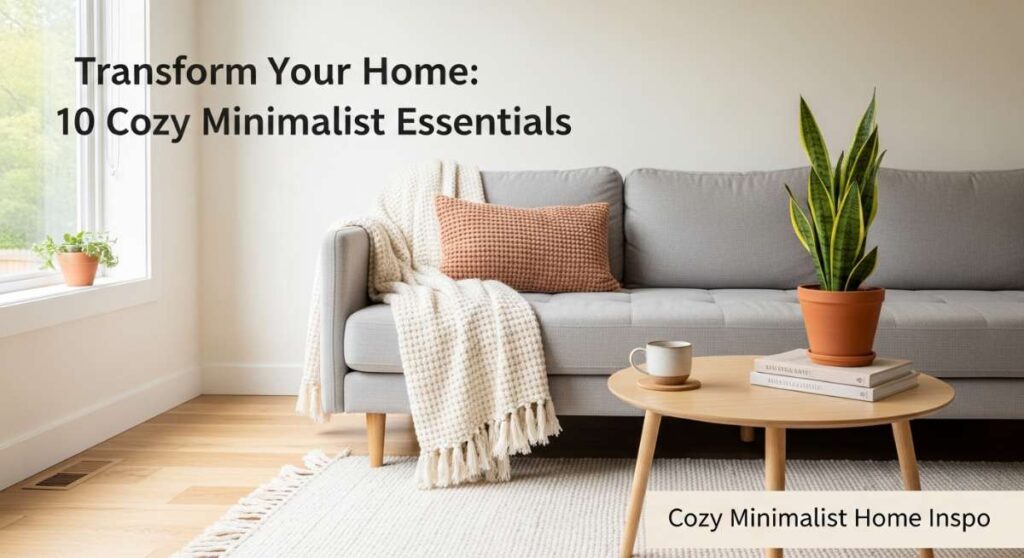
Have you ever walked into your home after a long, draining day and felt like the walls were closing in just a little bit? I’ve been there—tripping over stray shoes, squinting at cluttered shelves, and feeling my stress levels rise before I’ve even dropped my keys. For the longest time, I thought ‘minimalism’ meant living in a cold, white box with one uncomfortable chair. But then I discovered the magic of cozy minimalism, and honestly, it changed my entire relationship with my sanctuary. It’s not about having nothing; it’s about having the right things that breathe life and peace into your daily routine.
In this post, I’m sharing my heart and my home with you. We’re diving deep into how you can strip away the noise and curate a space that feels both airy and incredibly snug. Imagine a home that smells like cedar and fresh linen, where the light hits the floorboards just right, and every corner invites you to take a deep, restorative breath. Let’s transform your living space into the haven you’ve always dreamed of with these ten essential cozy minimalist pillars.
How to Curate a Cozy Minimalist Living Room for Total Daily Serenity

Why we love this
There is something profoundly healing about a living room that doesn’t demand your attention with clutter, but rather invites your soul to rest. We love this approach because it focuses on the ‘negative space’—the areas where nothing exists—allowing your eyes to glide across the room without friction. Imagine the soft scent of a soy wax candle wafting through the air while you sink into a sofa that feels like a cloud, surrounded by textures that feel like a warm hug. It is the ultimate sensory reset for anyone navigating a chaotic modern world, turning your primary living area into a temple of quietude and intentionality.
Essential Elements:
- Low-profile modular sofa in a neutral oat or sand tone
- Sheer linen curtains that filter sunlight into a soft blur
- Single, oversized ceramic floor vase
- Hidden storage solutions to mask tech cables and remotes
- Soft, dimmable ambient lighting
How to make it
- Begin by clearing the entire floor area to assess the ‘flow’ of the room; aim for a ‘less is more’ heat level by removing 30% of your current furniture.
- Position your largest piece—usually the sofa—facing the natural light source to maximize the ‘glow’ factor during the Golden Hour.
- Install sheer panels; ensure they are hung 2-3 inches above the window frame to create the illusion of height and airiness.
- Integrate one ‘anchor’ piece of art that uses a muted palette; ensure it is placed at eye level to create a focal point that grounds the room.
- Set your lighting ‘temperature’ to 2700K (warm white) and test the visual cue of a ‘soft shadow’ across the floor to ensure the ambiance is serene rather than stark.
How to Style Small Living Room Spaces for an Airy Apartment Feeling
Why we love this
Small apartments can often feel restrictive, but with the right minimalist touch, they become cozy jewel boxes that feel surprisingly expansive. We love this because it challenges the ‘more is better’ myth, proving that you don’t need a mansion to feel like you have room to breathe. The feeling of a small, well-styled room is one of intimacy and efficiency; it’s the crispness of a clean line meeting the softness of a plush rug. When you walk into a space styled this way, the ‘apartment claustrophobia’ vanishes, replaced by a sense of lightness and sophisticated organization that makes every square inch feel purposeful.
Essential Elements:
- Mirrored surfaces or glass-top coffee tables
- Leggy furniture that allows the floor to remain visible
- Monochromatic color palette with varying shades of white
- Vertical shelving that draws the eye upward
- Multi-functional furniture like a storage ottoman
How to make it
- Select furniture with visible legs; this technique allows light to pass under the pieces, which ‘cheats’ the eye into seeing more floor space.
- Apply a fresh coat of ‘Warm White’ paint to all walls; use a satin finish to reflect light more effectively than a flat matte.
- Mount shelves near the ceiling; this ‘upward’ visual cue distracts from a narrow floor plan and utilizes unused vertical real estate.
- Layer a large, light-colored jute rug that reaches within 6 inches of every wall; this ‘expands’ the floor visually by eliminating harsh borders.
- Place a large mirror opposite your main window; time this for midday to observe how the light ‘doubles’ the perceived depth of the room.
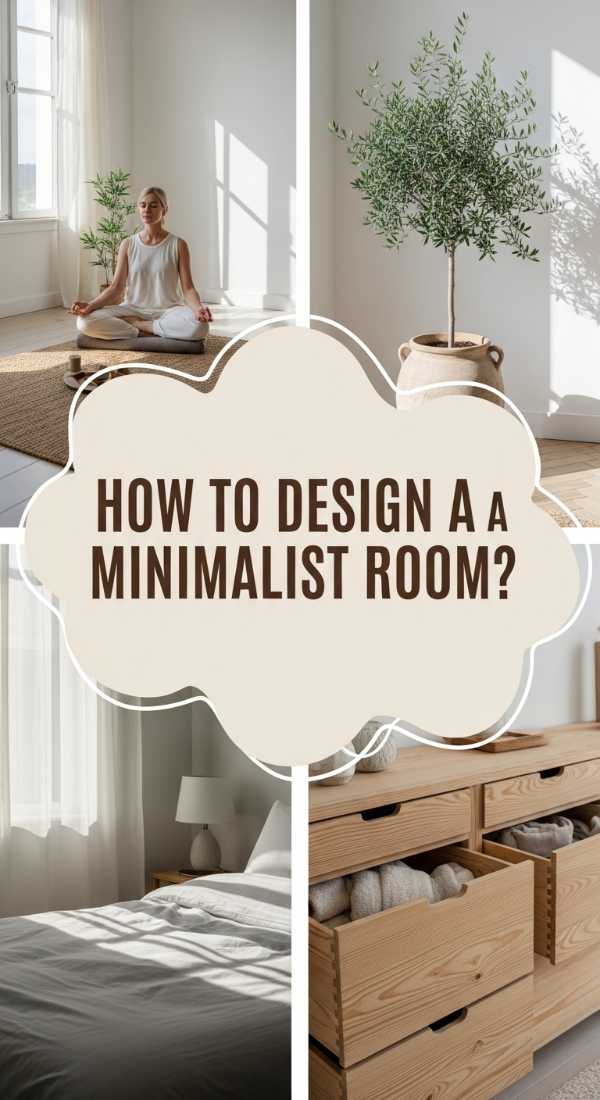
How to Design a Minimalist Room for Lasting Inner Peace
Why we love this
Designing for inner peace is about more than just aesthetics; it’s about psychology and the visceral reaction your body has to its environment. We love this because it prioritizes the inhabitant’s mental health, using soft curves and hushed tones to lower cortisol levels the moment you step inside. Picture the tactile sensation of a cool linen duvet or the sight of a single branch in a vase catching the morning light—it’s a visual poetry that calms the mind. It’s about creating a ‘no-friction’ zone where every object has a home and every surface serves as a reminder to slow down and exist in the present moment.
Essential Elements:
- Rounded or organic-shaped furniture pieces
- Sound-dampening textiles like heavy wool throws
- A dedicated ‘tech-free’ corner for meditation or reading
- Natural wood tones to bring an earthy warmth
- A subtle, high-quality essential oil diffuser
How to make it
- Identify the ‘clutter hotspots’ in your room and install closed-door cabinetry to hide visual noise immediately.
- Replace sharp-angled furniture with rounded silhouettes; this ‘softening’ technique reduces the visual ‘threat’ perceived by the brain.
- Incorporate a ‘sensory corner’ with a high-pile rug and a floor cushion; give this area a 15-minute ‘quiet test’ daily to ensure it feels peaceful.
- Use a ‘tonal layering’ technique: choose one base color (like beige) and use three different shades of it across the room to create depth without chaos.
- Adjust your window treatments to allow for ‘dappled light’; the visual cue of moving shadows from trees outside can significantly enhance feelings of calm.
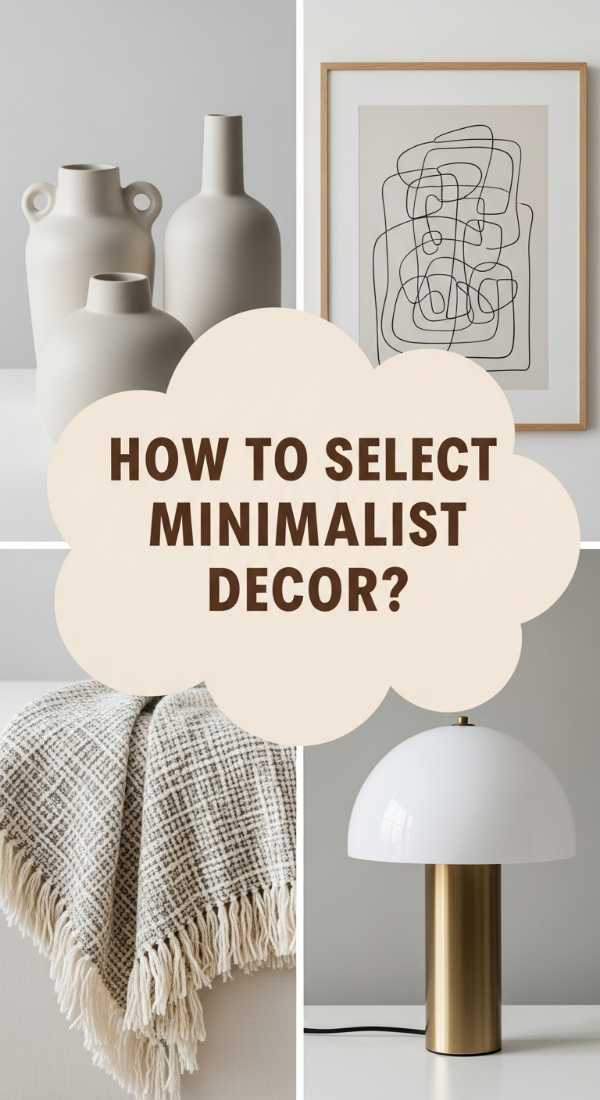
How to Select Minimalist Room Decor for a Sophisticated Aesthetic
Why we love this
Sophistication in minimalism comes from the quality of the materials rather than the quantity of the items. We love this style because it highlights the beauty of raw textures—the grain of the wood, the weave of the fabric, and the weight of a stone tray. It creates a ‘quiet luxury’ vibe that feels expensive and curated, yet remains approachable and livable. When you choose decor with a sophisticated eye, your home starts to feel like a high-end gallery where you are allowed to touch everything. It’s the ultimate sensory experience of feeling refined, yet completely at home and unpretentious.
Essential Elements:
- High-quality marble or stone accent pieces
- Hand-thrown stoneware and ceramics
- Textured wall art in neutral plaster or linen
- Sculptural lighting fixtures
- Real greenery with architectural leaves (like a Fiddle Leaf Fig)
How to make it
- Curate your surfaces using the ‘Rule of Three’: group three objects of varying heights (e.g., a tall candle, a medium vase, and a flat tray).
- Swap out plastic or cheap metal hardware for brushed brass or matte black finishes to elevate the ‘luxury heat level’ of the room.
- Select one ‘statement’ piece of furniture that features an interesting silhouette; ensure this piece has enough breathing room to be seen from all angles.
- Layer your textures: place a smooth stone bowl on a rough-hewn wooden table; this visual and tactile contrast is the hallmark of sophisticated design.
- Review your color story; ensure no more than two ‘accent’ colors are present to maintain a high-end, cohesive visual cue.
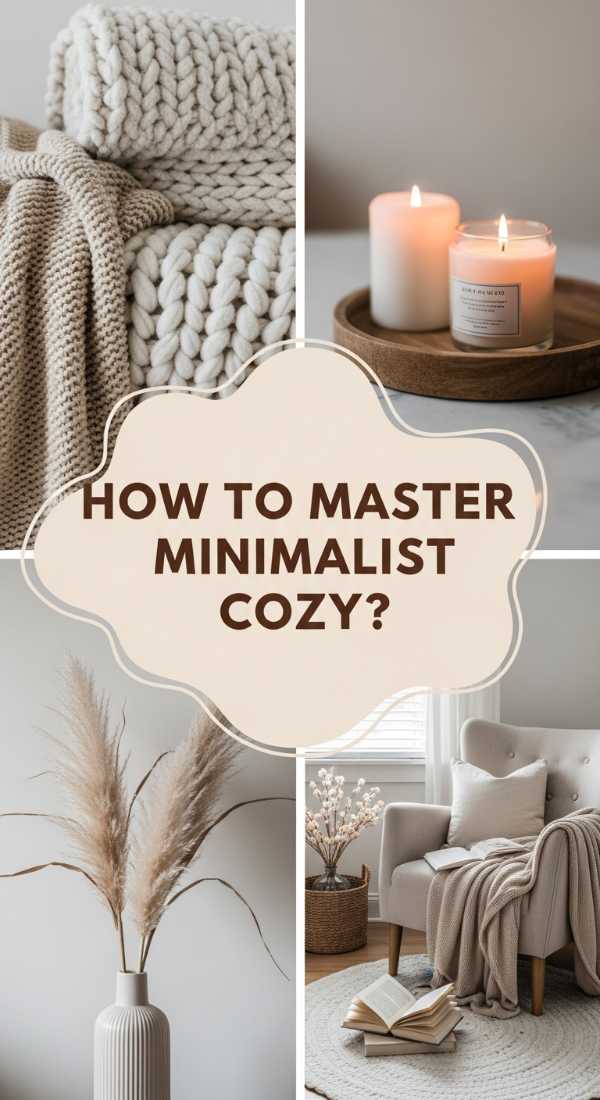
How to Master Minimalist Cozy Design for Ultimate Seasonal Warmth

Why we love this
Minimalism doesn’t have to be cold, and this seasonal approach proves exactly why. We love this because it allows your home to evolve with the rhythms of nature, bringing in heavy knits in the winter and light cottons in the summer without cluttering the space. Imagine the aroma of cinnamon and pine in a room that still feels light and airy, where the warmth comes from the ‘glow’ of carefully placed lamps rather than ‘stuff.’ It’s about creating a seasonal cocoon that protects you from the elements while maintaining the mental clarity that comes with a minimalist lifestyle.
Essential Elements:
- Chunky knit wool blankets in cream or charcoal
- Velvet pillow covers in deep earth tones
- Brass or copper candle holders for warm reflections
- A basket of firewood or dried pampas grass
- Electric fireplace or a cluster of varied-height pillar candles
How to make it
- Introduce ‘warmth layers’ by swapping light summer linens for heavy wool or faux-fur throws; drape them over the arm of a chair for an ‘inviting’ visual cue.
- Increase your ‘glow points’: add small amber-toned accent lamps to dark corners to create a ‘hearth-like’ heat level without a fire.
- Utilize scent as a decor element: simmer water with oranges and cloves on the stove to infuse the air with a ‘cozy’ texture.
- Rotate your botanical elements; swap fresh flowers for dried branches or pine boughs to reflect the current season’s energy.
- Check the ‘warmth balance’: sit in every chair in the room to ensure there is a reachable ‘warmth source’ (blanket or candle) within arm’s length.
How to Elevate Apartment Living with a Dreamy Cozy Aesthetic

Why we love this
Apartment living often involves compromise, but a dreamy cozy aesthetic turns those quirks into character. We love this because it uses light and softness to mask the ‘standard’ features of rental units, like beige carpets or basic fixtures. It’s the feeling of living in a cloud—where the light is always soft, the fabrics are always touchable, and the world outside the window feels miles away. This aesthetic turns a temporary living situation into a permanent sanctuary, making your apartment feel like a bespoke retreat tailored specifically to your comfort and peace of mind.
Essential Elements:
- Floor-to-ceiling drapery to hide ‘rental’ blinds
- Plug-in wall sconces for custom lighting without wiring
- Peel-and-stick ‘linen’ wallpaper for texture
- Large-scale rugs to cover unattractive flooring
- A ‘dreamy’ color palette of soft greys, blushes, and creams
How to make it
- Hang curtains ‘high and wide’: place the rod several inches beyond the window frame to make the windows feel grander and the light softer.
- Use ‘ambient layering’ with lighting; turn off all overhead ‘big lights’ and rely solely on floor and table lamps for a dreamy, diffused heat level.
- Apply textured peel-and-stick wallpaper to a single ‘accent wall’ behind your bed or sofa to add depth without permanent changes.
- Layer a smaller, plush faux-sheepskin rug over a larger flat-weave rug; this creates a ‘cloud-like’ visual cue that signals comfort.
- Incorporate ‘soft tech’: use smart bulbs to set a ‘sunset’ timer that gradually dims and warms the light as the evening progresses.
How to Simplify a Minimalist Home for an Organized Mindset
Why we love this
An organized mind starts with an organized environment, and this simplified approach is the ultimate tool for mental clarity. We love this because it removes the ‘decision fatigue’ of daily life; when every item has a specific, intentional home, your brain can finally stop scanning for ‘noise.’ Imagine the satisfaction of opening a drawer to find perfectly spaced essentials, or a kitchen counter that is completely clear except for a single bowl of fruit. This is about creating a home that functions like a well-oiled machine, allowing you to spend your energy on what matters most rather than managing your possessions.
Essential Elements:
- Uniform storage containers in glass or wood
- A ‘one-in, one-out’ rule for all new purchases
- Minimalist labeling that is subtle yet clear
- Hidden ‘drop zones’ for mail and keys
- Clear, unobstructed walkways and surfaces
How to make it
- Perform a ’30-day declutter’: remove one item from your home each day, increasing the ‘spatial heat level’ as the month progresses.
- Standardize your storage; use identical baskets for all shelving units to eliminate ‘visual discord’ and create a unified visual cue.
- Clear all ‘horizontal surfaces’ (counters, tables); only allow one high-use or beautiful item to remain on each to promote an ‘organized mindset.’
- Establish a ‘five-minute reset’ routine every evening where you return all items to their designated ‘homes’ to maintain the minimalist flow.
- Evaluate your ‘entryway flow’: ensure there is a specific, hidden spot for every item you carry through the door to prevent ‘clutter creep.’
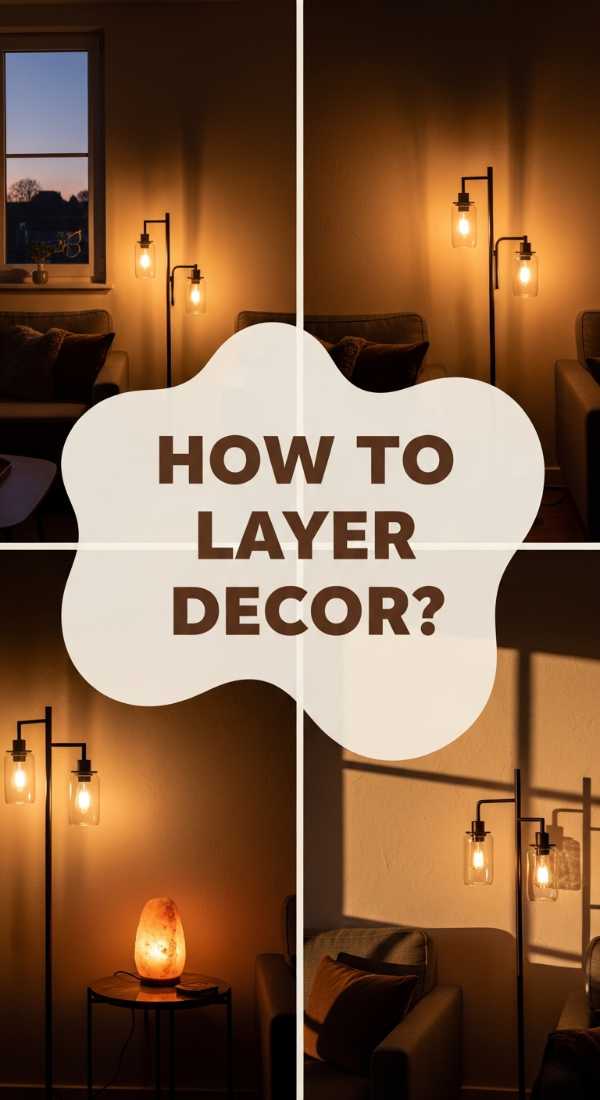
How to Layer Living Room Decor for a Glowy Evening Atmosphere

Why we love this
The magic of a cozy minimalist home truly reveals itself at night. We love this because it uses the play of light and shadow to create a ‘glowy’ sanctuary that feels private and magical. Imagine the way a warm lamp casts a soft pool of light onto a textured throw, or the flickering dance of a candle against a matte wall. This layering technique transforms a clean, bright daytime space into a moody, intimate retreat that signals to your body it is time to wind down and rest. It’s about mastering the ‘dimmer switch’ of life, creating an atmosphere that is as visually stunning as it is soul-soothing.
Essential Elements:
- Dimmable floor lamps with fabric shades
- String lights with warm ‘Edison’ style bulbs
- Battery-operated ‘tea lights’ inside frosted glass
- Reflective surfaces like brass trays or polished stone
- Darker, moodier accent pillows for evening contrast
How to make it
- Position lamps at different heights: one floor lamp, one table lamp, and one low-level light (like a candle on a tray) to create a ‘triangle of glow.’
- Use fabric shades rather than glass; this ‘diffusing’ technique softens the light and creates a more even, warm heat level throughout the room.
- Place a candle or small lamp in front of a mirror; the reflection ‘doubles’ the evening glow without adding more light fixtures.
- Turn off all screens 30 minutes before bed; use this visual cue to let the ambient light take over and prime your brain for sleep.
- Adjust the ‘warmth’ of your bulbs to 2200K-2700K; check the visual cue of the room to ensure there is no ‘blue light’ remaining.
How to Mix Decor Minimalist Textures for a High End Sensory Experience

Why we love this
In a minimalist home, texture becomes the ‘color’ that brings the room to life. We love this because it engages your sense of touch, making the home feel rich and layered without being busy. Imagine the contrast of a sleek, cold marble table against a thick, chunky wool rug, or the softness of a linen pillow against a smooth leather chair. This ‘sensory mixing’ creates a high-end feel that is deeply satisfying to live in; it’s a tactile playground that feels sophisticated because it relies on the inherent quality of natural materials to provide visual interest and depth.
Essential Elements:
- Natural fibers: linen, wool, cotton, silk
- Hard surfaces: marble, travertine, light oak, concrete
- Metals: brushed brass, matte black steel
- Woven elements: rattan, seagrass, jute
- Lush greenery: velvet-leaf plants like Calathea
How to make it
- Choose a ‘texture palette’ of 4-5 materials (e.g., linen, oak, brass, wool) and repeat them throughout the room to create a high-end, cohesive feel.
- Apply the ‘contrast rule’: if you have a smooth surface (like a glass table), place a highly textured item on top of it (like a woven coaster or a clay bowl).
- Layer fabrics on seating; combine a flat-weave linen sofa with a chunky-knit throw to increase the ‘tactile heat level’ and visual depth.
- Incorporate one ‘raw’ element, like a live-edge wooden stool or an unpolished stone, to provide a ‘visual break’ from clean, manufactured lines.
- Touch every surface in the room; if it feels ‘monotonous’ or ‘plastic,’ swap one item for a natural material to improve the sensory visual cue.
How to Integrate Natural Elements for a Fresh Minimalist Sanctuary
[IMAGE_10]
Why we love this
Bringing the outdoors in is the quickest way to breathe life into a minimalist space. We love this because it connects us to the earth, using living things to soften the clean lines of modern design. The scent of fresh eucalyptus hanging in the shower, the sight of a sun-drenched olive tree in the corner, and the organic shapes of river stones all work together to create a ‘fresh’ sanctuary. It’s a design philosophy that honors nature’s perfection, reminding us that we are part of something larger. This integration makes a home feel vibrant, oxygenated, and eternally ‘fresh,’ no matter what the weather is like outside.
Essential Elements:
- Live indoor trees (Olive, Fig, or Strelitzia)
- Dried botanicals like eucalyptus or lavender
- Natural stone accents (river rocks, crystals, or slate)
- Abundant natural light through clean windows
- Wooden furniture with visible, organic grain
How to make it
- Place a large potted tree in the ‘dead corner’ of your room; this ‘living anchor’ provides a vertical visual cue that softens the room’s architecture.
- Hang dried eucalyptus in your bathroom; the steam from the shower releases the oils, creating a ‘spa-like’ heat level and aroma.
- Incorporate stone trays on your coffee table or nightstand; this ‘earthy grounding’ technique adds weight and permanence to a minimalist setup.
- Clean your windows inside and out; this simple step increases the ‘light heat level’ by up to 20%, making the ‘natural’ connection much stronger.
- Introduce ‘water elements’: even a small, silent stone fountain can provide a subtle auditory visual cue of a fresh, natural sanctuary.
Conclusion: Embracing the Breathable Home
Transforming your home into a cozy minimalist sanctuary isn’t about achieving a picture-perfect ‘Instagram’ look; it’s about curating a space that supports your best, most peaceful self. By focusing on textures, light, and intentionality, you turn four walls into a living, breathing extension of your own calm. Start with one corner, one shelf, or one room, and feel the weight lift off your shoulders. You deserve a home that feels like a deep breath.