
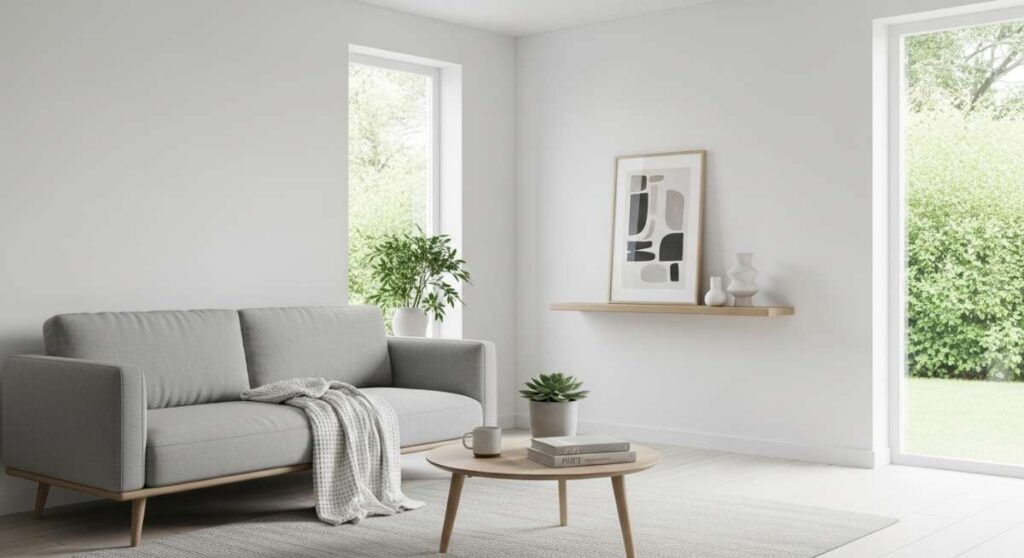
Have you ever walked into a room and felt an immediate sense of relief, like a weight you didn’t even know you were carrying just slid off your shoulders? That is the magic of minimalist home design. It’s not about living in a cold, empty box; it’s about creating a sanctuary that breathes, allowing your mind to rest while your soul feels completely at home. In a world that constantly demands our attention, coming home to a space that asks for nothing is the ultimate luxury.
I remember the moment I decided to embrace the ‘less is more’ lifestyle. My coffee table was buried under magazines, the shelves were screaming with knick-knacks, and honestly, I couldn’t find my keys half the time. By shifting to a minimalist approach, I didn’t just clear my surfaces; I cleared my head. Today, I’m sharing the secret sauce to achieving that viral, Instagram-worthy aesthetic that feels just as good as it looks. Let’s turn your home into a breathable masterpiece.
How to Create a Cozy Minimalist Living Room for Lasting Calm

Why we love this
This design style is the interior equivalent of a deep, cleansing breath. The sensory experience starts with the visual quiet of a neutral palette—think soft oatmeals and warm sands—that prevents the eyes from feeling overstimulated. As you settle in, the scent of a soy-based cedarwood candle wafts through the air, grounding you. The texture of a low-pile wool rug beneath your feet provides a gentle, earthy friction, while the sight of sunlight hitting a single, sculptural ceramic vase creates a moment of pure, cinematic stillness that lasts all day long.
Essential Elements:
- Low-profile modular sofa in a neutral performance fabric.
- A single, oversized statement branch (like eucalyptus or olive) in a clear glass vessel.
- Nesting coffee tables made of light oak or travertine.
- Sheer linen curtains that diffuse natural light.
- One high-quality cashmere or chunky knit throw in a tonal shade.
How to make it
- Curate the Base: Begin by stripping the room to its bare essentials. Ensure your ‘base’ layer—the walls and flooring—is free of distractions. Opt for a warm white paint that doesn’t lean too yellow or too blue.
- Layering the ‘Flavor’: Introduce your largest piece of furniture, the sofa. Position it to allow for ‘flow,’ ensuring there is at least 30 inches of walking space around it to maintain an airy ‘mouthfeel’ for the room.
- Simmer with Texture: Add your textiles. Place the rug first, ensuring at least the front legs of the sofa sit on it. Then, drape the throw over one corner. The goal is ‘lazy elegance,’ not stiff perfection.
- Garnish with Intention: Select three decorative items of varying heights. Place them on the coffee table using the ‘rule of three’ to create visual balance. If it doesn’t serve a purpose or bring joy, it stays in the pantry (the storage closet).
How to Style Small Living Room Ideas Apartment Cozy Aesthetic for Dreamy Vibes
Why we love this
Small spaces offer a unique opportunity to create a ‘nest’ that feels incredibly intentional and curated. The aroma of fresh citrus and white tea fills the compact air, making the room feel larger and more vibrant. You’ll love the way light bounces off strategically placed mirrors, mimicking the glow of a sunset even in mid-afternoon. There’s a tactile satisfaction in touching smooth, rounded edges of furniture that prevent the ‘sharp’ feeling of a cluttered apartment, resulting in a vibe that is both dreamy and impeccably organized.
Essential Elements:
- Wall-mounted floating shelves to draw the eye upward.
- A round pedestal dining/work table to save floor space.
- Acrylic or ‘ghost’ chairs that provide seating without visual bulk.
- Multi-functional storage ottomans in velvet or bouclé.
- Mirrored wall decor to double the perceived depth of the room.
How to make it
- Vertical Expansion: Install floating shelves at eye level. This ‘aerates’ the floor space. Keep the styling light—only two items per shelf to prevent the ‘heavy’ look of a traditional bookcase.
- Reflective Prep: Place a large floor mirror opposite your main window. This acts as a ‘second window,’ reflecting light into the darker corners of the apartment, effectively ‘brightening’ the room’s mood.
- Furniture Reduction: Choose pieces with exposed legs. This allows the eye to see the floor underneath, which tricks the brain into perceiving more square footage. It’s the design equivalent of reducing a sauce to its most potent essence.
- Zoning: Use a small, high-texture rug to define the ‘living’ area versus the ‘sleeping’ or ‘working’ area. This creates ‘flavor profiles’ for different parts of your day within one room.
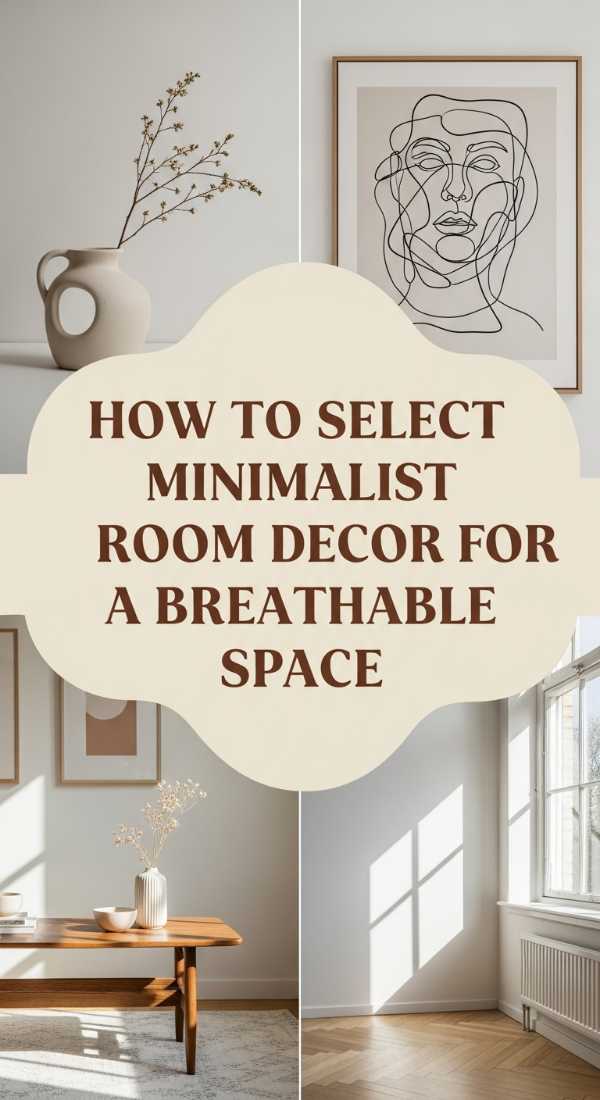
How to Select Minimalist Room Decor for a Breathable Space
Why we love this
Selecting decor for a minimalist space is like choosing the perfect spices for a delicate dish; each one must be potent and purposeful. The touch of a cold, matte-finish ceramic bowl against a warm wooden sideboard provides a sensory contrast that feels sophisticated and expensive. The space smells like crisp linen and fresh air, unburdened by dust-collecting trinkets. It’s a visual feast where every item has its own ‘breathing room,’ allowing you to appreciate the craftsmanship of a single hand-poured candle or a lone piece of abstract art.
Essential Elements:
- Matte ceramic vases in organic, irregular shapes.
- Frameless abstract line art or large-scale photography.
- Solid brass or blackened steel hardware accents.
- A single high-quality coffee table book with a minimalist cover.
- Dried botanicals like pampas grass or bunny tails.
How to make it
- The Edit: Lay out every decorative item you own on a flat surface. Group them by material—glass, wood, ceramic. This is your ‘mise en place.’
- Visual Hierarchy: Choose one ‘hero’ piece for each surface (a large vase, a sculpture). This item should have enough ‘heat’ to hold the attention of the room on its own.
- Negative Space Technique: When placing items, ensure there is more ’empty’ space than ‘filled’ space. A 70/30 ratio of empty to occupied surface area is the secret to that airy, breathable finish.
- Color Coding: Stick to a tight palette of three colors (e.g., Cream, Black, Oak). This ensures that even if items are from different stores, they ‘marry’ together perfectly in the final presentation.
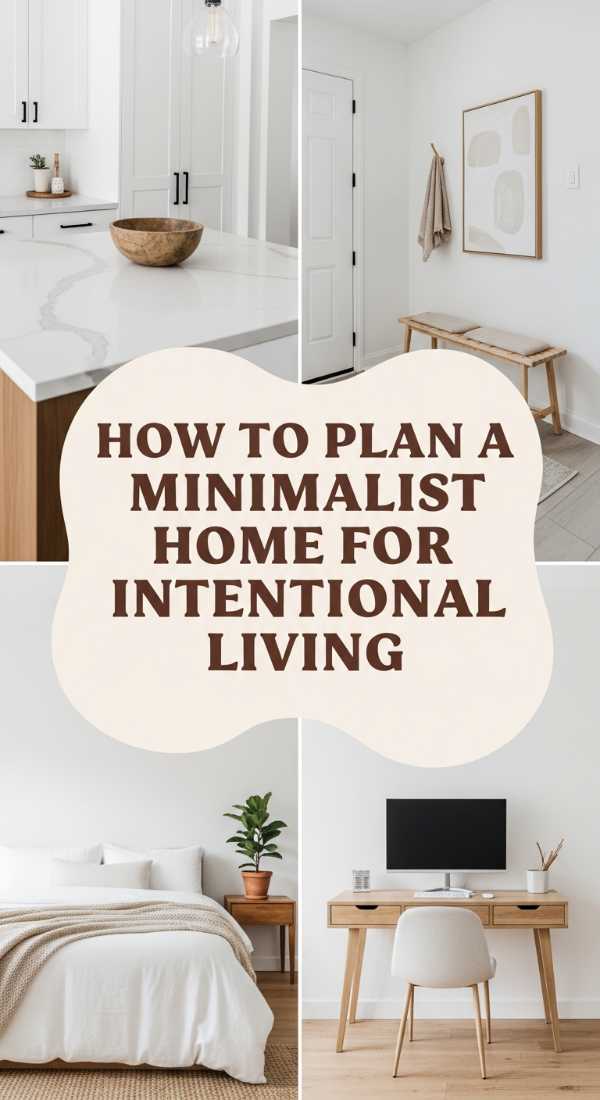
How to Plan a Minimalist Home for Intentional Living
Why we love this
Planning for minimalism is about designing a life that prioritizes experiences over possessions. The physical sensation of moving through a well-planned minimalist home is fluid and effortless, like a well-choreographed dance. The air feels lighter, and the subtle scent of beeswax polish on natural wood surfaces creates a timeless, nostalgic atmosphere. You’ll love the ‘quiet’ of a home where every object has a designated home, removing the mental friction of daily chores and replacing it with a sense of purposeful, rhythmic living.
Essential Elements:
- Customized built-in storage solutions that blend into the walls.
- Open-concept floor plans that maximize sightlines.
- High-quality natural materials like stone, wood, and linen.
- A ‘one-in, one-out’ rule for all new purchases.
- Hidden ‘tech stations’ to keep cords and chargers out of sight.
How to make it
- Mapping the Flow: Walk through your home and identify ‘clog’ points—areas where clutter naturally accumulates. Plan for ‘hidden’ storage (baskets, cabinets) exactly at these locations.
- Material Selection: Choose high-durability ‘raw’ ingredients for your home. Real hardwood floors and stone countertops age beautifully, developing a ‘patina’ that adds character without needing extra decor.
- The Lighting Layer: Plan your lighting in three ‘temps’: task (bright), ambient (warm), and accent (focused). Use dimmers to control the ‘heat’ of the room’s energy throughout the day.
- Intentional Voids: Intentionally leave one wall or one corner completely empty. This acts as a ‘palate cleanser’ for the eyes, providing a place for the mind to rest during busy days.
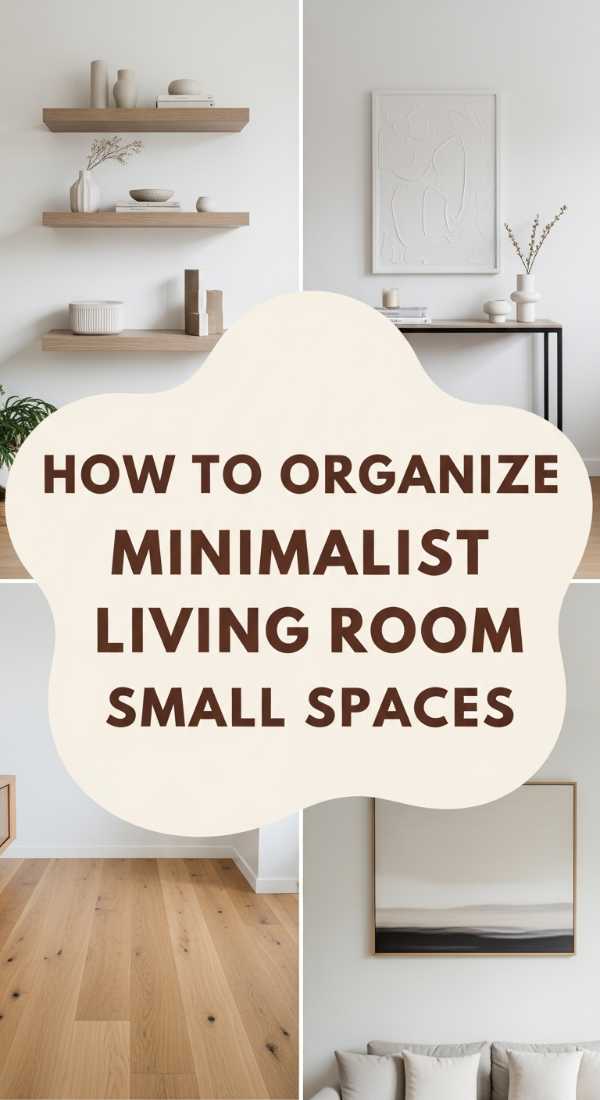
How to Organize Minimalist Living Room Small Spaces for Airy Comfort
Why we love this
Organization is the backbone of the minimalist aesthetic, turning chaos into a soothing melody. There is an immense satisfaction in opening a drawer to find perfectly spaced organizers, or seeing a shelf where items are balanced with mathematical precision. The room feels cool and crisp, with the faint, clean aroma of lavender sachets tucked away in storage bins. You’ll love how the ‘airy’ quality of the room makes even the smallest apartment feel like a sprawling loft, giving you the mental space to create and relax without the weight of ‘stuff’.
Essential Elements:
- Acrylic drawer dividers for invisible organization.
- Uniform storage baskets in natural seagrass or felt.
- Labelled bins for ‘out of sight’ essentials.
- A dedicated ‘drop zone’ for keys and mail near the entrance.
- Furniture with ‘hidden’ compartments (like lift-top tables).
How to make it
- The Great Purge: Empty every cabinet. If you haven’t used an item in the last six months, it’s ‘expired.’ Discard or donate to clear the ‘base’ of your space.
- Categorization: Group like items together. All remotes go in one decorative box; all blankets go in one basket. This creates ‘flavor profiles’ for your storage, making items easy to find.
- Hidden Prep: Use the space under the sofa or behind doors for slim storage bins. These should be ‘invisible’ to the casual observer, keeping the visual ‘plating’ of the room clean.
- Maintenance Check: Set a 5-minute timer every evening to ‘reset’ the room. Return all items to their ‘homes.’ This daily ‘simmer’ prevents clutter from boiling over.
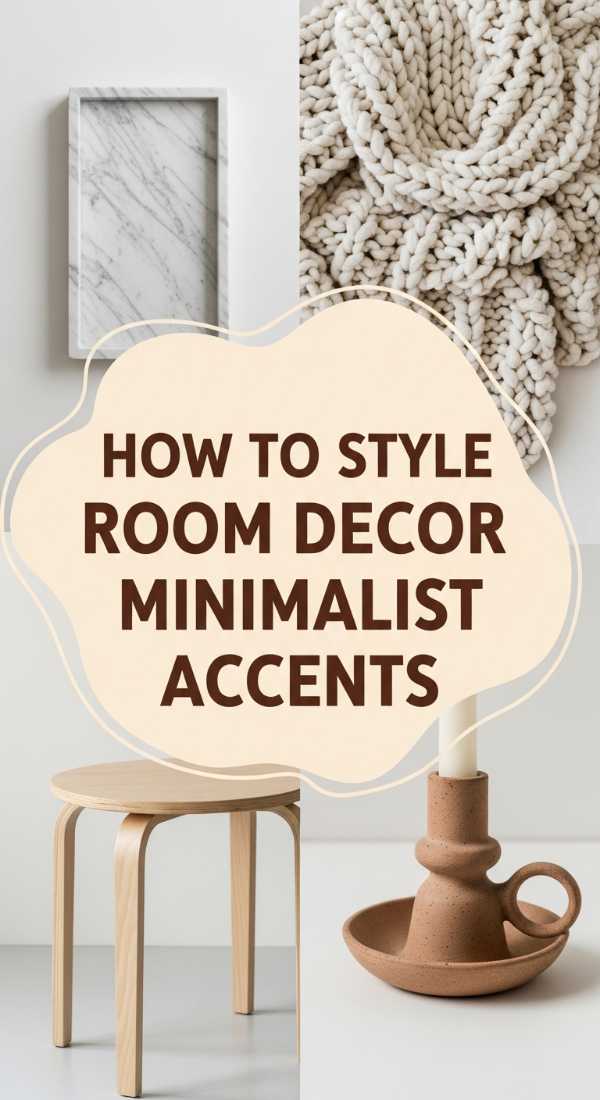
How to Style Room Decor Minimalist Accents for Sophisticated Texture
Why we love this
Texture is the secret ingredient that keeps minimalism from feeling ‘flat.’ Imagine running your hand over a cold marble coaster, then touching the soft, bumpy grain of a bouclé chair—it’s a sensory delight. The air carries the rich, earthy scent of high-quality leather and sun-dried wood. This approach creates a sophisticated, multi-dimensional space that feels layered and expensive. It’s the visual equivalent of a perfectly plated dish where every component—the smooth, the crunch, the soft—works together in a sophisticated harmony.
Essential Elements:
- Bouclé or sherpa accent chairs for soft, tactile interest.
- Ribbed or fluted wood wall panels or furniture details.
- Polished marble or travertine trays for coffee table styling.
- Linen-wrapped books for a soft, matte shelf appearance.
- Woven rattan or jute elements for an organic, ‘raw’ feel.
How to make it
- The Texture Mix: Select three distinct textures: one hard (stone/metal), one soft (wool/linen), and one organic (wood/rattan). This creates a ‘complex’ sensory experience.
- Layering Technique: Place your hard texture first (e.g., a marble tray). Layer a soft texture on top (e.g., a linen napkin or a small candle). Finish with an organic accent (e.g., a wooden bead garland).
- Contrast Management: Pair a ‘cold’ texture like metal with a ‘warm’ texture like wood to balance the room’s ‘temperature.’ This prevents the space from feeling too sterile or too rustic.
- Visual Depth: Use ‘ribbed’ or ‘fluted’ textures on vertical surfaces (like a sideboard door). This catches the light and creates shadows, adding ‘seasoning’ and depth without adding clutter.
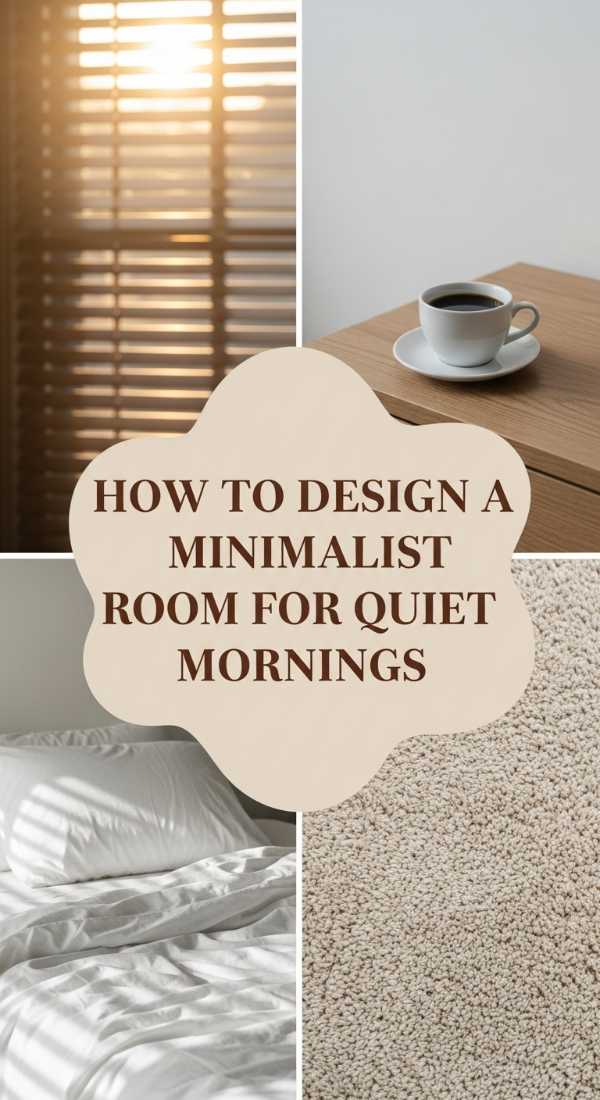
How to Design a Minimalist Room for Quiet Mornings
Why we love this
A room designed for quiet mornings is a gift to your future self. Imagine waking up to a space bathed in soft, blue-toned dawn light, where the air smells of freshly ground coffee and a hint of morning dew from an open window. The touch of cool floorboards gives way to a plush, high-pile bedside rug that feels like a cloud. This design encourages a slow, meditative start to the day, free from the visual ‘noise’ of yesterday’s chores, allowing you to sip your tea in a space that feels as calm as a still lake.
Essential Elements:
- Blackout curtains behind sheer drapes for total light control.
- A dedicated ‘morning nook’ with a comfortable armchair.
- A minimalist bedside carafe for fresh water.
- Dimmable, warm-toned bedside lamps (2700K color temp).
- Natural wood bed frame with crisp, white cotton bedding.
- Zero tech in the ‘sleep zone’ to maintain a ‘silent’ atmosphere.
How to make it
- Bedding Prep: Use only 100% natural fibers (cotton or linen). Layer a lightweight duvet with a waffle-knit coverlet. The goal is a ‘soufflé-like’ lightness that doesn’t trap too much heat.
- Lighting Calibration: Use smart bulbs that mimic the sun’s cycle—warming up in the evening and slowly brightening in the morning. This ‘slow-cooks’ your circadian rhythm for better rest.
- Scent Diffusion: Place a reed diffuser with notes of sandalwood or lavender near the bed. This provides a constant, ‘low-heat’ aromatic background that signals relaxation.
- The Empty Nightstand: Keep only three items on your nightstand: a lamp, a book, and a glass of water. This ensures your final ‘visual bite’ before sleep is one of total peace.
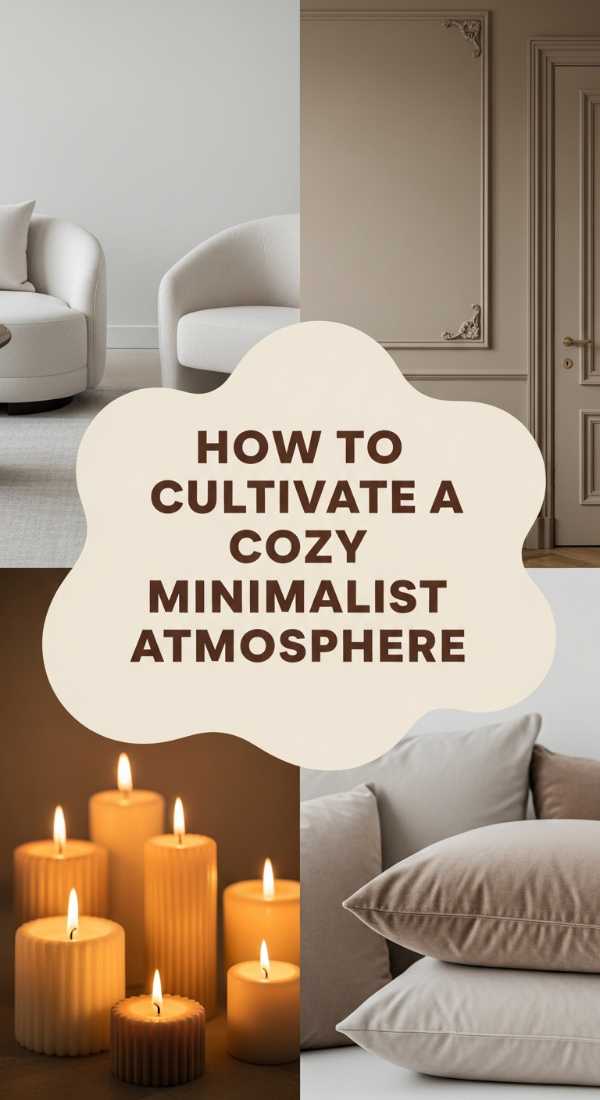
How to Cultivate a Cozy Minimalist Atmosphere for Relaxation
Why we love this
This aesthetic is the ‘comfort food’ of interior design. It takes the clean lines of minimalism and infuses them with the soul-warming comfort of a cozy cabin. The air is filled with the sweet, resinous scent of amber and vanilla, while the glow of low-level amber lighting creates a ‘golden hour’ feeling all night long. You’ll love the way a velvet pillow feels against a linen sofa, creating a ‘hug’ for your senses. It’s a space that doesn’t just look good; it feels like a warm embrace after a long, cold day.
Essential Elements:
- Warm-toned woods like walnut or cherry for a ‘grounded’ feel.
- Faux fur or high-pile wool throws for maximum ‘coziness.’
- Amber-tinted glass candle holders to warm up the light.
- Soft, rounded furniture shapes to encourage ‘lounging.’
- Potted indoor plants like rubber trees for a touch of ‘living’ color.
How to make it
- The ‘Warmth’ Filter: Swap out any ‘cool’ white bulbs for ‘warm’ ones. Lighting is the ‘salt’ of interior design; it enhances everything else. Aim for ‘candlelight’ levels of warmth in the evening.
- Textile Piling: Unlike strict minimalism, ‘cozy’ minimalism allows for an extra layer. Place two pillows of different textures (e.g., velvet and linen) in the corners of your seating.
- Organic Greenery: Introduce one large plant. The green ‘pop’ acts as a natural ‘herb’ that freshens the entire room’s visual palette without feeling like ‘clutter.’
- Scent Layering: Use a wood-fire scented candle alongside a soft background music playlist (low-fi or jazz). This creates a ‘full-bodied’ atmosphere that engages every sense.
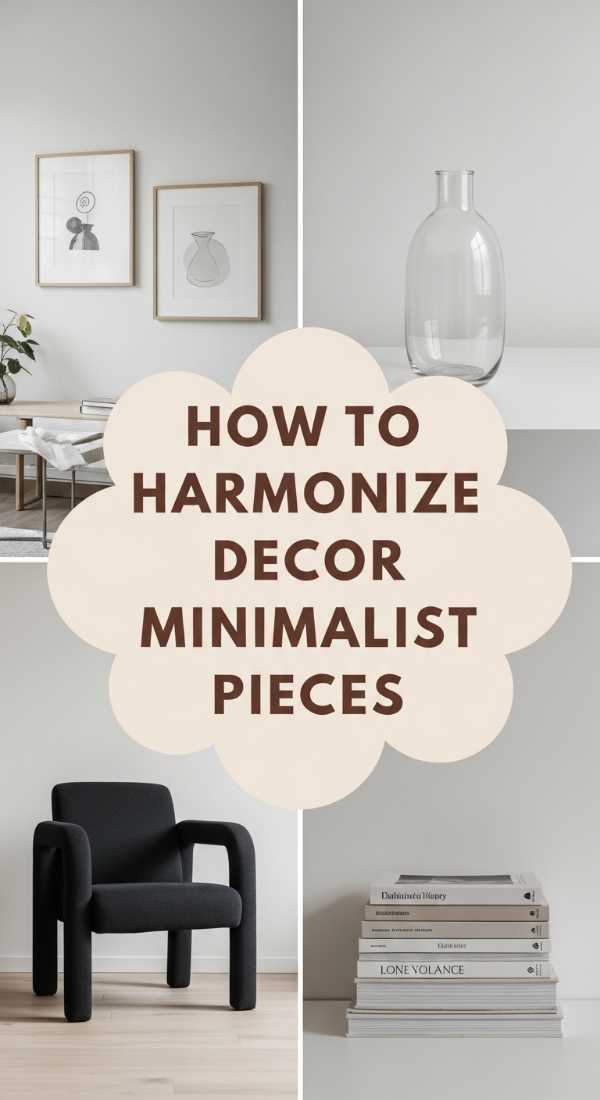
How to Harmonize Decor Minimalist Pieces for Modern Elegance
Why we love this
Harmonizing minimalist pieces is all about the ‘art of the edit’ to achieve a look of effortless elegance. The room feels expansive and high-end, with the faint, crisp aroma of expensive Bergamot and Leather. The tactile experience is one of precision—the smooth glide of a metal drawer, the solid ‘thunk’ of a heavy stone coaster. It’s an aesthetic that feels curated rather than decorated, where every piece is a ‘star’ and the harmony between them creates a sophisticated, gallery-like atmosphere that is undeniably chic.
Essential Elements:
- A monochromatic color scheme (shades of grey, black, or beige).
- High-contrast accents (e.g., a black metal lamp against a white wall).
- Large-scale, minimalist furniture with clean, architectural lines.
- Symmetry in layout (paired chairs, centered artwork).
- Polished surfaces like glass or chrome for a ‘glossy’ finish.
How to make it
- Monochromatic Base: Choose one color and use it in five different shades throughout the room. This ‘tonal’ approach creates a ‘rich’ flavor without adding too many ingredients.
- Symmetry Check: Arrange your main furniture pieces in a symmetrical layout. This provides an immediate sense of ‘order’ and ‘professional’ plating to the room’s design.
- Statement Scaling: Choose one ‘oversized’ element, like a floor-to-ceiling curtain or a massive piece of art. This ‘braise’ technique creates a focal point that anchors the entire room.
- Precision Cleaning: Keep surfaces literally sparkling. In a minimalist space, dust is highly visible. A quick daily wipe-down is the ‘final garnish’ that keeps the room looking elegant.
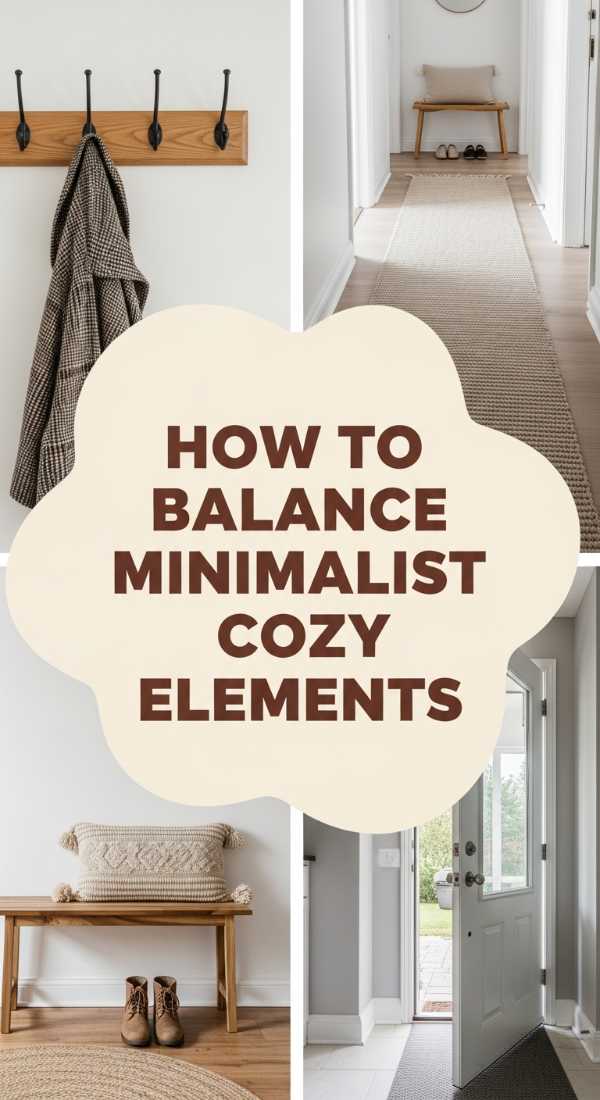
How to Balance Minimalist Cozy Elements for a Warm Welcome
[IMAGE_10]
Why we love this
The perfect balance of minimalist and cozy creates a home that feels both impeccably styled and deeply lived-in. The entryway smells like fresh citrus and eucalyptus, offering an immediate ‘palate cleanser’ as you walk through the door. The visual balance of clean, white walls and warm, honey-toned wood creates a ‘welcome’ that is both bright and grounding. You’ll love the tactile variety—the smoothness of a clean countertop paired with the rustic charm of a woven basket—resulting in a space that feels perfectly ‘seasoned’ for modern life.
Essential Elements:
- A wooden bench in the entryway for a ‘soft’ landing.
- Natural fiber doormats (jute or coir).
- A small bowl for ‘daily carry’ items (keys, wallet) to prevent sprawl.
- Warm, diffused overhead lighting for a ‘soft’ entry glow.
- A single, vibrant green plant to symbolize ‘life’ and ‘warmth.’
How to make it
- Entryway Edit: Clear the floor of all shoes except the pair you are currently wearing. Use a hidden cabinet for the rest. This ensures the ‘first bite’ of your home is clean and appetizing.
- The Scent Bridge: Place a diffuser near the entrance. Use a scent that transitions well from the ‘outside’ world to the ‘inside’ (something fresh like peppermint or lemon).
- Texture Anchoring: Place a soft, durable runner rug in the hallway. This ‘leads’ the guest (or you) into the home with a tactile ‘path’ of comfort.
- Visual Balance: If one side of the room has a ‘heavy’ piece (like a console), balance it on the other side with a ‘light’ piece (like a tall plant). This ‘levels’ the room’s visual weight for a harmonious feel.
Conclusion: Your Journey to a Breathable Home
Creating a minimalist home isn’t a one-time project; it’s a lifestyle shift that pays dividends in mental clarity and daily joy. By focusing on quality over quantity, and texture over clutter, you can transform any space into a viral-worthy sanctuary that feels uniquely yours. Remember, the goal isn’t perfection—it’s peace. Start with one corner, clear the noise, and let your home finally breathe. You deserve a space that is as intentional and beautiful as the life you’re building within it.