
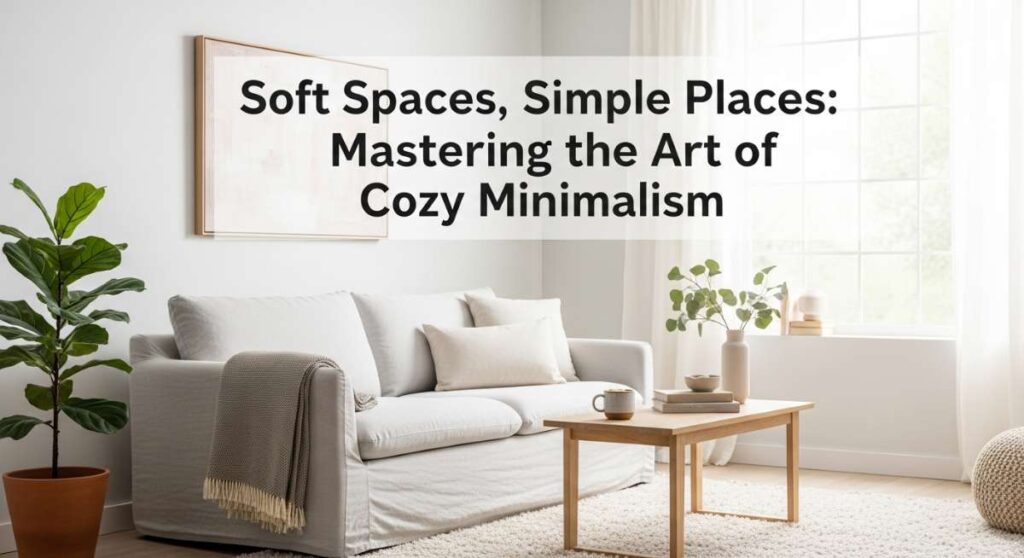
I remember the moment I finally broke. It was a Tuesday evening, and I was standing in the middle of my living room, surrounded by ‘things.’ There were stacks of magazines I hadn’t read, three different throw pillows that didn’t match, and enough knick-knacks to fill a small museum. Instead of feeling comforted by my belongings, I felt suffocated. I realized that my home, which was supposed to be my sanctuary, had become just another source of noise in an already loud world.
That’s when I discovered the magic of cozy minimalism. It’s not about living in a cold, white box with a single chair; it’s about stripping away the excess so that the things you love—the softest blanket, the way the light hits the floor, the scent of fresh cedar—can finally breathe. It’s about creating a space that feels both empty and full at the same time: empty of clutter, but full of peace and presence. It is a love letter to the ‘soft spaces’ in our lives.
In this guide, I’m taking you through the exact steps to transform your home into a haven of cozy minimalism. We aren’t just decorating; we are intentionalizing. We are crafting a life where every object has a purpose and every corner offers a hug. Let’s dive into how you can master the art of the simple, soft home.
How to Curate a Cozy Minimalist Living Room for Total Calm
Why we love this
There is a profound sense of relief that washes over you when you walk into a room where your eyes have a place to rest. This approach focuses on ‘visual silence,’ using a palette of oatmeals, creams, and soft greys to create a monochromatic sanctuary. You can almost feel the blood pressure drop as you sink into a plush sofa, the scent of a beeswax candle lingering in the air, and the tactile richness of a chunky knit rug beneath your feet. It’s about the luxury of space and the quiet hum of a room that isn’t demanding anything from you.
Essential Elements:
- Low-profile modular sofa in a neutral performance fabric.
- A large-scale textured wool rug that anchors the seating area.
- A single, oversized piece of abstract art with soft, flowing lines.
- Warm LED lighting (2700K) hidden in corners or behind furniture.
- Natural wood coffee table with a matte finish.
How to make it
- Begin by ‘ghosting’ the room: remove every single accessory, piece of art, and small furniture item until only the largest pieces remain. This allows you to see the architectural bones of the space without distraction.
- Analyze the flow of natural light throughout the day. Place your primary seating in a position that catches the afternoon ‘golden hour’ glow, ensuring there are no harsh shadows cutting through your relaxation zone.
- Introduce the ‘Anchor Texture.’ Lay down a high-pile or looped wool rug that extends at least 12 inches beyond the footprint of your sofa. This creates a defined ‘island’ of comfort that visually separates the living area from the rest of the house.
- Layer in exactly three high-quality textiles. Choose one heavy-weight linen throw and two oversized down-filled pillows in varying shades of the same neutral tone. Avoid patterns; let the weave of the fabric provide the interest.
- Finish with ‘Living Light.’ Instead of overhead fixtures, place one floor lamp with a linen shade and two small tea lights on the coffee table. The goal is to create a soft, diffused glow that mimics the warmth of a fireplace.
How to Arrange Small Living Room Furniture for an Airy Feel
Why we love this
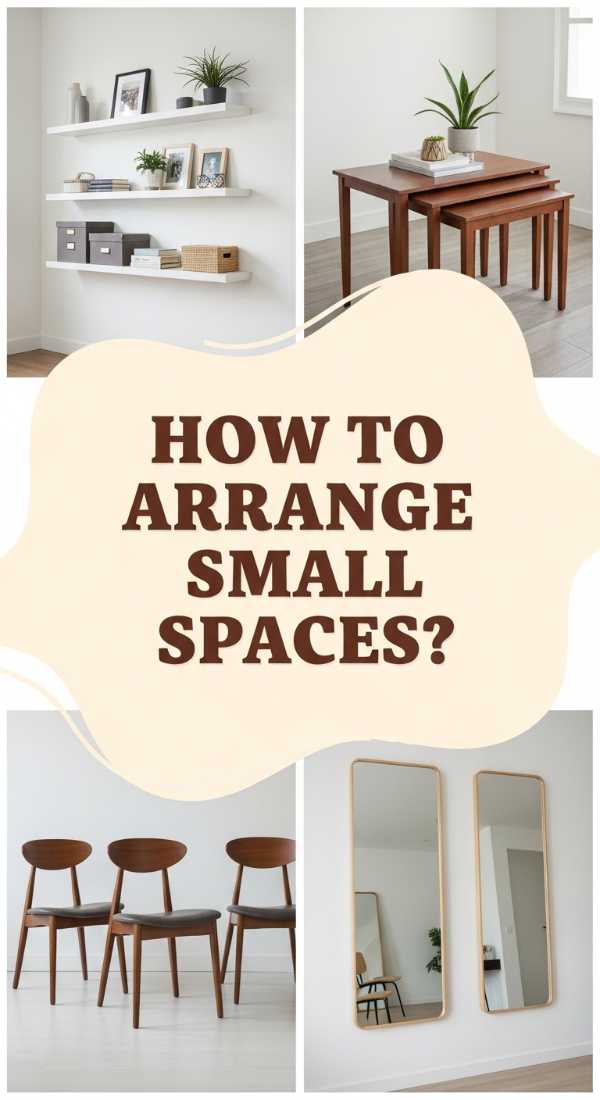
In a small space, every inch counts, but the goal isn’t to cram things in—it’s to invite the air to move. We love this technique because it uses the ‘leggy furniture’ trick to create an illusion of infinite floor space, making even the tiniest apartment feel like a sprawling loft. There’s a lightness to the atmosphere, a feeling that you can move freely without bumping into sharp corners. It’s the architectural equivalent of taking a deep, cleansing breath, where the furniture seems to float rather than sit heavily on the ground.
Essential Elements:
- Furniture with exposed legs (Mid-century modern or Scandi style).
- Glass or acrylic coffee table to minimize visual weight.
- Wall-mounted shelving units instead of bulky bookcases.
- Large wall mirror placed opposite the main window.
- Multi-functional nesting tables.
How to make it
- Select a ‘Hero Piece’ that is appropriately scaled. For small rooms, choose a settee or a small-scale sectional that sits at least 4-6 inches off the ground on tapered legs. This allows the eye to see the floor underneath, instantly doubling the perceived square footage.
- Apply the ‘Rule of the Perimeter.’ Pull all furniture at least 3 inches away from the walls. This ‘breathing room’ prevents the room from feeling cramped and creates a sense of intentional curation rather than storage.
- Mount a floor-to-ceiling mirror on the wall most directly hit by sunlight. Use heavy-duty wall anchors and ensure it is tilted slightly upward to bounce light toward the ceiling, which heightens the room.
- Replace a traditional heavy coffee table with a clear glass or round wooden pedestal table. The lack of hard corners improves ‘flow-pathing,’ allowing you to walk around the room with a natural, unhindered gait.
- Utilize vertical space with ‘Invisible Shelves.’ Install floating shelves that match the wall color. Stack books horizontally in small groupings, leaving at least 40% of the shelf surface empty to maintain that airy, minimalist aesthetic.
How to Style a Minimalist Room to Enhance Your Morning Routine

Why we love this
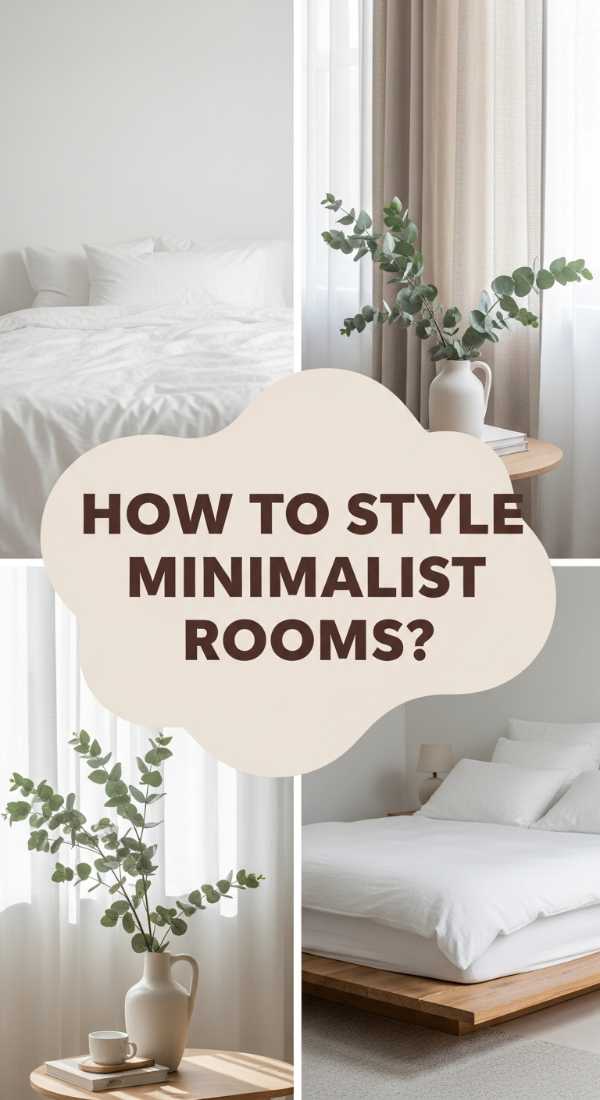
Imagine waking up in a room that feels like a fresh start every single day. This styling method focuses on the sensory experience of the first thirty minutes of your morning. We love it because it removes the ‘decision fatigue’ of a cluttered bedside and replaces it with a curated ritual station. The air feels crisp, the surfaces are smooth to the touch, and there is a dedicated spot for your coffee cup and your journal. It transforms the act of waking up from a chore into a slow, beautiful ceremony of presence.
Essential Elements:
- A minimalist nightstand with a single drawer to hide clutter.
- High-thread-count cotton or bamboo sheets in a crisp white.
- A ceramic carafe and matching glass for bedside hydration.
- Blackout curtains paired with sheer linen overlays.
- A small wooden bench at the foot of the bed.
How to make it
- Clear the ‘Visual Runway.’ Ensure the path from your bed to the door is completely unobstructed. Remove any floor clutter, shoes, or laundry baskets that might catch your eye the moment you wake up.
- Set the ‘Bedside Altar.’ Limit your nightstand to exactly three items: a lamp with a warm bulb, a single book you are currently reading, and a carafe of water. Hide chargers and electronics inside a drawer or behind the furniture.
- Layer your bedding for ‘Cloud Comfort.’ Use a duvet that is one size larger than your bed (e.g., a King duvet on a Queen bed) so it drapes luxuriously to the floor. Use only white or cream linens to mimic the feeling of a high-end spa.
- Position a small, soft sheepskin or faux-fur rug exactly where your feet land when you swing them out of bed. This tactile ‘grounding’ helps transition your body from sleep to wakefulness with a soft touch.
- Install ‘Light Control.’ Use a double-rod system with heavy velvet curtains for total darkness during sleep, and light-diffusing sheers for the morning. Open the heavy curtains immediately upon waking to flood the room with natural circadian-rhythm-regulating light.
How to Select Minimalist Room Decor for a High End Look
Why we love this
High-end minimalism is all about the ‘Power of One.’ Instead of a shelf full of cheap trinkets, we focus on one museum-quality object that commands the room. We love this look because it radiates sophistication and timelessness. It’s the feeling of walking into a gallery where every piece has a story and a soul. The materials are raw and honest—heavy stone, unlacquered brass, and hand-thrown ceramics—providing a sensory richness that plastic or mass-produced items can never replicate. It’s an investment in quality that pays off in daily inspiration.
Essential Elements:
- Sculptural ceramic vases in organic shapes.
- Solid marble or travertine trays for grouping items.
- Original art or high-quality giclée prints on textured paper.
- Objects made from natural materials (bone, stone, wood).
- Strategic use of ‘Negative Space’ on all surfaces.
How to make it
- Adopt the ‘Gallery Mindset.’ Evaluate every decorative object you own. If it doesn’t evoke a strong emotional response or possess beautiful craftsmanship, it must be donated. Aim for 70% empty surface space.
- Focus on ‘Material Contrast.’ Pair a cold, smooth marble tray with a warm, rough-hewn wooden bowl. This tension between textures is what makes a minimalist room feel high-end rather than boring.
- Invest in ‘Statement Ceramics.’ Place one large, sculptural vase (at least 15 inches tall) on your entryway table or mantle. Leave it empty; the silhouette of the piece is the art itself.
- Curate your ‘Art Voids.’ When hanging art, give each piece twice as much wall space as the art itself. This creates a ‘breathing frame’ around the work, elevating it to a focal point.
- Use ‘Functional Decor.’ Replace utilitarian items with beautiful versions. Use a heavy brass bowl for your keys, a marble pestle and mortar for the kitchen counter, and a hand-blown glass cloche for a candle.
How to Design a Living Room for Ultimate Relaxation and Presence

Why we love this
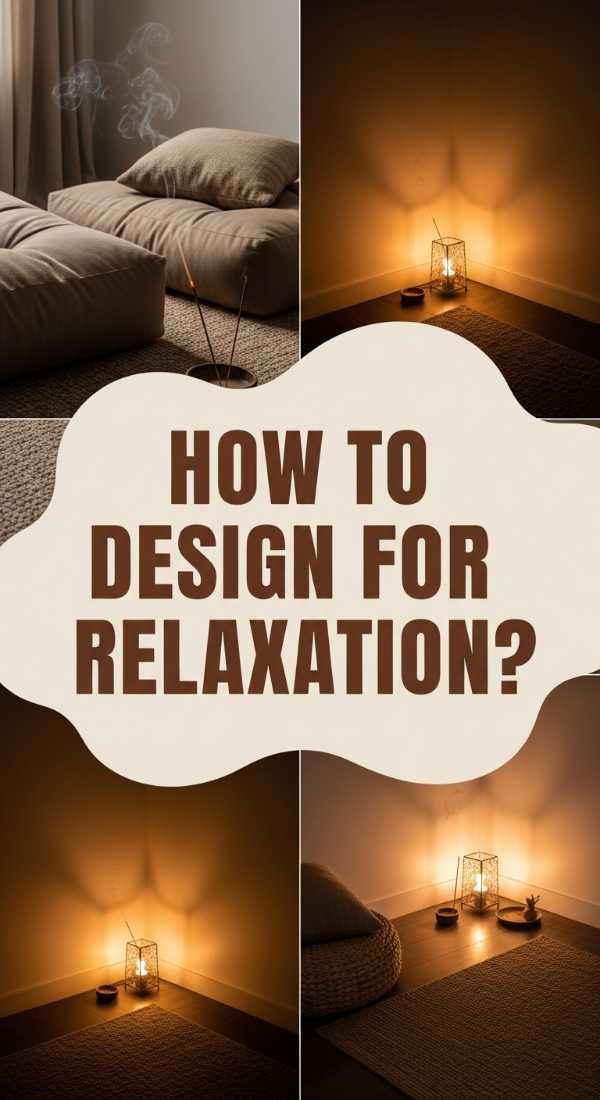
This design philosophy is about turning the living room into a ‘digital-free’ sanctuary. We love it because it forces us to slow down and actually engage with our surroundings and the people in them. There’s a cozy heaviness to this style—oversized floor cushions, the crackle of a candle, and furniture arranged for conversation rather than screen-watching. It feels like a warm embrace, a place where the air is thick with calm and the outside world feels miles away. It is the ultimate antidote to our high-speed, high-stress modern lives.
Essential Elements:
- Circular seating arrangement to encourage eye contact.
- Oversized floor poufs or meditation cushions.
- A dedicated ‘Analog Nook’ with a record player or books.
- Soft, dimmable ambient lighting.
- A low-tech coffee table tray with tea supplies.
How to make it
- Reorient the room toward a ‘Natural Focal Point.’ If you have a fireplace or a large window, turn your furniture toward that instead of the television. If you must have a TV, use a ‘Frame’ style model that displays art when not in use.
- Create ‘Comfort Clusters.’ Group a comfortable armchair with a small side table and a high-quality reading lamp. This creates a ‘room within a room’ that invites you to sit and stay for a while.
- Implement ‘Soft Audio.’ Instead of a blaring TV, set up a small high-fidelity speaker or record player. Keep a curated selection of 5-10 vinyl records visible to encourage the ritual of physical music selection.
- The ‘Scent Layer.’ Use a stone diffuser with high-grade essential oils like sandalwood or lavender. Scent is the fastest way to trigger the parasympathetic nervous system and signal to the brain that it is time to relax.
- Establish a ‘Basket Protocol.’ Keep a beautiful woven basket near the seating area. At 7:00 PM every night, place all smartphones and tablets in the basket to eliminate digital distractions and reclaim your evening presence.
How to Transform Your Apartment with Cozy Aesthetic Details

Why we love this
Apartment living often feels transient, but adding cozy aesthetic details makes it feel permanent and personal. We love this because it’s about ‘micro-styling’—those tiny corners that catch your eye and make you smile. It’s the soft glow of a battery-operated sconce in a hallway, the velvet ribbon tied around a stack of old letters, or the way a silk pillowcase feels against your skin. These details turn a generic rental into a curated home, proving that you don’t need a massive house to live with massive style and comfort.
Essential Elements:
- Removable ‘peel and stick’ linen wallpaper for texture.
- High-quality linen tea towels and napkins.
- Brass or matte black hardware upgrades for cabinets.
- Scented drawer liners in cedar or rose.
- Velvet or silk throw pillow covers in jewel tones.
How to make it
- Upgrade ‘Touchpoints.’ Replace standard plastic cabinet knobs with solid brass or stone hardware. These are the items you touch multiple times a day; making them feel substantial instantly elevates the apartment’s ‘heft.’
- Layer ‘Window Softness.’ Even if you have blinds, install a tension rod with sheer linen curtains. The way the fabric moves in a breeze adds a romantic, ‘cozy’ movement to a static apartment room.
- Create a ‘Sensory Entryway.’ Place a small wooden stool by the door with a ceramic bowl for keys and a high-end reed diffuser. The moment you cross the threshold, you should be greeted by a signature home scent.
- Use ‘Textiles as Art.’ Drape a beautiful, hand-woven textile over the back of a plain apartment sofa. This adds color and pattern without the permanence of paint or heavy furniture.
- The ‘Lighting Hack.’ Use battery-powered LED puck lights inside glass-front cabinets or under shelves. This creates a high-end ‘integrated’ lighting look without needing an electrician or risking your security deposit.
How to Master Minimalist Cozy Vibes for Seasonal Comfort
Why we love this
Minimalism doesn’t mean your house stays the same all year; it means you change your environment with intention. We love this seasonal approach because it honors the rhythm of nature. In winter, it’s about the weight of wool and the amber glow of candles; in summer, it’s about the lightness of cotton and the scent of citrus. It keeps your home feeling fresh and exciting without accumulating ‘seasonal clutter’ in the attic. It’s about quality over quantity, choosing two or three powerful seasonal shifts that change the entire mood.
Essential Elements:
- A ‘Textile Library’ (one heavy set for winter, one light for summer).
- Seasonal natural elements (dried branches, fresh pine, spring blooms).
- Scented candles that match the outdoor atmosphere.
- Versatile neutral base furniture.
- A heavy-weight decorative wooden bowl for seasonal produce.
How to make it
- Execute the ‘Fabric Swap.’ On the first day of the new season, remove all throw blankets and pillow covers. For colder months, bring out heavy knits and velvets. For warmer months, switch to gauzy linens and cool cottons.
- Use ‘Found Decor.’ Instead of buying plastic seasonal items, use nature. A single branch of autumn leaves in a tall glass vase or a bowl of smooth river stones in the summer provides a powerful seasonal connection without the clutter.
- The ‘Olfactory Shift.’ Change your home fragrance completely every three months. Use heavy wood and spice scents in winter, and transition to ozone, salt, or floral notes as the weather warms.
- Adjust ‘Light Density.’ In the winter, add more small lamps and candles to combat the darkness. In the summer, strip back the lamps and ensure windows are completely unobstructed to maximize every minute of daylight.
- Curate a ‘Seasonal Tray.’ On your coffee table, keep a tray that holds exactly one seasonal book, one seasonal candle, and one seasonal natural element. This small ‘vignette’ keeps the room feeling current without overwhelming it.
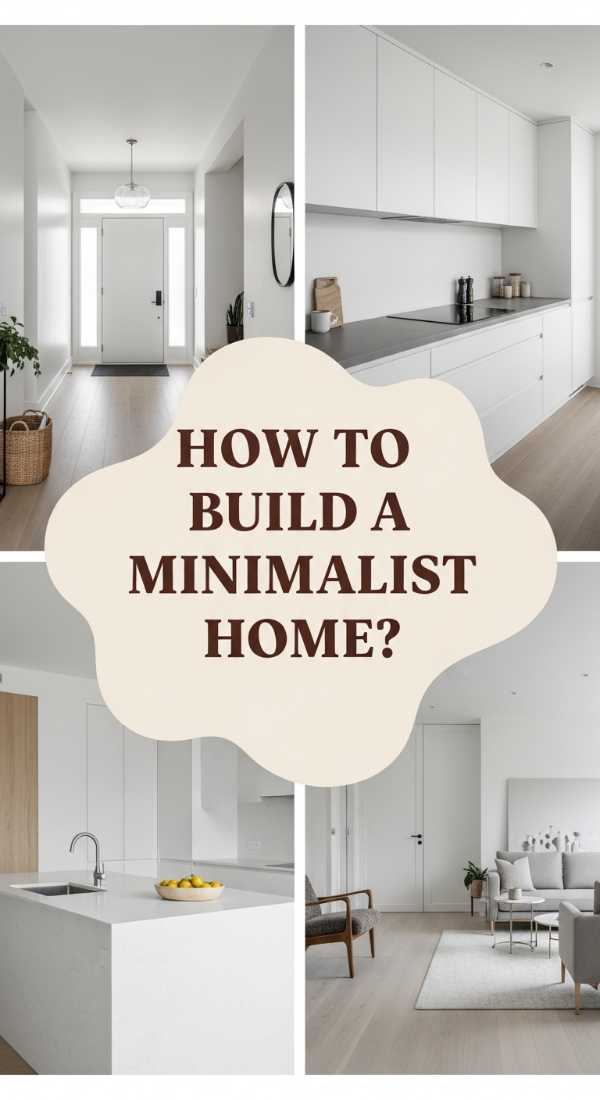
How to Build a Minimalist Home for a Mindful Lifestyle

Why we love this
This is the ultimate expression of ‘less is more.’ We love building a mindful home because it turns the act of living into a meditation. Every object in a mindful home has been ‘auditioned’ for its role. The result is a space that is incredibly easy to clean, easy to maintain, and easy to be in. It’s about removing the friction of daily life—no more searching for keys, no more tripping over shoes. It’s a clean slate that allows your mind to wander and your creativity to flourish in the quiet gaps between beautiful things.
Essential Elements:
- Closed storage solutions (cabinets with doors) to hide visual noise.
- A designated ‘Drop Zone’ for daily items.
- High-quality, long-lasting cleaning tools made of natural materials.
- A ‘One-In, One-Out’ rule for all new purchases.
- Clear, organized surfaces with only daily-use items visible.
How to make it
- Perform a ‘Function Audit.’ Spend a week noticing where you naturally drop things. Build your minimalism around these habits. If you always drop your bag by the door, put a single, beautiful wooden hook there. Don’t fight your nature; design for it.
- Implement ‘Hidden Tech.’ Route all cables through furniture or use cord management boxes. A room without visible wires feels instantly more peaceful and ‘mindful.’
- Choose ‘Tactile Materials.’ When selecting furniture, prioritize how it feels to the touch. A honed stone countertop, a raw wood table, or a brushed metal lamp provide ‘grounding’ sensations throughout the day.
- The ‘Evening Reset.’ Spend 10 minutes every night returning every object to its designated ‘home.’ A mindful home depends on this ritual to ensure you wake up to a clean, stress-free environment every morning.
- Create ‘Negative Space Pockets.’ Deliberately leave one corner of every room completely empty. This ’empty space’ serves as a visual reminder that you don’t need to fill every void to be happy.
How to Integrate Indoor Plants for a Fresh Living Room Atmosphere
Why we love this
Plants are the ‘living lungs’ of a minimalist home. We love integrating greenery because it softens the hard lines of minimalist furniture and adds a vibrant, organic energy that artificial decor can’t match. There’s something deeply satisfying about watching a new leaf unfurl. The color green is naturally soothing to the human eye, and the presence of plants actually improves air quality and humidity. It’s the perfect way to bring the ‘outdoors in,’ making your living room feel like a lush, private garden.
Essential Elements:
- Large-scale floor plants (Fiddle Leaf Fig, Olive Tree, or Bird of Paradise).
- Uniform ceramic planters in matte white or terracotta.
- Trailing plants for high shelves (Pothos or String of Pearls).
- A high-quality brass watering can that doubles as decor.
- Plant stands of varying heights to create a ‘greenery landscape.’
How to make it
- Select ‘Structural Plants.’ For a minimalist look, choose plants with strong, clean silhouettes like a Snake Plant or a large-leaf Monstera. Avoid ‘busy’ or multi-colored foliage that can look cluttered.
- Use the ‘Rule of Three.’ Group three plants of varying heights in a corner. Place the tallest in the back, a medium-sized one in the middle, and a trailing plant on a small stool in the front to create a lush, layered look.
- Coordinate your ‘Vessel Vocabulary.’ Ensure all your pots are the same material or color family. This creates a cohesive look that lets the beauty of the plants take center stage rather than the containers.
- Maximize ‘Vertical Greenery.’ Place a trailing plant on the top of a tall cabinet or a floating shelf. Let the vines hang down naturally to ‘soften’ the vertical edges of your furniture and walls.
- The ‘Hydration Ritual.’ Use your plant care as a mindful moment. Every Sunday morning, use a soft microfiber cloth to dust the leaves and a brass mister to provide humidity. This keeps the plants healthy and connects you to the life in your home.
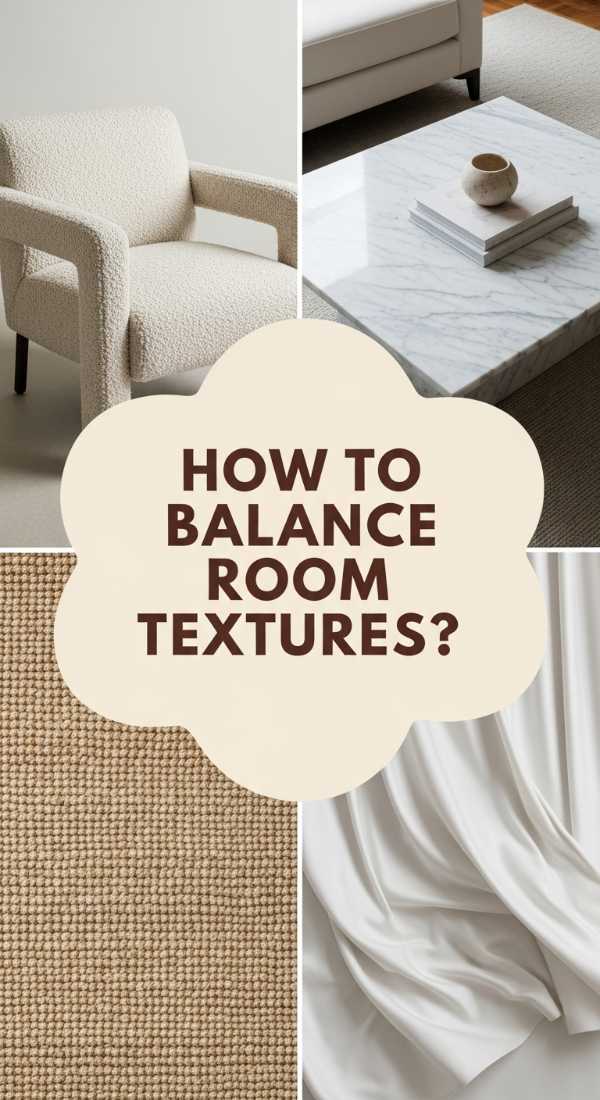
How to Balance Textures for a Sophisticated Minimalist Space
[IMAGE_10]
Why we love this
Texture is the secret ingredient that keeps minimalism from feeling cold or ‘surgical.’ We love this balancing act because it appeals to our sense of touch as much as our sight. A room with a smooth leather sofa, a rough jute rug, and a soft mohair throw feels ‘finished’ and expensive. It’s a sophisticated dance of opposites: the hard and the soft, the shiny and the matte. When you get the texture right, you don’t need color; the interplay of light and shadow on different surfaces creates all the drama you need.
Essential Elements:
- A mix of ‘Hard’ textures (metal, glass, stone, wood).
- A mix of ‘Soft’ textures (linen, wool, velvet, leather).
- Woven elements like baskets or seagrass rugs.
- Textured wall treatments (limewash or plaster).
- Various ‘Pile Heights’ in rugs and cushions.
How to make it
- Identify the ‘Base Texture.’ Start with your largest surface—usually the floor. If you have hard wood, add a soft, high-pile wool rug. If you have carpet, add a flat-weave jute rug on top to provide structural contrast.
- Apply the ‘Opposites Attract’ rule. If you have a sleek, modern leather sofa, drape a chunky, hand-knit wool blanket over it. The contrast between the ‘cool’ leather and the ‘warm’ wool is what creates the cozy minimalist vibe.
- Introduce ‘Raw Wood.’ Ensure there is at least one piece of unsealed or live-edge wood in the room. The grain and texture of natural wood provide an essential ‘organic’ anchor for the space.
- Use ‘Reflective Balance.’ If a room feels too dull, add a polished brass bowl or a glass coffee table. If it feels too ‘glitzy,’ add a matte ceramic lamp or a linen-covered ottoman to soak up the excess light.
- The ‘Five Senses Test.’ Walk through the room and touch five different surfaces. If they all feel the same (e.g., all smooth or all soft), you need to introduce a contrasting texture to create visual and tactile depth.
Conclusion: Embracing the Quiet Home
Mastering cozy minimalism isn’t a weekend project; it’s a lifestyle shift. It’s about choosing peace over possessions and quality over quantity. As you begin to strip back the layers of your home, you’ll find that you aren’t just losing clutter—you’re gaining time, clarity, and a profound sense of calm. Your home should be the place where the world stops spinning, a soft space that catches you at the end of a long day. Start small, be intentional, and enjoy the beauty of the simple places you create.