
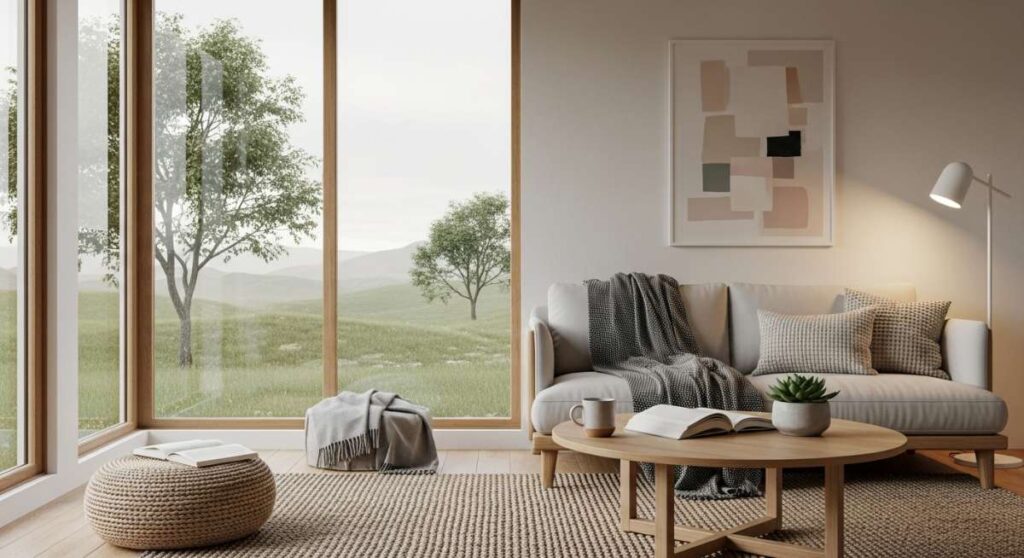
Finding Comfort in Simplicity: Your Cozy Minimalist Blueprint
Have you ever walked into a room and felt like you could finally, for the first time in weeks, take a deep breath? That is the magic of the cozy minimalist home. For years, I lived in a space filled with ‘stuff’ that I thought defined my personality, but in reality, it was just noise. My journey into minimalism wasn’t about stripping everything away until only a white box remained; it was about curating a sanctuary where every texture, scent, and shadow serves a purpose for my peace of mind.
We live in a world that constantly screams for our attention, urging us to buy more, do more, and be more. Cozy minimalism is the quiet rebellion against that chaos. It’s the art of finding the ‘just right’ balance—where your home feels light and airy, yet wraps you in a warm hug the moment you kick off your shoes. Let’s dive into how you can transform your living space into a haven of intentional comfort.
How to Elevate Tiny Living Areas for a Peaceful Atmosphere
Why we love this
There is something incredibly restorative about a small space that has been intentionally curated to feel expansive. We love this approach because it proves that you don’t need a mansion to experience luxury; you simply need a clear vision. Imagine the scent of a single eucalyptus sprig wafting through a room where the air feels light, and every piece of furniture has room to breathe. It’s about the tactile joy of running your hand over a smooth wooden surface that isn’t covered in mail or knick-knacks, allowing your eyes to rest on the architecture rather than the clutter.
Essential Elements:
- Multi-functional furniture (like a storage ottoman).
- Strategic mirror placement to bounce natural light.
- A unified color palette of soft whites and creams.
- Low-profile seating to maintain sightlines.
- Vertical shelving to keep floor space clear.
How to make it
- Begin by performing a ‘sweep’ of the room. Remove every item that does not serve a daily functional purpose or spark immediate joy. The visual cue for success here is ‘breathing room’—you should see at least 20% more floor or surface area.
- Identify your primary light source. Position a large, thin-framed mirror directly opposite the window. This technique uses reflection to double the perceived depth of the room.
- Apply the ‘Low-Pro’ rule. Swap tall, bulky cabinets for lower sideboards. This keeps the upper half of your visual field open, which trickles down into a psychological feeling of freedom.
- Select a signature scent, like sandalwood or linen, to define the zone. Use a ceramic diffuser rather than multiple candles to keep surfaces looking clean and uncluttered.
How to Select Tactile Fabrics for a Cozy Minimalist Haven
Why we love this
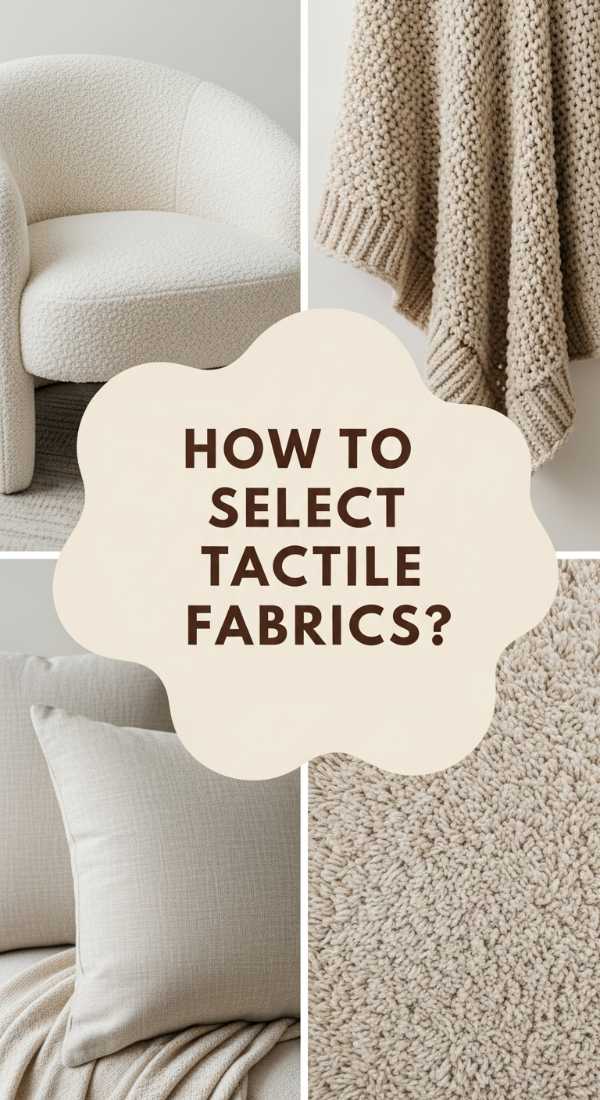
Minimalism can sometimes feel cold or sterile, but the right fabrics act as the bridge to warmth. We love tactile layering because it engages the sense of touch, turning a simple sofa into an inviting retreat. Imagine sinking into a cloud of chunky knit wool, the slightly rough but comforting texture of raw linen against your skin, and the buttery softness of a velvet pillow. These sensory details provide the ‘cozy’ in cozy minimalism, making the space feel lived-in and loved without the need for visual ‘noise’ or excessive patterns.
Essential Elements:
- Chunky wool knit throws.
- Stonewashed linen cushions.
- Organic cotton area rugs.
- Sheer linen window treatments.
- Faux-mohair or velvet accents.
How to make it
- Start with a ‘base layer’ of smooth textures. Your largest pieces of furniture (the sofa or bed) should have a tight-weave fabric like cotton or canvas.
- Layer on ‘High-Contrast’ textures. Place a heavily textured, chunky knit throw over the smooth sofa arm. The visual cue is the play of light and shadow within the loops of the yarn.
- Mix weights. Use heavy linen for curtains to provide a grounded feel, then pair them with light, airy cotton sheers. This creates a professional ‘layered’ look that filters light beautifully.
- Check the ‘Drape.’ When styling a throw, don’t fold it perfectly. Pinch it from the center and let it fall naturally over a corner. A soft, organic drape looks more inviting than a stiff, geometric fold.
How to Curate Minimalist Room Decor for a Refined Home Vibe
Why we love this
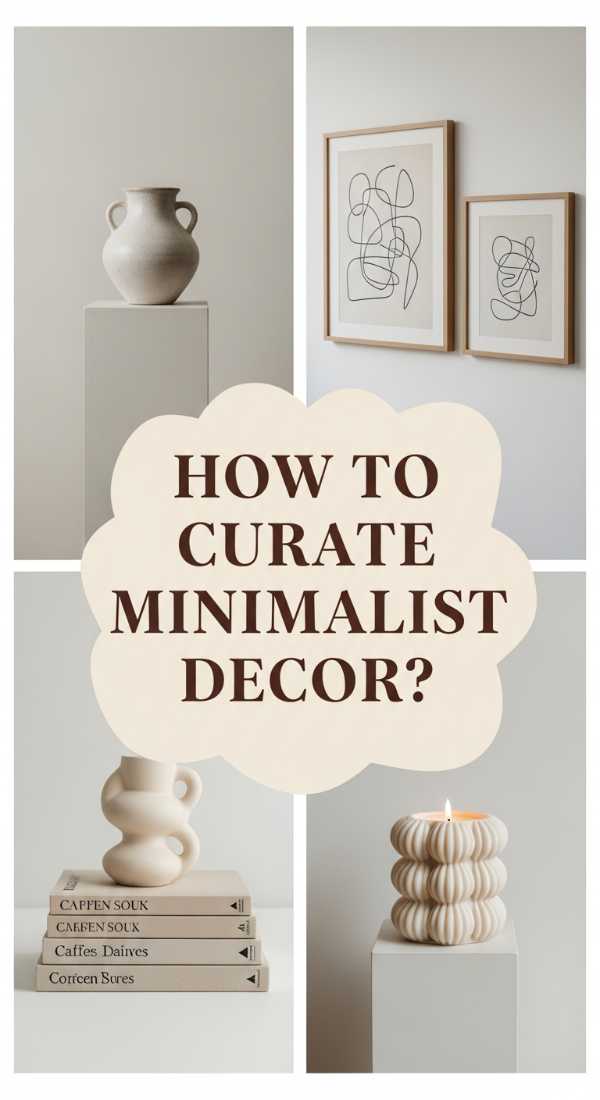
Curating decor is like editing a story; every piece you keep should contribute to the narrative of your home. We love this because it shifts the focus from ‘having’ to ‘appreciating.’ When you only display three items on a shelf instead of thirty, those three items become masterpieces. You begin to notice the subtle glaze on a ceramic vase, the intricate grain of a piece of driftwood, or the way a single black-and-white photograph captures a memory. It’s a sophisticated, gallery-like experience that makes your daily life feel more intentional and artful.
Essential Elements:
- Odd-numbered groupings (The Rule of Three).
- Varied heights in decor objects.
- Matte-finish ceramics.
- A single ‘hero’ piece of oversized art.
- Negative space (empty areas).
How to make it
- Clear all surfaces to a blank slate. This allows you to see the ‘bones’ of the room without bias.
- Select a ‘Hero Piece.’ Choose one item that is larger or more visually striking than the rest—perhaps a large stone vase. Place this off-center for a more modern, dynamic feel.
- Apply the ‘Rule of Three.’ Group two smaller items with your hero piece. Ensure they vary in height and texture (e.g., a tall vase, a medium wooden bowl, and a small flat tray).
- Evaluate the ‘Negative Space.’ Step back 10 feet. If a surface looks ‘full,’ remove one item. The goal is to see the surface itself as part of the decor. The visual cue is a sense of balance rather than symmetry.
How to Use Soft Lighting for a Warm Living Room Glow
Why we love this
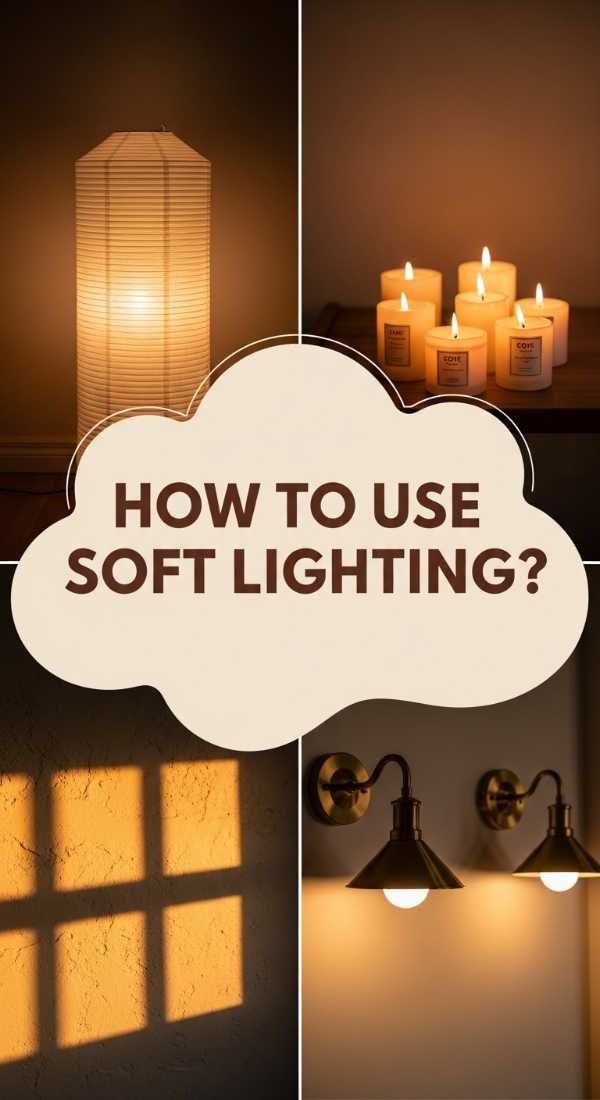
Lighting is the ‘invisible’ decor that changes everything. We love soft, layered lighting because it has the power to melt away the stress of a long day instantly. Imagine the harsh overhead lights clicking off, replaced by the warm, amber glow of a floor lamp in the corner and the flicker of a single candle. This creates a ‘hygge’ atmosphere where shadows are soft and the edges of the room seem to disappear, making the space feel intimate and safe. It’s the ultimate tool for setting a mood without adding a single piece of physical clutter.
Essential Elements:
- Warm-toned LED bulbs (2700K).
- Dimmable floor and table lamps.
- Amber glass candle holders.
- Hidden LED strip lighting for shelving.
- Natural beeswax candles.
How to make it
- Eliminate ‘The Big Light.’ Commit to never using the central ceiling fixture in the evening. This immediately softens the room’s energy.
- Create ‘Light Islands.’ Place lamps at different heights throughout the room—one on a side table, one on the floor, and perhaps a small one on a bookshelf. This creates depth and draws the eye around the room gently.
- Use the ‘Bounce’ technique. Point floor lamps toward a corner or a pale wall. The light will hit the wall and bounce back into the room as a soft, diffused glow rather than a harsh direct beam.
- Switch to 2700K bulbs. Check the packaging for the Kelvin rating; 2700K provides that golden hour glow that mimics firelight. The visual cue is a lack of blue or stark white tones.
How to Organize Open Floor Plans for Maximum Comfort
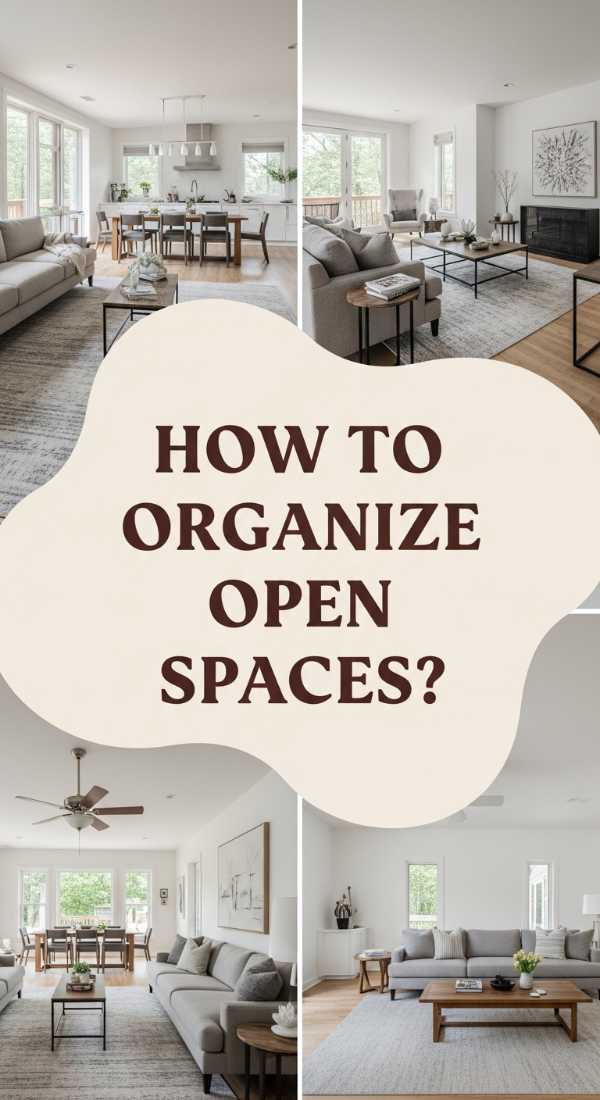
Why we love this
Open floor plans are wonderful for light, but they can often feel ‘drifting’ or unanchored. We love the process of zoning because it creates ‘rooms within a room’ without the need for walls. It’s the feeling of a cozy nest in the middle of a vast space. By organizing an open plan, you create a psychological boundary—the moment you step onto the rug in the ‘living area,’ your brain knows it’s time to relax, even if the kitchen island is just a few feet away. It brings order to freedom.
Essential Elements:
- Large area rugs to define zones.
- Floating furniture arrangements.
- Consoles or low bookshelves as dividers.
- Consistent color palette across all zones.
- Focused lighting for each functional area.
How to make it
- Anchor with ‘Islands.’ Place a large rug under your main seating group. Ensure all furniture legs (or at least the front ones) are touching the rug. This visually ‘locks’ the pieces together into a single unit.
- Float the Sofa. Instead of pushing furniture against the walls, pull it toward the center of the room. Leave a ‘traffic path’ of at least 3 feet behind the sofa. This creates a more professional, airy feel.
- Use ‘Visual Anchors.’ Place a long, low console table behind the sofa. This acts as a soft wall that separates the living zone from the dining or kitchen zone without blocking any light.
- Maintain a ‘Thread.’ Use the same accent color (like a specific shade of sage green or navy) in small doses across all zones to tie the open space together harmoniously.
How to Balance Neutral Palettes for a Soothing Room Design

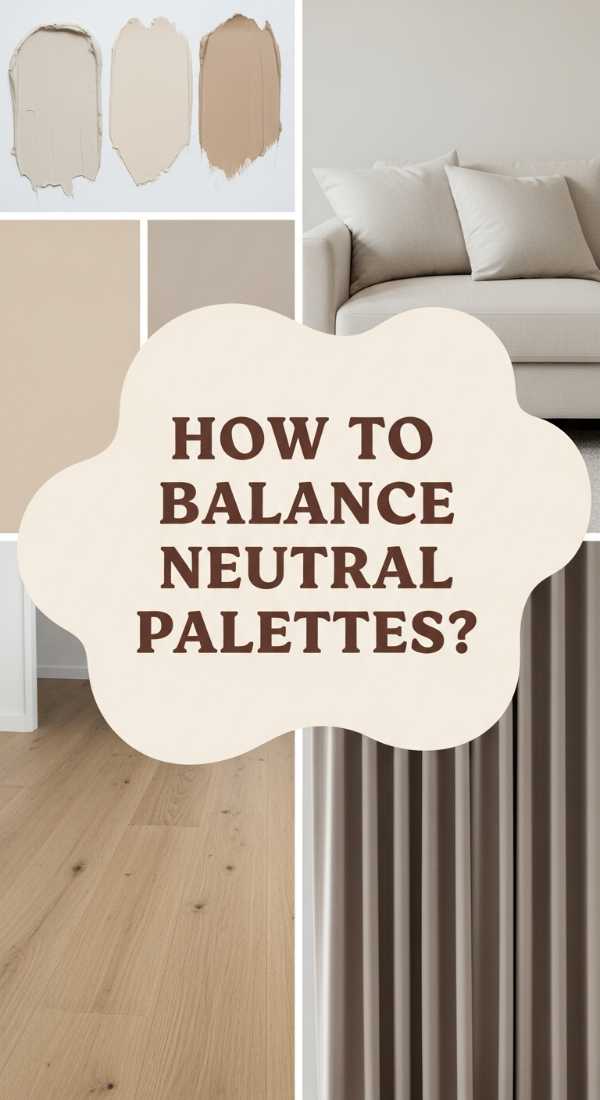
Why we love this
A perfectly balanced neutral palette is anything but boring; it is the visual equivalent of a deep exhale. We love this because it relies on the subtle interplay of undertones—the warmth of a creamy beige against the cool crispness of a soft grey. It’s a sophisticated dance of ‘greige,’ ‘sand,’ and ‘oatmeal’ that creates a timeless backdrop for your life. When the colors are in harmony, the room feels cohesive and calm, allowing the people and the moments within it to be the true vibrant colors of the home.
Essential Elements:
- A mix of warm and cool neutrals.
- Natural wood tones (oak, maple).
- Black accents for ‘grounding.’
- Tonal layering (different shades of the same color).
- Matte and satin finishes.
How to make it
- Pick your ‘Primary Neutral.’ This is usually your wall color (e.g., a warm white). This should make up about 60% of the room.
- Layer ‘Secondary Tones.’ Choose two or three shades that are slightly darker or lighter than your primary color (e.g., oatmeal and mushroom). Use these for larger furniture pieces and curtains.
- Add the ‘Black Anchor.’ Every neutral room needs a ‘punctuation mark.’ Use a thin black lamp base, a black picture frame, or a black metal chair leg. This prevents the room from looking ‘washed out’ or floating.
- Use ‘Natural Warmth.’ Incorporate light-toned wood. The organic grain of wood counts as a neutral but adds a necessary ‘living’ warmth that paint cannot provide. The visual cue is a space that feels earthy rather than plastic.
How to Bring Nature Indoors for an Organic Minimalist Feel
Why we love this
Bringing nature indoors is the literal ‘soul’ of organic minimalism. We love this because plants and natural materials provide a type of visual complexity that looks clean rather than cluttered. There is a primal comfort in seeing the vibrant green of a leaf or the rugged texture of a stone bowl. It connects us to the outside world, purifying the air and grounding our energy. Nature doesn’t follow strict lines, so it softens the hard edges of minimalist furniture, making the home feel more ‘alive’ and less like a showroom.
Essential Elements:
- Large, sculptural indoor plants (Fiddle Leaf Fig, Olive Tree).
- Terracotta or stone planters.
- Dried botanical stems (pampas grass, eucalyptus).
- Woven seagrass or jute baskets.
- Raw wood surfaces.
How to make it
- Choose ‘Statement Greenery.’ Rather than ten small succulents, opt for one large, floor-standing plant like an Olive Tree. Its sculptural branches act as a piece of living art.
- Use ‘The Grouping Technique.’ If you have smaller plants, cluster them in groups of three on a tray. This makes them look like a single intentional design element rather than scattered clutter.
- Introduce ‘Earth Textures.’ Swap plastic pots for breathable materials like terracotta, concrete, or stone. The matte, porous surfaces add to the organic aesthetic.
- Focus on ‘Lines.’ Arrange dried branches in a tall, narrow vase. Look for branches with interesting ‘movement’ or bends. The visual cue is a sense of effortless, wild beauty captured in a clean environment.
How to Simplify Bedside Styling for a Dreamy Sleep Space
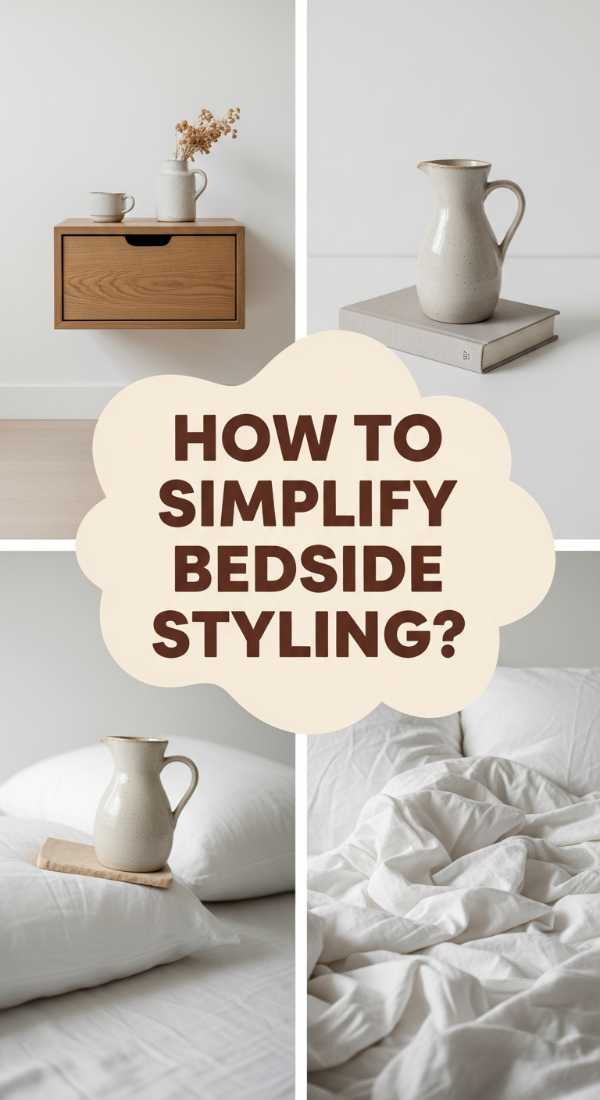
Why we love this
The bedside table is often the first thing we see in the morning and the last thing we see at night. We love a simplified bedside because it promotes ‘sleep hygiene’—clearing the mental clutter before you even close your eyes. Imagine a surface that holds only a glass of water, a single book, and a soft lamp. No charging cables, no half-finished snacks, no stacks of mail. It’s a dedicated zone for rest that signals to your brain that the day is done and it’s safe to let go.
Essential Elements:
- A tray to corral small items.
- A warm-glow reading lamp.
- One meaningful decorative object.
- Hidden cable management.
- A single book or journal.
How to make it
- Perform a ‘Nightstand Detox.’ Remove everything from the top. If it’s not a lamp, a book, or water, it goes in a drawer or another room.
- Apply the ‘Tray Method.’ Use a small wooden or ceramic tray to hold your glasses or a watch. Coralling items onto a tray makes them look like a ‘collection’ rather than ‘mess.’
- Hide the Tech. Route charging cables behind the nightstand using adhesive clips. Never leave a phone charging face-up on the surface; the light is a sleep disruptor.
- Choose ‘Functional Beauty.’ Instead of a plastic water bottle, use a beautiful glass carafe and tumbler. The visual cue is ‘spa-like serenity’—everything you need is within reach, but it looks curated and calm.
How to Design a Calm Reading Nook for Personal Relaxation

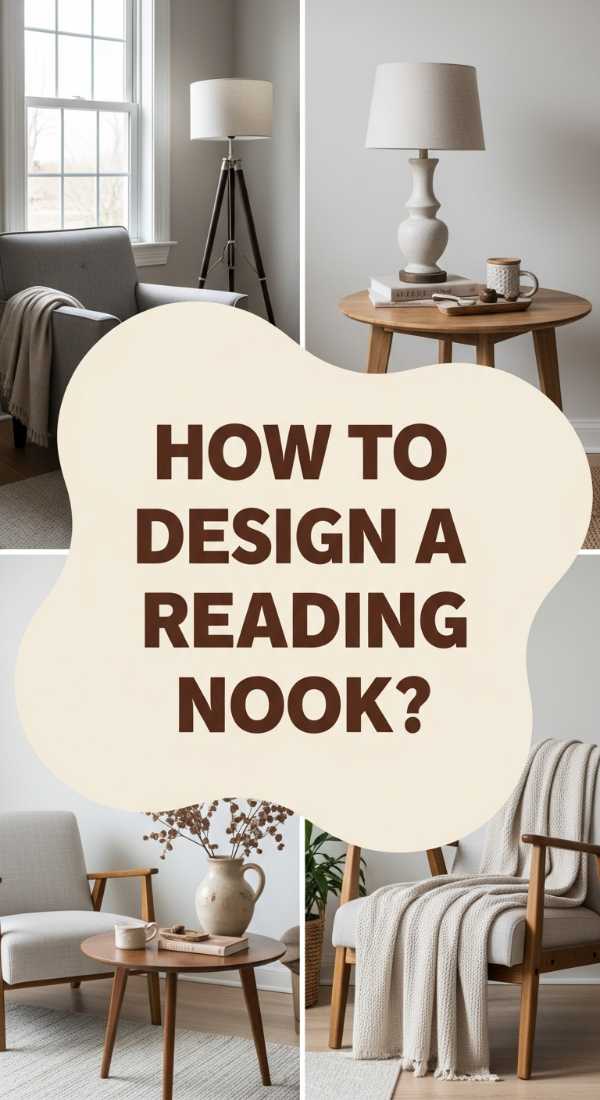
Why we love this
Every home needs a dedicated ‘escape’ zone. We love the reading nook because it is a physical manifestation of self-care. It’s a tiny corner of the world where time slows down. In a cozy minimalist home, this nook isn’t filled with dozens of pillows you have to move; it’s one perfect chair, one soft light, and one thick blanket. It’s the ultimate expression of ‘quality over quantity,’ where the environment is so supportive that you can fully disappear into the pages of a story.
Essential Elements:
- A comfortable, high-quality armchair.
- An adjustable floor lamp.
- A small side table for tea.
- A soft, high-pile rug (to define the space).
- A single, oversized throw pillow.
How to make it
- Carve out a ‘Corner.’ Find a spot away from the TV or the kitchen. Even a 3×3 foot space will work.
- Select the ‘Anchor Chair.’ Choose a chair with a deep seat and supportive back. The technique here is ‘Visual Weight’—choose a chair in a neutral tone so it feels light in the room but has a sturdy presence.
- Focus on ‘Task Lighting.’ Position a floor lamp so the light falls directly over your shoulder onto your lap. Avoid lighting the whole corner; you want a ‘pool’ of light that creates an intimate cocoon.
- Add the ‘Comfort Layer.’ Place a small rug under the chair to separate your feet from the ‘rest of the house.’ Drape a single high-quality cashmere or wool throw over the back. The visual cue is a ‘destination’ within your own home.
How to Add Warmth to Minimalist Living Rooms for Winter
[IMAGE_10]
Why we love this
Winter demands a shift in our minimalism. We love this seasonal transition because it allows us to ‘layer up’ our homes just like we layer our clothing. It’s about introducing deeper textures and richer scents to combat the chill outside. It’s the magic of ‘Visual Warmth’—using materials that look heavy and warm, like faux fur or deep woods, to make a minimalist room feel cozy and protective. It’s minimalism that adapts to the rhythm of the seasons without losing its clean, intentional soul.
Essential Elements:
- Faux-fur or heavy wool rugs.
- Deep-scented candles (cedar, amber, pine).
- Heavier weight drapes.
- Warm-toned metallic accents (brass or copper).
- Stacked firewood (even if decorative).
How to make it
- Switch the ‘Textile Weight.’ Swap your light summer linens for heavy wool or faux-fur throws. The visual cue is ‘Volume’—the room should look slightly more ‘padded’ and soft around the edges.
- Introduce ‘Warm Metals.’ Add a brass tray or a copper candle holder. These metals reflect the warm light of your lamps and add a ‘fire-like’ glow to the room’s surfaces.
- Update the ‘Scent Profile.’ Shift from fresh/citrus scents to earthy/woody scents. Use a candle with a wooden wick; the subtle ‘crackle’ adds an auditory layer of warmth.
- Layer the Floor. Place a smaller, high-pile sheepskin rug on top of your existing jute or cotton rug. This ‘Double Rug’ technique adds instant insulation and a luxurious, cozy feel underfoot.
Conclusion
Cozy minimalism isn’t a destination; it’s a practice of mindfulness. By focusing on quality, texture, and light, you transform your home from a place where you store your belongings into a place where you truly live. Remember, the goal is not to have the ‘perfect’ home, but to have a home that perfectly supports your well-being. Start small—clear one surface, light one candle, and feel the difference that simplicity can make.