
10 Landscaping Secrets for a Magical Outdoor Oasis
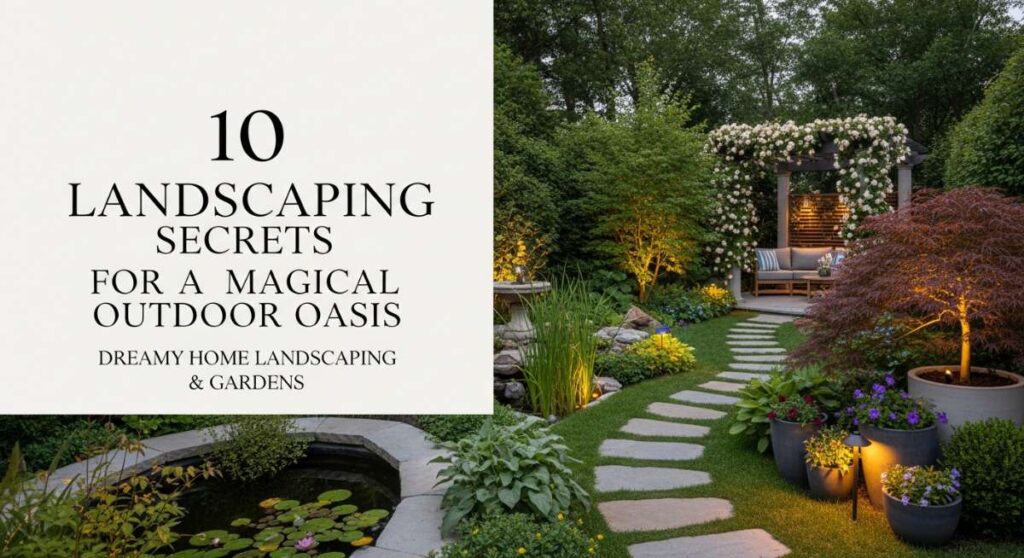
There is something truly transformative about pulling into your driveway after a long day and feeling the immediate embrace of a garden that breathes life into your soul. For me, landscaping has never just been about curb appeal or property value; it is about creating a living, breathing extension of our homes where memories are rooted and peace is cultivated. Whether you are sipping your morning coffee amidst the chirping birds or watching the golden hour light filter through a canopy of leaves, a well-designed garden is a sanctuary for the heart.
I remember the first time I planted a handful of lavender seeds near my front porch—the way the scent greeted me every evening felt like a warm hug from the earth itself. That small change sparked a passion for outdoor design that I am so excited to share with you today. From the hidden corners of your side yard to the dramatic slopes of a hillside, every inch of your outdoor space holds the potential for magic. Let’s dive into the secrets that will turn your yard into the dreamy oasis you’ve always imagined.
How to Master Front Yard Landscaping for Instant Curb Appeal
Why we love this
This approach is all about the ‘wow’ factor that makes your home stand out in the neighborhood while still feeling inviting. We love the way structured boxwoods contrast with the soft, ethereal textures of blooming hydrangeas, creating a visual balance that feels both sophisticated and lived-in. The aroma of fresh mulch mixed with the sweet scent of seasonal flowers creates an immediate sensory transition from the bustle of the street to the serenity of your front door. It’s about creating a narrative of elegance that begins the moment someone catches a glimpse of your property.
Essential Elements:
- Evergreen foundation shrubs (like Boxwood or Yew)
- Layered perennial flowers for seasonal color
- Professional-grade landscape edging
- Fresh dark hardwood mulch
- Solar-powered path lighting
- A focal point tree (like a Japanese Maple or Dogwood)
How to make it
- Start by defining your garden beds using a garden hose to map out soft, organic curves rather than rigid straight lines; this creates a more natural flow.
- Remove all grass and weeds within the marked area, ensuring you dig at least 3 inches deep to clear out root systems.
- Install your large ‘anchor’ plants first, such as evergreen shrubs, placing them about 2-3 feet away from the house foundation to allow for air circulation and growth.
- Layer in mid-sized perennials, ensuring you space them according to their mature width so they don’t crowd each other out in two years.
- Apply a 3-inch layer of organic mulch across the entire bed, keeping it a few inches away from the base of plant stems to prevent rot.
- Finish by installing low-voltage or solar lighting along the walkway, angling the lights slightly downward to prevent glare while illuminating the path safely.
How to Create a Front Yard Garden Design for a Whimsical Entrance
Why we love this
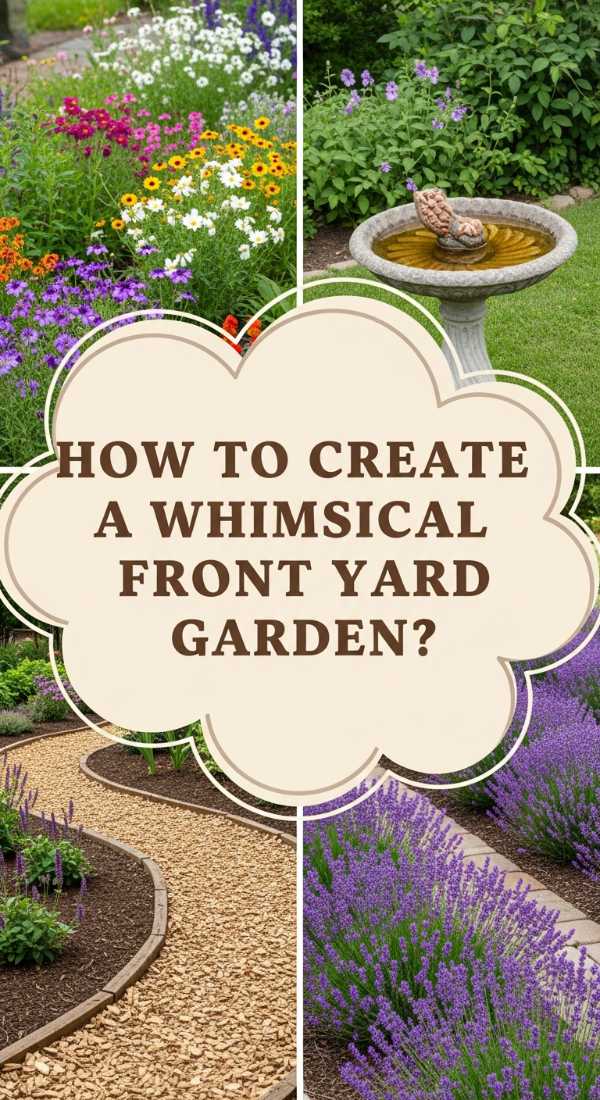
There is a profound sense of playfulness and romance in a whimsical entrance that feels like a scene from a storybook. We adore the way overflowing wildflowers and climbing roses soften the hard lines of a home, inviting butterflies and bees to dance across your walkway. The texture of crunchy gravel underfoot combined with the visual delight of varying heights and ‘planned chaos’ makes every trip to the mailbox feel like a tiny adventure. It is a style that celebrates nature’s wild beauty while providing a charming, personal touch to your home’s exterior.
Essential Elements:
- Climbing vines (like Clematis or Honeysuckle)
- Rustic wooden or metal trellis
- A mix of cottage garden favorites (Peonies, Foxgloves, Delphiniums)
- Flagstone or pea gravel pathway
- Decorative birdbath or sundial
- Vintage-inspired garden gate
How to make it
- Install a sturdy trellis or arbor over your primary walkway or flanking the front door to provide vertical interest and support for climbers.
- Plant your climbing vines at the base of the structure, gently weaving the young tendrils into the lattice using soft garden twine to encourage upward growth.
- Prepare the soil with plenty of organic compost to support the heavy feeding needs of flowering perennials.
- Plant your tallest flowers (like Foxgloves) in the back and graduate down to low-growing groundcovers like Creeping Thyme near the path edges.
- Lay your pathway material—if using flagstone, nestle the stones into the soil so they are flush with the ground to prevent tripping.
- Scatter ‘filler’ seeds like Alyssum or Nigella in the gaps to create that lush, overgrown look that characterizes whimsical designs.
How to Plan Backyard Landscaping Designs for a Private Sanctuary
Why we love this
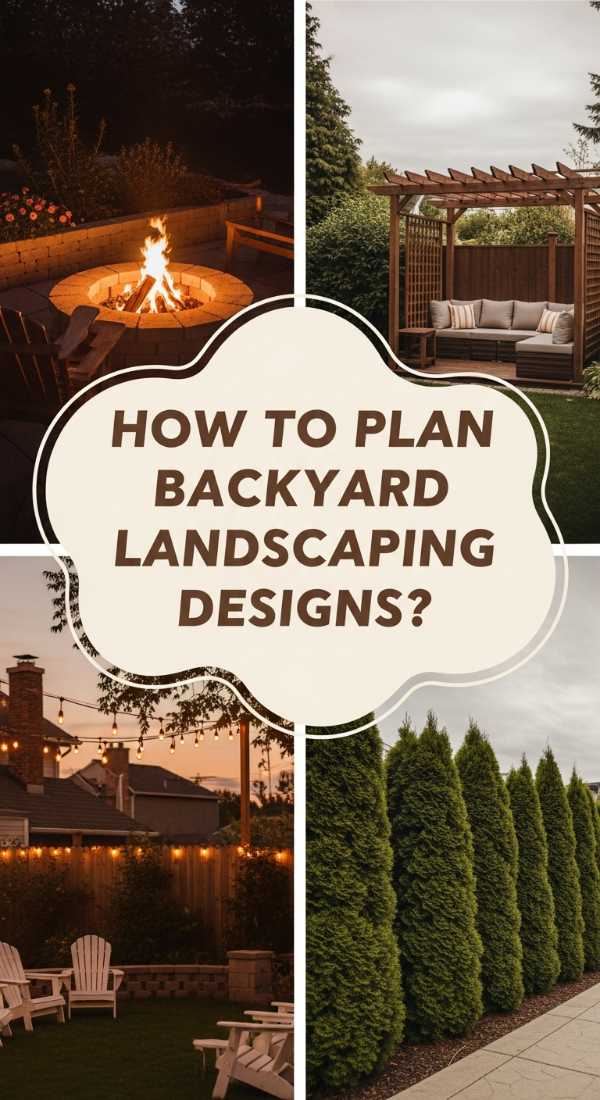
The backyard should be your ultimate retreat—a place where the world fades away behind a wall of green. We love this design for its ability to create ‘outdoor rooms’ that feel intimate and protected, utilizing tall hedges and soft rustling grasses to dampen neighborhood noise. The scent of damp earth and the cool shade of a well-placed pergola create a microclimate of relaxation that is perfect for summer reading or evening cocktails. It’s the feeling of being on vacation without ever leaving your zip code, focusing on deep greens and tranquil textures.
Essential Elements:
- Privacy hedging (like Arborvitae or Privet)
- Comfortable outdoor seating area
- A focal water feature (fountain or small pond)
- Ambient string lighting or lanterns
- Natural stone patio or wooden deck
- Potted ornamental grasses
How to make it
- Determine your privacy needs by sitting in your intended lounge area and identifying sightlines from neighbor’s windows or the street.
- Plant a perimeter of fast-growing evergreens, spacing them so they will touch at maturity to create a solid green wall.
- Clear a level area for your ‘floor’—whether that’s excavating for a stone patio or leveling the ground for a deck frame.
- Position your water feature in a spot where the sound of trickling water can be heard from the seating area but isn’t overwhelming for conversation.
- Arrange high-quality outdoor furniture in a conversational circle, adding an outdoor rug to define the ‘living room’ space.
- String Edison-style lights overhead, ensuring they are rated for outdoor use and securely fastened to posts or the house.
How to Achieve Simple Landscaping Front Yard for Effortless Elegance
Why we love this
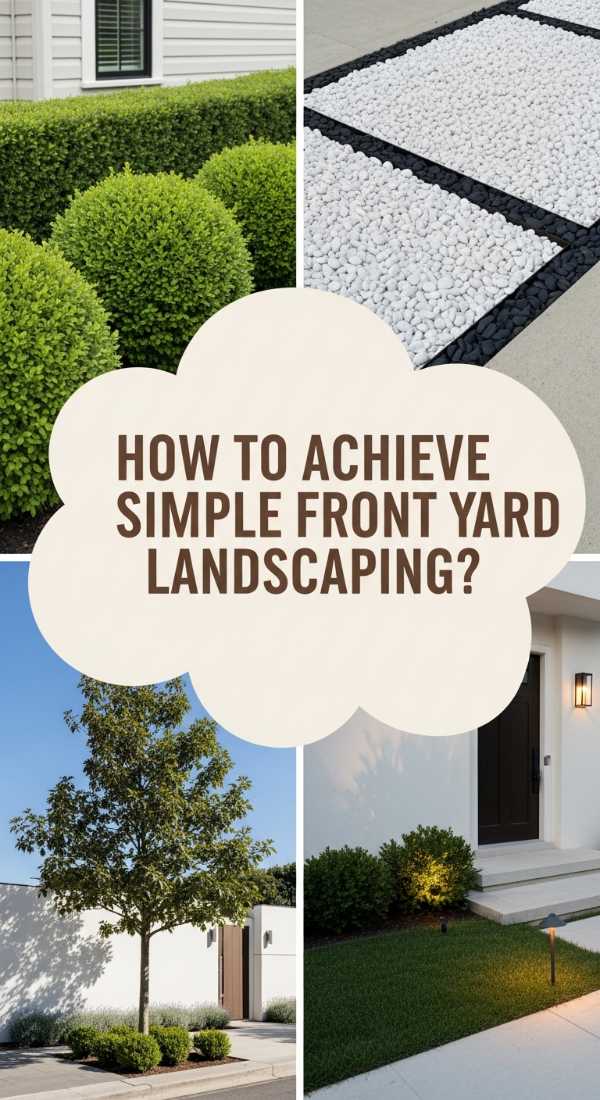
Sometimes, the loudest statement is made with the quietest design. We love simple landscaping because it emphasizes clean lines, high-quality materials, and a curated selection of plants that don’t compete for attention. The visual clarity of a perfectly manicured lawn paired with a few architectural plants like Agave or ornamental grasses creates a modern, sophisticated vibe that is incredibly soothing to look at. It feels expensive and intentional, focusing on the quality of the composition rather than the quantity of the plants, making the architecture of the house the star.
Essential Elements:
- Minimalist plant palette (3-4 species max)
- Geometric garden beds
- High-contrast materials (black mulch vs. white stone)
- Clean-edged lawn
- Modern house numbers and mailbox
- Uniform planters
How to make it
- Strip back existing cluttered beds and focus on a geometric layout, using straight lines or perfect semicircles.
- Select a ‘hero’ plant for each bed—something with a strong shape, like a neatly trimmed topiary or a large architectural grass.
- Use a metal or heavy-duty plastic edging to create a sharp, permanent line between the lawn and the garden beds.
- Fill the beds with a single type of groundcover or a uniform layer of decorative stone for a sleek, monochromatic look.
- Place a pair of identical, high-quality planters on either side of the front door to create symmetry and height.
- Keep the lawn meticulously mowed and edged, as the simplicity of the design relies on the perfection of the maintenance.
How to Transform Side Yard Landscaping for a Lush Secret Passage
Why we love this
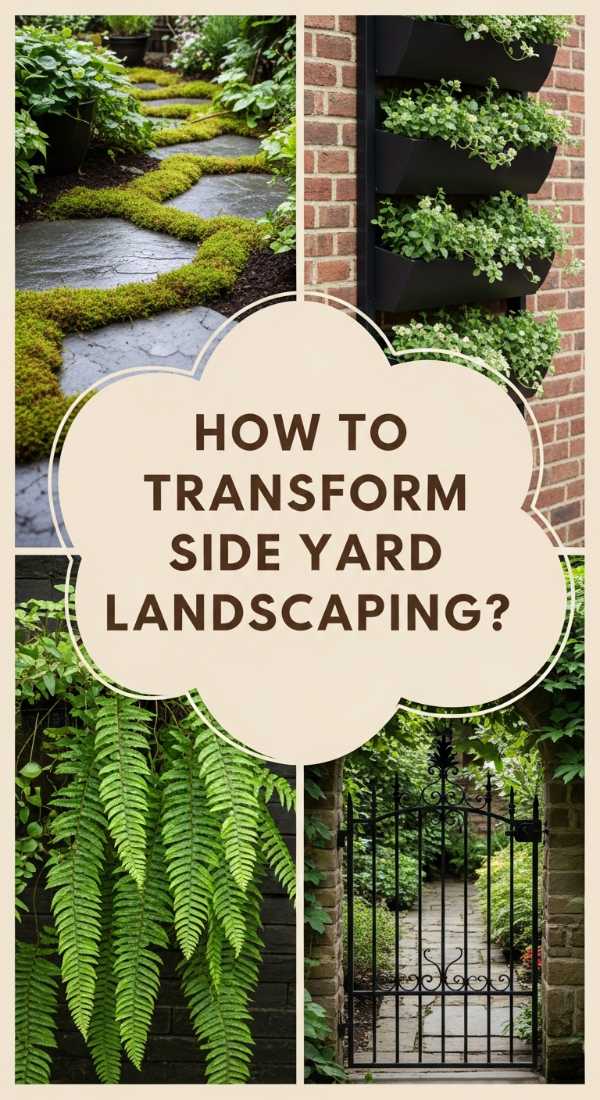
The side yard is often the most neglected part of a property, but it has the potential to be the most magical. We love turning these narrow strips into ‘secret passages’ filled with shade-loving ferns, soft mosses, and hidden textures that delight the senses. The cool, damp environment of a side yard often allows for a different palette of plants that feel lush and forest-like, providing a refreshing transition from the front to the back of the house. It’s a small-scale transformation that adds immense depth and discovery to your overall garden layout.
Essential Elements:
- Shade-tolerant plants (Hostas, Ferns, Heuchera)
- Step-stone pathway
- Vertical garden elements or wall-mounted planters
- Light-colored gravel to brighten the space
- A small trellis for shade-climbing vines
- Subtle low-level lighting
How to make it
- Assess the light levels; most side yards are heavily shaded, so choose plants specifically labeled for ‘Full Shade’ or ‘Part Shade.’
- Install a path of large stepping stones, spacing them about 18-24 inches from center to center to match a natural walking gait.
- Fill the spaces between stones with a light-colored gravel or a shade-tolerant groundcover like Irish Moss to prevent mud.
- Plant Hostas and Ferns in groups of three or five along the house and fence lines to create a layered, woodland effect.
- Install wall-mounted planters on the fence or house wall to utilize vertical space and draw the eye upward.
- Add small, warm-toned LED ‘puck’ lights under the foliage to illuminate the path at night without being intrusive.
How to Style Modern Backyard Landscaping for Sophisticated Outdoor Living
Why we love this
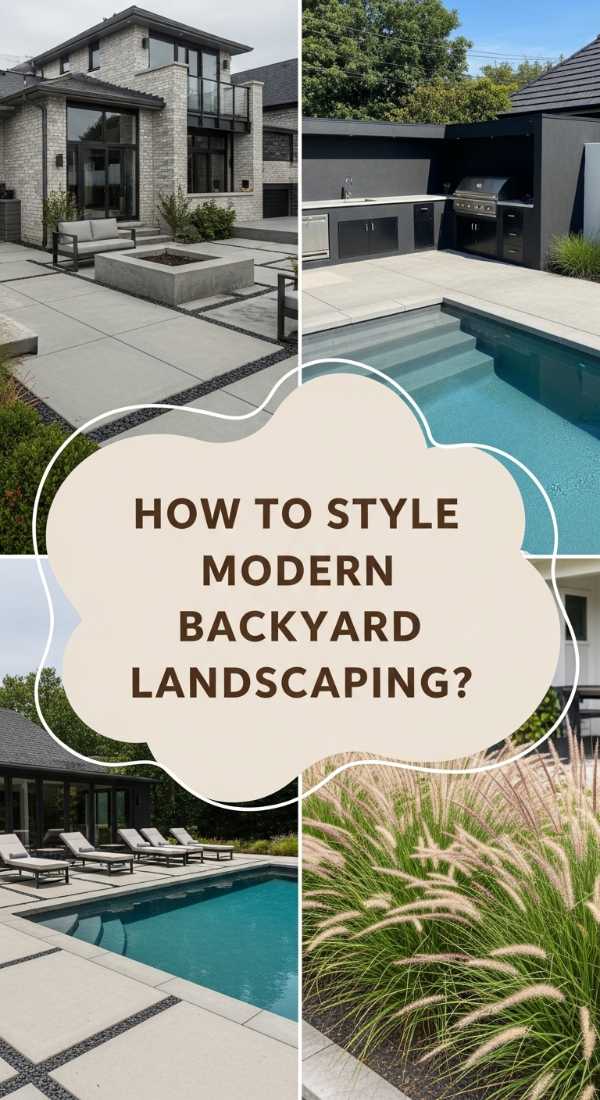
Modern backyard design is where luxury meets functionality. We love the use of ‘hardscaping’—like concrete pavers, sleek wood decking, and built-in fire pits—to create a space that feels like a high-end lounge. The contrast between the rigid, manufactured lines of the patio and the organic movement of ornamental grasses creates a dynamic energy that is perfect for entertaining. The smell of a wood-burning fire or the glow of an integrated gas pit adds a layer of warmth that makes the space usable well into the autumn months, embodying a lifestyle of sophisticated comfort.
Essential Elements:
- Large-format concrete pavers
- Built-in seating or fire pit
- Black or dark gray gravel accents
- Architectural lighting (uplights on trees)
- Minimalist water feature
- Sleek, weather-resistant furniture
How to make it
- Design the layout using a grid system, aligning the edges of patios and beds with the architectural lines of your home.
- Excavate the patio area and lay a compacted gravel base followed by sand to ensure a perfectly level surface for large pavers.
- Install the pavers with wide gaps (2-4 inches) and fill those gaps with dark basalt gravel or a contrasting groundcover for a modern look.
- Build or install a central fire feature, ensuring it is at a safe distance from the house and overhanging trees.
- Incorporate ‘living walls’ or tall, slender planters to provide green accents without cluttering the floor space.
- Use professional uplighting to highlight the bark of a specimen tree or the texture of a stone wall, creating dramatic shadows after dark.
How to Maintain Low Maintenance Landscaping Front Yard for Busy Homeowners
Why we love this
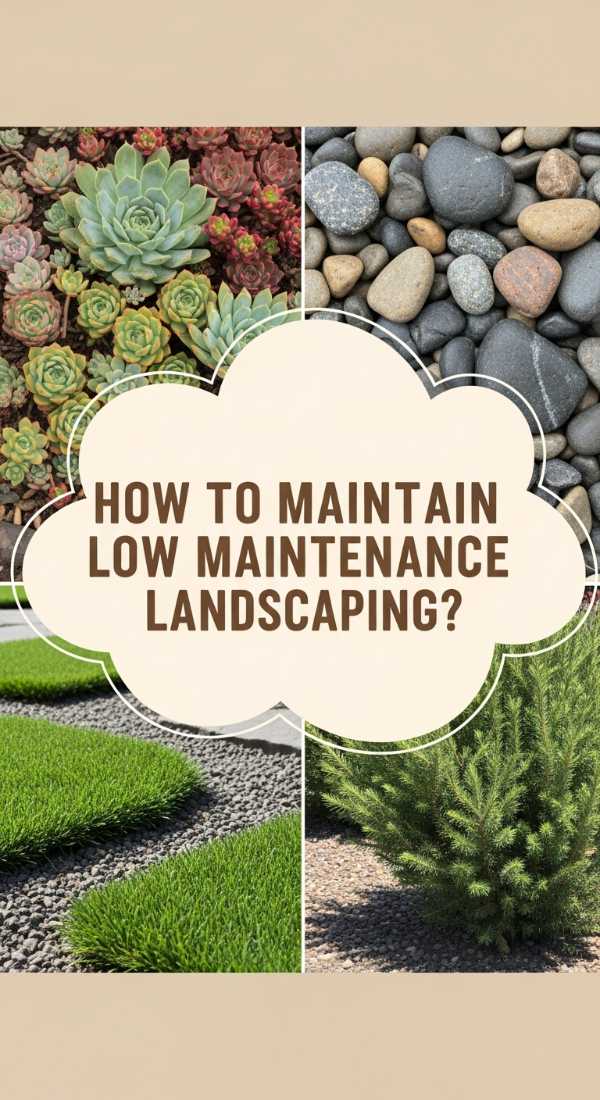
We love low-maintenance landscaping because it respects your time while still providing a beautiful environment. This design philosophy focuses on ‘right plant, right place,’ utilizing hardy perennials and shrubs that thrive with minimal intervention. There is a quiet beauty in the ruggedness of drought-tolerant succulents or the reliable bloom of a ‘Knock Out’ rose. It’s the perfect solution for the homeowner who wants to enjoy their garden on the weekends rather than spending every spare second weeding and pruning, offering a clean and stable look year-round.
Essential Elements:
- Drought-tolerant plants (Lavender, Sedum, Coneflower)
- High-quality landscape fabric (optional, but weed control is key)
- Deep mulching or rock mulch
- Slow-growing evergreen shrubs
- Automated drip irrigation system
- Native plant species
How to make it
- Select native plants that are naturally adapted to your local climate and soil, as they require significantly less water and fertilizer.
- Group plants with similar water needs together (hydro-zoning) to make irrigation more efficient.
- Install a simple drip irrigation system with a timer; this delivers water directly to the roots and reduces weed growth in unplanted areas.
- Apply a heavy 3-4 inch layer of wood chips or decorative stones to suppress weeds and retain soil moisture.
- Avoid ‘fussy’ plants that require deadheading or frequent pruning; stick to those that maintain a naturally tidy shape.
- Perform a ‘one-and-done’ spring cleanup to prune back old growth and refresh mulch, which should carry the garden through the season.
How to Cultivate a Front Yard Garden for Sustainable Beauty
Why we love this
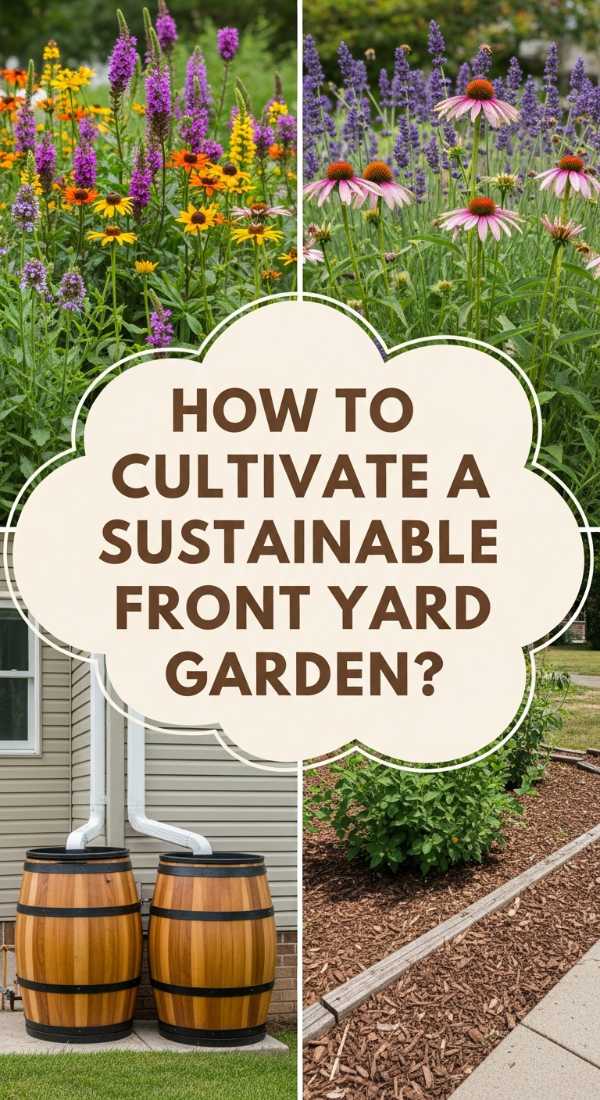
Sustainable gardening is a love letter to the planet. We love this approach because it turns a traditional lawn into a productive ecosystem that supports local pollinators and improves soil health. The sight of bees hovering over native milkweed and the vibrant colors of a meadow-style garden provide a soul-satisfying connection to nature. This style often has a soft, romantic texture with plenty of movement as the wind catches the long stems of wildflowers, offering a beauty that is both ecological and aesthetic.
Essential Elements:
- Native wildflower mix
- Rain garden components (deep-rooted plants for drainage)
- Compost-rich soil
- Bee hotels or butterfly houses
- Permeable paving materials
- Organic fertilizers only
How to make it
- Replace a portion of your lawn with a ‘no-mow’ wildflower meadow, starting by solarizing the grass (covering with plastic) to kill it without chemicals.
- Incorporate a rain garden in a low spot of the yard, using plants like Joe Pye Weed or Cardinal Flower that can handle ‘wet feet.’
- Use permeable materials for paths, like crushed oyster shells or porous pavers, to allow rainwater to soak back into the earth.
- Install a compost bin in a discreet corner to turn kitchen scraps into ‘black gold’ for your garden beds.
- Plant a variety of flowers that bloom at different times (spring, summer, fall) to provide a constant food source for pollinators.
- Label your plants with small, artistic signs to educate neighbors on the importance of native species and sustainable practices.
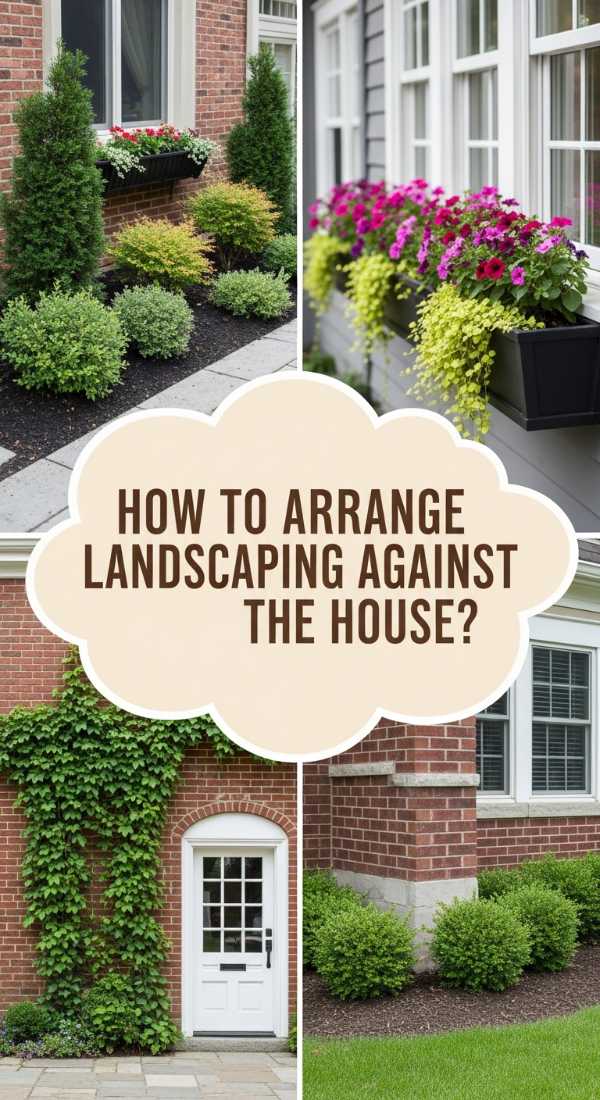
How to Arrange Landscaping Against House for a Seamless Look
Why we love this
The area where your home meets the ground is a critical design junction. We love ‘foundation planting’ because it anchors the house to the earth, making it feel established and grand. By layering heights and textures against the facade, you can hide unsightly foundations and create a lush frame for your architecture. The smell of jasmine climbing a porch pillar or the sight of soft ferns brushing against stone siding creates a tactile experience that makes the house feel like it grew right out of the garden. It is the key to a cohesive and professional-looking exterior.
Essential Elements:
- Layered heights (tall in back, short in front)
- Evergreens for winter structure
- Textural contrast (broad leaves vs. needles)
- Window boxes for added charm
- Climbing plants for vertical integration
- Root-safe distances from the foundation
How to make it
- Check your home’s foundation type and ensure you plant large shrubs at least 3-5 feet away to prevent root damage and allow for house maintenance.
- Start with ‘skeletal’ plants—tall evergreens at the corners of the house to soften the vertical edges of the building.
- Add a second layer of deciduous shrubs that provide changing colors through the seasons, like Spirea or Oakleaf Hydrangea.
- Plant low-growing perennials or annuals in the front-most row to add pops of color and hide the ‘legs’ of the larger shrubs.
- Install window boxes that echo the colors of your garden beds to pull the greenery up onto the facade of the house.
- Ensure the soil slopes slightly away from the house to maintain proper drainage and prevent water from pooling near the foundation.
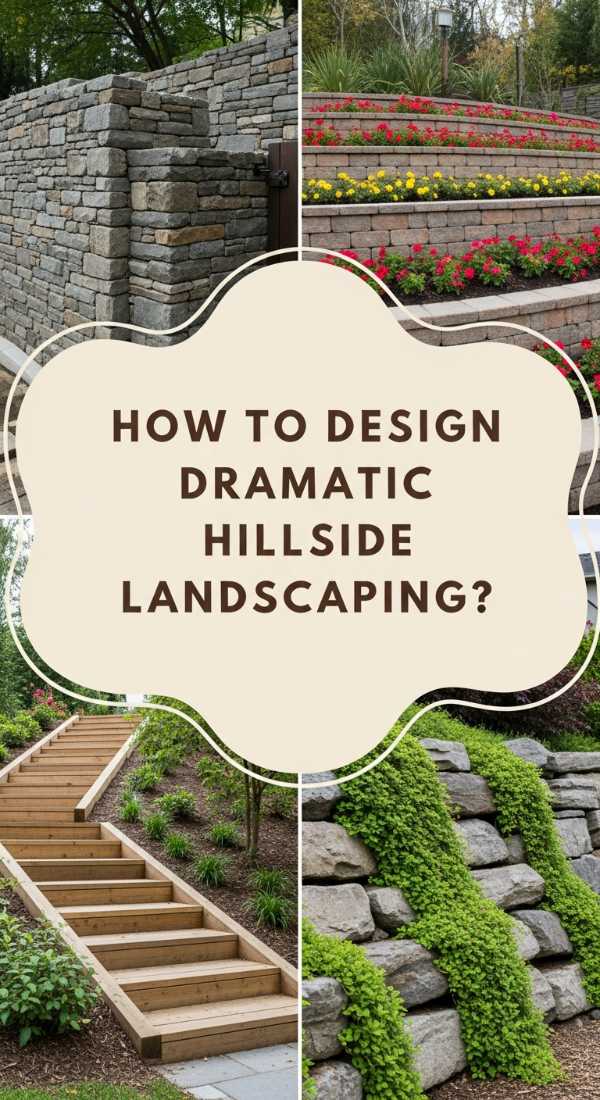
How to Design Hillside Landscaping for a Dramatic Sloped View
[IMAGE_10]
Why we love this
While slopes can be a challenge, they offer the most dramatic opportunities for landscaping. We love hillside designs for their verticality and the way they allow for cascading plants that look like floral waterfalls. The sound of water tumbling down a rocky stream or the sight of stone terraces creates a sense of scale and grandeur that flat yards simply can’t match. It’s about conquering the terrain and turning a ‘problem area’ into a breathtaking focal point that offers different views from every level.
Essential Elements:
- Retaining walls (stone, timber, or concrete)
- Erosion-control plants (Creeping Juniper, Vinca)
- Stone stairs or winding paths
- Tiered garden beds
- Built-in drainage systems
- Hardy groundcovers
How to make it
- Assess the steepness; for very steep slopes, you may need a professional to design retaining walls that ensure soil stability.
- Create ‘tiers’ or terraces using natural stone or heavy timbers to create flat planting pockets, which prevents water runoff and erosion.
- Install a series of stone steps to make the slope accessible, ensuring each step has a slight pitch forward for drainage.
- Plant heavy-rooted groundcovers and shrubs that are known for erosion control to knit the soil together.
- Incorporate cascading plants at the edges of the walls, like Creeping Phlox or ‘Silver Falls’ Dichondra, to soften the hard stone lines.
- Place larger boulders throughout the slope to mimic a natural rock outcropping and provide structural support for the soil.
Conclusion: Your Garden, Your Masterpiece
Transforming your outdoor space is one of the most rewarding journeys you can take as a homeowner. Whether you choose the sleek lines of modern design or the wild charm of a whimsical garden, remember that a garden is never truly ‘finished’—it is a living entity that grows and changes with you. Start small, focus on the details that make you happy, and don’t be afraid to get your hands a little dirty. Your magical outdoor oasis is waiting to bloom.