
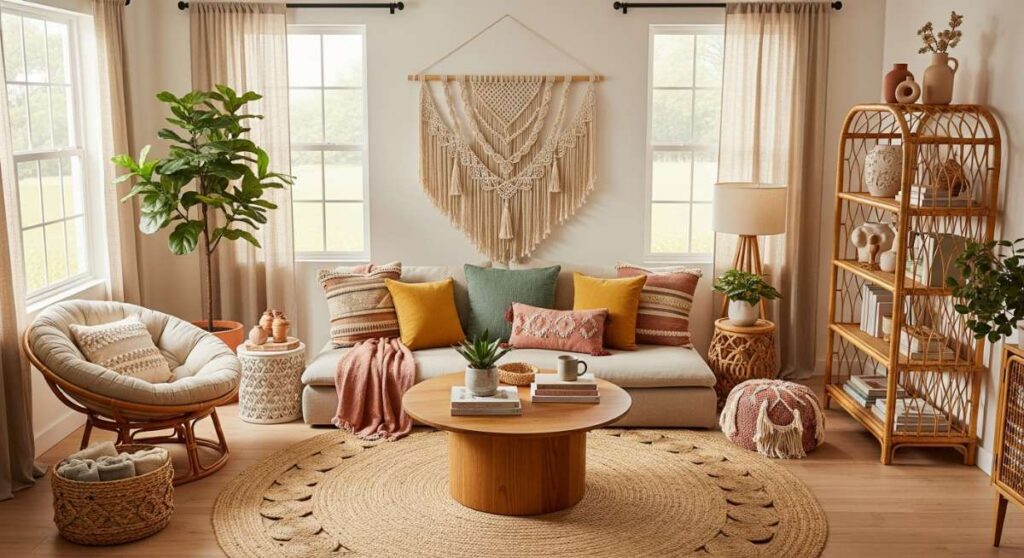
Have you ever walked into a room and felt like you were being embraced by a warm, familiar story? There is a certain magic in the eclectic—a soulful resonance that comes from mixing the old with the new, the polished with the raw, and the intentional with the serendipitous. Designing a bohemian retreat isn’t just about following a trend; it’s about creating a sanctuary that mirrors your inner landscape, a place where every fringe, fabric, and flower has a purpose and a memory. It’s about breathing life into your four walls until they hum with the vibrant energy of a life well-lived.
For years, I searched for the ‘perfect’ aesthetic, only to realize that perfection was the very thing keeping my home from feeling alive. The true heart of bohemian design lies in the imperfections—the slightly frayed edges of a hand-woven rug, the patina on a vintage brass mirror, and the way light dances across a room filled with mismatched treasures. In this guide, we are going to dive deep into the art of the eclectic, exploring how to curate a space that feels curated yet effortless, luxurious yet grounded. Let’s transform your home into a dreamy, bohemian sanctuary that nourishes your spirit every single day.
How to Style a Dreamy Bohemian Bed for Restful Sleep

Why we love this
There is nothing quite like sinking into a bed that feels like a soft, tactile cloud at the end of a long day. The bohemian bed is the ultimate centerpiece of relaxation, characterized by its rich layers of breathable linen, chunky knit throws, and an abundance of pillows that invite you to lounge. It’s about the sensory experience of cool, stonewashed fabric against your skin and the earthy, calming scent of a nearby eucalyptus spray. When styled correctly, your bed becomes more than just a place to sleep—it becomes a cocoon of serenity where the outside world simply melts away into the shadows.
Essential Elements:
- High-quality stonewashed linen sheets in earthy tones
- A heavy, oversized duvet with a textured cover
- A chunky knit or tasseled throw blanket
- A mix of sleeping pillows, shams, and decorative lumbar pillows
- A wooden or rattan headboard
- Dried lavender or a linen mist
How to make it
- Begin by stripping the bed and airing out the mattress for at least thirty minutes to ensure a fresh base. Apply a base layer of high-thread-count cotton or linen fitted sheets, ensuring the corners are tight and the surface is smooth.
- Lay the flat sheet upside down so that when you fold the top edge over the duvet, the decorative side or hem is visible. Use a hospital-corner fold at the foot of the bed for a crisp, professional foundation that stays secure throughout the night.
- Position your duvet or comforter over the sheets. For that signature ‘boho loft,’ fold the top third of the duvet back toward the foot of the bed. This creates visual volume and exposes the different textures of your bedding layers.
- Arrange your pillows starting from the back: place two large European shams against the headboard, followed by your standard sleeping pillows, and finish with a curated selection of textured throw pillows. The ‘doneness’ is achieved when the pillows look abundant but not crowded.
- Drape a chunky knit throw diagonally across the bottom corner of the bed. Don’t fold it too neatly; the goal is an ‘effortless’ tumble that suggests you’ve just stepped out of a cozy nap. Finish with a light mist of lavender water to set the mood.
How to Design a Warm Bohemian Kitchen for Home Cooked Bliss
Why we love this
A bohemian kitchen is the heart of the home, vibrating with the warmth of simmering pots and the earthy aroma of fresh herbs drying on the windowsill. Unlike clinical, modern kitchens, the boho kitchen celebrates the beauty of utility, where wooden spoons are displayed like art and terra cotta pots hold the secrets of family recipes. It’s a space that feels lived-in and loved, where the tactile crunch of a salt cellar and the smooth glaze of a handmade ceramic mug turn the morning coffee ritual into a moment of pure, grounding bliss. It is a place where slow living is the only way to cook.
Essential Elements:
- Open shelving made of reclaimed wood
- A collection of mismatched ceramic mugs and plates
- Hanging copper or cast iron cookware
- Live herb garden in clay pots
- A vintage runner or jute rug
- Warm, amber-toned lighting
How to make it
- Clear your countertops of all non-essential plastic appliances to make room for ‘functional decor.’ The first phase of prep is identifying which items you use daily—like your French press or olive oil—and placing them in beautiful glass or ceramic vessels.
- Install open wooden shelving at eye level. When styling, group items by ‘visual weight.’ Place heavier ceramic bowls on the bottom shelves and lighter glassware or trailing plants like Pothos on the higher tiers to create a balanced, airy feel.
- Introduce ‘warmth levels’ by swapping out cool LED bulbs for warm-toned Edison bulbs. This mimics the golden hour glow and makes the wood grains and ceramic textures pop.
- Create a ‘coffee or tea station’ on a dedicated tray. Include a small jar of honey, a ceramic sugar bowl, and a linen napkin. This creates a focal point of hospitality and intentionality in the room.
- Incorporate greenery by placing potted herbs near the sink or window. The kitchen is ‘finished’ when the space smells of basil or rosemary and the surfaces are clear enough for prep but full enough to feel soulful.
How to Choose a Textured Bohemian Rug for Living Room Comfort
Why we love this
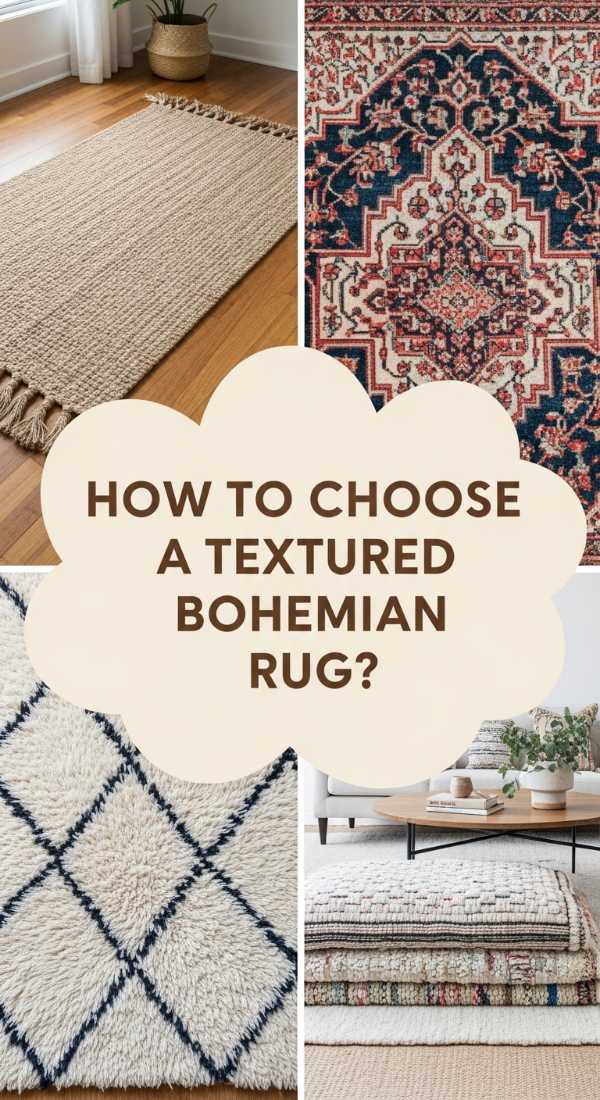
The rug is the soul of a bohemian living room, acting as the anchor that ties every disparate element together into a cohesive whole. We love the way a high-pile Moroccan rug feels beneath bare feet, offering a plush, rhythmic texture that softens the entire room’s energy. It’s not just about the visual pattern; it’s about the acoustic softening and the physical warmth it provides against a cold floor. A well-chosen rug invites you to sit on the floor, play a board game, or simply sprawl out with a book, making the entire room feel more accessible and human.
Essential Elements:
- A natural fiber base (jute or sisal)
- A secondary patterned rug (Persian or Moroccan style)
- Non-slip rug pad for safety and extra cushion
- Rug tape for edge securing
- A vacuum with adjustable height settings
How to make it
- Measure your seating area thoroughly; a common mistake is choosing a rug that is too small. For a professional look, ensure that at least the front two legs of all your furniture pieces are resting on the rug to ‘ground’ the seating arrangement.
- Start with a ‘base layer’ of a large, neutral jute rug. This provides a durable, organic foundation and adds a subtle, hay-like aroma that enhances the bohemian vibe.
- Layer a smaller, more vibrant or high-texture rug on top of the jute base. Center it under the coffee table. This ‘double layering’ technique adds depth and creates a luxurious, high-end designer look that is quintessentially boho.
- Check the ‘tension’ of the rugs. Use a rug pad between the floor and the base layer, and rug tape between the two rugs to prevent bunching or sliding, which can ruin the visual flow.
- Groom the rug by vacuuming against the grain to lift the fibers. The room is ‘done’ when the rug feels like a soft island that invites you to kick off your shoes and stay a while.
How to Arrange Aesthetic Bohemian Wall Decor for Artistic Expression

Why we love this
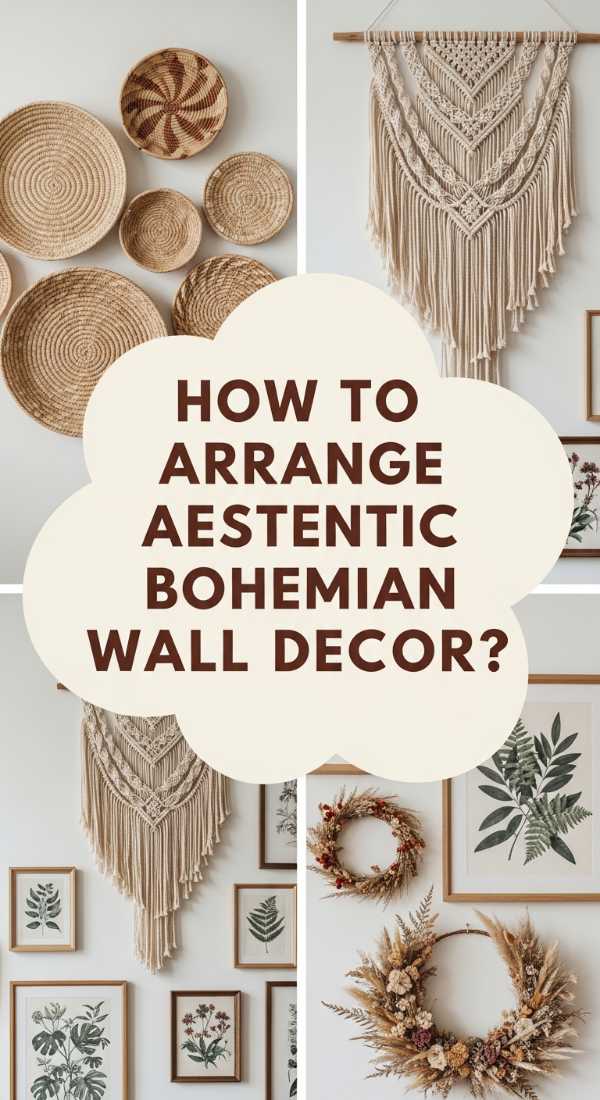
Walls in a bohemian home are a canvas for personal history, a curated gallery of where you’ve been and what you love. We adore the way a macramé hanging adds a soft, textile dimension to a flat surface, or how a collection of vintage botanical prints can bring the mystery of the forest indoors. There is a deep satisfaction in seeing your memories—from travel postcards to pressed flowers—displayed in a way that feels intentional yet wild. It’s an expressive, visual poetry that tells your story without saying a single word, turning a house into a home.
Essential Elements:
- Macramé or woven wall hangings
- A mix of vintage and modern frames
- Floating wooden shelves
- Dried flower bouquets or eucalyptus
- Command hooks or small nails
- A spirit level and measuring tape
How to make it
- Begin by gathering all your potential pieces on the floor in front of the wall you intend to decorate. This ‘dry run’ allows you to play with the composition without making unnecessary holes in the wall.
- Identify a ‘hero piece’—usually your largest or most vibrant item—and place it slightly off-center to create a dynamic, asymmetrical balance. This is the ‘heat’ of your gallery; everything else will radiate from here.
- Incorporate different textures to avoid a ‘flat’ look. If you have three framed photos, break them up with a soft textile hanging or a small wooden shelf holding a trailing plant. The visual cue for ‘doneness’ is a mix of hard and soft surfaces.
- Use a spirit level to ensure your frames are straight, but don’t be afraid to let your textile pieces hang naturally. The contrast between the rigid frames and the fluid fabric is the key to the bohemian aesthetic.
- Secure everything safely. For heavier items like mirrors or large shelves, ensure you are using the correct anchors for your wall type. The arrangement is complete when the wall feels full of life but still has ‘white space’ to breathe.
How to Position a Sunburst Bohemian Mirror for Maximum Natural Light
Why we love this
The sunburst mirror is the golden icon of bohemian decor, acting as a functional piece of art that captures and redistributes the sun’s rays. We love how it mimics the celestial energy of the sun, bringing a sense of warmth and radiance into even the darkest corners of a room. When positioned correctly, it doesn’t just show your reflection; it opens up the space, making the room feel twice as large and infinitely more airy. The way the light glints off the ‘rays’ of the mirror creates a dancing, rhythmic glow that changes throughout the day, following the natural cycle of the world outside.
Essential Elements:
- A brass or rattan sunburst mirror
- A wall across from or adjacent to a window
- Heavy-duty wall anchors
- Microfiber cloth and glass cleaner
- Measuring tape
How to make it
- Identify the primary source of natural light in your room. The goal is to ‘catch’ the light at its strongest point during the day, usually between 10 AM and 2 PM.
- Position the mirror on the wall directly opposite or at a 45-degree angle to the window. This allows the mirror to act as a ‘second window,’ bouncing the light into the center of the room.
- Check the ‘height level’ by ensuring the center of the mirror is at eye level (roughly 57 to 60 inches from the floor). This ensures it serves its functional purpose while also reflecting the most vibrant parts of the room.
- Install the mirror using a heavy-duty anchor. Sunburst mirrors, especially metal ones, can be surprisingly heavy. Safety is paramount to ensure the ‘doneness’ of the project remains permanent.
- Clean the glass thoroughly with a microfiber cloth. A dusty mirror scatters light inefficiently; a polished one creates a crisp, vibrant reflection that elevates the room’s overall ‘vibe’ instantly.
How to Pick a Cozy Bohemian Chair for Your Reading Nook
Why we love this
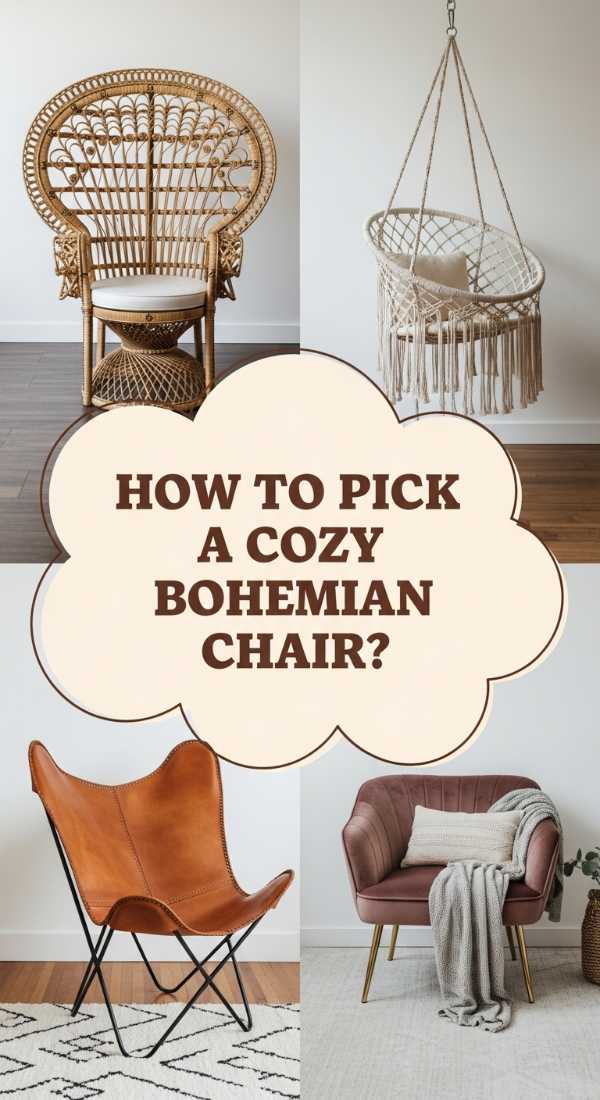
Every bohemian retreat needs a corner dedicated to the quiet art of reading and reflection, centered around a chair that feels like a warm embrace. We love a chair that has character—perhaps a vintage velvet armchair in a deep emerald or a swinging rattan egg chair that adds a playful, weightless element to the room. The reading nook is a sanctuary within a sanctuary, a place where the texture of the upholstery and the ergonomic curve of the backrest support your body while your mind wanders through the pages of a book. It’s the ultimate expression of slow, soulful living.
Essential Elements:
- A high-back armchair or rattan swing chair
- A soft sheepskin or faux-fur rug
- A small side table for tea or coffee
- A floor lamp with a warm bulb
- A soft, knitted throw pillow
How to make it
- Choose a corner of the room that is away from high-traffic areas. The first phase is ‘zoning’—using the chair to define a specific area for rest.
- Select a chair with ‘visual texture.’ If your walls are smooth, choose a chair with a rougher weave or tufted velvet. This creates a sensory contrast that is essential for the bohemian feel.
- Add a ‘comfort layer’ by draping a sheepskin rug over the seat. This provides immediate softness and an organic shape that breaks up the lines of the chair.
- Position a small side table within arm’s reach. The height of the table should be slightly lower than the arm of the chair for easy access to your drink or book without straining.
- Set the ‘lighting level’ by placing a floor lamp behind or beside the chair. Ensure the light falls over your shoulder onto your lap. The nook is ‘done’ when you sit down and feel an immediate sense of privacy and calm.
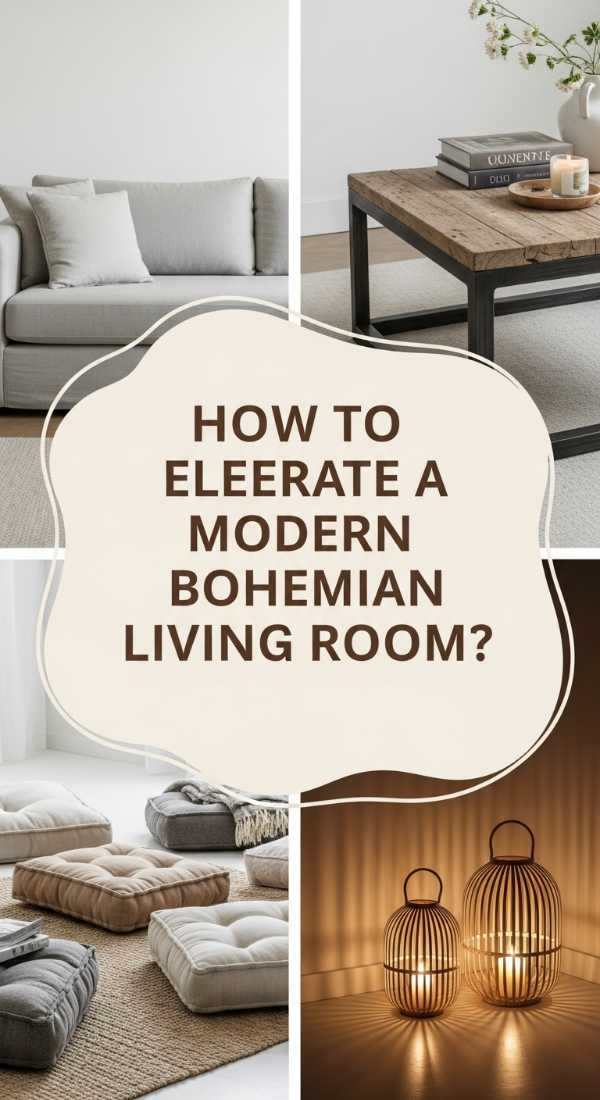
How to Elevate a Modern Bohemian Living Room for Ultimate Relaxation
Why we love this
The modern bohemian living room is a masterclass in balance, blending the clean lines of contemporary furniture with the wild, untamed spirit of eclectic decor. We love how this style allows for a sophisticated space that still feels approachable and deeply relaxing. It’s the combination of a sleek, mid-century sofa paired with a flurry of patterned textiles and a jungle of indoor plants. This aesthetic creates a ‘living’ environment that breathes, where the air feels fresh thanks to the greenery and the atmosphere feels expensive yet grounded. It is the perfect backdrop for both lively gatherings and quiet, meditative evenings.
Essential Elements:
- A neutral-colored modern sofa (grey, beige, or tan)
- Large-leaf plants (Monstera or Fiddle Leaf Fig)
- Woven baskets for storage and plant pots
- A collection of coffee table books
- Natural wood accents
How to make it
- Start with your ‘hero furniture’—the sofa. Position it away from the walls if space allows to create an ‘island’ of relaxation, which feels more modern and spacious.
- Introduce ‘vertical life’ by placing large potted plants in the corners of the room. Use woven baskets as decorative covers for plastic nursery pots to instantly ‘boho-fy’ the greenery.
- Layer your coffee table with ‘intentional clutter.’ Start with a stack of three large art books, add a ceramic tray, and finish with a small candle or a piece of driftwood. This creates a curated, lived-in ‘prep’ for the room.
- Integrate ‘natural heat’ by using wooden elements like a reclaimed wood coffee table or oak picture frames. The warmth of the wood balances the coolness of modern furniture.
- Assess the ‘visual flow.’ Walk through the room; if it feels too cluttered, remove one item. The room is ‘done’ when it feels both stylishly elevated and completely unpretentious.
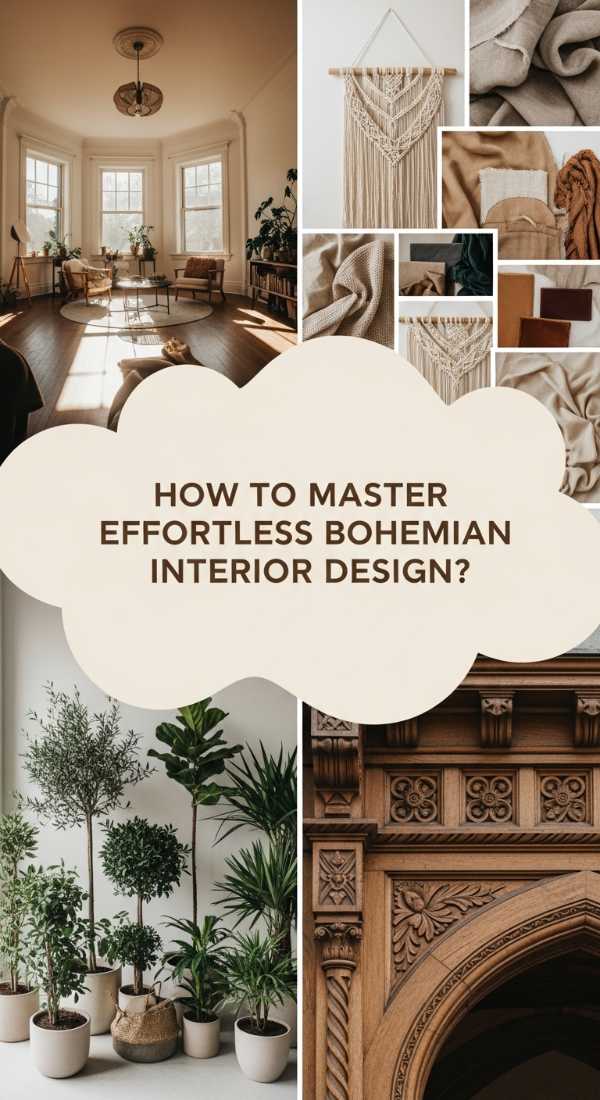
How to Master Effortless Bohemian Interior Design for a Serene Home
Why we love this
The secret to mastering the bohemian look is making it look like it wasn’t ‘designed’ at all, but rather ‘gathered’ over time. We love the effortless grace of a home that feels like it has a soul—where a hand-painted tile serves as a coaster and a vintage ladder holds your collection of heirloom quilts. This approach to design is incredibly forgiving and deeply personal; it’s about trusting your intuition over a catalog. When you master this, your home becomes a serene reflection of your journey, filled with items that spark joy and evoke memories, creating an environment of total emotional comfort.
Essential Elements:
- A consistent color palette of 3-5 earthy tones
- Personal mementos and travel finds
- Natural materials (wool, wood, stone, cotton)
- Soft, layered lighting
- Incense or essential oil diffuser
How to make it
- Establish your ‘color foundation.’ Even in an eclectic home, a common thread of color—like a specific shade of terracotta or sage—will prevent the space from feeling chaotic.
- Curate your ‘found objects.’ Phase one is gathering items from your life—stones from a favorite beach, a vintage bowl from a thrift store—and distributing them throughout the house as focal points.
- Focus on ‘tactile timing.’ Arrange your space so that you encounter different textures as you move through it: a soft rug in the entry, a smooth wooden banister, a velvet cushion on the bench.
- Control the ‘aroma level.’ Use an oil diffuser with earthy scents like sandalwood or palo santo. A bohemian home is a multi-sensory experience, and scent is the final ‘prep’ step.
- Practice ‘visual editing.’ Stand back and look for ‘hot spots’ where too many patterns are clashing. The design is ‘finished’ when the eye can move easily from one interesting detail to the next without feeling overwhelmed.
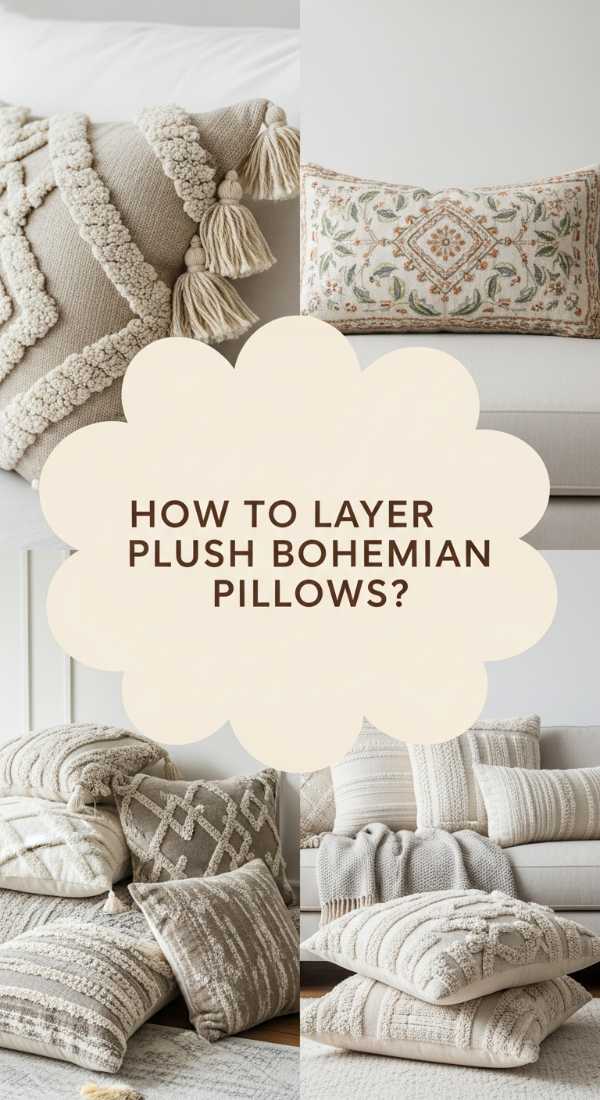
How to Layer Plush Bohemian Pillows for a Luxurious Sofa Look
Why we love this
Pillows are the ‘jewelry’ of the sofa, providing the final touch of luxury and comfort that invites you to dive into relaxation. We love the play of different shapes and sizes—the way a long lumbar pillow can anchor a group of square cushions, or how a round velvet pillow adds a soft, unexpected curve to a linear sofa. Layering pillows is an art form that allows you to experiment with patterns and colors without a permanent commitment. It turns a standard piece of furniture into a plush, multi-dimensional landscape of softness that you can’t help but sink into.
Essential Elements:
- 2 large base pillows (22×22 inches) in a solid color
- 2 medium patterned pillows (20×20 inches)
- 1-2 unique ‘accent’ pillows (round, tasseled, or lumbar)
- High-quality feather or down-alternative inserts
- Textile spray for a fresh scent
How to make it
- Choose inserts that are 2 inches larger than your pillow covers. This ‘pro tip’ ensures the pillows look plump and luxurious rather than limp and flat. This is the ‘prep phase’ for maximum volume.
- Place the two largest, solid-colored pillows at the far ends of the sofa, tucked into the corners. These act as the ‘foundation’ or ‘crust’ for your arrangement.
- Layer the medium patterned pillows slightly in front of and overlapping the base pillows. Angle them slightly inward toward the center of the sofa to create a ‘nesting’ effect.
- Add your ‘accent’ piece in the very center. A long lumbar pillow with heavy embroidery or tassels acts as the ‘cherry on top,’ drawing the eye and tying the colors together.
- Give each pillow a ‘karate chop’ in the center top to create a slight indentation. This ‘doneness’ cue is a classic designer trick that makes the pillows look lived-in yet expertly styled.
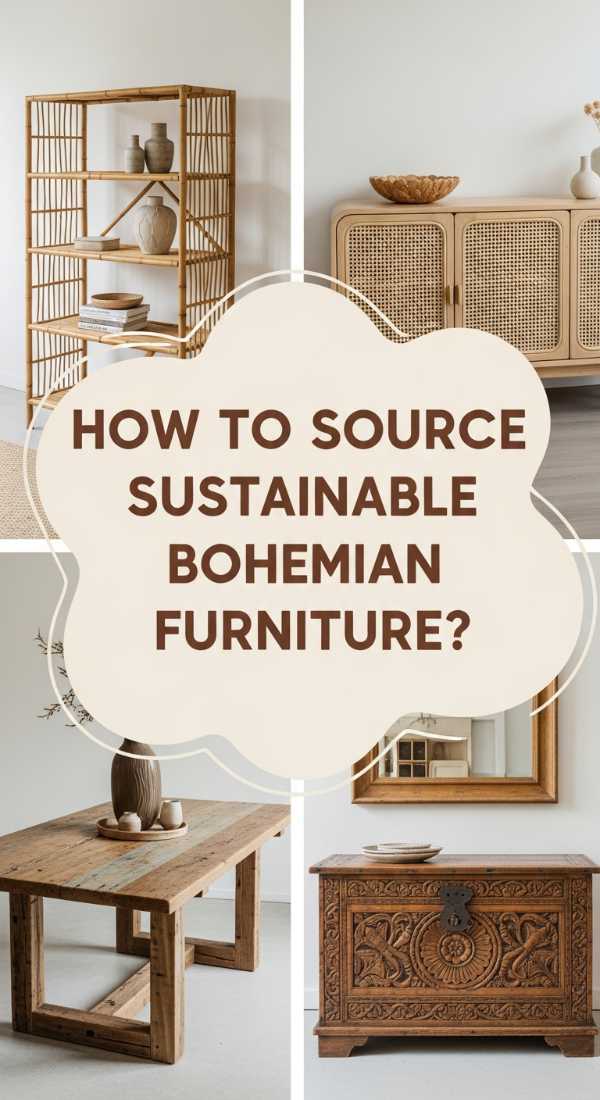
How to Source Sustainable Bohemian Furniture for an Eco Friendly Space
[IMAGE_10]
Why we love this
Bohemian design at its core is a celebration of the earth, making sustainability a natural partner to the aesthetic. We love the character found in reclaimed wood, the history in a vintage wicker chair, and the knowledge that our sanctuary isn’t costing the planet its health. Choosing sustainable furniture means opting for pieces that are built to last, made from renewable materials like bamboo or rattan, or rescued from a landfill and given a new life with a coat of low-VOC paint. It’s a way of designing with a conscience, ensuring your home is a retreat for both you and the environment.
Essential Elements:
- Second-hand or vintage furniture pieces
- Items made from FSC-certified wood
- Natural, non-toxic finishes and waxes
- Rattan, bamboo, or seagrass materials
- Upcycling tools (sandpaper, eco-friendly stain)
How to make it
- Start your search at local thrift stores, estate sales, or online vintage marketplaces. The first phase is ‘sourcing with intent’—looking for ‘good bones’ (solid wood frames) rather than perfect finishes.
- Evaluate the ‘material health.’ Avoid furniture made from pressed wood or MDF, which often contains formaldehyde. Stick to solid, natural materials that can be sanded and refinished.
- Refinish your finds using ‘eco-heat.’ Use a heat gun or soy-based stripper to remove old paint instead of harsh chemicals. This is safer for you and the air quality of your home.
- Apply a natural wax or hemp oil finish to raw wood. This protects the piece while allowing the natural grain to ‘breathe’ and show its unique character.
- Incorporate ‘living history’ by keeping the small scratches or dings that tell the furniture’s story. The piece is ‘ready’ when it feels sturdy, clean, and full of its own unique, sustainable soul.
Conclusion
Creating a bohemian retreat is a journey of self-discovery, a process of layering textures, colors, and memories until your home feels like an extension of your own heart. It’s about more than just furniture; it’s about the feeling of peace that washes over you when you walk through the door. By embracing the eclectic and prioritizing comfort, sustainability, and personal expression, you aren’t just decorating a house—you are cultivating a sanctuary. So, go ahead: mix those patterns, light that incense, and let your home tell the beautiful, wild story of you.