
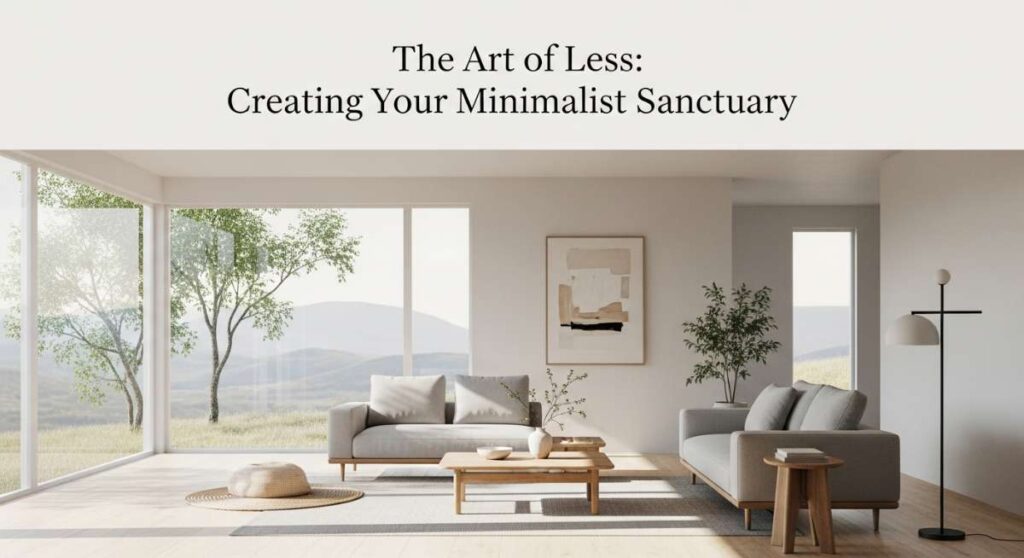
The Art of Less: Creating Your Minimalist Sanctuary
Have you ever walked into a room and felt your shoulders instantly drop? That deep, restorative exhale is what I’ve been chasing for years in my own home. We live in a world that constantly demands more—more hustle, more noise, and more ‘stuff’ filling up our closets and our minds. But lately, I’ve found that the real magic happens when we choose less, stripping away the clutter to reveal the beauty of what remains.
Creating a minimalist sanctuary isn’t about living in a cold, empty box or getting rid of everything you love. It’s about intentionality. It’s about curating a space that breathes, a home that reflects your inner peace and invites you to truly rest at the end of a long day. Today, I’m sharing my favorite ways to infuse your home with that serene, cozy, and intentional vibe that turns a house into a soul-soothing haven.
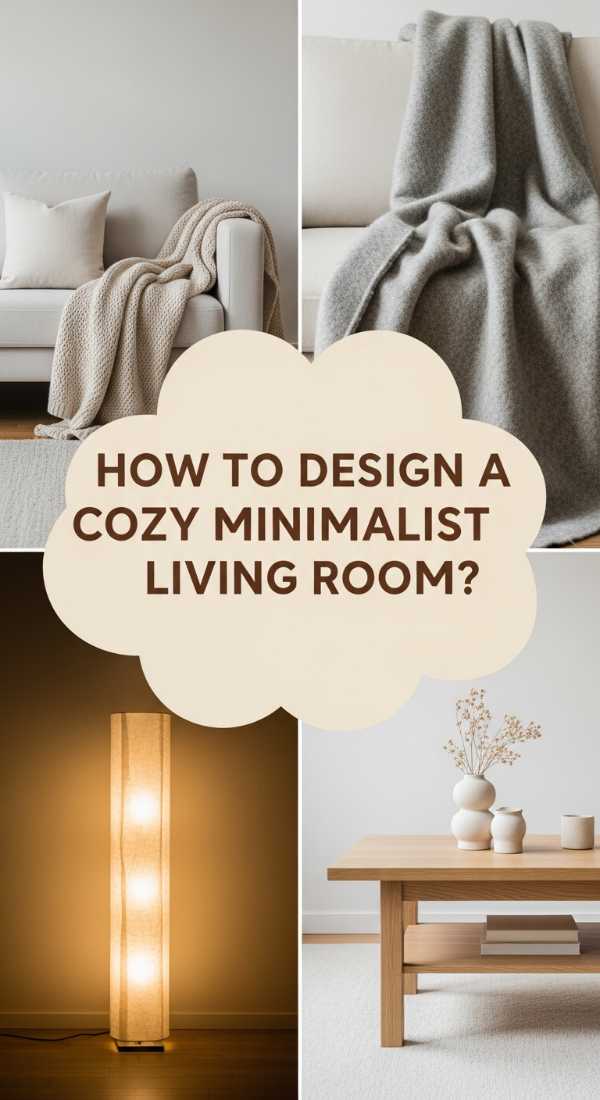
How to Design a Cozy Minimalist Living Room for Total Serenity
Why we love this
There is a profound sense of relief that washes over you when you enter a room where every object has a purpose and a place. We love this approach because it balances the clean lines of modern design with the tactile warmth of natural fibers like organic cotton and raw wood. Imagine sinking into a soft, sand-colored sofa while the scent of white tea and ginger wafts through the air, your eyes resting on a single, perfectly placed ceramic vase rather than a mountain of knick-knacks. It creates a sensory experience that is both visually cooling and emotionally warming.
Essential Elements:
- Low-profile modular sofa in oatmeal or dove grey
- Natural jute or wool area rug for soft underfoot texture
- Hand-thrown ceramic vessels in earthy tones
- Sheer linen curtains that diffuse sunlight into a soft glow
- One large-scale piece of abstract art with a neutral palette
How to make it
- Begin by clearing the room entirely of small decor items to establish a ‘blank canvas’ mindset. This allows you to see the architectural bones of the space without visual noise.
- Select a primary anchor piece, usually the sofa, and position it to maximize the flow of natural light. Ensure there is at least 30 inches of walking space around furniture to maintain an airy, uncrowded feel.
- Apply the ‘Rule of Three’ when styling surfaces: group a tall candle, a medium-sized book, and a small textured stone. This creates visual interest without cluttering the flat plane.
- Introduce ‘living’ elements by placing one large leafy plant, like a Fiddle Leaf Fig, in a corner. The organic shape of the leaves breaks up the straight lines of minimalist furniture, adding a vital energy to the serenity.
- Layer lighting by avoiding harsh overhead fixtures. Use floor lamps with warm-toned LED bulbs (2700K) to create pools of soft light that define ‘zones’ of relaxation.
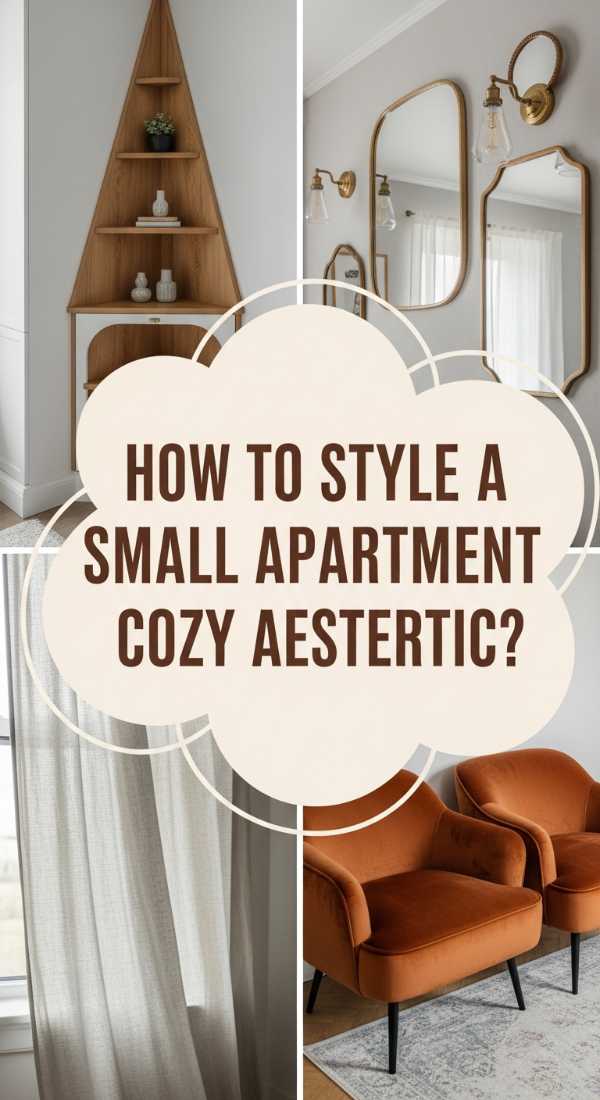
How to Style Small Living Room Ideas Apartment Cozy Aesthetic for Maximum Comfort
Why we love this
Small spaces offer a unique opportunity to create a ‘hug’ in room form, where every square inch is optimized for comfort without feeling claustrophobic. We love the challenge of apartment living because it forces a focus on quality over quantity, encouraging the use of multi-functional pieces that feel luxurious. The aroma of a cedarwood candle paired with the sight of sunlight reflecting off a strategically placed mirror creates an illusion of vastness while keeping the actual vibe intimate and protected from the outside world.
Essential Elements:
- Wall-mounted floating shelving to keep floor space clear
- Acrylic or glass coffee table to maintain visual transparency
- Velvet floor cushions for extra seating without the bulk
- Large wall mirror to bounce light and double the perceived space
- High-quality throw blankets in chunky knit textures
How to make it
- Utilize ‘vertical expansion’ by hanging curtains from the ceiling to the floor rather than just above the window frame. This technique draws the eye upward, making low ceilings feel loftier.
- Select furniture with exposed legs. Being able to see the floor underneath a chair or sofa creates a ‘visual break’ that prevents the room from feeling weighed down.
- Implement a ‘one-in, one-out’ rule for decor. For every new book or candle brought in, one must be donated or stored away to keep the apartment’s aesthetic tightly curated.
- Use a monochromatic color scheme—shades of the same color (like warm whites and creams)—to blend the furniture into the walls, reducing visual boundaries.
- Incorporate ‘hidden storage’ solutions, such as an ottoman that opens up, to tuck away remote controls and chargers, keeping surfaces pristine and calming.
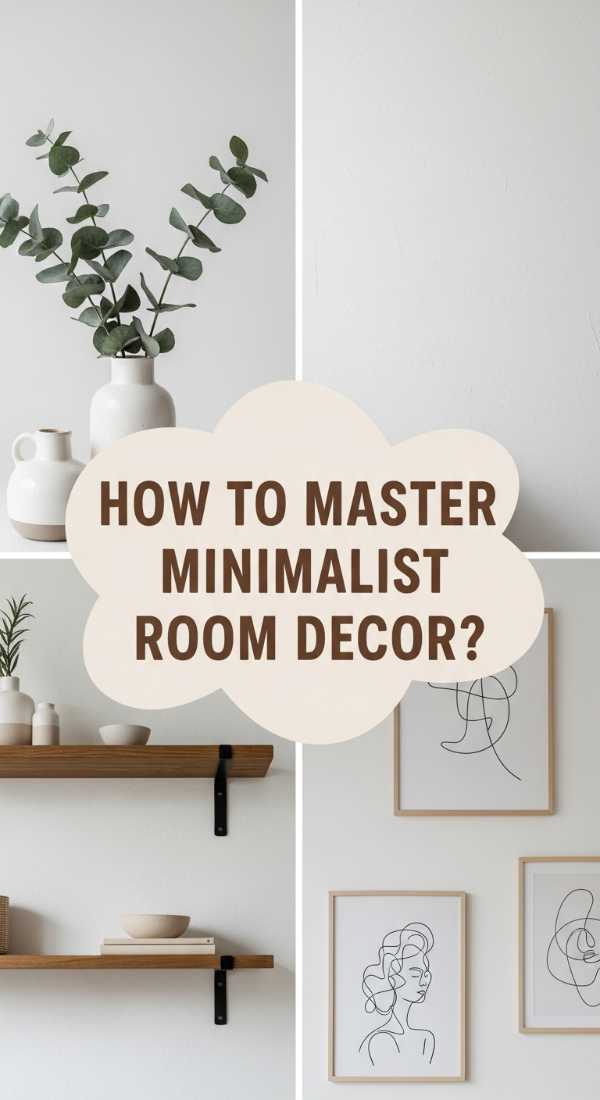
How to Master Minimalist Room Decor for a Peaceful Mindset
Why we love this
A peaceful mindset begins with a peaceful environment; when your physical surroundings are orderly, your mental chatter begins to quiet down. This decor style is essentially a visual meditation, focusing on ‘negative space’ as much as the objects themselves. We love the way a minimalist room feels like a fresh start every morning, with the cool touch of smooth surfaces and the rhythmic simplicity of a curated bookshelf. It’s about creating a landscape where your thoughts can wander freely without getting snagged on clutter.
Essential Elements:
- Uniform storage bins in natural materials like seagrass
- Minimalist wall clock with a silent sweep movement
- Solid-colored bedding in breathable eucalyptus silk
- A dedicated ‘tech-free’ zone marked by a comfortable chair
- Symmetry in furniture placement to create balance
How to make it
- Perform a ‘visual audit’ of your room. Sit in the center and identify any item that provokes a feeling of ‘to-do’ or guilt (like a stack of unread mail) and move it to a closed cabinet.
- Choose a calming focal point, such as a single window view or a piece of wall art, and arrange all other furniture to face or complement that point.
- Minimize high-contrast colors. Instead of black and white, try charcoal and light grey to soften the visual impact on the eyes, which reduces sensory processing stress.
- Limit surface decor to no more than two items per flat surface. This technique ensures that the eye can rest rather than darting from object to object.
- Integrate soft-close hardware on all drawers and cabinets. The absence of banging sounds contributes significantly to a quiet, peaceful atmosphere.
How to Elevate Decor Minimalist Living Room Styles for Timeless Elegance
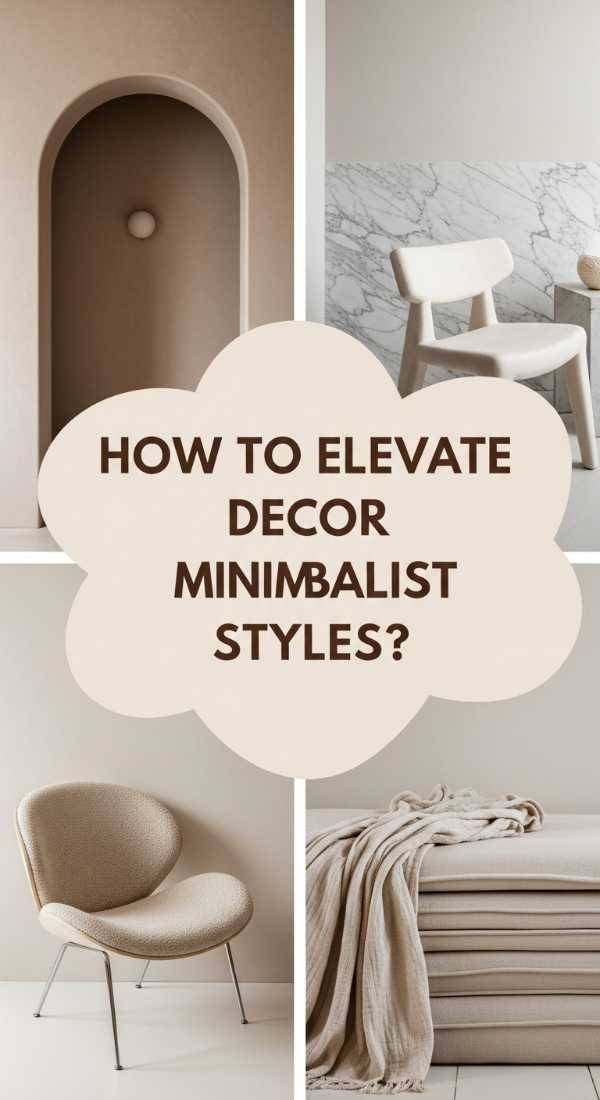
Why we love this
Elegance in minimalism is found in the ‘whisper’ of luxury—the weight of a heavy linen drape, the grain of a solid oak table, or the patina on a vintage brass tray. We love this style because it transcends trends, offering a sophisticated sanctuary that feels as relevant today as it will in twenty years. The atmosphere is one of quiet confidence, where the lack of ‘stuff’ is compensated for by the incredible quality of the few pieces present. It feels like a high-end gallery that you actually get to live and nap in.
Essential Elements:
- Statement lounge chair in top-grain leather
- Solid marble side table with clean, chamfered edges
- Architectural lighting fixtures in matte black or brushed gold
- Floor-to-ceiling built-in bookcases with ample empty space
- Large-scale indoor tree, like an Olive or Citrus tree
How to make it
- Invest in ‘hero pieces.’ Choose one high-quality item, like a designer armchair, and let it stand alone with plenty of space around it to highlight its form.
- Focus on material honesty. Avoid faux finishes; choose real wood, real stone, and real metal. The natural variations in these materials provide all the ‘pattern’ a minimalist room needs.
- Execute ‘ghost styling’ on bookshelves. Turn book spines inward to show the cream-colored pages, or group books by cover color for a streamlined, high-end look.
- Use oversized rugs that extend beyond the furniture. A rug that is too small looks ‘cluttered,’ while an oversized rug grounds the room and adds an expansive feel.
- Incorporate ‘negative space’ on walls. Don’t feel the need to fill every wall with art; leaving a wall blank allows the other elements in the room to ‘pop’ with elegance.
How to Create a Cozy Minimalist Sanctuary for Restful Evenings

Why we love this
Evening is the time for the ‘soft landing,’ and a cozy minimalist sanctuary provides the perfect runway for sleep. We love this approach because it emphasizes the transition from the frantic energy of the day to the stillness of the night. Picture the soft flicker of a beeswax candle, the heavy warmth of a weighted blanket, and the absence of blinking blue lights. It’s a cocoon-like experience that treats sleep as a sacred ritual, wrapping you in textures that feel like a gentle hug for your nervous system.
Essential Elements:
- Dimmable warm ambient lighting
- Electronic-free nightstands
- Lavender-infused linen spray for olfactory relaxation
- Woven baskets for storing extra pillows
- Blackout curtains in a heavy, neutral fabric
How to make it
- Set the ‘Golden Hour’ tone by switching off all overhead lights two hours before bed. Use small, low-wattage lamps at hip-level to mimic the setting sun.
- Clear the ‘landing strip.’ The area immediately around your bed should be completely free of clutter, shoes, or clothing to prevent morning anxiety.
- Texture-layering is key. Pair a smooth cotton sheet with a rougher linen duvet and a wool throw. This variety in tactile sensation signals the body to relax.
- Introduce a ‘scent signature.’ Use a stone diffuser with essential oils like sandalwood or cedar to create a consistent sensory cue that it is time to rest.
- Sound-proof the space visually. Thick rugs and heavy curtains don’t just look good; they dampen echoes and external noise, creating a ‘sonic sanctuary.’
How to Curate a Minimalist Room for Stress Free Living
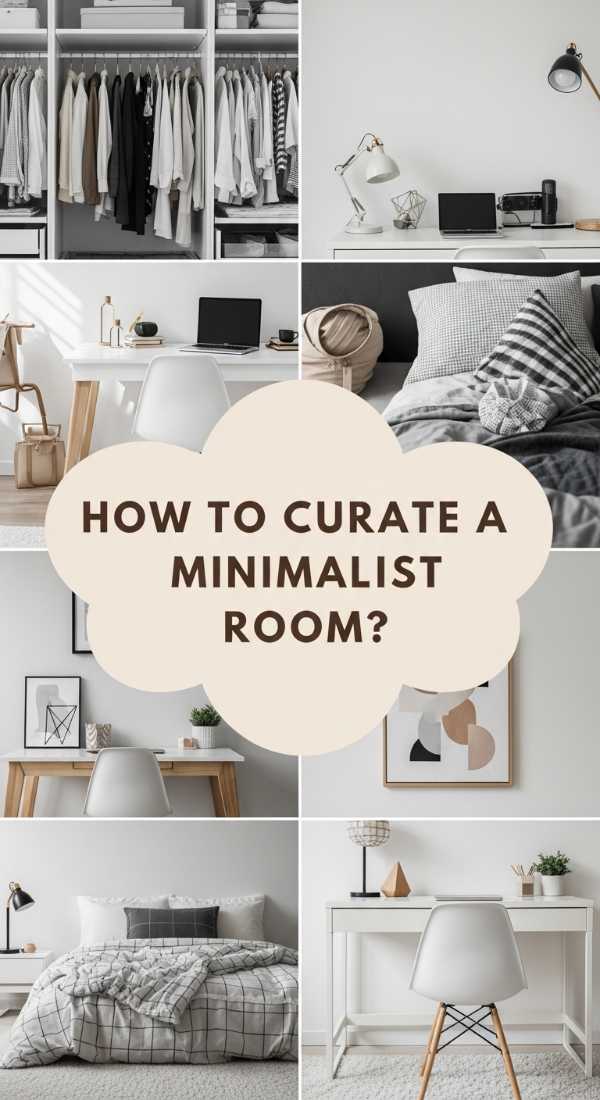
Why we love this
Stress-free living is about removing the friction from your daily routines. We love a curated minimalist room because it functions like a well-oiled machine while looking like a peaceful retreat. Every item has a ‘home,’ meaning you never spend twenty minutes hunting for your keys or a remote. The air feels lighter, the surfaces are easier to clean, and the overall vibe is one of total control and calm. It’s about designing a space that serves you, rather than a space that you have to serve with constant tidying.
Essential Elements:
- Sleek, closed-door cabinetry to hide visual clutter
- A ‘drop zone’ tray for daily essentials near the entry
- Uniform hangers in the closet for visual consistency
- Labelled organizational inserts for drawers
- Minimalist cable management boxes for electronics
How to make it
- Map your ‘daily flow.’ Observe where you naturally drop items (like mail or bags) and place a minimalist organizational solution exactly in that spot.
- Adopt the ‘Flat Surface Policy.’ Commit to keeping 90% of all flat surfaces (tables, counters) clear of any permanent items to facilitate easy cleaning.
- Curate your ‘daily kit.’ Keep only the items you use every single day within reach; everything else should be stored behind closed doors or in a different room.
- Use ‘zonal organization.’ Group related tasks together—like a coffee station or a reading nook—so that the movement within the room is logical and efficient.
- Perform a weekly ‘edit.’ Spend ten minutes every Sunday removing items that have migrated into the room, ensuring the minimalist integrity is maintained.
How to Optimize Minimalist Living Room Small Spaces for Modern Functionality
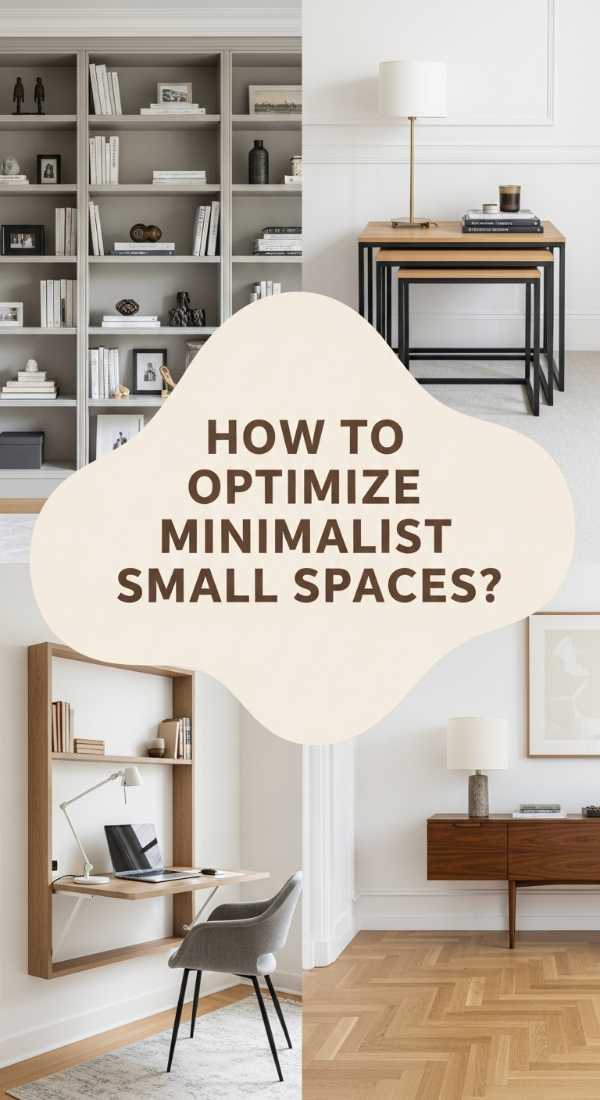
Why we love this
Modern functionality in a small space is like a beautiful puzzle where every piece fits perfectly. We love this style because it celebrates clever engineering and smart design, proving that you don’t need a mansion to live large. There’s something incredibly satisfying about a coffee table that rises to become a desk or a sofa that feels as sturdy as a bed. It’s a crisp, clean aesthetic that prioritizes the ‘now,’ using technology and innovative furniture to make life seamless and stylish without the bulk.
Essential Elements:
- Convertible or nesting furniture
- Wall-mounted television with a ‘frame’ mode for art
- Smart-home hubs hidden within decor
- Integrated charging ports in furniture
- Lightweight, movable accent chairs
How to make it
- Select ‘double-duty’ furniture. Look for pieces like a storage ottoman or a desk that can also serve as a dining table, reducing the total number of items in the room.
- Maximize ‘visual floor space.’ Using wall-mounted lights instead of floor lamps keeps the ground clear, making the room feel significantly larger.
- Implement ‘hidden tech.’ Use cord-management kits to hide every single wire. The absence of visible cables is a hallmark of modern, functional minimalism.
- Use light-reflective finishes. While staying minimalist, choose semi-gloss paints or polished stone surfaces to bounce light into the darker corners of the small space.
- Keep the ‘scale’ in check. Avoid oversized furniture that ‘eats’ the room; instead, choose ‘apartment-sized’ versions that respect the proportions of the space.
How to Achieve a Minimalist Home Vibe for Pure Inner Balance

Why we love this
Inner balance is often a reflection of our outer world, and achieving a minimalist vibe throughout the home creates a continuous flow of calm. We love this approach because it treats the home as a holistic ecosystem. When you move from the kitchen to the bedroom and the aesthetic remains consistent—clean, bright, and uncluttered—your brain doesn’t have to ‘reset’ with each transition. It’s a harmonious experience characterized by soft whispers of color, natural light, and a sense of ‘oneness’ with your surroundings.
Essential Elements:
- Consistent flooring throughout the entire home
- A unified color palette of 3-4 soft, natural tones
- Open-concept layouts that prioritize flow
- Indoor-outdoor transitions with large glass doors
- Natural materials like bamboo, cork, and stone
How to make it
- Standardize your ‘visual transitions.’ Use the same paint color for the hallways and the main rooms to create a seamless, ‘endless’ visual effect.
- Create ‘breathing room.’ Leave at least one wall in every room completely empty to act as a visual ‘reset button’ for your eyes as you move through the house.
- Balance the ‘elements.’ Ensure every room has a touch of wood (earth), a mirror or glass (water), and plenty of natural light (fire/energy).
- Declutter ‘horizontally.’ Clear the tops of refrigerators, cabinets, and wardrobes. Seeing these high lines clear of clutter creates a massive sense of psychological balance.
- Curate a ‘signature home scent.’ Using the same high-quality scent throughout the home ties the minimalist aesthetic together through the power of smell.
How to Balance Minimalist Cozy Elements for a Warm Welcome

Why we love this
There is a sweet spot between ‘stark’ and ‘cluttered’ that we call ‘warm minimalism.’ We love this because it feels incredibly welcoming and ‘lived-in’ while remaining perfectly tidy. It’s the feeling of walking into a space and seeing a beautifully draped throw over a chair, a stack of artisanal ceramic bowls, and a soft glow from a table lamp. It smells like fresh eucalyptus and old books. It’s an inviting, ‘hygge-inspired’ take on minimalism that proves you can be a minimalist and still be a lover of cozy, warm comforts.
Essential Elements:
- Textured wall treatments like lime-wash or plaster
- Soft, rounded edges on furniture (curved sofas, round tables)
- Warm metallic accents like antique brass or copper
- Plush, high-pile rugs in neutral tones
- Stacks of high-quality, textured textiles
How to make it
- ‘Softening the edges.’ Avoid sharp, jagged furniture lines. Choose pieces with rounded corners to make the room feel more approachable and ‘fluid.’
- Layer ‘warm neutrals.’ Instead of using stark white, use ‘greige,’ biscuit, and sand. These colors provide the minimalist look but with a much warmer ‘undertone.’
- Incorporate ‘tactile variety.’ Mix a smooth marble table with a rough woven basket and a velvet chair. This contrast in textures adds ‘visual warmth’ without needing extra items.
- Use ‘living decor.’ A bowl of fresh pears or a bundle of dried lavender adds color and a ‘human touch’ that makes a minimalist room feel like a home.
- Focus on the entryway. Ensure the first thing you see is a warm light and a soft texture, setting a ‘welcome home’ tone immediately upon arrival.
How to Select Room Decor Minimalist Pieces for Artistic Inspiration
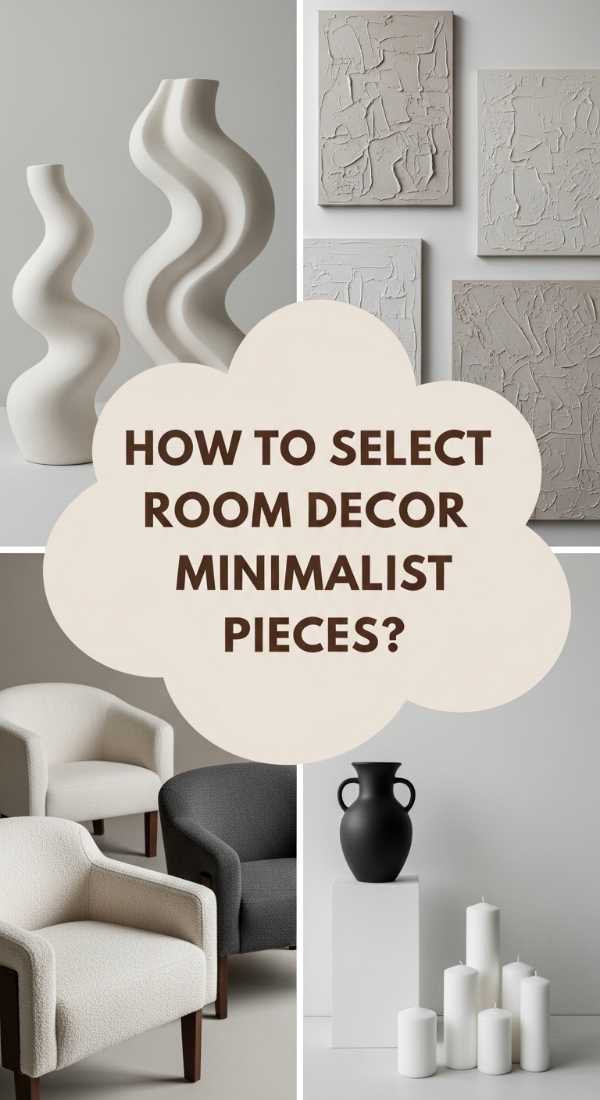
Why we love this
Minimalism is the ultimate stage for art; when you have fewer things, the things you do have become incredibly powerful. We love selecting decor as ‘artistic inspiration’ because it turns your home into a personal gallery of your life’s journey. Every object is a conversation starter—a hand-carved wooden bowl from a trip, a single dramatic branch in a floor vase, or a sculptural chair that looks like a piece of modern art. It’s an inspiring, creative way to live where quality is the only metric that matters.
Essential Elements:
- Unique, sculptural furniture pieces
- Artisanal, handmade ceramics
- Large-scale, meaningful photography or paintings
- Negative space used as a ‘frame’ around objects
- Quality over quantity in every single purchase
How to make it
- Practice ‘intentional acquisition.’ Wait at least 30 days before buying a decor piece to ensure it truly inspires you and isn’t just a ‘filler’ item.
- Use ‘the gallery squeeze.’ Place one small, beautiful object on a large, empty surface. The surrounding empty space acts as a ‘mat’ for the ‘art,’ drawing all focus to the object.
- Switch to ‘sculptural lighting.’ Choose lamps that look like art pieces even when they are turned off. This provides dual functionality in a minimalist space.
- Curate your ‘shelfies.’ Instead of filling a shelf with books, place one beautiful object and three books. This turns a storage unit into an art installation.
- Rotate your ‘collection.’ Only display a few artistic pieces at a time and store the rest. Rotating them keeps your inspiration fresh and your home uncluttered.
The Path to a Lighter Home
Embracing the art of less isn’t a destination you reach overnight; it’s a beautiful, ongoing practice of choosing what truly adds value to your life. As you begin to strip away the excess and focus on the textures, light, and space that make you feel whole, you’ll find that your home becomes more than just a place to sleep. It becomes a sanctuary that nurtures your creativity, calms your spirit, and welcomes you back to yourself every single day. Happy styling!