
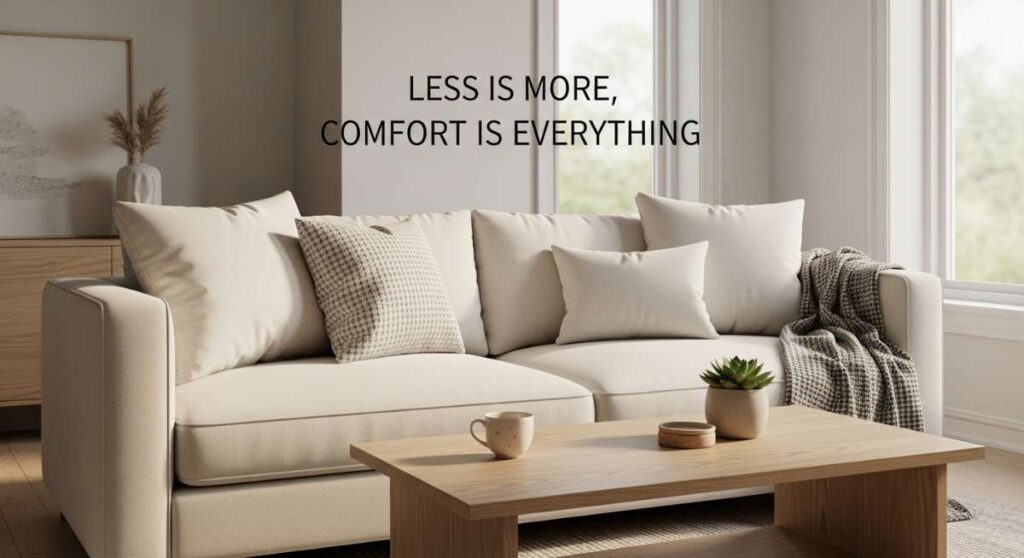
Less is More, Comfort is Everything: Creating Your Cozy Minimalist Sanctuary
Have you ever walked into a room and felt your shoulders immediately drop, your breath deepen, and a sense of profound calm wash over you? That is the magic of a cozy minimalist sanctuary. It is a space that doesn’t demand your attention with clutter or noise, but instead, gently invites you to exhale. For years, I thought ‘minimalism’ meant cold white walls and uncomfortable chairs, but I’ve discovered that the secret lies in the ‘cozy’—finding that perfect balance where every item has a purpose and every texture feels like a warm hug.
Creating this sanctuary isn’t just about throwing things away; it’s about curate-ing a life that feels lighter and more intentional. It’s about walking through your front door and feeling like you’ve finally arrived at a place that protects your peace. In this guide, we’re going to dive deep into how you can transform your living space into a breathable, beautiful retreat that nurtures your soul and clears your mind. Let’s turn your home into the ultimate restorative escape.
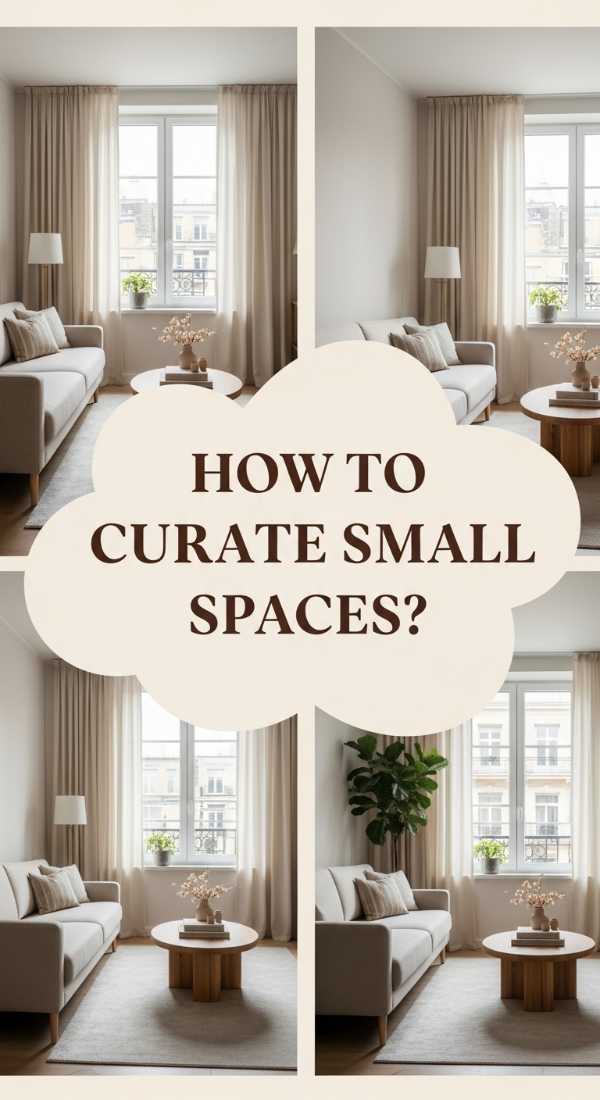
How to Curate a Small Living Room for Maximum Serenity
Why we love this
There is a specific, quiet joy in a small room that has been perfectly edited to feel spacious yet intimate. We love this because it proves that you don’t need a sprawling floor plan to experience true luxury; you just need intentionality. Imagine the soft glow of a single ceramic lamp reflecting off a clean wooden surface, while a plush, neutral rug grounds the space under your feet. The air feels crisp and open, allowing your thoughts to drift without being interrupted by piles of ‘to-do’ lists or unnecessary trinkets. It’s a sensory experience of lightness and ease that turns a tiny footprint into a grand escape.
Essential Elements:
- Multi-functional furniture with clean lines.
- A monochromatic color palette (think creams, beiges, and soft greys).
- One large-scale piece of art instead of a gallery wall.
- Sheer linen curtains to maximize natural light.
- Hidden storage solutions to keep surfaces clear.
How to make it
- Begin by completely clearing the room of all small decor items to visualize the raw architecture of the space; this ‘blank canvas’ phase is crucial for seeing potential.
- Position your largest piece of furniture, usually the sofa, against the longest wall or in a corner to open up the central floor area, creating an immediate sense of ‘flow.’
- Layer in a large area rug that extends under all furniture legs; this visual cue tricks the eye into perceiving the room as wider than it actually is.
- Select only three ‘soul pieces’—items that bring you genuine happiness—and place them in prominent positions with plenty of ‘white space’ around them to let them breathe.
- Adjust your lighting temperature to a warm 2700K; use floor lamps at varying heights to eliminate dark corners, ensuring the room feels ‘cooked’ to a perfect, cozy medium-rare.
How to Master the Cozy Minimalist Vibe for Ultimate Relaxation

Why we love this
The ‘Cozy Minimalist’ vibe is the ultimate marriage of functionality and soul. We love it because it removes the sterile ‘museum’ feeling of traditional minimalism and replaces it with the scent of cedarwood and the touch of organic cotton. It’s about the feeling of a heavy knit throw draped over a sleek, modern chair—the contrast between the sharp and the soft. It’s a design philosophy that honors your need for rest, providing a visual silence that allows your nervous system to finally power down after a long day of digital overstimulation.
Essential Elements:
- Natural wood accents (oak or walnut).
- Scented candles with earthy, grounding notes.
- Layered textiles in varying weaves.
- Handcrafted ceramics with organic, imperfect shapes.
- A dedicated ‘tech-free’ nook.
How to make it
- Audit your current decor and remove anything that feels ‘loud’ or ‘busy,’ focusing on keeping items that serve both a function and a feeling.
- Introduce ‘warm’ minimalism by swapping cold metal surfaces for warm-toned woods; the goal is to create a ‘simmering’ atmosphere of organic warmth.
- Layer your seating with exactly two high-quality cushions—one textured and one smooth—to provide physical comfort without creating visual ‘clutter noise.’
- Incorporate a ‘scent story’ by using an ultrasonic diffuser with essential oils like frankincense or sandalwood, which anchors the minimalist aesthetic in a sensory reality.
- Check the ‘doneness’ of the room by sitting in every chair; if you don’t feel an immediate urge to relax, remove one more visual distraction and add one more soft texture.
How to Choose Minimalist Room Decor for a Breathable Sanctuary

Why we love this
When decor is chosen with a ‘less is more’ mindset, each piece becomes a conversation. We love this approach because it elevates the everyday; a simple glass vase with a single eucalyptus branch becomes a work of art. The sanctuary becomes ‘breathable’ because there is literal space for the air to move and the light to dance. There is a profound sense of relief in knowing that everything in your line of sight is there for a reason, creating a visual rhythm that is steady, calm, and incredibly sophisticated.
Essential Elements:
- Vases with sculptural silhouettes.
- Coffee table books with neutral spines.
- Minimalist wall clocks or mirrors.
- Organic-shaped bowls for catch-alls.
- Framed photography with wide matting.
How to make it
- Apply the ‘Rule of Three’ to your surfaces, grouping items of varying heights but similar tones to create interest without chaos.
- Choose decor pieces that utilize negative space, such as wire-frame sculptures or open-back shelving, to maintain a ‘breathable’ sightline throughout the room.
- Incorporate mirrors strategically across from windows to double the ‘visual oxygen’ and bounce natural light into the deeper parts of the sanctuary.
- Edit your bookshelves by turning some spines inward or grouping by color to reduce the ‘visual heat’ of mismatched typography.
- Finalize the look by ‘pruning’—if you have to move an object to use the surface, it’s a sign that the decor is too heavy and needs to be scaled back.
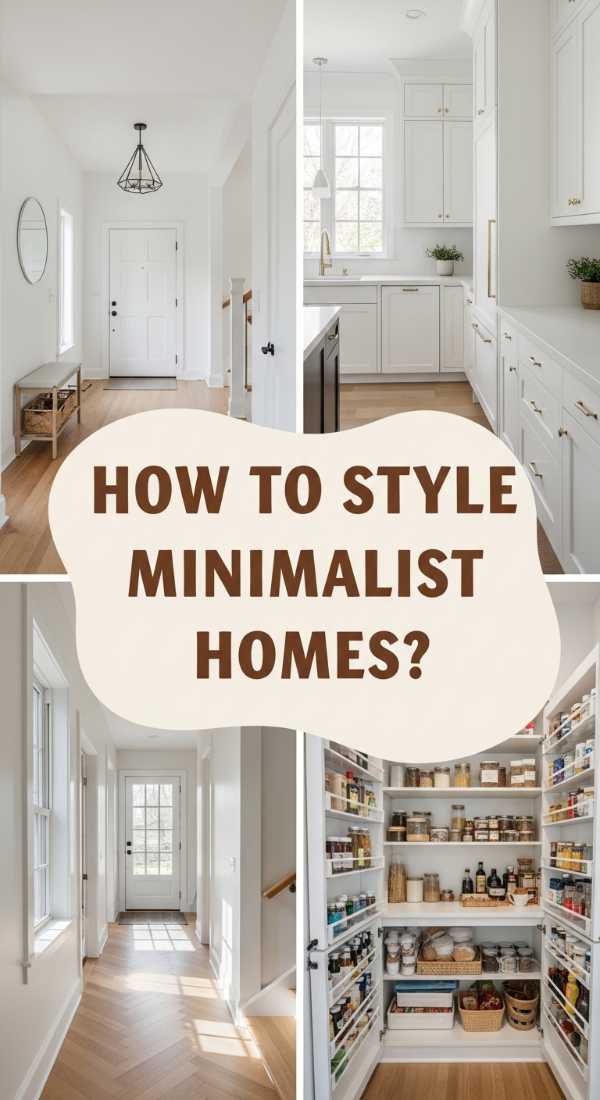
How to Style a Minimalist Home for a Clutter Free Mind
Why we love this
A clutter-free home is the ultimate form of self-care. We love this styling method because it directly impacts your mental health, clearing the external ‘static’ so you can focus on what truly matters. There is something deeply satisfying about smooth, clear surfaces that catch the afternoon sun, and the way a room feels when it isn’t ‘shouting’ at you to clean it. It’s about creating a home that supports your flow, where every object has a home and your mind is free to wander, create, and dream without being snagged by the visual weight of ‘stuff.’
Essential Elements:
- Uniform storage containers (glass, wood, or woven).
- A ‘one-in, one-out’ policy for new purchases.
- Closed cabinetry to hide visual busy-ness.
- A designated ‘landing strip’ for keys and mail.
- Digital decluttering zones.
How to make it
- Identify ‘clutter magnets’—like the entryway table or kitchen island—and clear them completely, leaving only one functional, beautiful item behind.
- Utilize the ‘Internal/External’ storage technique: keep the items you use daily within arm’s reach in beautiful vessels, and hide the ‘occasional’ items in closed bins.
- Style your shelving with at least 40% empty space; this ‘white space’ acts as a visual buffer that prevents the eye from feeling fatigued.
- Categorize loose items into ‘kits’ (e.g., a letter-writing kit in a beautiful box) to keep horizontal surfaces impeccably clear.
- Maintain the ‘doneness’ of your space with a 5-minute nightly reset, ensuring the visual serenity is preserved for the following morning.
How to Create an Apartment Cozy Aesthetic for a Personalized Retreat

Why we love this
Creating a personalized retreat in a rented apartment is a beautiful act of rebellion against the ‘temporary’ feel of modern living. We love this because it uses the constraints of small, often cookie-cutter spaces to spark incredible creativity. It’s the feeling of soft, battery-operated sconces warming up a dark corner, and the way a high-quality area rug can mask a ‘builder-grade’ floor. It’s about layering your own story—through scent, touch, and light—onto a blank canvas until it feels uniquely yours, safe, and deeply restorative.
Essential Elements:
- Command-strip mounted mood lighting.
- High-quality, oversized floor pillows.
- Peel-and-stick textures (like faux wood or linen).
- Plush, high-pile rugs for acoustic dampening.
- A collection of personalized, minimalist mementos.
How to make it
- Define ‘zones’ within your open apartment layout using area rugs to create the feeling of separate rooms without using bulky dividers.
- Upgrade standard apartment lighting by swapping out harsh ‘daylight’ bulbs for ‘soft white’ LEDs and adding dimmable table lamps for a custom ‘glow.’
- Incorporate vertical interest with ‘leaning’ mirrors or tall plants to draw the eye upward, making the ceiling feel higher and the sanctuary more expansive.
- Layer textures on your bed or sofa using ‘ton-sur-ton’ (tone-on-tone) colors to add depth and ‘flavor’ without introducing jarring patterns.
- Personalize the ‘retreat’ feeling by displaying a few carefully curated travel mementos in shadow boxes, ensuring they are integrated into the minimalist flow.
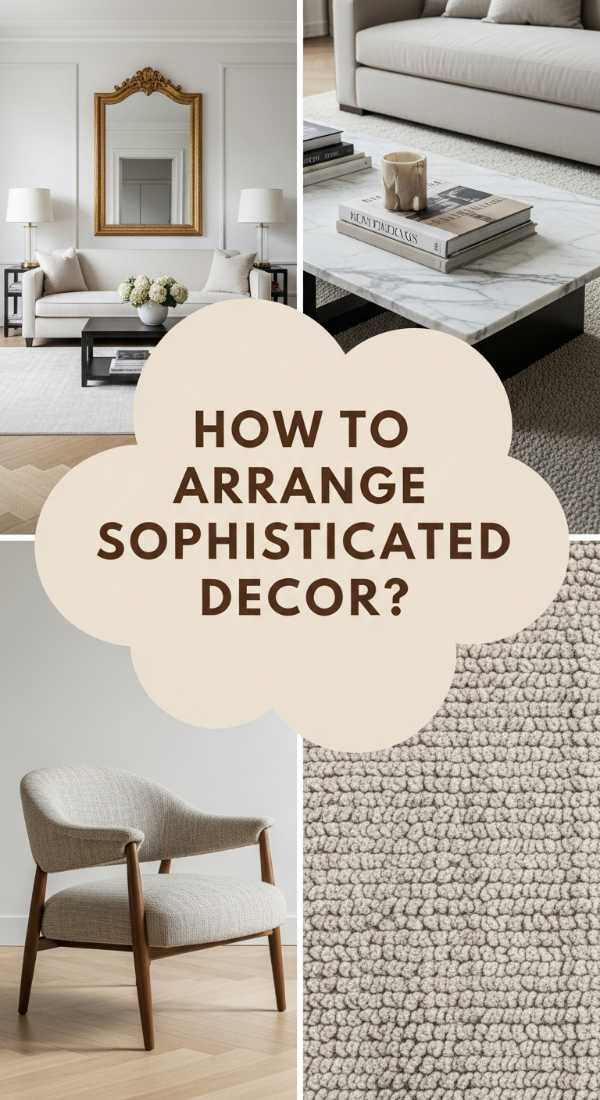
How to Arrange Living Room Decor for a Sophisticated Flow
Why we love this
A sophisticated flow is what makes a room feel ‘expensive’ and ‘designed,’ even if the furniture was a bargain. We love this because it prioritizes the human experience; it’s about how people move, talk, and exist within the space. When the arrangement is right, the room feels balanced—neither too heavy on one side nor too sparse. It’s the ease of being able to place a drink down without looking, and the natural path that leads you from the door to the most comfortable seat in the house. It’s design harmony in its purest form.
Essential Elements:
- Balanced furniture ‘weight’ (pairing a heavy sofa with light chairs).
- Clear walking paths (at least 30-36 inches).
- An ‘anchor’ piece (like a fireplace or a large window).
- Nesting tables for flexible utility.
- Symmetry or intentional asymmetry.
How to make it
- Identify your room’s natural ‘anchor’ and arrange your primary seating to face it, creating an immediate sense of purpose and direction.
- Establish clear ‘traffic lanes’ by ensuring no piece of furniture blocks the direct path between entryways and seating areas.
- Balance the ‘visual weight’ by placing larger pieces across from each other; if you have a large sofa on one side, balance it with two chairs or a large sideboard on the other.
- Scale your coffee table to be approximately two-thirds the length of your sofa, and place it 14-18 inches away for optimal ‘reachability’ and ‘flow.’
- Refine the arrangement by removing any ‘clutter furniture’—small tables or stools that don’t serve a specific purpose—to allow the floor plan to ‘breathe.’
How to Design Minimalist Living Room Small Spaces for Daily Joy
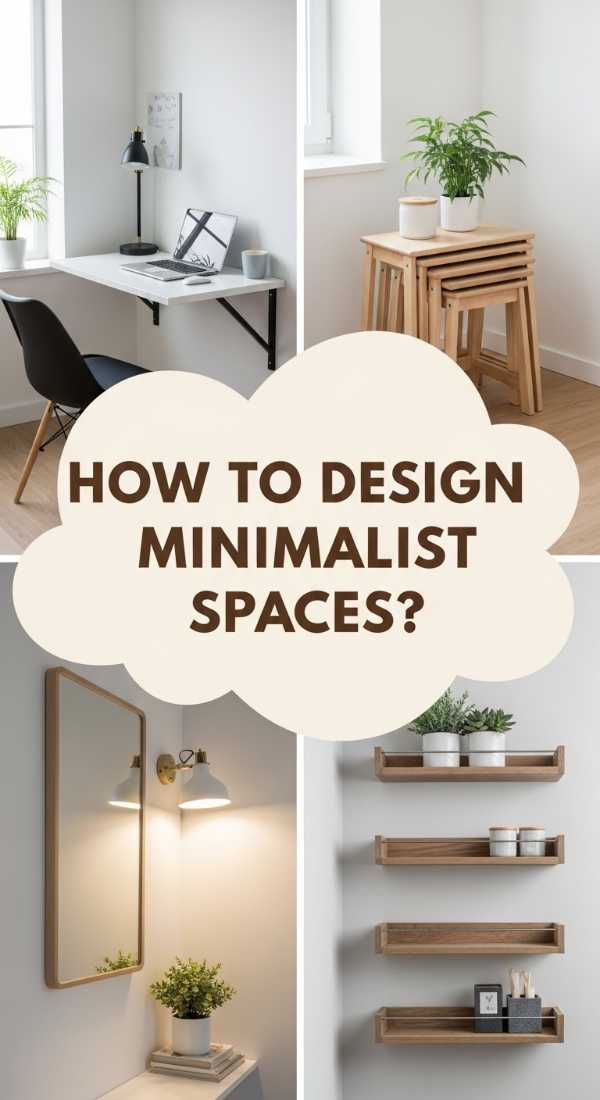
Why we love this
Daily joy comes from the little things—the way the sun hits a crystal prism on your windowsill or the softness of a velvet ottoman under your feet. We love designing for joy in small spaces because it forces you to prioritize what truly makes you happy. It’s about ‘micro-moments’ of beauty: a perfectly organized shelf, a single thriving plant, or a cozy corner dedicated to your morning coffee. In a small space, every design choice is amplified, making the joy felt even more intensely when the balance of ‘less’ and ‘more’ is struck just right.
Essential Elements:
- Floating shelves to save floor space.
- Acrylic or glass furniture to maintain transparency.
- Reflective surfaces to bounce light.
- Pop of ‘joy’ colors (like a soft sage or terracotta).
- Wall-mounted lighting to free up end tables.
How to make it
- Select one ‘statement’ element—like a bold light fixture or a vibrant plant—to serve as the ‘joy focal point’ while keeping everything else understated.
- Maximize vertical space with floor-to-ceiling shelving, but keep the top two shelves empty to prevent the room from feeling ‘top-heavy’ or claustrophobic.
- Use ‘ghost’ furniture, such as acrylic chairs or glass nesting tables, which provide function without taking up ‘visual real estate.’
- Incorporate ‘hidden’ storage within ottomans or benches to whisk away daily items, keeping the ‘joyful’ surfaces clean and clear.
- Audit the ‘happiness factor’ of each item; if a piece of decor doesn’t spark an immediate smile during your morning routine, it’s time to donate it.
How to Achieve a Peaceful Minimalist Room for Restorative Sleep
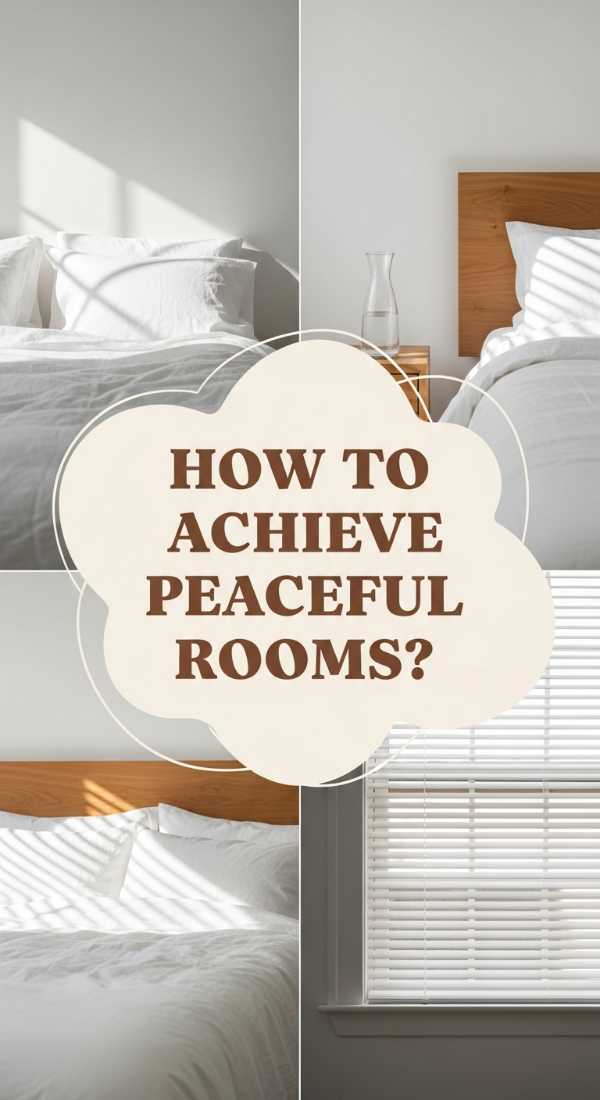
Why we love this
A bedroom should be a temple of rest, and a minimalist approach is the fastest way to get there. We love this because it removes the ‘mental load’ of the day; when you walk into a minimalist bedroom, there is no visual noise to remind you of work or chores. The air feels cooler, the bedding looks like a cloud, and the silence is palpable. It’s about creating a ‘sleep cocoon’ where the textures are premium, the colors are muted, and the only goal is total surrender to sleep. It is the ultimate luxury in a busy world.
Essential Elements:
- 100% linen or organic cotton bedding.
- Blackout curtains in a heavy, neutral fabric.
- A clutter-free nightstand (only a lamp and a book).
- Dimmable, warm-toned lighting.
- Soft, under-bed lighting for a floating effect.
How to make it
- Remove all electronics, including TVs and charging hubs, to eliminate ‘blue light’ and ‘digital buzz’ from your sleep sanctuary.
- Invest in high-quality ‘layering’ for the bed: a crisp base sheet, a medium-weight duvet, and a textured coverlet for a ‘hotel-luxe’ feel.
- Keep surfaces completely bare except for a single carafe of water and a warm-toned lamp to signal to your brain that the day is ‘done.’
- Install floor-to-ceiling curtains and hang them wider than the window to create a ‘soft wall’ effect that dampens sound and blocks light entirely.
- Infuse the space with a calming ‘sleep scent’ like lavender or cedar wood through a stone diffuser, setting the ‘heat’ of the room to a cool, restful level.
How to Layer Minimalist Cozy Textures for a Luxurious Feel

Why we love this
Texture is the ‘secret sauce’ of minimalism. Without it, a room is cold; with it, a room is a masterpiece. We love layering textures because it provides a richness that doesn’t rely on color or patterns. Imagine the tactile journey of walking from a smooth hardwood floor onto a chunky wool rug, then sinking into a velvet sofa and pulling a mohair throw over your lap. It’s a sensory feast that feels incredibly high-end. Layering allows you to keep a neutral palette while adding ‘depth’ and ‘flavor’ that you can literally feel with your fingertips.
Essential Elements:
- Chunky knit wool throws.
- Smooth silk or velvet pillows.
- Woven seagrass or jute baskets.
- Matte ceramic vases vs. shiny glass.
- Raw wood grains against polished stone.
How to make it
- Start with a ‘base’ texture—usually a large, flat-weave rug—and build upward with increasingly ‘softer’ materials.
- Mix three different textures within the same color family (e.g., a cream linen sofa, a cream wool throw, and a cream velvet pillow) to create ‘tonal depth.’
- Contrast your ‘hard’ surfaces (like a stone coffee table) with ‘soft’ layers (like a draped sheepskin) to balance the visual and physical ‘temperature.’
- Use baskets not just for storage, but as a ‘tactile element’ to ground corners and add an organic, earthy ‘crust’ to the room’s design.
- Finish the layering by ensuring no two adjacent surfaces have the same texture; this ‘checkered’ approach to materiality ensures the room feels ‘perfectly seasoned.’
How to Integrate Natural Minimalist Elements for a Grounded Atmosphere
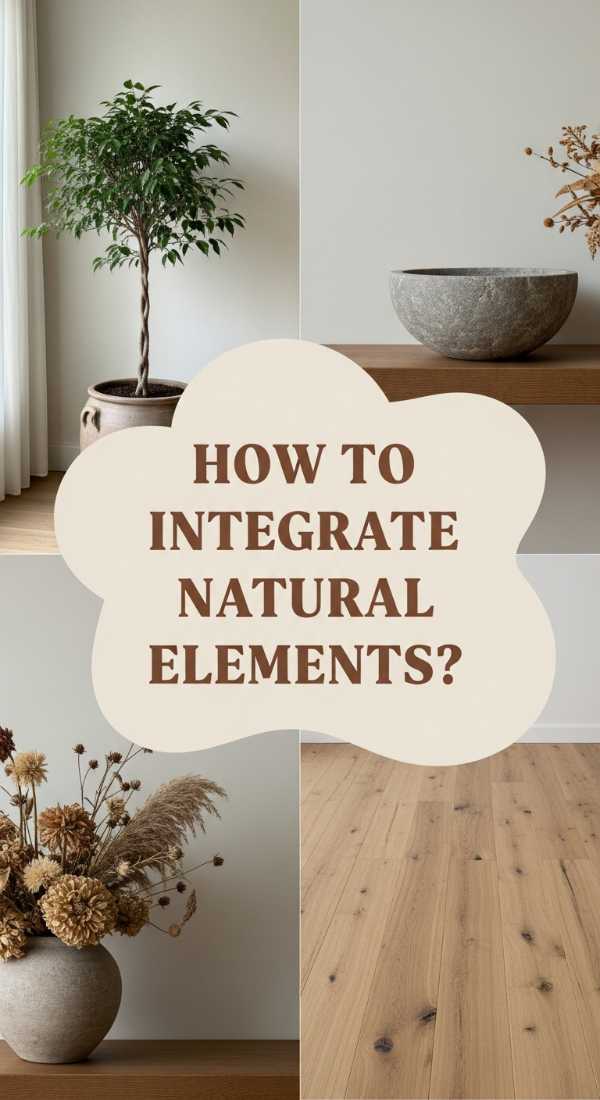
Why we love this
Bringing the outdoors in is the most effective way to ‘ground’ a minimalist home. We love natural elements because they possess an effortless beauty that man-made items can’t replicate. The organic curve of a piece of driftwood or the vibrant green of a fiddle-leaf fig adds ‘life force’ to a room. These elements connect us to the earth, lowering our heart rates and making the sanctuary feel like a living, breathing entity. It’s about the raw, the unrefined, and the enduring beauty of nature providing a steady pulse in your quiet home.
Essential Elements:
- Live indoor plants (Monstera, Snake Plant, or Olive Tree).
- Unfinished wood furniture or decor.
- Stone or marble accents.
- Natural sunlight (unobstructed windows).
- Earthy materials like terracotta and clay.
How to make it
- Place one ‘hero’ plant in a corner where it can receive indirect sunlight; the organic silhouette will soften the ‘sharp’ lines of minimalist furniture.
- Incorporate raw wood elements, such as a live-edge side table or wooden bowls, to introduce ‘warmth’ and ‘imperfection’ into the space.
- Use natural stone coasters or trays to provide a ‘cool,’ grounded weight to your coffee table or nightstand.
- Maximize ‘visual access’ to the outdoors by keeping window treatments minimal; the view outside should act as the room’s primary ‘wallpaper.’
- Refine the ‘atmosphere’ by adding a small tabletop water fountain or a collection of smooth river stones, ensuring the ‘grounding’ effect is both visual and auditory.
Conclusion
Creating a cozy minimalist sanctuary is a journey of choosing yourself over your belongings. It is about recognizing that your home is a container for your life, and by clearing the excess, you make room for the experiences, the rest, and the joy that truly matter. Whether you are styling a small apartment or a large family home, the principles remain the same: keep it light, keep it soft, and keep it intentional. Your sanctuary is waiting for you—all you have to do is let go of the noise and embrace the quiet beauty of ‘less.’ Happy decorating!