
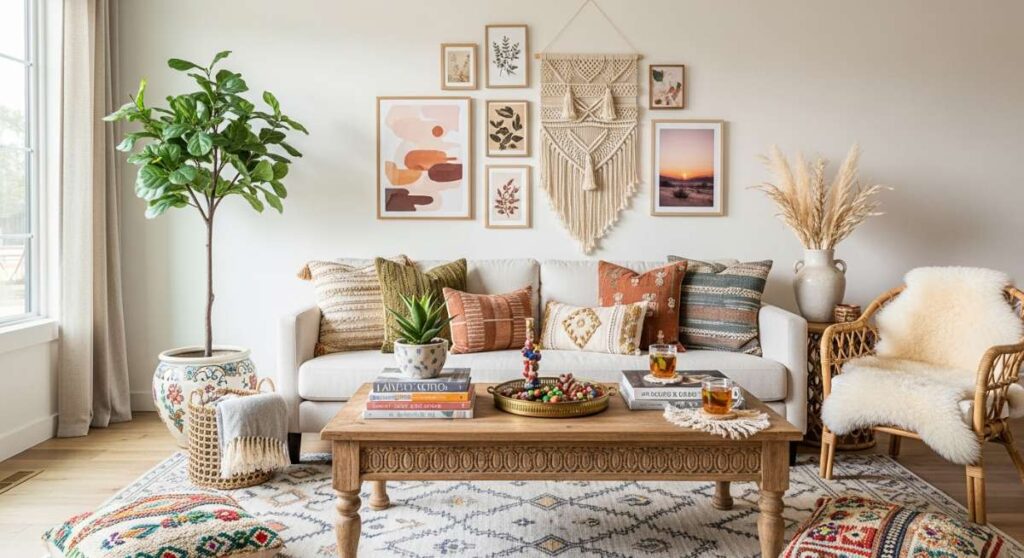
Have you ever walked into a room and felt like you were being wrapped in a warm, velvet-textured hug? That is the magic of bohemian design—a style that doesn’t just fill a space with furniture, but fills it with soul, history, and a touch of wild wandering. It’s about creating a sanctuary where the rules of ‘perfect’ are traded for the joy of ‘personal,’ where every flea market find and travel souvenir has a place to breathe and shine.
For me, transforming my home into a bohemian oasis was less about a renovation and more about a homecoming. It’s the scent of incense lingering on woven tapestries, the way sunlight dances through mismatched glass bottles, and the sheer comfort of sinking into a mountain of plush pillows after a long day. If you’ve been craving a home that feels alive, eclectic, and unapologetically you, then you’re in the right place to begin your transformation.
How to Style a Bohemian Living Room for Ultimate Comfort

Why we love this
A bohemian living room is the ultimate expression of relaxation, acting as a soft landing spot for the weary traveler and the homebody alike. We love the way it blends tactile warmth—think chunky knits, sun-faded leathers, and velvet—with an earthy aroma of sandalwood that seems to settle into the very fibers of the rug. It feels like a perpetual afternoon nap, where the visual weight of the room is balanced by the lightness of trailing ivy and the rhythmic patterns of hand-woven textiles that invite you to kick off your shoes and stay a while.
Essential Elements:
- Low-profile modular sofa or distressed leather couch
- Potted floor plants like Monstera or Fiddle Leaf Fig
- Assorted floor poufs and ottomans
- Hand-carved wooden coffee table
- Ambient lighting including fairy lights and floor lamps
How to make it
- Establish the anchor: Place your largest piece of furniture, ideally a low-to-the-ground sofa, against the main wall to ground the space.
- Introduce the organic: Position large floor plants in the corners to break up hard angles, ensuring they receive filtered natural light for that lush, conservatory feel.
- Layer the textiles: Drape a heavy wool throw over the back of the sofa, letting it fall naturally to create a lived-in look rather than a staged one.
- Arrange the seating: Scatter floor poufs around the coffee table to encourage a circular, communal flow that feels informal and inviting.
- Visual cue for completion: Your living room is ‘done’ when the eye moves smoothly from the soft textures of the seating to the vibrant greens of the plants without hitting a stark, empty corner.
How to Arrange Bohemian Wall Decor for Artistic Expression

Why we love this
Walls in a boho home are never silent; they are galleries of a life well-lived, whispering stories of adventures and artistic curiosities. There is a profound beauty in the layering of a fringe macramé wall hanging next to a framed botanical print, creating a visual rhythm that feels both curated and chaotic in the best way possible. This approach brings a deep, resonant texture to the room, turning a flat surface into a multidimensional landscape that captures the eye and sparks conversation with every glance.
Essential Elements:
- Macramé or woven fiber art
- Framed vintage maps or botanical illustrations
- Woven seagrass baskets in various sizes
- Brass or copper wall sconces
- Small floating wooden shelves for curios
How to make it
- Start with a focal point: Hang your largest piece—typically a macramé or a large canvas—slightly off-center to create a sense of bohemian asymmetry.
- Cluster the accents: Group 3-5 woven baskets of varying diameters around the central piece, overlapping the edges slightly to build depth.
- Integrate the ‘found’ objects: Use small command hooks to hang vintage keys, dried flower bundles, or brass mirrors within the gaps of your gallery.
- Balance the weight: Step back frequently to ensure the visual ‘heat’ of the wall is evenly distributed, avoiding clumps of heavy dark colors in one spot.
- Visual cue for completion: The arrangement is successful when the wall feels like a single, cohesive tapestry of objects rather than a collection of separate items.
How to Design a Bohemian Kitchen for Inspired Cooking

Why we love this
The bohemian kitchen is the heart of the home, a place where the air is filled with the zest of fresh herbs and the rich, nutty aroma of coffee brewing in a French press. We love the departure from clinical, cold surfaces in favor of open shelving stacked with terracotta bowls, mismatched ceramic mugs, and jars of colorful spices that look like edible jewels. It transforms the act of cooking from a chore into a sensory ritual, surrounded by natural wood grains and the greenery of a windowsill herb garden that pulses with life.
Essential Elements:
- Open wooden shelving with live edges
- Terracotta and ceramic dishware
- Clear glass canisters for grains and spices
- Hanging pot rack with copper cookware
- Woven runner rug for the floor
How to make it
- Clear the clutter: Remove upper cabinet doors to expose your most beautiful ceramics and glassware, creating an immediate sense of openness.
- Prep the shelving: Install sturdy wooden shelves at eye level, ensuring they are deep enough to hold stacked dinner plates and large mixing bowls.
- Organize by texture: Group items by material—place all your ceramic pieces together, then your glass canisters, creating ‘stations’ of visual interest.
- Infuse life: Place small pots of basil, mint, and rosemary on the counters or windowsills to provide both fragrance and a vibrant green contrast to the wood.
- Visual cue for completion: The kitchen is ready when it feels like an artist’s studio where the medium is food, and every tool is within arm’s reach.
How to Select a Bohemian Rug for Instant Room Warmth

Why we love this
A rug is the soul-foundation of a bohemian room, acting as the canvas upon which all other design elements are painted. We are obsessed with the way a faded Persian-style rug or a thick, shaggy Moroccan Beni Ourain can instantly muffle sound and provide a plush, warm surface that feels incredible against bare skin. The intricate patterns and deep, jewel-toned dyes bring a sense of ancient history and worldly mystery into a modern space, making the entire room feel grounded and incredibly cozy.
Essential Elements:
- Low-pile Persian or Turkish distressed rugs
- Jute or sisal base rugs for layering
- Sheepskin or faux-fur accents
- Geometric Moroccan tribal rugs
- Rug pads for extra cushioning
How to make it
- Measure the footprint: Ensure the rug is large enough so that at least the front legs of all furniture pieces sit on it, which ‘locks’ the room together.
- Layer the base: Lay down a large, neutral jute rug first to provide a natural, scratchy texture that contrasts beautifully with softer top layers.
- Add the ‘hero’ rug: Place your patterned, colorful rug at an angle over the jute base to create that signature eclectic, effortless bohemian vibe.
- Secure the edges: Use high-quality rug tape to prevent curling, which keeps the lines clean and prevents tripping in high-traffic areas.
- Visual cue for completion: The floor is complete when the layering looks intentional and the room feels physically warmer and quieter.
How to Layer Bohemian Pillows for a Dreamy Lounge Area
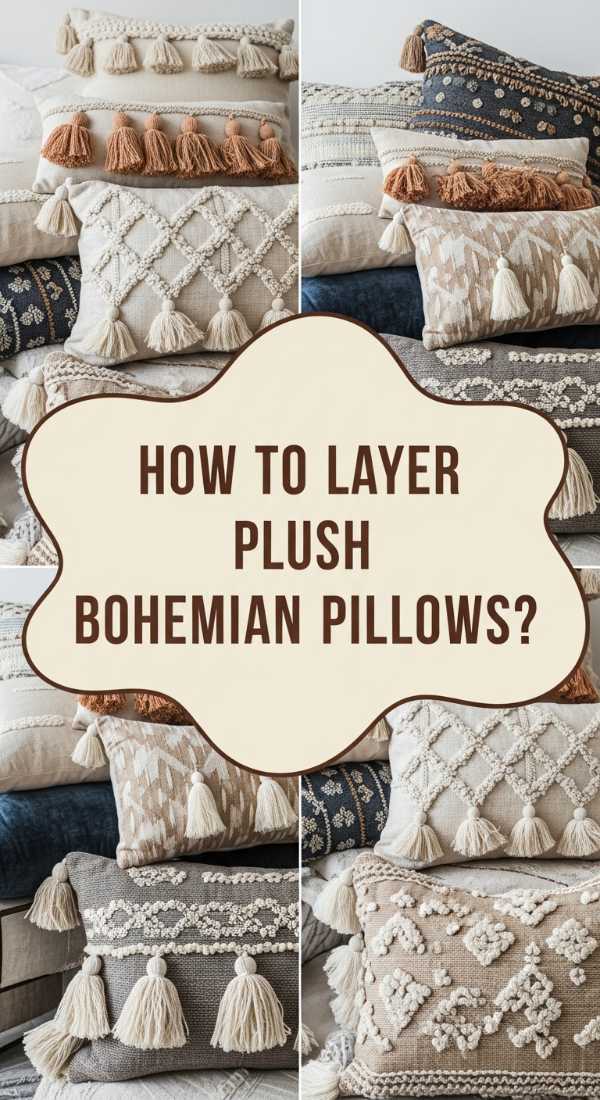
Why we love this
There is no such thing as too many pillows in a bohemian sanctuary; they are the fluffy clouds of the interior design world. We love the tactile symphony of mixing smooth silks with rough-hewn linens and shaggy wools, creating a pile so inviting you can’t help but sink into it. The way these colors and patterns clash and then harmonize creates a visual richness that feels decadent yet approachable, turning any corner of the house into a high-end lounge that smells of lavender and peace.
Essential Elements:
- Large velvet floor cushions
- Embroidered lumbar pillows
- Tasselled and pom-pom accented covers
- Mudcloth and indigo-dyed textiles
- Feather-down inserts for maximum squish
How to make it
- Build the back row: Start with the largest, firmest pillows (usually 24×24 inches) in solid colors to act as a supportive ‘wall.’
- Introduce pattern: Add a middle layer of slightly smaller pillows featuring bold geometric prints or ethnic embroideries to draw the eye.
- Vary the shapes: Place circular or long lumbar pillows in the front to break up the monotony of squares and add ergonomic support.
- Texture check: Ensure no two identical textures are touching—pair a rough linen pillow next to a soft velvet one for maximum sensory impact.
- Visual cue for completion: The lounge area is done when the seating looks like a beckoning, plush mountain that you want to dive into immediately.
How to Place a Bohemian Mirror for Enhanced Natural Light
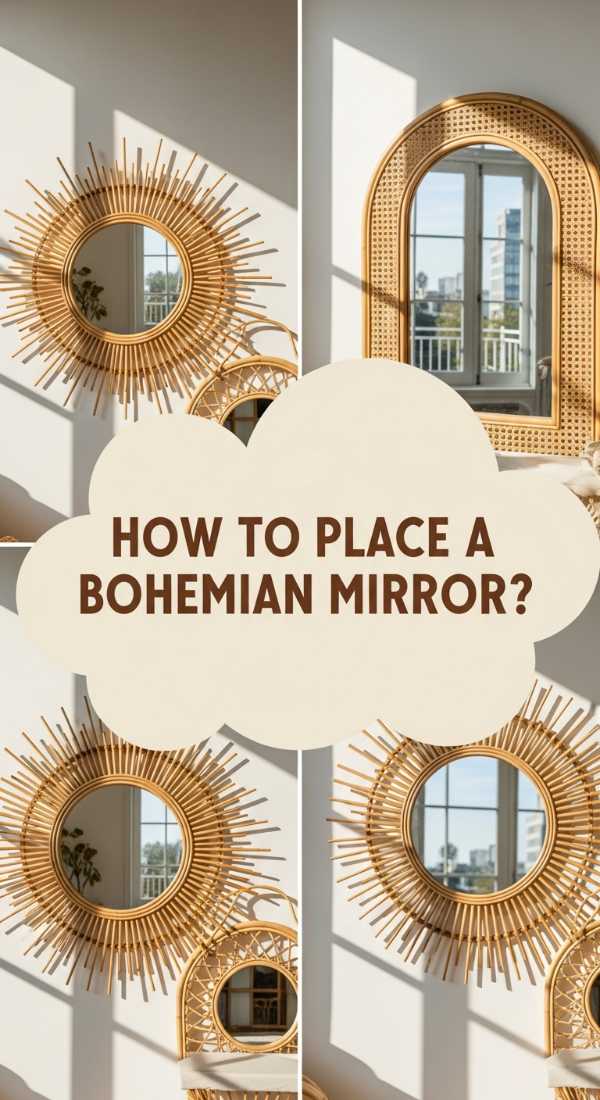
Why we love this
Mirrors in a bohemian home serve as more than just a place to check your reflection; they are light-catchers and space-expanders that bring a touch of ethereal glow to dim corners. We love the use of ornate brass frames or sunburst shapes that look like golden talismans on the wall, reflecting the green of indoor plants and the flicker of candlelight. It creates an enchanting ‘infinity’ effect where the room feels twice as large and ten times as bright, mimicking the airy feeling of an outdoor patio.
Essential Elements:
- Rattan or wicker framed mirrors
- Antique brass sunburst mirrors
- Large arched floor mirrors
- Distressed wood frames
- Cluster of small vintage hand mirrors
How to make it
- Identify the light source: Find the window that receives the most direct sunlight and prepare the opposite wall for the mirror placement.
- Height adjustment: Hang the mirror so its center is at eye level (roughly 57-60 inches), allowing it to catch the light at the most effective angle.
- Angle for depth: If using a floor mirror, lean it slightly back against the wall to catch more of the ceiling and sky, increasing the perceived height of the room.
- Surround with life: Place a hanging plant (like a String of Pearls) near the mirror so the reflection doubles the greenery in the room.
- Visual cue for completion: The placement is perfect when the room feels noticeably brighter and you catch a glimpse of nature in the reflection from across the room.
How to Choose a Bohemian Bed for a Serene Sanctuary
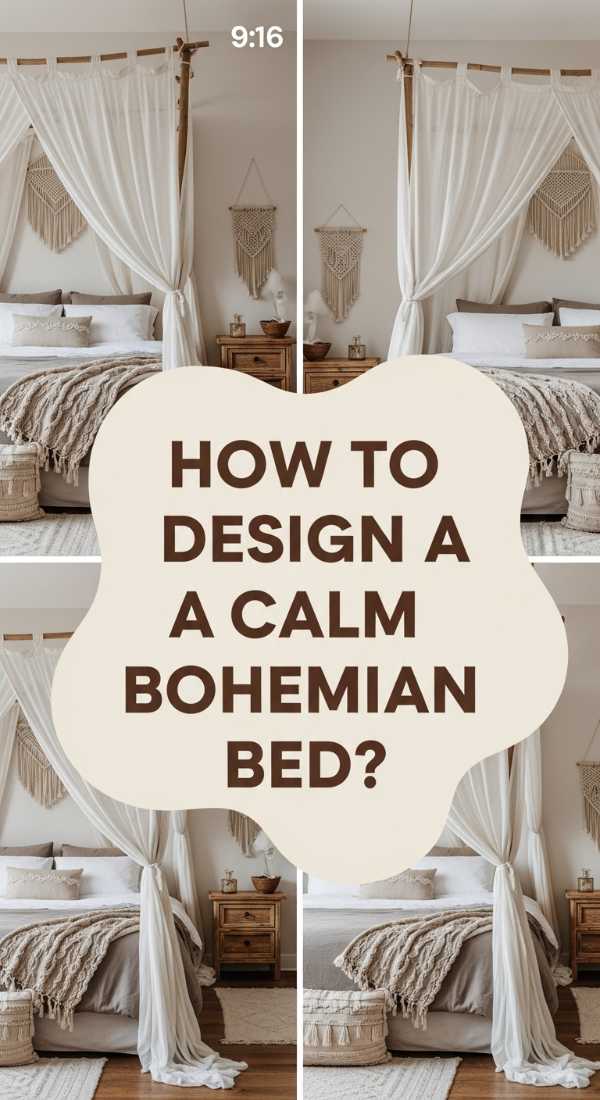
Why we love this
The bohemian bed is a temple of rest, a cloud-like retreat where the stresses of the world simply melt away. We love the combination of a natural rattan headboard with a mountain of linen bedding that only gets softer and better with every wash. It’s about the feeling of cool, breathable fabric against your skin and the sight of layered textures—from a chunky knit foot-blanket to a delicate lace canopy—that make going to sleep feel like a luxurious, spiritual experience every single night.
Essential Elements:
- Rattan, wicker, or carved wood headboard
- Linen or 100% cotton duvet cover
- Layered quilts and kantha throws
- Macramé bed canopy
- Under-bed storage baskets
How to make it
- Select the frame: Choose a bed frame made of natural materials like light oak or rattan to bring an earthy, grounded energy to the bedroom.
- The base layer: Use a high-thread-count linen sheet set in a neutral tone like oatmeal or terracotta to provide a breathable, soft foundation.
- Pile on the warmth: Layer a heavy, patterned quilt over the duvet, then fold a chunky knit throw across the bottom third of the bed for visual weight.
- The crowning touch: Install a simple hoop macramé canopy above the headboard, allowing the fringe to frame your sleeping area like a protective cocoon.
- Visual cue for completion: Your sanctuary is ready when the bed looks so cozy and texturally rich that it becomes the undeniable centerpiece of the room.
How to Master Bohemian Interior Design for a Personalized Home

Why we love this
Mastering the ‘boho’ look is an exercise in creative freedom; it’s about trusting your intuition and surrounding yourself with objects that spark joy and nostalgia. We love the lack of rigidity—the way a mid-century modern chair can sit comfortably next to a hand-carved African stool. It’s a design style that grows with you, allowing for constant evolution as you travel, collect, and change. This personalization creates a home that isn’t just a house, but a living biography of your tastes and experiences.
Essential Elements:
- A mix of vintage and modern furniture
- Global textiles and patterns
- An abundance of indoor greenery
- Handmade or artisanal accents
- Warm, layered lighting schemes
How to make it
- Pick a color palette: Start with a neutral base (creams and tans) and add 2-3 ‘soul’ colors like deep teal, mustard yellow, or burnt orange to tie the rooms together.
- Source with intention: Visit thrift stores and local markets to find unique pieces that have a ‘patina’ or a history, avoiding mass-produced sets.
- Create ‘vignettes’: Arrange small groups of objects—a candle, a book, and a crystal—on surfaces to create tiny moments of beauty throughout the home.
- Focus on flow: Ensure there is enough space to move between the eclectic furniture, maintaining a relaxed, airy atmosphere rather than a cluttered one.
- Visual cue for completion: You have mastered the design when the space feels balanced, curated, but still deeply comfortable and lived-in.
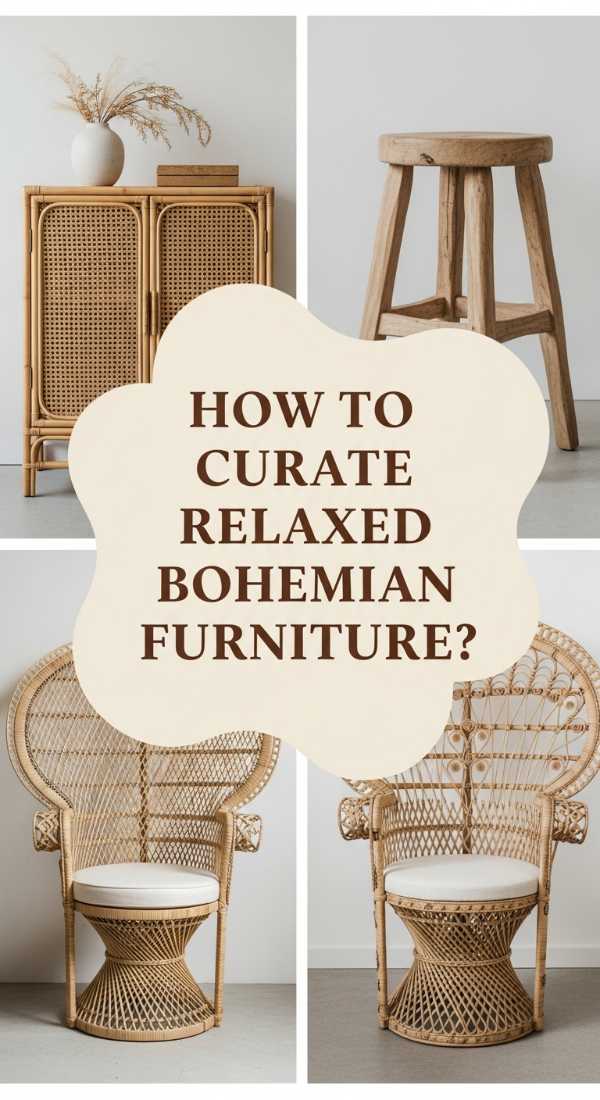
How to Curate Bohemian Furniture for a Relaxed Atmosphere
Why we love this
Bohemian furniture is the opposite of corporate; it is curvy, worn-in, and full of character. We love pieces that invite you to lounge rather than sit upright—think oversized papasan chairs, low-slung hammocks, and distressed wood tables that don’t mind a few water rings from a tea mug. These pieces bring a sense of history and ease to a room, suggesting that the home is a place for living, laughing, and creating, rather than just a showpiece for guests.
Essential Elements:
- Vintage bamboo or rattan chairs
- Distressed wood dining table
- Upholstered velvet armchairs
- Low-seated coffee tables
- Hammocks or hanging chairs
How to make it
- Choose for comfort: When selecting chairs, always opt for pieces that allow you to tuck your legs up, fostering a truly relaxed posture.
- Mix the eras: Pair a sleek 1960s sideboard with a heavily carved 19th-century trunk to create a sense of timelessness.
- Softness check: If a piece of furniture is made of a hard material (like wood or metal), immediately soften it with a sheepskin or a fabric cushion.
- Placement for conversation: Arrange furniture in ‘nooks’ that face each other, encouraging face-to-face interaction and a cozy, communal vibe.
- Visual cue for completion: The furniture curation is finished when every seat in the house feels like the ‘best seat,’ offering both comfort and a great view.
How to Style a Bohemian Wall for Deep Visual Texture

Why we love this
Visual texture is the secret ingredient that makes a bohemian wall feel ‘alive’ rather than flat. We love the interplay of light and shadow created by 3D elements like hanging baskets, wall-mounted plants, and textured wallpapers or limewash paints. It’s a feast for the eyes that changes throughout the day as the sun moves, highlighting the ridges of a woven fan or the soft drape of a textile. This depth makes a room feel mysterious and layered, inviting you to look closer and discover hidden details.
Essential Elements:
- Limewash or textured wall paint
- Woven wall fans and hats
- Floating wooden ledges
- Trailing wall plants (like Pothos)
- Metallic wall accents (brass or copper)
How to make it
- Prep the canvas: Apply a limewash paint in a warm ‘greige’ or sandy tone to give the wall a natural, stone-like texture before adding any decor.
- Layer vertically: Start from the ceiling with hanging planters, then work your way down with wall-mounted art and baskets.
- Create ‘pop’ with metal: Intersperse a few brass elements among the natural fibers to catch and reflect light, adding a touch of ‘glam’ to the bohemian earthiness.
- Use plants as ‘connectors’: Let the vines of a Pothos plant trail over the edges of frames or baskets to soften the lines and link separate decor pieces.
- Visual cue for completion: The wall is styled when it has a 3D quality that makes you want to reach out and touch the different materials.
Embracing the Boho Spirit
Creating a dreamy bohemian home is a journey, not a destination. It’s about the slow accumulation of things you love and the brave mixing of patterns that shouldn’t work—but somehow do. As you implement these steps, remember that your home is a reflection of your own beautiful, eclectic spirit. Don’t be afraid to break the rules, add one more pillow, or bring in another plant. In the world of bohemian design, more is more, and the most important element is always the love you put into your space.
Bohemian Home FAQ
Q: How do I keep my bohemian home from looking cluttered?
A: The key is ‘intentional grouping.’ Instead of scattering items everywhere, cluster them into vignettes. Use trays to ground small objects and ensure there is enough ‘white space’ on the floors and walls so the eye has a place to rest between the textures.
Q: Can I do boho decor on a budget?
A: Absolutely! The boho style thrives on thrifted, vintage, and DIY items. Visit local charity shops, Facebook Marketplace, and garage sales. A simple can of spray paint for a frame or a new handmade textile can transform a space without breaking the bank.
Q: Is bohemian design suitable for small apartments?
A: It’s actually perfect for small spaces! Using mirrors to reflect light, vertical wall decor to draw the eye up, and multi-functional floor seating makes a small room feel cozy and expansive rather than cramped.