

There is something truly soul-stirring about pulling into your driveway after a long day and feeling an immediate sense of peace wash over you. Your home is your sanctuary, but the magic shouldn’t stop at the front door. I truly believe that our outdoor spaces are the lungs of our homes—places where we can breathe deeply, watch the seasons shift, and create memories under the open sky.
Lately, I’ve been obsessed with the idea of ‘dreamy landscaping.’ It’s more than just mowing the lawn; it’s about creating a narrative with nature. Whether you have a sprawling backyard or a tiny sliver of a side yard, there is so much potential to turn that patch of earth into a curated oasis that reflects your soul. From the scent of blooming jasmine on a summer evening to the crisp architectural lines of a modern garden, let’s dive into how you can design your own slice of heaven.
How to Elevate Front Yard Landscaping for Instant Curb Appeal

Why we love this
A well-executed front yard feels like a warm, welcoming hug before you even reach the porch. We love the way crisp, clean lawn edges contrast with the soft, billowing textures of ornamental grasses and the vibrant pops of seasonal color. There is a specific sensory joy in seeing the morning dew sit perfectly on a manicured hedge, and the subtle, earthy aroma of fresh cedar mulch that signals a home is loved and cared for. It creates a rhythmic visual flow that guides the eye naturally toward your front door with elegance and grace.
Essential Elements:
- Defined stone or brick edging
- Layered foundation plantings
- Professional-grade LED landscape lighting
- A focal point specimen tree (like a Japanese Maple)
- Fresh organic dark mulch
How to make it
- Begin by defining your ‘hard edges’—use a spade or a mechanical edger to create deep, clean lines between your lawn and planting beds to ensure a professional finish.
- Evaluate your soil health by testing the pH; amend the soil with high-quality compost and organic matter to ensure your plants have the nutrient ‘fuel’ they need to thrive.
- Select a hierarchy of plants, placing taller evergreen shrubs at the back to serve as a year-round anchor and shorter, colorful perennials in the foreground.
- Install low-voltage path lights at 6-foot intervals, angling them slightly away from the eyes to create a soft, ethereal glow rather than a harsh glare.
- Apply a 3-inch layer of double-shredded hardwood mulch, keeping it a few inches away from the base of trunks to prevent rot while locking in essential moisture.
How to Plan a Front Yard Garden Design for a Blooming Entrance

Why we love this
There is nothing quite as romantic as walking through a garden that feels like it’s in a constant state of celebration. We adore the symphony of colors—from the dusty purples of lavender to the creamy whites of climbing roses—that dance together in the breeze. The air here is always heavy with the sweet, honey-like scent of nectar-rich flowers, and the soft humming of bees adds a layer of living music to your entrance. It transforms a simple walk to the mailbox into a mindful journey through a floral wonderland.
Essential Elements:
- Pollinator-friendly perennials
- Climbing vines or trellises
- A winding stone pathway
- Varying bloom cycles (Spring through Fall)
- Birdbaths or water features
How to make it
- Map your sun exposure throughout the day; identify ‘hot zones’ that receive 6+ hours of direct light and ‘cool zones’ with dappled shade to match plants to their ideal climate.
- Layout a winding path using flagstones or pea gravel, ensuring the width is at least 3 feet to allow for a comfortable, unhurried walking pace.
- Plant in ‘drifts’ rather than single spots—group 3 to 5 of the same species together to create bold sweeps of color that look intentional and lush.
- Incorporate verticality by installing a cedar trellis near the entryway and training climbing Clematis or Jasmine to grow upwards, softening the architectural lines of the house.
- Deadhead spent blooms weekly during the height of summer to encourage the plants to redirect energy into new flower production for a continuous show.
How to Curate Backyard Landscaping Designs for an Outdoor Oasis

Why we love this
The backyard is where the soul of the home truly resides—it’s a private theater for starlit dinners and slow Sunday mornings. We love the feeling of ‘outdoor rooms’ that provide a sense of enclosure and intimacy, using tall privacy hedges as living walls. There’s a tactile luxury in stepping onto a smooth stone patio that’s been warmed by the sun, or the cooling sensation of a breeze passing through a weeping willow. It’s about creating a space that feels entirely separate from the stresses of the outside world.
Essential Elements:
- A central social hub (Fire pit or dining area)
- Privacy screening (Hedges or fencing)
- Soft ambient string lighting
- Weather-resistant outdoor rugs
- Zoned activity areas
How to make it
- Identify your primary ‘anchor’—decide if the yard revolves around a dining table or a fire feature, and center your design geometry around this focal point.
- Create ‘walls’ using fast-growing evergreens like Arborvitae or skip laurels to block sightlines from neighbors and create an immediate sense of seclusion.
- Level the ground for your patio area using a base of compacted crushed stone followed by a layer of leveling sand before laying your pavers or flagstones.
- String high-quality Edison bulbs in a ‘zig-zag’ pattern across the main seating area, ensuring they are high enough to clear heads but low enough to feel intimate.
- Layer in soft goods like outdoor pillows and rugs to dampen sound and add a tactile warmth that mimics the comfort of an indoor living room.
How to Achieve Simple Landscaping Front Yard for Minimalist Beauty
Why we love this
Minimalism in the garden is all about the power of ‘less is more,’ and we are obsessed with the quiet confidence it exudes. We love the architectural precision of a single, perfectly placed agave or the rhythmic repetition of boxwood spheres against a bed of white river stones. There is a visual ‘hush’ that comes with a limited color palette—mostly greens, greys, and blacks—allowing the textures of the plants and the shadows they cast to become the main event. It feels modern, sophisticated, and incredibly tranquil.
Essential Elements:
- Monochromatic plant palette
- Geometric planting patterns
- Decorative rock or gravel mulch
- Clean-lined concrete planters
- Ornamental grasses
How to make it
- Strip back the existing clutter; remove any patchy grass or overgrown shrubs to create a ‘blank canvas’ of leveled soil.
- Choose three main species—perhaps an architectural grass, a structural shrub, and a groundcover—and repeat them in a grid or linear pattern for a disciplined look.
- Use metal landscape edging to create razor-sharp divisions between your gravel beds and any walking paths, maintaining a high-contrast aesthetic.
- Select large, oversized concrete or matte black planters to flank the entryway, filling them with a single variety of plant for a bold, singular statement.
- Replace traditional wood mulch with Mexican beach pebbles or white crushed marble to provide a clean, maintenance-free base that highlights plant silhouettes.
How to Optimize Side Yard Landscaping for Functional Style
Why we love this
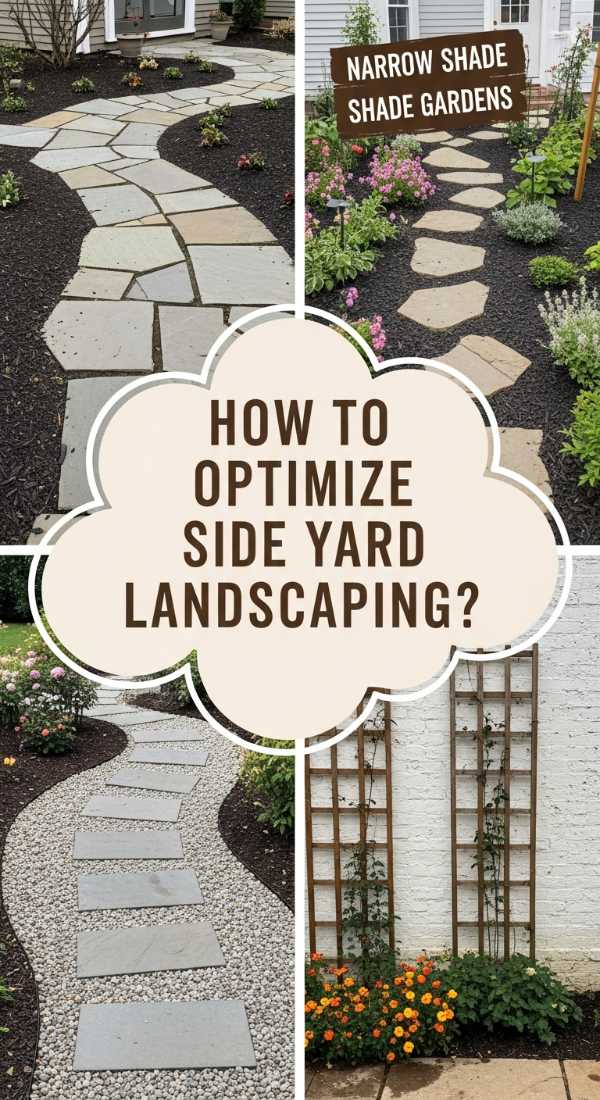
Side yards are often the ‘forgotten’ spaces, but we love the challenge of turning a narrow passage into a secret, functional corridor. There’s a wonderful sense of discovery when a side yard is transformed with a stepping-stone path nestled in soft moss or bright green groundcover. We love how a well-designed side yard can serve a dual purpose—hiding unsightly trash bins behind beautiful cedar screens while providing a lush, shaded microclimate for ferns and hostas to thrive. It’s small-scale gardening at its most creative.
Essential Elements:
- Stepping stones or pavers
- Shade-tolerant groundcovers (like Irish Moss)
- Hidden storage solutions
- Vertical wall gardens
- Narrow-profile shrubs
How to make it
- Clear out any debris and address drainage issues first; ensure the ground slopes slightly away from the foundation to prevent water pooling in narrow areas.
- Lay down a weed-barrier fabric before placing large, flat flagstones as ‘steps,’ spacing them about 18 inches apart for a natural walking stride.
- Fill the gaps between stones with a ‘steppable’ groundcover like Creeping Thyme or Moss, which releases a gentle fragrance when trodden upon.
- Build or buy a ‘hide-away’ enclosure for AC units and bins using horizontal slats that allow for airflow while providing a clean, modern visual screen.
- Utilize the vertical space on fences by hanging narrow planter boxes filled with shade-loving plants like ferns or impatiens to add life without taking up floor space.
How to Design Modern Backyard Landscaping for a Contemporary Home

Why we love this
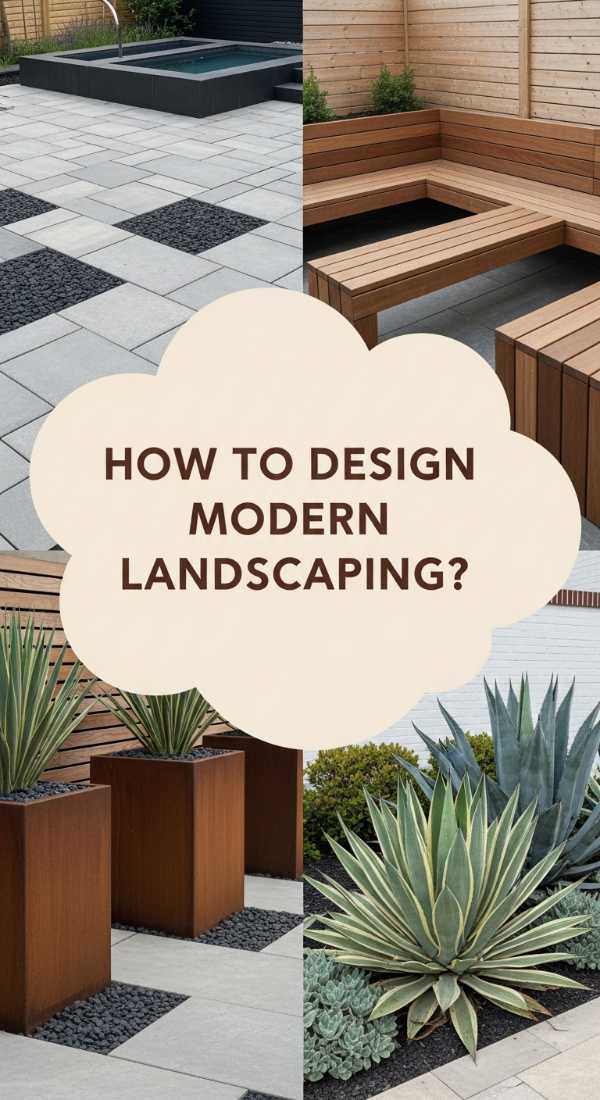
Modern landscaping is the perfect marriage of nature and geometry, and we love the sleek, high-end feel it brings to a property. We are captivated by the use of ‘negative space’—where the absence of plants is just as important as their presence. The use of industrial materials like Corten steel, smooth poured concrete, and dark wood decking creates a stunning backdrop for structural plants. It’s a look that feels curated, intentional, and effortlessly cool, providing a seamless transition from a modern interior to the great outdoors.
Essential Elements:
- Poured-in-place concrete pads
- Corten steel raised beds
- Black or dark grey fencing
- Structural plants (like Horsetail or Yucca)
- Linear fire features
How to make it
- Design your layout using long, linear lines and right angles to mirror the architecture of a contemporary home; avoid soft curves in favor of bold geometry.
- Install oversized rectangular concrete pavers with wide gaps filled with black basalt gravel to create a high-contrast, ‘floating’ walkway effect.
- Incorporate metal elements like Corten steel planters, which will develop a beautiful rust-colored patina over time, adding warmth to the cool concrete.
- Focus on ‘foliage over flowers’—choose plants with interesting shapes and leaf textures rather than traditional blooming bushes to maintain a clean aesthetic.
- Integrate a built-in linear gas fire pit as the centerpiece of the seating area, surrounding it with low-profile, modular outdoor furniture.
How to Master Low Maintenance Landscaping Front Yard for Busy Owners
Why we love this
We love low-maintenance landscaping because it proves that you don’t have to be a slave to your garden to have a stunning home. There is a deep satisfaction in a ‘set it and forget it’ design that looks lush year-round with minimal intervention. We adore the use of hardy evergreens and drought-tolerant succulents that maintain their deep greens and architectural shapes regardless of the weather. It’s the ultimate luxury for the busy homeowner—a yard that stays beautiful while you spend your weekends actually enjoying it.
Essential Elements:
- Slow-growing evergreen shrubs
- Drip irrigation systems
- High-quality artificial turf or clover
- Perennial ornamental grasses
- Rock mulching
How to make it
- Select ‘workhorse’ plants that are native to your specific region, as they are naturally adapted to the local rainfall and soil, requiring less supplemental watering.
- Install an automated drip irrigation system buried beneath the mulch to deliver water directly to the roots, reducing evaporation and weeding needs.
- Group plants with similar water needs together (hydro-zoning) to ensure you aren’t over-watering some while under-watering others.
- Use a heavy-duty landscape fabric under a layer of decorative stone or lava rock to virtually eliminate weed growth for years at a time.
- Choose ‘dwarf’ varieties of popular shrubs that are genetically programmed to stay small, removing the need for frequent pruning or shaping.
How to Perfect Landscaping Against House for a Polished Look
Why we love this
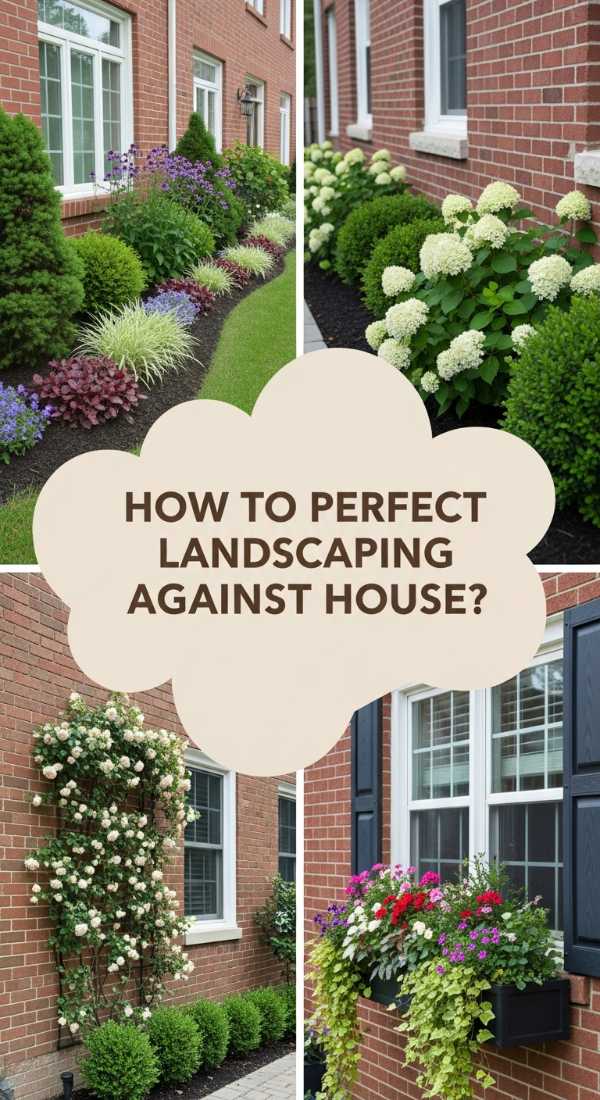
The space where your garden meets your walls is the most critical transition in landscaping, and we love how a ‘polished’ foundation planting hides unsightly concrete bases. There is something so satisfying about the way soft green foliage ‘grounds’ a house, making it look as though it grew naturally out of the earth. We love the layering of textures—the way a glossy-leafed camellia looks against a brick facade, or how delicate ferns soften a stone foundation. It creates a seamless, high-end finish that defines the home’s silhouette.
Essential Elements:
- Layered heights (Back, Middle, Front)
- Evergreen foundation anchors
- Textural contrast (Broadleaf vs. Needle)
- Correct plant-to-wall spacing
- Trellises for vertical interest
How to make it
- Measure the distance from your foundation; ensure the ‘back row’ plants are placed at least 3 feet away from the wall to allow for airflow and house maintenance.
- Start with ‘anchor’ plants at the corners—larger shrubs or small trees that ‘soften’ the sharp vertical lines of the house corners.
- Arrange your plants in three tiers: tall shrubs in the back, medium perennials in the middle, and low-growing groundcover or annuals at the very edge.
- Match the plant colors to your home’s trim or siding—for example, use chartreuse foliage against dark grey walls for a vibrant, modern pop.
- Apply a consistent, deep edge to the bed that follows the line of the house, creating a tidy ‘frame’ that makes the entire property look professionally designed.
How to Conquer Hillside Landscaping for a Dramatic Sloped Garden
Why we love this
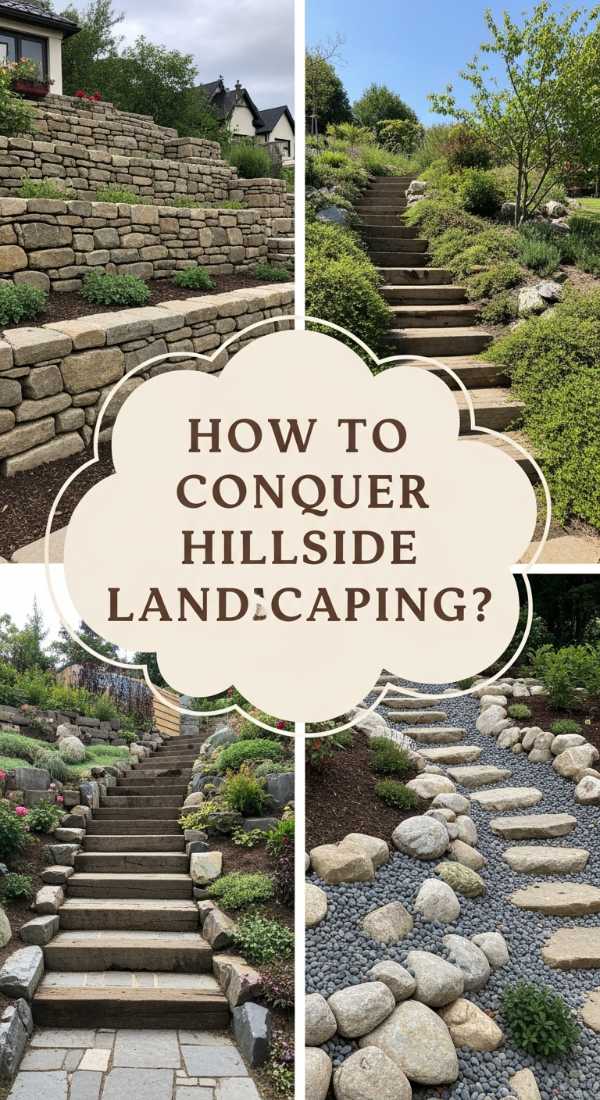
Hillsides offer a unique opportunity for drama and depth that flat yards just can’t match, and we love the ‘hanging garden’ effect of a well-landscaped slope. There is a magnificent visual payoff when you look up at a series of stone terraces overflowing with cascading flowers and trailing vines. We love how the verticality allows you to see every layer of the garden at once, creating a lush tapestry of color that feels grand and epic. It turns a challenging terrain into a masterpiece of engineering and art.
Essential Elements:
- Retaining walls (Stone, timber, or block)
- Deep-rooted erosion control plants
- Built-in stone stairs
- Creeping trailing plants (like Creeping Phlox)
- Tiered planting levels
How to make it
- Address ‘slope creep’ by installing a series of low retaining walls rather than one tall one; this creates manageable ‘shelves’ for planting and reduces soil pressure.
- Excavate the ‘treads’ for your hillside stairs, ensuring each step is level and reinforced with gravel and sand before placing your heavy stone blocks.
- Plant ‘creepers’ and ‘spreaders’ like Juniper or Forsythia on the steepest parts of the slope; their aggressive root systems act as natural ‘rebar’ to hold the soil in place.
- Incorporate a variety of heights on each terrace to prevent the ‘stair-step’ look from appearing too rigid; let some plants spill over the edges for a natural look.
- Install a heavy-duty drainage pipe (French drain) behind your retaining walls to prevent hydrostatic pressure from building up and causing wall failure during heavy rain.
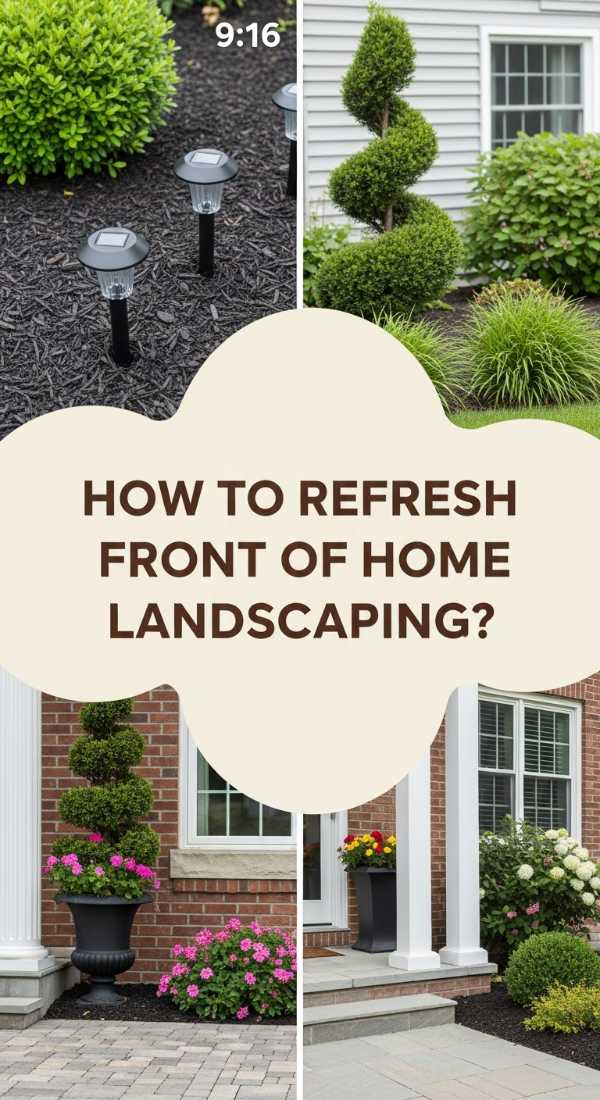
How to Refresh Front of Home Landscaping Ideas for a Modern Glow Up
[IMAGE_10]
Why we love this
Sometimes all a home needs is a thoughtful ‘glow up’ to feel brand new again, and we love the instant gratification of a landscape refresh. There’s a certain magic in swapping out dated, overgrown bushes for sleek, airy grasses and modern lighting. We love the way fresh black mulch makes every green leaf pop with newfound intensity, and how a freshly painted front door paired with new modern planters can completely change the ‘vibe’ of a house in a single weekend. It’s about breathing new life into familiar spaces.
Essential Elements:
- Upgraded modern house numbers
- Modern, oversized porch planters
- Updated light fixtures
- Pruned and reshaped existing shrubs
- New, high-contrast mulch
How to make it
- Perform a ‘deep prune’ on all existing greenery; remove dead wood and thin out the centers of crowded shrubs to allow light and air to penetrate the core.
- Remove any ‘dated’ elements like plastic edging or scalloped bricks and replace them with hidden metal edging for a much sleeker, more expensive look.
- Replace old, yellowing porch lights with modern matte black or brass fixtures that feature clean lines and warm-temperature LED bulbs.
- Install new, bold house numbers in a contemporary font, mounting them directly to the siding or onto a dedicated wooden plaque for a custom feel.
- Top off all beds with a fresh 2-inch layer of black or dark brown mulch to provide a high-contrast background that makes the architecture of the home stand out.
Conclusion: Embracing Your Outdoor Sanctuary
Designing your dreamy landscape is a journey, not a destination. It’s about more than just curb appeal; it’s about creating a space that nourishes your spirit every time you step outside. Whether you’re conquering a steep hillside or simply tidying up the flower beds against your house, remember that nature is forgiving and ever-changing. Start small, focus on the details that bring you joy, and watch as your home transforms into the sanctuary you’ve always dreamed of. Happy planting!