
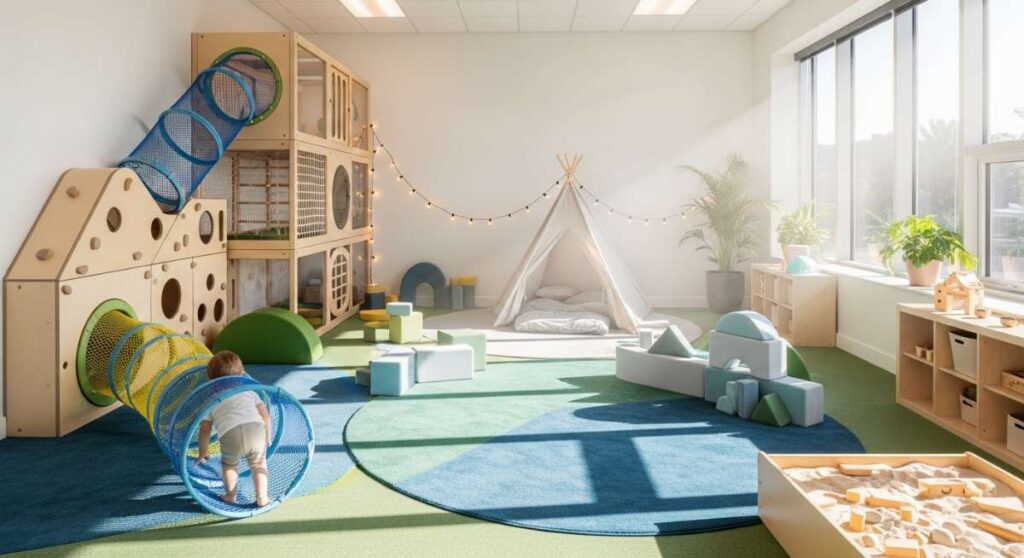
Beyond the Toy Box: Designing an Indoor Haven for Tiny Adventurers
I remember the moment I looked at our living room and realized it had been completely colonized by neon plastic. There was a stray building block under my heel, a battery-operated siren wailing from under the sofa, and a general sense of chaos that made my morning coffee feel less like a ritual and more like a survival tactic. It hit me then: our kids don’t just need toys; they need spaces. They need environments that beckon them to climb, imagine, and breathe—places where the architecture of the room does the heavy lifting so our nervous systems don’t have to.
Creating the ultimate play space is about more than just buying a swing set or a play tent. It’s about crafting a sanctuary that evolves with their curiosity. Whether you’re working with a sprawling backyard or a cozy apartment corner, the goal is the same: to design a haven where the ‘wild’ of childhood can live in harmony with the ‘warmth’ of home. Today, I’m sharing my roadmap for transforming everyday spaces into extraordinary playgrounds that feel as good as they look.
How to Design Dreamy Outdoor Play Areas for Endless Summer Fun
Why we love this
There is something deeply nostalgic about the scent of sun-warmed cedar and the rhythmic creak of a swing under a July sky. This design philosophy focuses on creating a sun-drenched escape where the air feels lighter and the possibilities feel endless. We love the way the golden hour light filters through slatted wooden roofs, casting dancing shadows across a soft, grassy expanse, and the tactile joy of bare feet meeting cool, natural surfaces after a long afternoon of play.
Essential Elements:
- Weather-resistant cedar wood structures
- Canvas sun sails for dappled shade
- Soft-fall grass or premium turf
- Integrated planter boxes for sensory gardening
- Built-in sandbox with a foldable cover
How to make it
- Begin by surveying your yard’s sun exposure during peak afternoon hours to identify the ‘cool zone’ for the main structure.
- Level the ground meticulously using a spirit level and crushed stone base to ensure the play tower sits perfectly flush without wobbling.
- Assemble the primary wooden frame, treating every joint with eco-friendly sealant to preserve the wood’s honey-toned aroma and texture.
- Install the sun sails at varying heights to create a dynamic, layered canopy that mimics the shifting shadows of a forest.
- Finish by surrounding the area with a deep border of mulch or turf, ensuring the transition from lawn to play zone is seamless and soft.
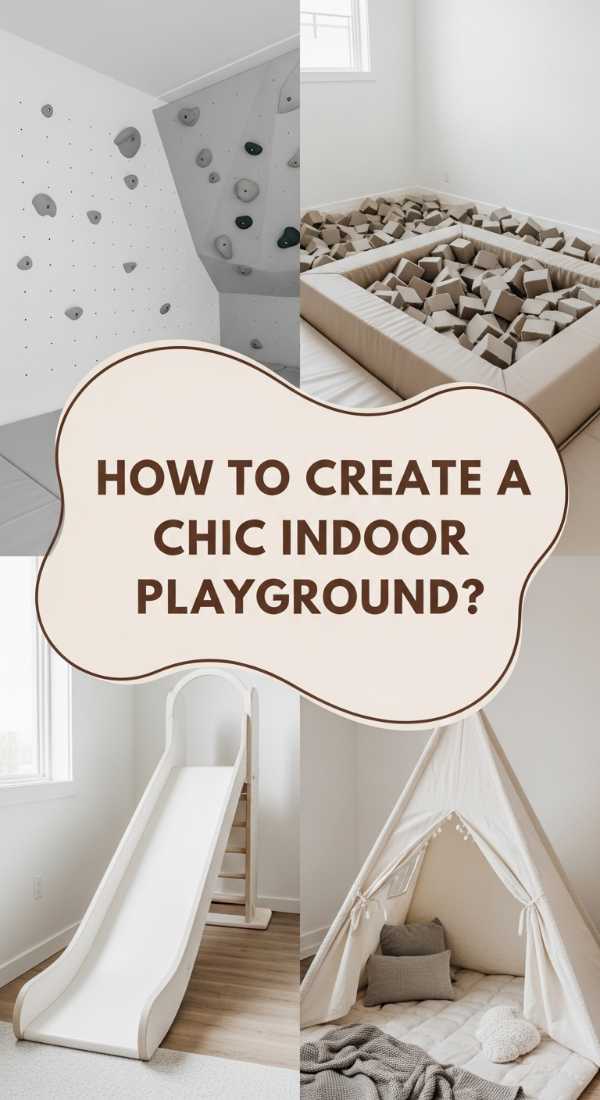
How to Create a Chic Indoor Playground for Rainy Day Magic
Why we love this
When the rain begins to lash against the windowpanes, there is an incredible comfort in retreating to a space that feels like a velvet-wrapped cocoon. A chic indoor playground replaces the ‘primary color overload’ with muted pastels, soft linen textures, and the gentle glow of warm LED lighting. It’s a sensory delight where the sound of pattering rain provides the soundtrack to quiet puzzles on a plush rug, making even the gloomiest Tuesday feel like a boutique staycation for the soul.
Essential Elements:
- Modular foam play blocks in neutral tones
- Wall-mounted climbing rungs or a Swedish ladder
- Padded floor mats with a linen-look finish
- Soft-glow fairy lights or dimmable sconces
- A minimalist wooden slide
How to make it
- Select a dedicated corner of the room and install high-density floor padding that absorbs sound and provides a cushioned landing for energetic jumps.
- Secure the climbing ladder to wall studs using heavy-duty lag bolts, testing the weight capacity to ensure it remains rock-solid during use.
- Arrange modular foam pieces into a ‘base camp’ configuration, allowing for open-ended reconfiguration by the children themselves.
- Mount the wooden slide at a gentle 30-degree angle, ensuring there is a clear two-foot ‘buffer zone’ at the base for safe exits.
- Layer the lighting by adding a warm-toned floor lamp with a fabric shade to eliminate harsh shadows and create an inviting, golden atmosphere.
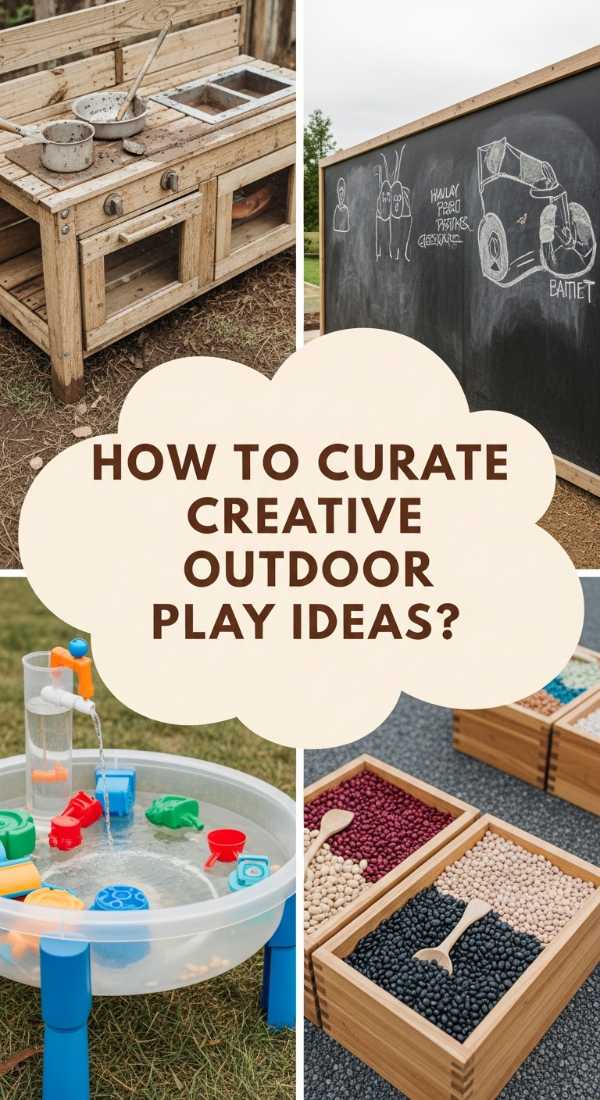
How to Curate Creative Kids Outdoor Play Area Ideas for Inspired Movement
Why we love this
Movement is the language of childhood, and this space is designed to be a vibrant conversation. We adore the juxtaposition of rugged textures—think thick hemp ropes and smooth recycled plastic—against the vibrant greens of the garden. It’s about the rush of cool wind against the face as they zip down a slide and the satisfying ‘thud’ of a successful landing on rubberized bark, all while the scent of blooming jasmine lingers in the air.
Essential Elements:
- Hemp rope climbing nets
- Recycled rubber pathway discs
- Interactive wall with outdoor musical instruments
- Zig-zag balance beams
- A heavy-duty tire swing
How to make it
- Map out a ‘flow circuit’ that encourages a natural progression from climbing to balancing to swinging.
- Anchor the hemp net between two sturdy posts, ensuring the tension is tight enough to support weight but loose enough to provide a tactile challenge.
- Set the balance beams into the ground using concrete footings, burying the base at least six inches deep for absolute stability.
- Install the musical wall (using repurposed pots or metal pipes) at chest height for the children, ensuring all edges are filed smooth.
- Clear a circular radius of six feet around the tire swing, filling the area with deep-fill engineered wood fiber to absorb high-impact movement.
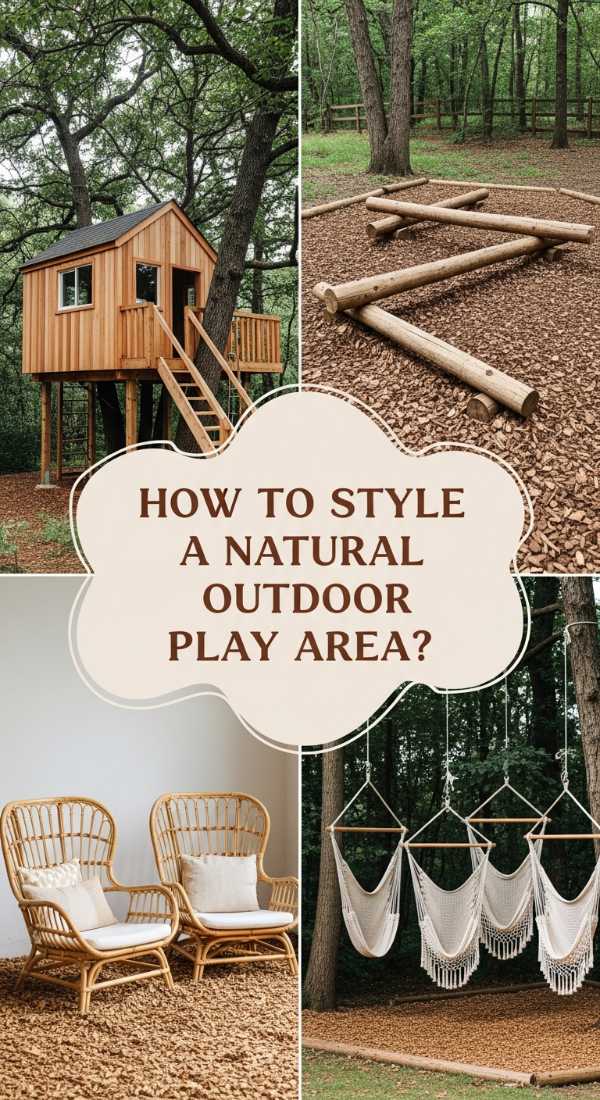
How to Style a Natural Outdoor Kids Play Area for Earthy Adventures
Why we love this
There is a profound, grounding magic in ‘dirt under the fingernails’ play. This aesthetic celebrates the raw beauty of the earth: the rough, honest texture of tree bark, the cool smoothness of river stones, and the earthy perfume of damp moss. It’s a space that feels less like a playground and more like a secret clearing in an ancient woods, where children can reconnect with the slow, steady rhythm of the natural world.
Essential Elements:
- Hollowed-out log tunnels
- River rock ‘rivers’ for sensory walking
- Willow branch teepees
- Edible berry bushes as natural fencing
- Mud kitchen with stainless steel bowls
How to make it
- Source untreated, debarked logs from a local arborist, ensuring they are free of pests and have been sanded to prevent splinters.
- Excavate a shallow trench for the ‘river,’ lining it with landscape fabric before filling it with smooth, multi-sized river stones.
- Construct the willow teepee by soaking long branches until pliable, then weaving them together and securing the apex with natural jute twine.
- Position the mud kitchen near a water source, building the frame from reclaimed pallet wood and installing a simple gravity-fed faucet.
- Plant a perimeter of blueberry or thornless blackberry bushes, which serve as both a tasty snack and a lush, living privacy screen.
How to Encourage Active Kids Outdoor Play for Healthy Hearts
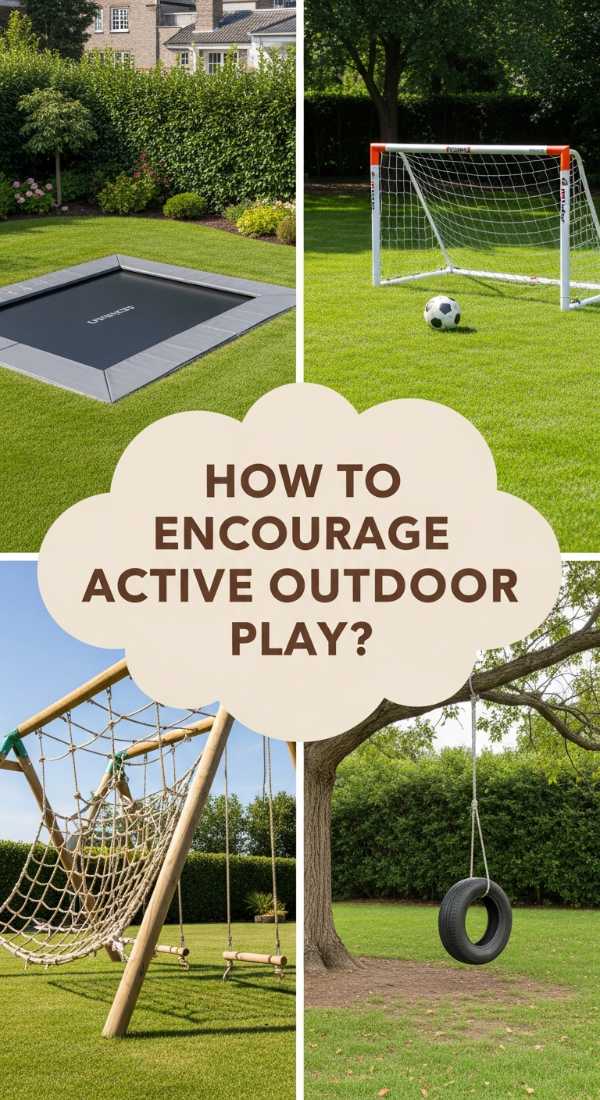
Why we love this
This is the high-energy heart of the home, where the atmosphere is charged with the sound of laughter and the rhythmic ‘bounce-bounce’ of a ball. We love the clean, athletic aesthetic of this space—the crisp lines of a painted court and the industrial-cool look of a basketball hoop. It’s about the glow of rosy cheeks after a spirited game of tag and the satisfying feeling of physical exhaustion that leads to the best night’s sleep imaginable.
Essential Elements:
- Polypropylene sports floor tiles
- Adjustable-height basketball hoop
- Mini soccer goals with weather-proof netting
- Agility ladder painted onto the ground
- A dedicated hydration station
How to make it
- Prep a flat concrete or asphalt pad, ensuring it is swept clean of debris and completely dry before beginning the layout.
- Snap chalk lines to define the ‘court’ area, then apply high-grip outdoor paint in a contrasting color for clear boundaries.
- Snap the interlocking floor tiles into place, starting from the center and working outward to ensure a tight, professional fit.
- Bolt the basketball system into the ground using a J-bolt anchor system, allowing the concrete to cure for at least 72 hours before use.
- Set up a permanent hydration station nearby with a wall-mounted cup dispenser and a heavy-duty cooler stand to keep play going.
How to Build Modern Kids Backyard Ideas for Family Harmony
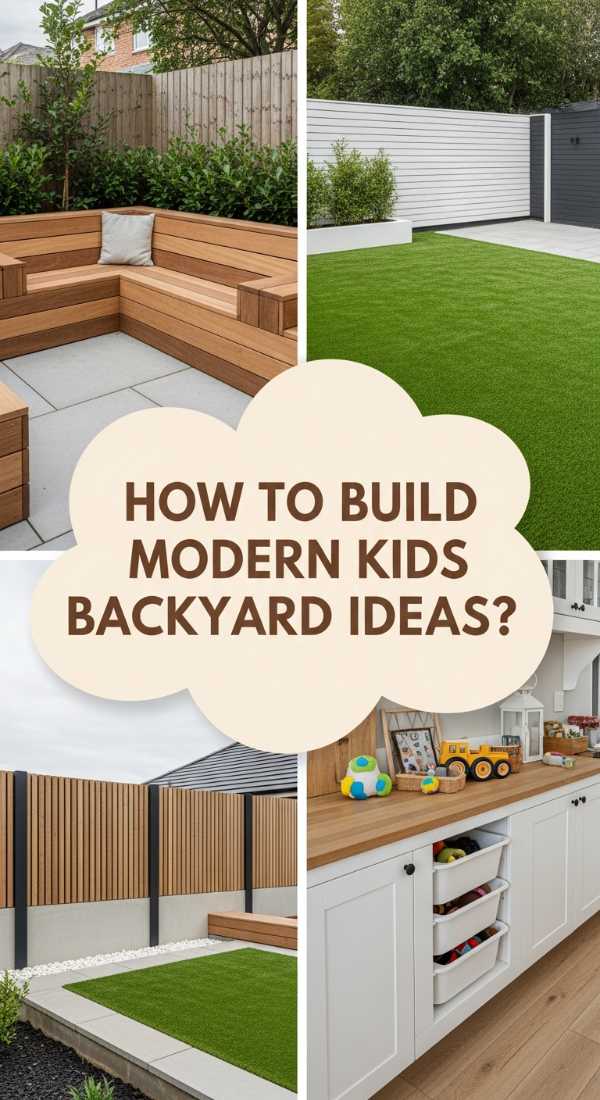
Why we love this
Designing for family harmony means creating a space where the grownups actually want to hang out too. This ‘modernist’ approach uses sleek lines, monochrome palettes, and high-end materials that blend play equipment with sophisticated landscaping. We love the feeling of sipping a chilled glass of wine on a built-in bench while the kids explore a nearby structure that looks more like a piece of sculpture than a plastic toy. It’s architectural, serene, and incredibly functional.
Essential Elements:
- Sunken seating areas with fire pits
- Modern geometric playhouses
- Black powder-coated metal accents
- Minimalist landscaping (ornamental grasses)
- Integrated LED strip lighting
How to make it
- Design the play structure using a ‘cubic’ philosophy, utilizing dark-stained wood and vertical slats to match the home’s modern architecture.
- Construct a sunken patio using large-format concrete pavers, leaving gaps for architectural moss or gravel for a high-end finish.
- Install the playhouse on a raised platform, using hidden fasteners to maintain the clean, screw-free look of the modern design.
- Tuck waterproof LED strips under the lips of steps and benches to provide a soft, ambient glow that makes the space usable after dark.
- Plant structural greenery like horsetail reed or ‘Karl Foerster’ grass in linear corten steel planters to define the zones without blocking sightlines.
How to Craft Magical Backyard Ideas for Kids for Whimsical Discovery
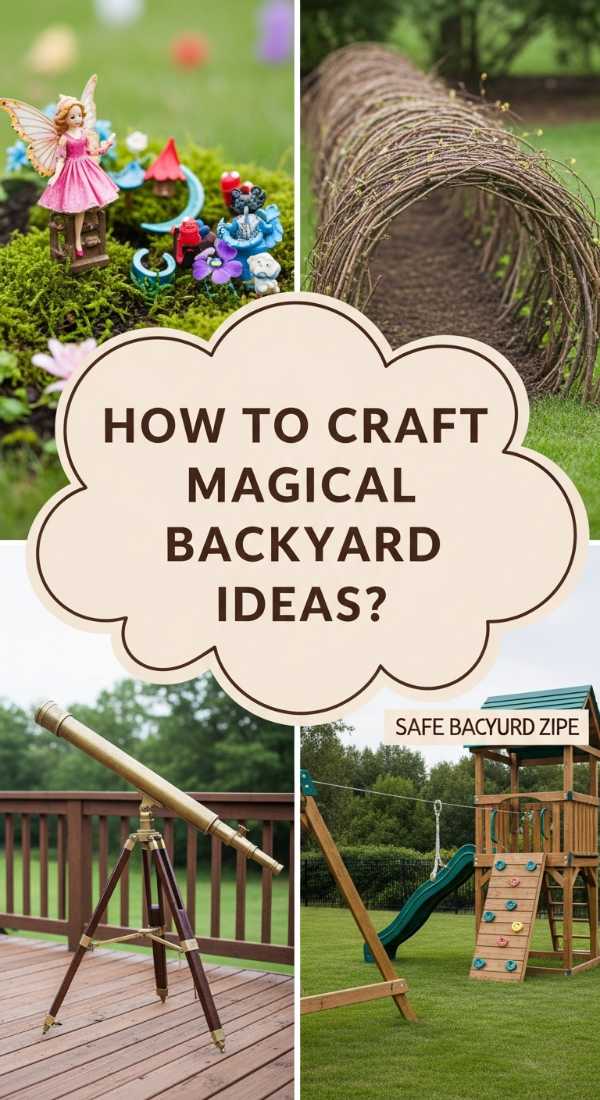
Why we love this
This is where fairy tales come to life. We are obsessed with the ‘hidden’ details: a tiny door at the base of a tree, the twinkle of solar-powered lanterns at dusk, and the soft rustle of ribbons tied to low-hanging branches. It’s a sensory feast of light and shadow, where the air feels heavy with mystery and the garden seems to whisper secrets to whoever is small enough to listen. It’s pure, unadulterated childhood whimsy at its finest.
Essential Elements:
- Solar-powered fairy lanterns
- A ‘secret’ path made of mismatched stepping stones
- Birdhouses painted in jewel tones
- A bridge over a dry creek bed
- Wind chimes with a soft, melodic tone
How to make it
- Create a winding path through the tallest plants in your garden, using varied stones to make the journey feel like an exploration.
- Hang solar lanterns at varying heights from tree branches, ensuring they receive enough daily sun to ‘bloom’ with light every evening.
- Build a small wooden bridge over a patch of blue-flowering groundcover to simulate a ‘magical river’ without the need for actual water.
- Install a ‘fairy door’ at the base of your most majestic tree, using weatherproof adhesive and a bit of moss to make it look ancient.
- Add a weather-proof ‘treasure chest’ hidden behind a bush, filled with magnifying glasses and smooth ‘dragon’ stones for kids to find.
How to Plan a Safe Outdoor Play Area for Total Peace of Mind
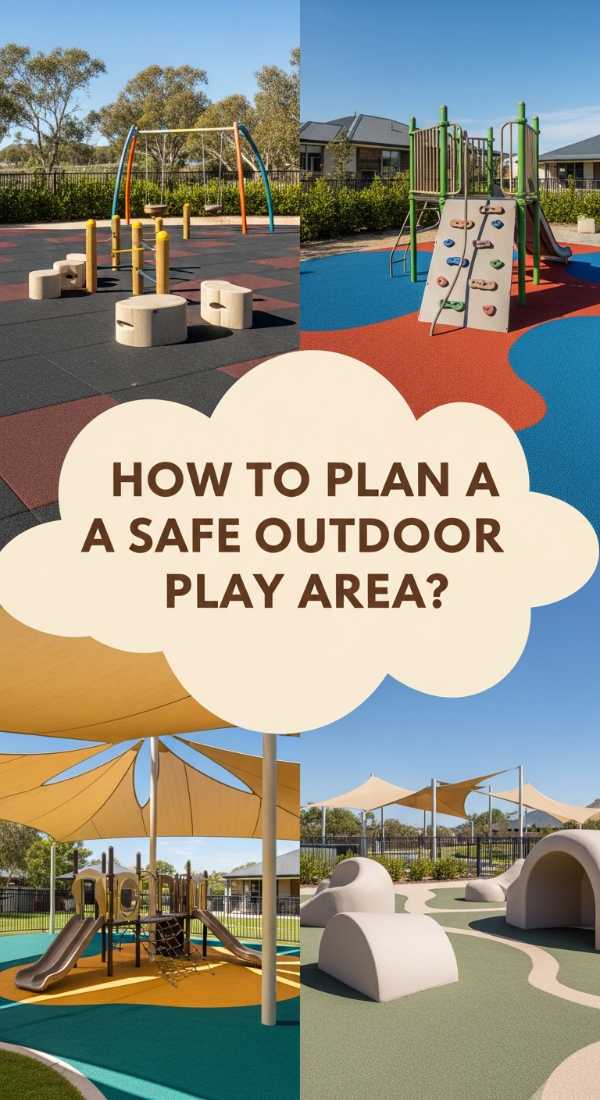
Why we love this
There is no greater luxury for a parent than the ‘deep exhale’—that moment you realize your children are exploring in a space designed entirely for their protection. We love the soft, springy give of high-quality rubber mulch and the sturdy, reassuring ‘clunk’ of a safety gate locking into place. This space feels like a warm hug; it’s clean, organized, and meticulously maintained so that the only thing parents have to focus on is the joy of the moment.
Essential Elements:
- Self-closing, lockable safety gates
- Impact-absorbing rubber mulch (IPEMA certified)
- Rounded edges on all wooden structures
- Shade structures with UPF 50+ protection
- Non-toxic, kid-safe plant varieties
How to make it
- Conduct a ‘pinch point’ audit of all equipment, ensuring no gaps exist between 3.5 and 9 inches where a head or limb could get stuck.
- Excavate the play area to a depth of 12 inches and fill with certified rubber mulch to provide a critical fall height rating of 10 feet.
- Install a perimeter fence with vertical pickets no more than 3 inches apart to prevent climbing or small bodies squeezing through.
- Apply a ‘sand-and-seal’ treatment to all wooden surfaces every spring to eliminate splinters and ensure the wood remains smooth to the touch.
- Audit your landscaping using a nursery guide to remove any plants that are toxic if ingested, replacing them with hardy, safe alternatives like lavender.
How to Organize a Minimalist Indoor Playground for Calm Playtime
Why we love this
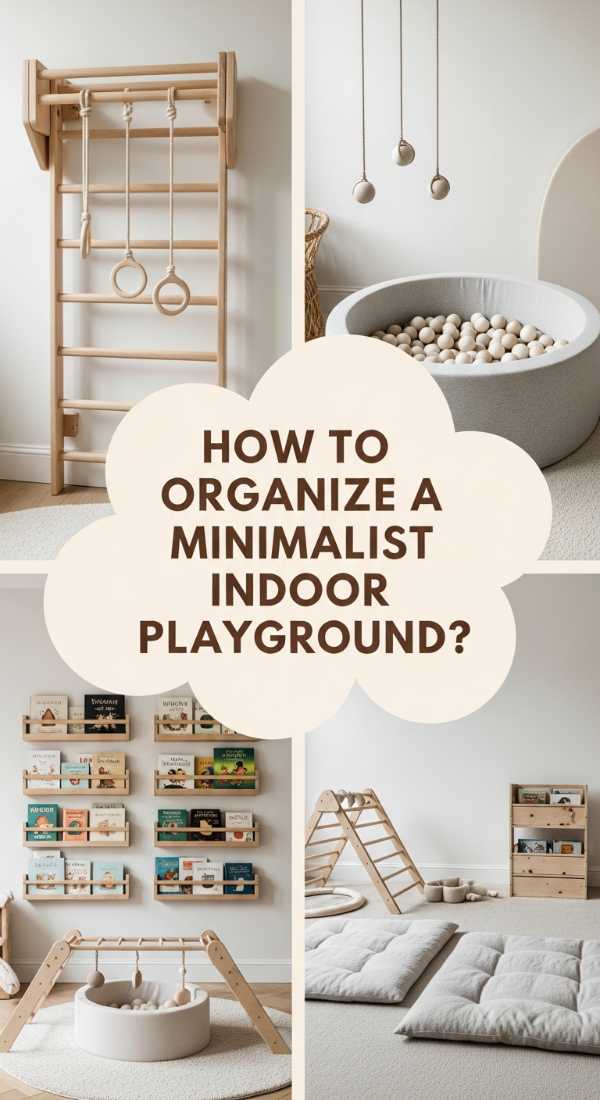
In a world of constant overstimulation, a minimalist play space is a breath of fresh air. We love the visual silence of white walls paired with warm wood, and the way a lack of clutter invites a deeper, more focused kind of play. It’s the feeling of a quiet morning where the only sound is the click of wooden blocks and the soft turning of pages in a cozy reading nook. It’s proof that ‘less’ truly is ‘more’ when it comes to fostering imagination.
Essential Elements:
- Floating wooden shelves at child-height
- Canvas storage bins for easy cleanup
- A simple floor-level Montessori bed or lounger
- Neutral-colored activity table
- Rotating toy displays
How to make it
- Clear the room completely and paint the walls in a warm, ‘broken white’ to create a bright, airy canvas that reflects natural light.
- Install low-profile shelving that allows children to see and reach their toys without help, encouraging independence.
- Implement a ‘toy rotation’ system, keeping only 5-7 high-quality toys out at a time and storing the rest in a hidden closet to prevent overwhelm.
- Set up a ‘focus zone’ with a small wooden table and chair, positioned near a window to provide plenty of natural task lighting for art.
- Use large canvas floor cushions instead of bulky furniture to keep the floor space open and flexible for movement.
How to Develop Sustainable Kids Backyard Ideas for Green Living
[IMAGE_10]
Why we love this
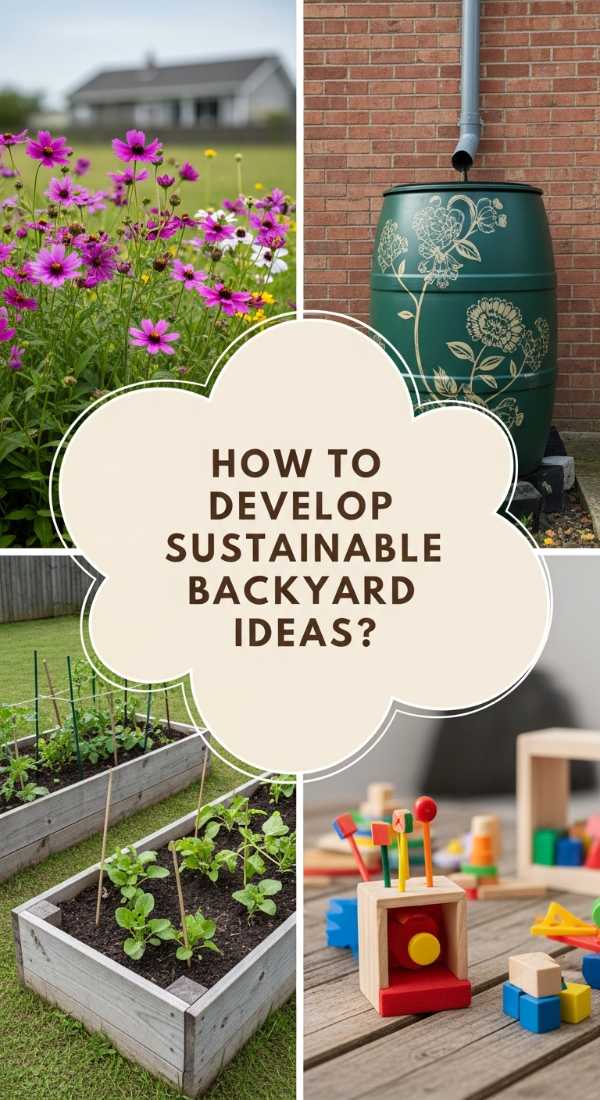
Teaching our children to love the earth starts in their own backyard. This design approach is a love letter to the environment, featuring the silver-gray patina of reclaimed wood and the industrious hum of a pollinator garden. We love the tactile experience of crumbling organic compost between fingers and the sight of a child watering a garden they helped plant. it’s a space that grows with them, teaching responsibility and stewardship through the simple act of play.
Essential Elements:
- Reclaimed wood play structures
- Rain barrels for water play and gardening
- Pollinator-friendly flower beds
- A mini composting station
- Solar-powered path markers
How to make it
- Source FSC-certified or reclaimed timber for all builds, ensuring the wood is untreated by harsh chemicals but naturally rot-resistant (like Black Locust).
- Install a rain barrel with a child-safe lid, connecting it to a small hose or watering can station for ‘chore play.’
- Build a raised garden bed at a height of 18 inches, allowing children to plant easy-to-grow veggies like cherry tomatoes and radishes.
- Design a ‘bug hotel’ using old pallets, pinecones, and hollow reeds to encourage beneficial insects to move into the play area.
- Replace traditional lighting with high-efficiency solar stakes that charge during the day and guide the way to the house at twilight.
Creating Your Family’s Signature Haven
Designing these spaces isn’t about perfection; it’s about presence. Whether you choose the sleek lines of a modern backyard or the cozy, minimalist corners of an indoor retreat, you are building a stage for the most important performance of your life: your children’s growth. Take it one step at a time, prioritize the textures and feelings that resonate with your family, and watch as your home transforms into a place where adventure is always just a room away.