
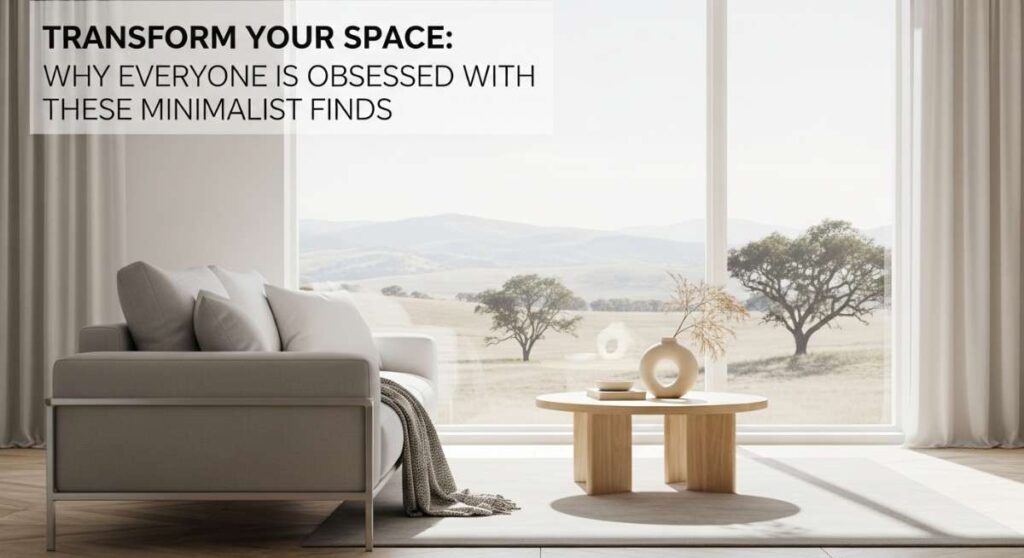
Transform Your Space: Why Everyone is Obsessed with These Minimalist Finds
Have you ever walked into a room and felt an immediate, overwhelming sense of peace? Not the kind of peace that comes from a lack of activity, but a profound clarity that stems from everything being exactly where it should be. For years, I struggled with ‘clutter-guilt,’ keeping items I didn’t need just because they filled the silence of a room. But lately, there is a shift happening—a viral movement toward minimalist decor that isn’t cold or sterile, but deeply soulful and warm. It’s about curating a life that feels as good on the inside as it looks on the outside.
We are all craving a reset. In a world that is constantly screaming for our attention, our homes should be the one place that whispers. This obsession with minimalist finds isn’t just a trend; it’s a collective deep breath. By focusing on quality over quantity and texture over noise, we are rediscovering what it means to truly inhabit our spaces. Let’s dive into how you can transform your home into the serene, aesthetic sanctuary you’ve been seeing all over your feed.
How to Create a Cozy Minimalist Living Room for Absolute Serenity

Why we love this
There is something deeply restorative about a room that balances negative space with incredibly soft, tactile elements. We love this look because it prioritizes the human experience, inviting you to sink into a plush, oversized sofa while your eyes rest on clean, uncluttered lines. Imagine the scent of a sandalwood candle wafting through the air, the feel of a thick wool rug beneath your bare feet, and the sight of soft sunlight hitting a textured plaster wall. It’s a sensory experience that grounds you, turning a simple living room into a private retreat from the chaotic digital world.
Essential Elements:
- Oversized modular sofa in oatmeal or cream.
- Low-profile oak coffee table with a natural grain.
- Hand-tufted wool rug in a monochromatic geometric pattern.
- Soft linen throw blankets in earthy tones.
- Dimmable warm-toned LED floor lamps.
How to make it
- Begin by clearing the entire room of small knick-knacks and ‘visual noise’ to establish a blank canvas.
- Position your largest piece, the sofa, away from the wall if space allows to create a ‘floating’ feel that encourages flow.
- Layer your rug first, ensuring it is large enough so that all furniture legs sit comfortably on top of it, which anchors the space visually.
- Introduce lighting at three different heights: a tall floor lamp for ambient glow, a table lamp for task lighting, and wall sconces for soft accents.
- Finish by adding exactly three high-quality decorative items to the coffee table—a book, a ceramic bowl, and a natural element like a dried branch.
How to Style a Small Living Room Apartment for Cozy Aesthetic Vibes
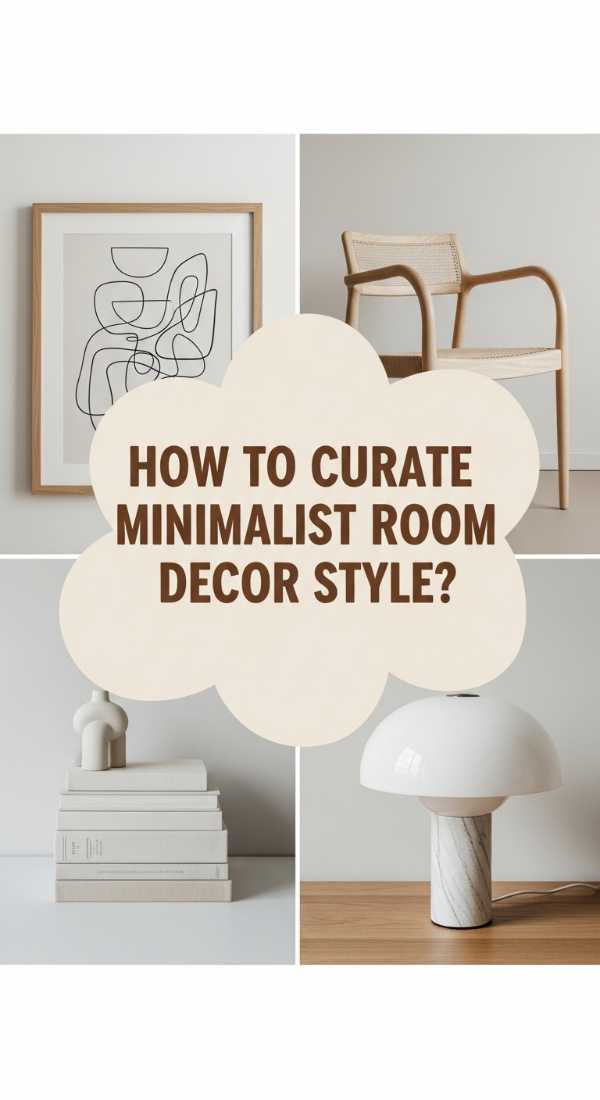
Why we love this
Small apartments often feel like they are closing in on us, but with the right minimalist approach, they can become the ultimate cozy jewel boxes. We love this style because it proves that luxury isn’t about square footage; it’s about the intentionality of every item. The interplay of mirrors reflecting soft light and light-toned woods creates an airy, breathable atmosphere. When you walk into a well-styled small space, you don’t notice the lack of room; you notice the warmth of a perfectly placed velvet cushion and the curated charm of a single, stunning piece of art.
Essential Elements:
- Wall-mounted shelving units to save floor space.
- Acrylic or glass coffee tables to maintain visual transparency.
- Floor-to-ceiling sheer linen curtains.
- Large arched floor mirror to bounce light.
- Multi-functional storage ottomans.
How to make it
- Measure your floor plan meticulously and select furniture that is scaled specifically for smaller dimensions; avoid ‘over-stuffed’ styles.
- Install your curtain rod several inches above the actual window frame and let the fabric ‘puddle’ slightly on the floor to create the illusion of height.
- Place a large mirror opposite your primary light source to double the perceived brightness of the room instantly.
- Use ‘invisible’ storage techniques, such as hidden drawers in coffee tables or decorative baskets under consoles, to keep surfaces clear.
- Stick to a monochromatic color palette (like shades of white, beige, and greige) to prevent the eye from being ‘stopped’ by harsh color transitions.
How to Curate Minimalist Room Decor for a Refined Home
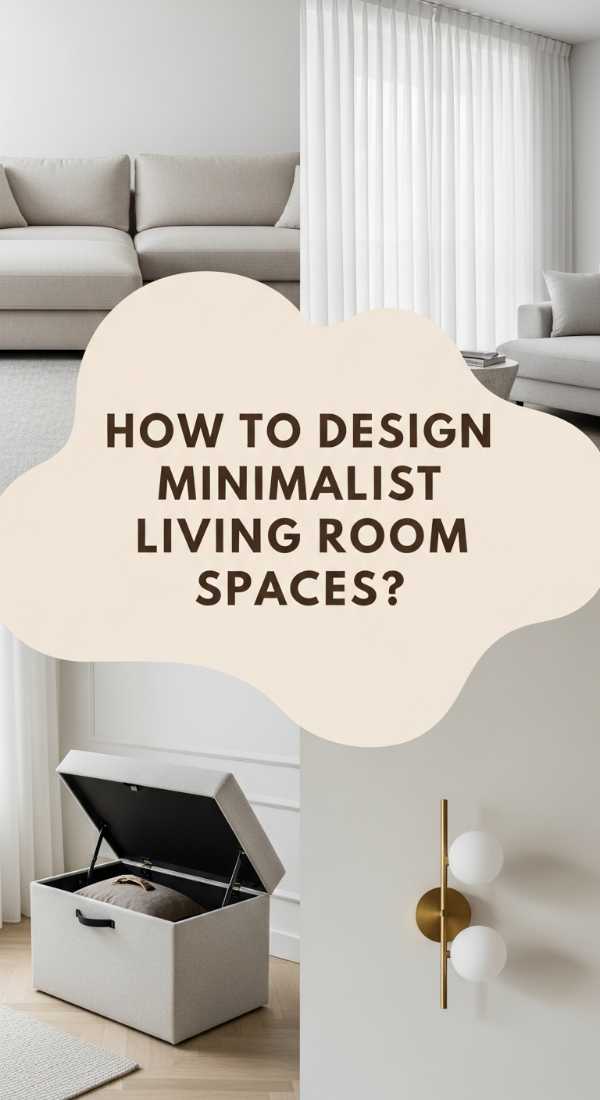
Why we love this
Refinement in minimalism is all about the ‘quiet luxury’ of materials. We love this curation because it moves away from mass-produced items and toward pieces that tell a story through their silhouette and texture. Think of a hand-thrown ceramic vase with a matte finish or a heavy travertine tray that feels cool to the touch. This approach creates a home that feels sophisticated and expensive without being flashy. It is the visual equivalent of a cashmere sweater—understated, high-quality, and timelessly elegant.
Essential Elements:
- Travertine or marble accent pieces.
- Hand-thrown ceramics with organic shapes.
- Black-and-white photography in thin metal frames.
- A single statement branch or leaf in a glass vessel.
- High-quality textiles like silk or heavy cotton.
How to make it
- Audit your current decor and remove anything that feels ‘temporary’ or doesn’t bring you genuine aesthetic joy.
- Choose a ‘material theme’—for example, focusing on stone and wood—and ensure every new piece fits within that material story.
- Group items in odd numbers (the rule of three) but keep significant space between the groups to allow each piece to ‘breathe.’
- Prioritize texture over color; if you have a white vase, pair it with a rough wooden pedestal to create visual interest through contrast.
- Invest in one ‘investment piece’ per room, such as a designer chair or an original painting, to act as the sophisticated anchor for the rest of the space.
How to Design a Minimalist Living Room for Small Spaces to Feel Expansive
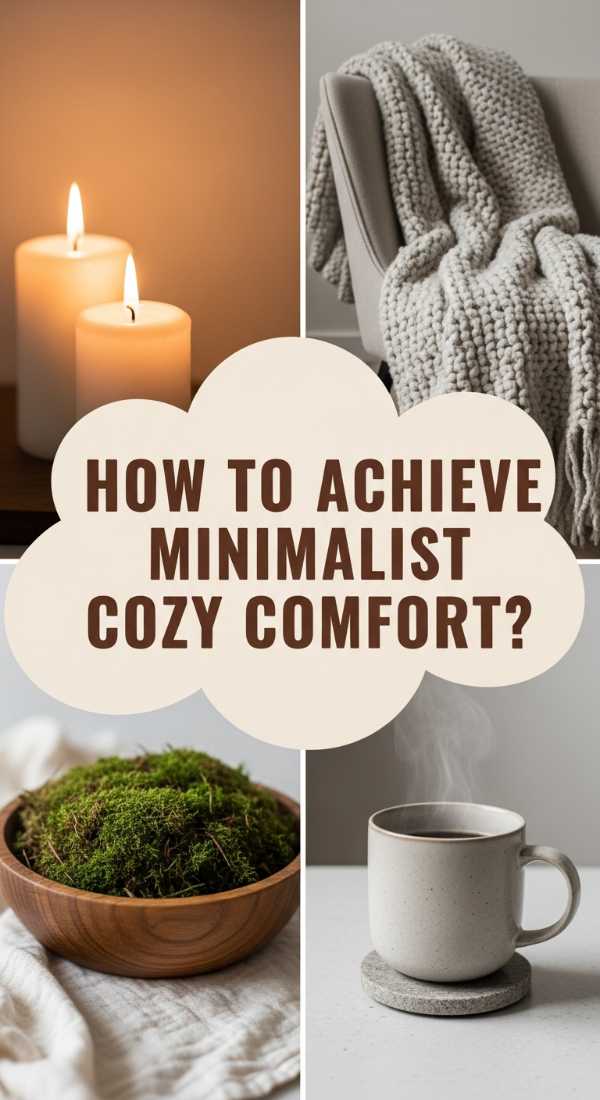
Why we love this
There is a specific magic in making a tiny room feel like an expansive gallery. We love this design philosophy because it challenges the idea that minimalism means ’empty.’ Instead, it’s about ‘intentional fullness.’ By using furniture with legs (rather than pieces that sit flat on the floor), you allow the eye to see more of the floor, which tricks the brain into perceiving more space. The result is a room that feels light, breezy, and incredibly high-end, regardless of its actual size.
Essential Elements:
- Leggy, mid-century modern inspired furniture.
- A pale, neutral color palette (think ‘cloud’ and ‘parchment’).
- Minimalist wall art with plenty of white space.
- Polished concrete or light-stained wood floors.
- Recessed lighting to avoid visual clutter on the ceiling.
How to make it
- Select a sofa and chairs with exposed legs to create ‘air’ underneath the furniture, making the floor area appear larger.
- Paint your walls, baseboards, and ceiling the same shade of off-white to eliminate ‘seams’ and make the walls recede.
- Choose a large-scale rug that goes almost to the walls; small rugs make a room look chopped up and tinier.
- Keep window treatments as simple as possible—think motorized roller shades that disappear during the day.
- Utilize vertical space with a single, tall, slender bookcase that draws the eye upward toward the ceiling.
How to Achieve Minimalist Cozy Comfort for Winter Nights
Why we love this
Winter is the ultimate test of minimalism—how do you keep a space clean while making it warm enough to hibernate in? We love this because it focuses on ‘thermal layering.’ It’s about the heavy weight of a chunky knit blanket against a crisp linen sheet, and the flickering warmth of a candle reflected in a glass cloche. It transforms the home into a sanctuary against the cold, emphasizing rest and introspection through soft textures and dim, golden lighting.
Essential Elements:
- Chunky knit merino wool throws.
- Faux-fur or high-pile velvet pillows.
- Soy wax candles with wood-smoke or pine scents.
- Dimmable floor lamps with fabric shades.
- Woven seagrass baskets for storing extra blankets.
How to make it
- Swap out thin summer textiles for heavier weights, like replacing cotton throws with wool or cashmere versions.
- Create a ‘glow’ by clustering candles of varying heights on a non-flammable tray, focusing the light in one cozy corner.
- Add a ‘texture layer’ to your seating—drape a sheepskin (or faux sheepskin) over the back of a chair for instant warmth.
- Adjust your light bulbs to a ‘warm white’ (2700K) to mimic the soothing amber light of a fireplace.
- Place a textured floor pillow near the coffee table to encourage casual, low-to-the-ground lounging.
How to Arrange a Minimalist Home for Effortless Everyday Living
Why we love this
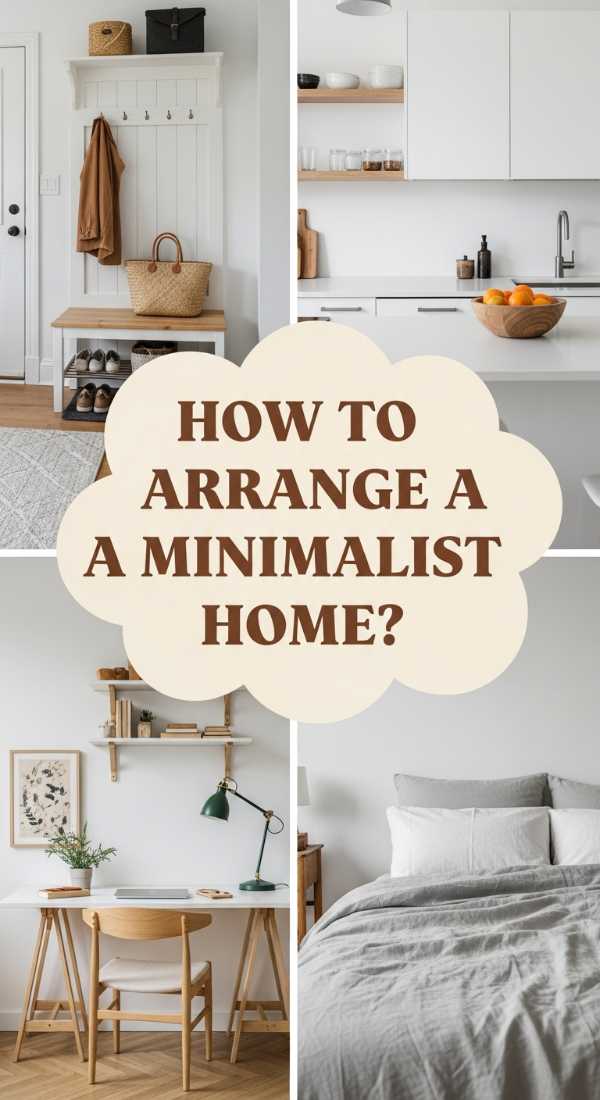
This approach is the ‘life hack’ of the decor world. We love it because it’s about function meeting beauty in a way that reduces daily stress. Imagine a hallway where the ‘drop zone’ is a beautiful oak bench and a single ceramic bowl for keys, rather than a pile of mail and shoes. It makes cleaning easier, decision-making faster, and living more fluid. It’s the art of creating a home that works for you, rather than you working for your home.
Essential Elements:
- Integrated ‘drop zones’ near entryways.
- Hidden cable management systems.
- Uniform containers in pantries and closets.
- Sleek, handle-less cabinetry.
- Minimalist wall hooks for essential daily items.
How to make it
- Identify your ‘friction points’—areas where clutter naturally builds up—and design a minimalist solution for them, like a dedicated tray for mail.
- Apply the ‘one-in, one-out’ rule strictly to ensure that your curated environment doesn’t slowly succumb to clutter over time.
- Organize your most-used items in the ‘reach zone’ (between hip and shoulder height) to make daily tasks feel seamless.
- Use cord-hiding boxes to tuck away chargers and electronics, as exposed wires are the biggest enemy of a minimalist aesthetic.
- Set up a ‘reset ritual’ where every evening you spend 5 minutes returning those few daily items to their designated minimalist ‘homes.’
How to Choose Decor Minimalist Pieces for a Sophisticated Look
Why we love this
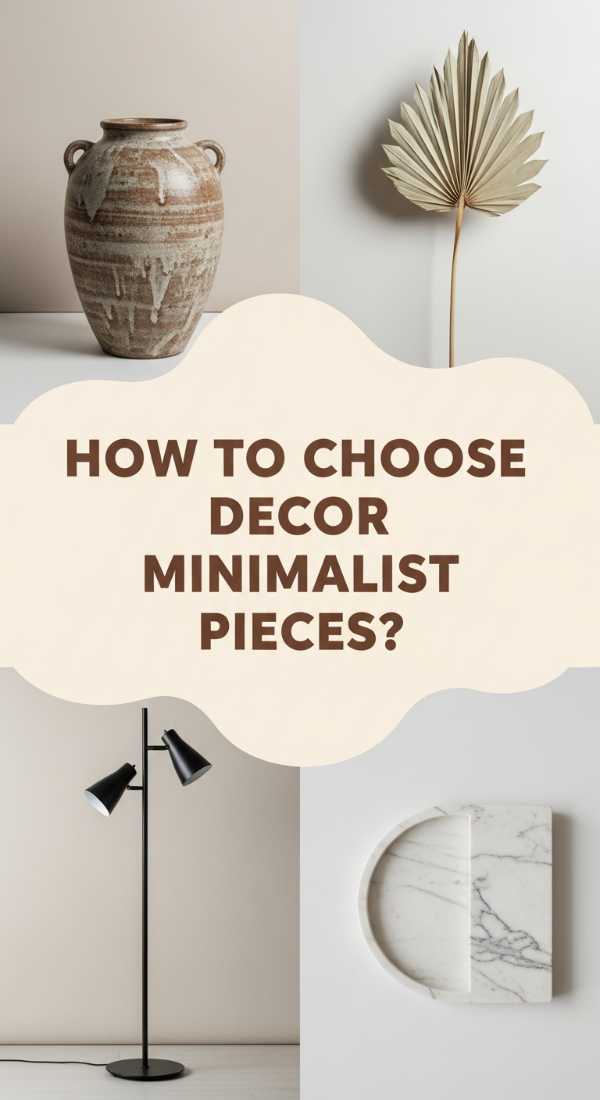
Choosing decor is often the hardest part of minimalism because every item has to stand on its own. We love this because it encourages a ‘curator’ mindset. Instead of buying a dozen cheap items, you wait for that one perfect piece of smoked glass or that hand-carved wooden stool. This look is about the silhouette—how the curve of a vase interacts with the straight line of a shelf. It’s sophisticated because it shows restraint and a keen eye for form.
Essential Elements:
- Smoked glass or matte black metal accents.
- Furniture with organic, curved silhouettes.
- Abstract line art or textured canvases.
- Premium natural materials like leather, stone, and solid wood.
- Minimalist clocks or functional objects that double as art.
How to make it
- Look for ‘sculptural’ qualities in everyday furniture; a chair shouldn’t just be a seat, it should be a beautiful shape when viewed from behind.
- Stick to a ‘rule of three’ colors: one primary neutral (white), one secondary earthy tone (taupe), and one high-contrast accent (black).
- Avoid patterns; instead, seek out ‘visual weight’ through materials like a heavy marble bookend or a thick glass bowl.
- Place your most beautiful items in ‘sightlines’—the areas your eyes naturally land when you enter a room.
- Incorporate greenery sparingly; one large, structural plant like a Fiddle Leaf Fig is more sophisticated than ten small succulents.
How to Transform a Standard Minimalist Room into an Inner Calm Oasis
Why we love this
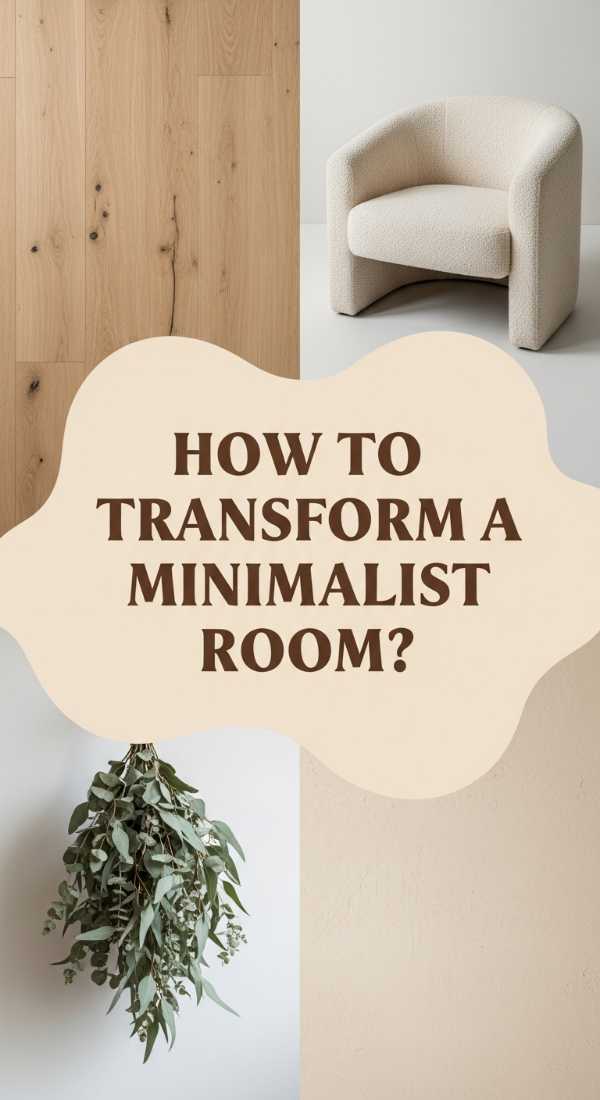
A room can be minimalist without being an ‘oasis,’ but the oasis-style is what we all truly desire. We love this because it incorporates the principles of biophilic design—bringing the outdoors in. The sound of a small water feature, the presence of natural light, and the use of raw, unrefined materials like cork or jute create a space that feels alive. It’s a room that actually lowers your cortisol levels the moment you step inside.
Essential Elements:
- Natural light-diffusing window treatments.
- Raw wood accents and jute rugs.
- Air-purifying plants like Snake Plants or Peace Lilies.
- Soft, rhythmic acoustic elements (like a white noise machine).
- A dedicated ‘tech-free’ zone with comfortable seating.
How to make it
- Maximize natural light by keeping windows clear and using light-reflective paint on the walls facing the windows.
- Introduce a ‘living element’ such as a small indoor herb garden or a single high-quality plant to improve air quality and mood.
- Use scent as a design tool; use an ultrasonic diffuser with essential oils like lavender or eucalyptus to create an olfactory ‘shield.’
- Eliminate all blue-light-emitting electronics from this specific room to make it a true sanctuary for the mind.
- Choose soft-touch materials for anything you interact with frequently, like high-thread-count cotton or brushed suede.
How to Balance Room Decor Minimalist Elements for a Harmonious Atmosphere
Why we love this
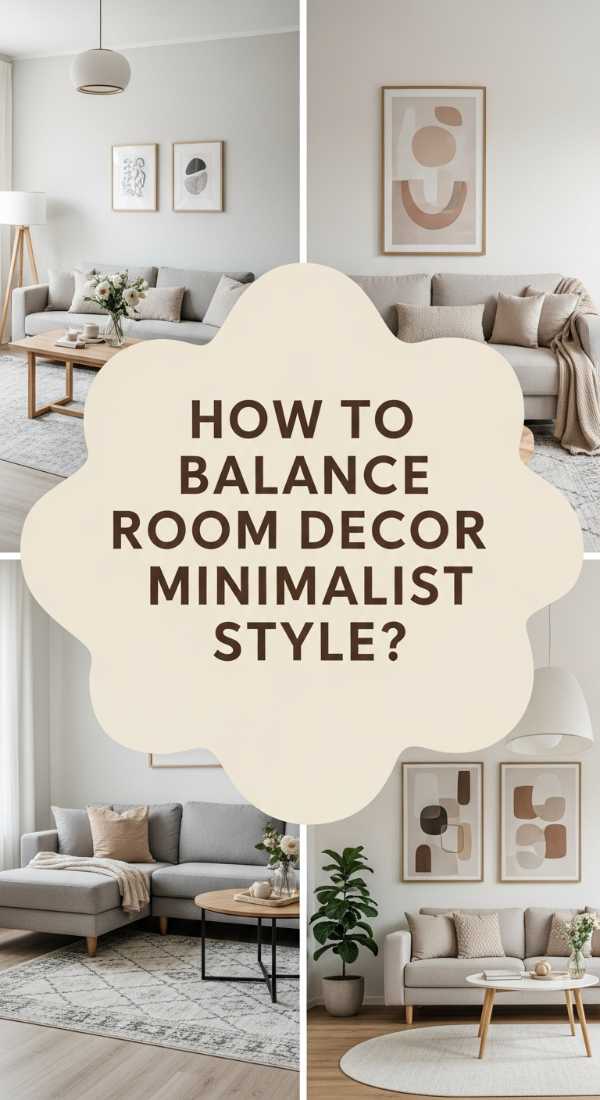
Harmonious minimalism is all about balance—ensuring that a room doesn’t feel ‘lopsided’ or too heavy in one corner. We love this because it creates a sense of visual rhythm. When the height of your plants balances the height of your lamps, and the ‘weight’ of a dark sofa is offset by a light-colored wall, the room feels stable. It provides a sense of security and order that is incredibly soothing to the human brain, which naturally seeks out symmetry and balance.
Essential Elements:
- Symmetrical furniture arrangements.
- Balanced ‘visual weight’ (dark vs light, tall vs short).
- A cohesive color palette used across all elements.
- Repeated shapes (e.g., circular mirrors and circular coffee tables).
- Consistent metal finishes (all brass or all matte black).
How to make it
- Draw a line down the center of your room (mentally) and ensure the ‘visual weight’ on both sides is roughly equal.
- Use ‘echoing’—if you have a round dining table, repeat that shape with a round rug or round wall art to create a cohesive theme.
- Keep your horizon line clean; try to keep the tops of cabinets or shelves at a similar height to avoid a jagged visual experience.
- Distribute your accent color evenly around the room so the eye moves smoothly from one point to the next.
- Check the ‘flow’ by walking through the room; if you have to swerve around furniture, the balance is off and needs adjustment.
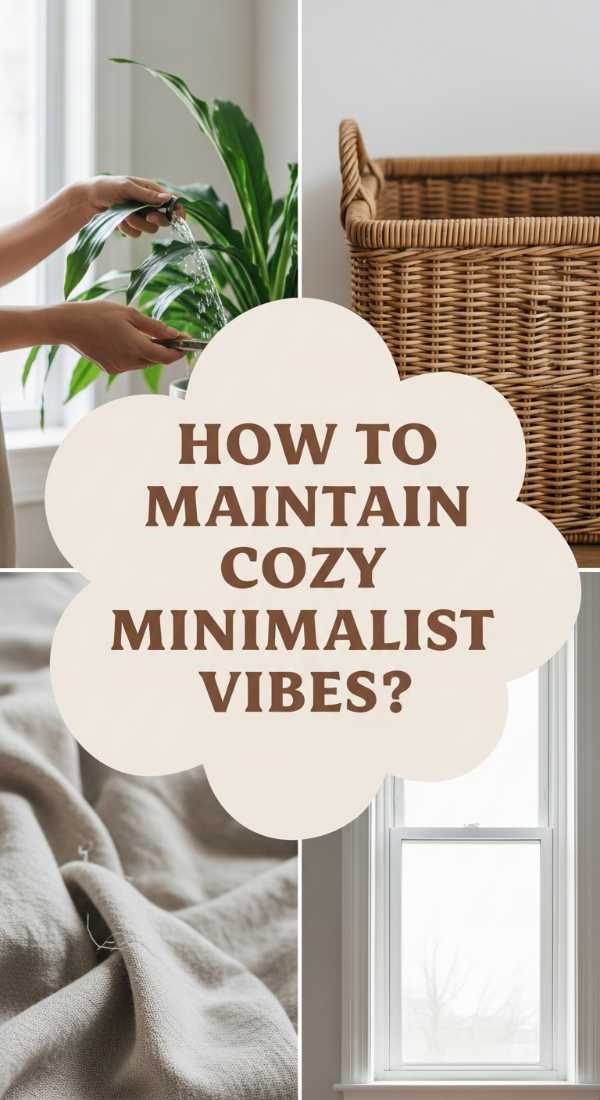
How to Maintain a Cozy Minimalist Lifestyle for Long Term Happiness
[IMAGE_10]
Why we love this
The best part of a minimalist home is the lifestyle it fosters. We love this because it’s a commitment to a life less cluttered by ‘stuff’ and more filled with ‘moments.’ By maintaining this environment, you reduce the time spent cleaning, searching for items, and managing possessions. It frees up your mental energy for hobbies, relationships, and rest. It’s a sustainable way of living that values the space you inhabit as much as the life you lead within it.
Essential Elements:
- A ‘one-touch’ cleaning rule.
- Digital decluttering habits.
- High-quality, durable furniture that lasts years.
- A mindset of ‘enoughness.’
- Regular seasonal ‘purges’ of unused items.
How to make it
- Implement the ‘one-touch’ rule: when you pick something up, put it back in its designated home immediately rather than setting it down elsewhere.
- Schedule a 10-minute ‘nightly sweep’ where you return the living space to its ‘base state’ of cleanliness before going to bed.
- Be extremely selective about new purchases; ask yourself if the item is ‘useful, beautiful, or sentimental’ before bringing it home.
- Digitize as much as possible (paperwork, photos, books) to keep physical surfaces clear and manageable.
- Review your space every three months (seasonally) to remove items that no longer serve your lifestyle or aesthetic goals.
Conclusion: Embracing the Minimalist Glow
Transforming your space into a minimalist sanctuary is more than just an interior design choice; it is a profound act of self-care. By stripping away the excess and focusing on the essential, you create a home that reflects a mind at peace. Whether you are styling a tiny apartment or a large family room, the principles remain the same: cherish the light, value the texture, and respect the space. Your home is the backdrop of your life—make sure it’s a beautiful one.