
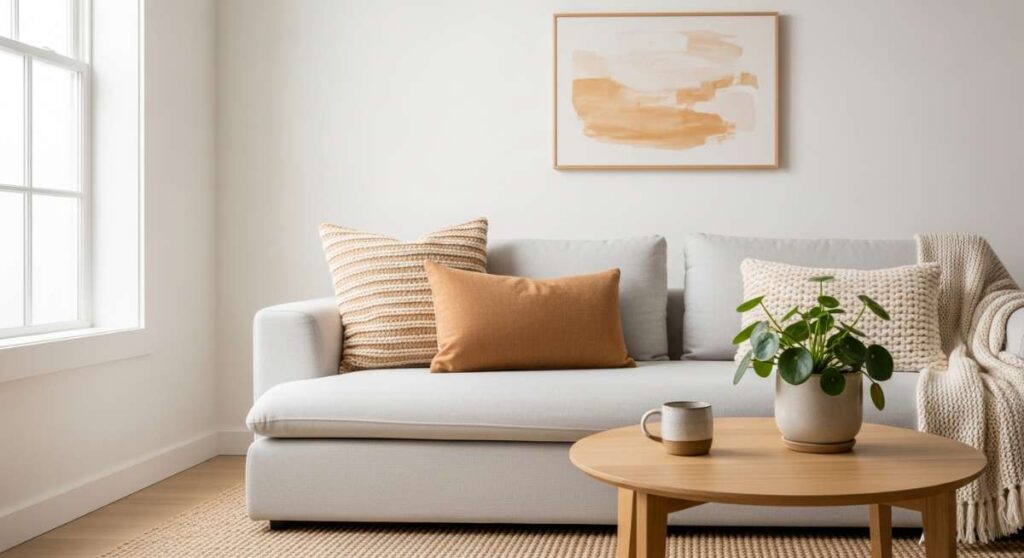
The Art of the ‘Warm’ Edit: A Guide to Cozy Minimalism
There was a time when minimalism felt a bit like a hospital waiting room—all white walls, sharp angles, and an intimidating lack of personality. We were told that ‘less is more,’ but often it felt like ‘less is just empty.’ I remember sitting in my first minimalist-inspired apartment, surrounded by bare surfaces, feeling more anxious than zen. It wasn’t until I discovered the ‘Warm Edit’ that everything clicked. It’s the sweet spot where the clarity of a decluttered space meets the soul-hugging comfort of a fireplace on a rainy Sunday.
Cozy minimalism isn’t about owning nothing; it’s about owning the right things that spark a sense of calm and tactile joy. It’s about the way the light hits a ceramic vase or how a chunky knit throw softens the edge of a mid-century chair. In this guide, we’re going to walk through how to transform your home into a sanctuary that breathes, without losing the warmth that makes it a home. Let’s dive into the art of the intentional, cozy space.
How to Style a Cozy Minimalist Living Room for Total Serenity

Why we love this
This approach transforms a living room from a mere transit zone into a sensory experience that grounds your nervous system. Imagine sinking into a sofa that smells faintly of cedar and vanilla, feeling the coarse yet soft grain of a natural jute rug under your feet, and watching the amber glow of a sunset dance across cream-colored linen. It’s a visual exhale that prioritizes tactile richness over visual clutter, ensuring that every time you walk through the door, the world’s noise simply melts away into the silence of soft textures.
Essential Elements:
- Overstuffed linen sofa in oatmeal or sand tones
- Natural fiber rug (jute or wool)
- Hidden storage solutions for tech and cables
- Dimmable floor lamps with warm-toned bulbs
- A single, high-quality ceramic vessel
How to make it
- **The Foundation Phase (Setting the Temperature):** Start by clearing the room entirely. Begin with your largest piece—the sofa—and position it to face a natural light source. This ‘sets the heat’ for the room’s energy. Visual cue: The room should feel open but grounded.
- **Layering for Depth (The Simmer):** Introduce your rug. Ensure it is large enough that all furniture legs touch it. This anchors the space. Wait 24 hours to see how the natural light interacts with the fabric before adding more.
- **The Texture Infusion:** Add two oversized pillows and one heavy-weight throw. The technique here is ‘asymmetric draping’—don’t fold them perfectly; let them look lived-in. Timing: This should take about 15 minutes to ‘pinch and fluff’ until the balance feels organic.
- **Sensory Finishing (The Garnish):** Place a single candle and a book on a wooden tray. Lighting the candle is your ‘visual cue for doneness’; if the light reflects softly off the surfaces without creating harsh shadows, the serenity level is peak.
How to Design a Small Living Room for Apartment Living Ease
Why we love this
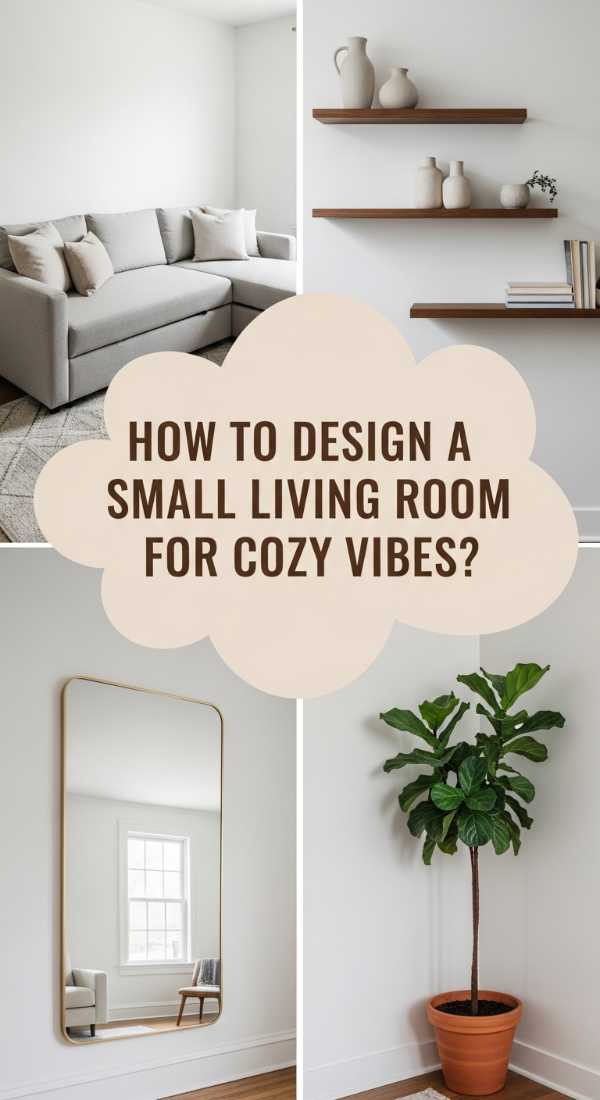
There is a unique magic in a small space that is perfectly curated; it feels like a jewel box of comfort. We love this because it forces intentionality—you can’t hide behind ‘stuff.’ When done right, a small apartment living room feels expansive and airy, utilizing vertical lines and light-reflecting surfaces to trick the eye. It’s about the satisfaction of a ‘place for everything,’ where the aroma of fresh coffee lingers and the lack of clutter makes the small footprint feel like a deliberate, cozy choice rather than a constraint.
Essential Elements:
- Leggy furniture (to show more floor space)
- Large wall-mounted mirror
- Sheer floor-to-ceiling curtains
- Multi-functional nesting tables
- Soft, low-pile rug in a light hue
How to make it
- **The Spatial Prep:** Measure your ‘walking paths’ first. You need at least 18 inches between furniture pieces to maintain ‘flow.’ Use painter’s tape on the floor to visualize the ‘prep area’ before moving heavy items.
- **The Elevation Technique:** Install curtain rods 6 inches above the window frame. This ‘stretches’ the walls vertically. Visual cue: The room should immediately feel 2 feet taller once the sheers are hung.
- **The Mirror Bake:** Place a large mirror directly opposite your primary window. This ‘doubles’ the light volume in the room. Adjust the angle until you catch the most sky, not the floor.
- **Functional Finishing:** Select furniture with legs (no skirts!). This allows ‘air’ to circulate underneath, which is the professional tip for making a cramped space feel like it’s breathing on a medium-cool setting.
How to Curate Minimalist Room Decor for a Peaceful Vibe
Why we love this
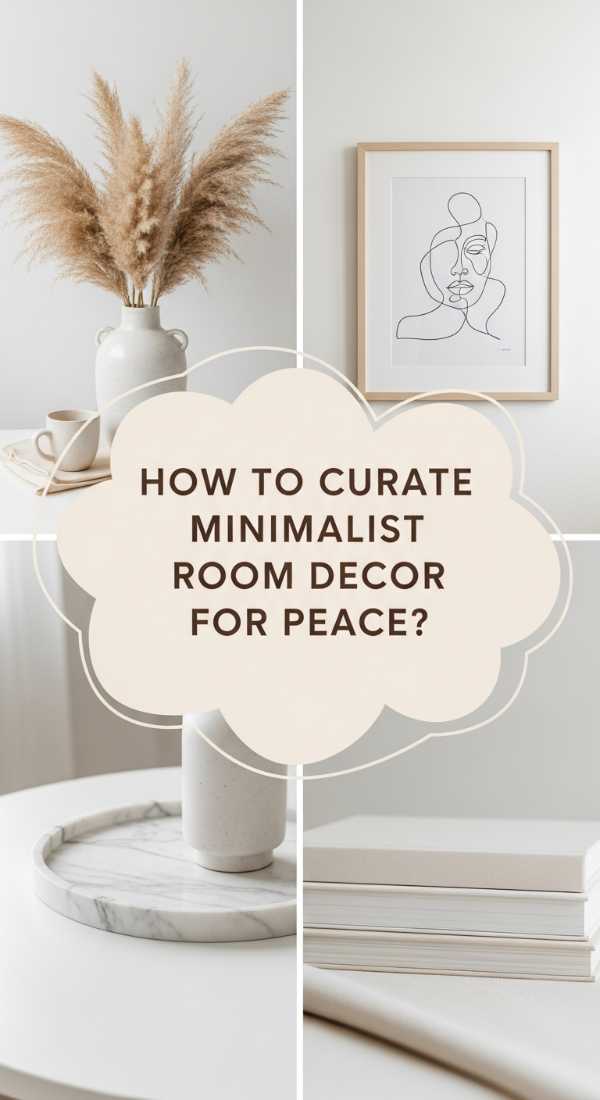
Curating decor is like composing a silent song; it’s about the pauses between the notes. We love this because it elevates everyday objects—a bowl of lemons, a stack of linen-bound books, or a single dried palm leaf—into works of art. The sensory appeal lies in the absence of ‘visual noise,’ allowing your eyes to rest on beautiful, natural materials like stone, wood, and clay. It creates a vibe that is sophisticated yet deeply approachable, like a high-end spa that actually feels like home.
Essential Elements:
- Neutral-toned stoneware vases
- Hand-poured soy candles in matte glass
- Dried botanicals (eucalyptus or pampas grass)
- Stack of aesthetic coffee table books
- Small sculptural marble trays
How to make it
- **The Culling Phase (High Heat):** Remove every decorative item from the room. Wipe down all surfaces. This ‘de-greases’ the visual palette so you can start with a clean slate.
- **The Rule of Three (The Composition):** Group items in threes of varying heights. For example, a tall vase, a medium candle, and a small tray. Visual cue: If the grouping looks like a staircase, you’ve achieved the right balance.
- **Material Mixing (The Emulsion):** Ensure you have at least three different textures in every vignette (e.g., smooth marble, rough clay, and soft paper). This prevents the minimalism from feeling ‘flat’ or ‘raw.’
- **The Negative Space Check:** Leave at least 40% of every surface empty. Timing: Step back 5 feet and look at the surface for 30 seconds. If your eyes ‘dart’ around, remove one more item until they can rest easily.
How to Build a Minimalist Home for Stress Free Mornings
Why we love this
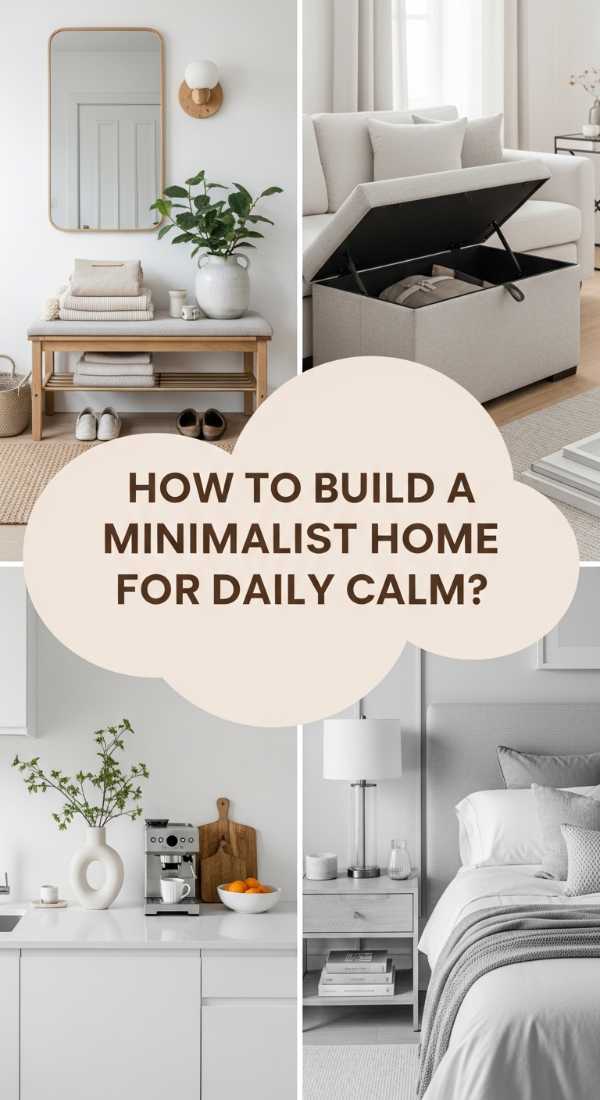
Mornings are the ‘pre-heat’ for your entire day, and a minimalist home ensures that heat stays steady and calm. We love this because it removes the ‘decision fatigue’ of searching for keys or moving piles of mail to make toast. Imagine a kitchen counter that is completely clear except for your favorite mug, the smell of freshly ground beans, and a streak of morning sun. It fosters a routine that feels like a ritual rather than a race, wrapping you in a blanket of organized serenity before you even step outside.
Essential Elements:
- Clear kitchen countertops (appliance garages are key)
- Dedicated ‘drop zone’ by the entry
- Uniform wooden or velvet hangers
- Under-cabinet lighting for soft morning glow
- Minimalist breakfast nook with comfortable seating
How to make it
- **The Clearing Phase:** Remove everything from your counters that isn’t used daily. Store the toaster and blender in a cupboard. Visual cue: The ‘doneness’ is reached when the reflection of the window is visible on the countertop surface.
- **The Entryway Prep:** Install three sturdy hooks and a small wooden bowl for keys. This ‘seasons’ the home for order. Timing: This takes 10 minutes but saves hours of search time over a month.
- **The Lighting Sequence:** Set your kitchen lights to a ‘low-simmer’ (dimmer) for the first 30 minutes of the day. This prevents a sensory shock to the system.
- **The Morning Flow Check:** Walk your morning path from bed to coffee to door. If you have to move anything out of your way, that object needs a new ‘home’ inside a cabinet.
How to Achieve a Cozy Minimalist Aesthetic for Winter Warmth

Why we love this
Winter demands a ‘thicker’ version of minimalism. We love this because it proves that you can be a minimalist and still be incredibly warm. It’s the contrast of a clean, white room against the heavy texture of a shearling chair and the flickering orange light of a wood-burning fire. The scent of cinnamon and pine, the weight of a 15-pound knit blanket, and the visual softness of faux fur create a cocoon that protects you from the frost outside while maintaining the structural integrity of a modern home.
Essential Elements:
- Chunky wool knit blankets
- Faux shearling or hide rugs
- Taper candles in brass holders
- Darker wood accents (walnut or oak)
- Woven baskets for firewood or extra pillows
How to make it
- **The Thermal Layering:** Swap light linen throws for heavy wool or velvet. Layer a smaller faux-fur rug over your main jute rug. Visual cue: The floor should look ‘thick’ and inviting.
- **The Glow Phase (Low Heat):** Place taper candles in groups of 5 on a mantle or dining table. The ‘technique’ is to use varying heights to mimic a natural flame line.
- **The Scent Profile:** Introduce warm spices like clove or amber via a diffuser. Timing: Start the diffuser 20 minutes before sunset to ‘marinate’ the room in winter vibes.
- **The Soft Corner:** Create a ‘reading nook’ using one oversized chair and a floor lamp with a warm parchment shade. This serves as the ‘heart’ of the winter edit.
How to Master Living Room Decor Minimalist Style for Modern Comfort
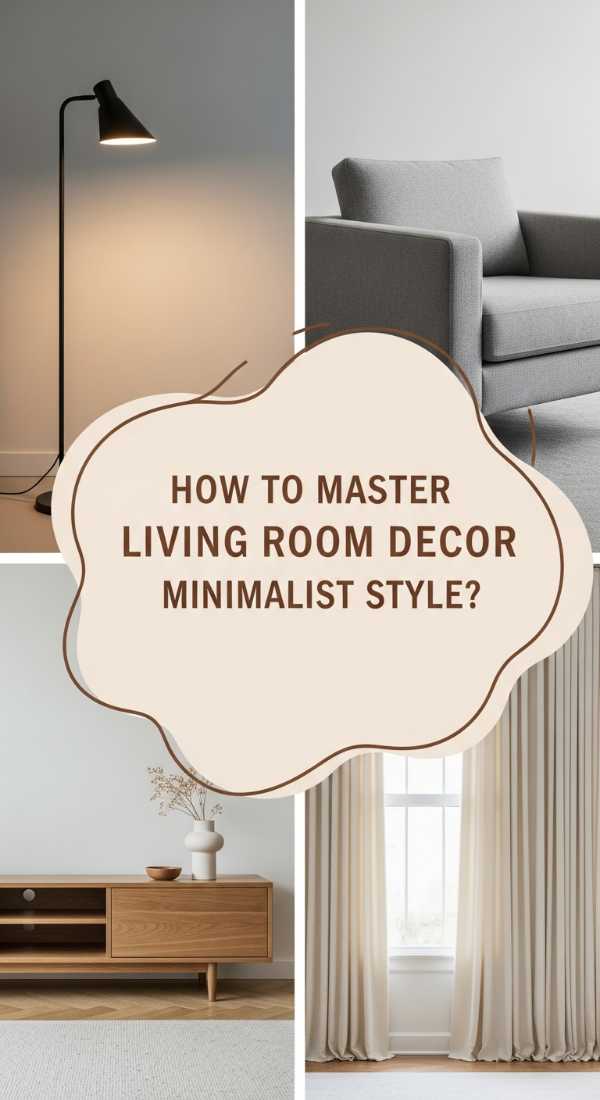
Why we love this
This is where precision meets plushness. We love this because it celebrates the beauty of high-end design without the ‘don’t sit there’ museum vibe. It’s about choosing one iconic piece—like a curved bouclé sofa—and letting it be the hero. The comfort comes from the ergonomic support and the high-quality materials that feel expensive yet sturdy. It’s the ultimate modern luxury: having exactly what you need to feel relaxed, in a space that looks curated and sharp.
Essential Elements:
- Low-profile modular sofa
- Statement coffee table in stone or wood
- Aged brass accents
- Large-scale abstract art with plenty of white space
- Smart lighting systems for ‘scene’ setting
How to make it
- **The Hero Placement:** Position your modular sofa as the ‘anchor.’ Ensure there is enough space to walk around it entirely. Visual cue: The sofa should look like a sculpture in the center of the room.
- **The Tone-on-Tone Blend:** Choose a color palette of only three shades (e.g., charcoal, smoke, and silver). This ’emulsifies’ the room into a single, cohesive unit.
- **The Accenting Phase:** Add one brass element (a lamp or a bowl) to ‘sear’ the look with a bit of shine. Too much will ruin the ‘flavor,’ so keep it to 5% of the room’s total surface area.
- **The Final Polish:** Use a ‘hand-steamer’ on all curtains and upholstery. A crisp, wrinkle-free finish is the professional sign of ‘doneness’ in modern minimalism.
How to Arrange Minimalist Living Room Small Spaces for Maximum Flow
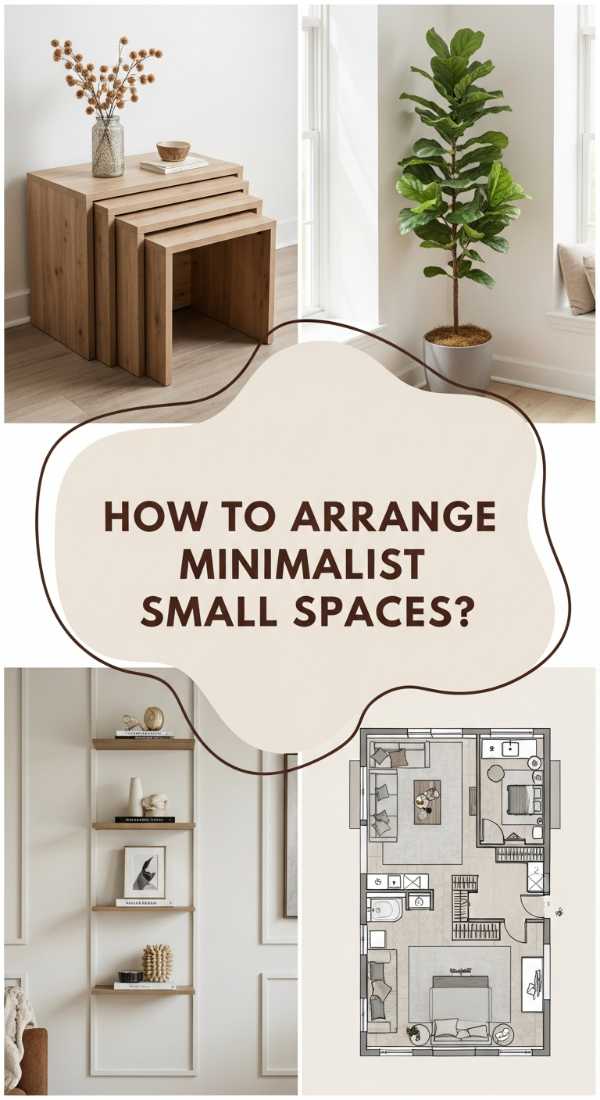
Why we love this
There is a rhythmic beauty to a room that ‘flows.’ We love this because it uses the principles of feng shui and minimalism to make a small space feel like an endless loop of comfort. By removing the physical barriers of bulky furniture and unnecessary rugs, you create a path for both air and energy. It’s the feeling of never bumping your shin on a coffee table and always having a clear view of the window, creating a mental clarity that is often lost in crowded city living.
Essential Elements:
- Round coffee tables (no sharp corners)
- Floating shelves to keep the floor clear
- Clear acrylic or glass accents
- Sconces instead of floor lamps
- Minimalist sliding doors or room dividers
How to make it
- **The Pathfinding Phase:** Clear the floor. Walk from the entrance to the seating area. If you have to make a ‘sharp turn,’ the furniture is misaligned. Use a ’rounded path’ technique.
- **The Vertical Rise:** Mount shelves at eye level. This pulls the gaze upward and away from the limited floor space. Visual cue: The ‘flow’ is working when your eye moves easily from the floor to the ceiling.
- **The Transparency Trick:** Incorporate a glass or acrylic coffee table. This ‘boils down’ the visual weight of the furniture, making the piece ‘disappear’ while remaining functional.
- **The Lighting Flush:** Use wall-mounted sconces to eliminate the ‘trip hazard’ of lamp cords. This ‘cleans the pan’ of your floor layout for a professional, seamless finish.
How to Select Minimalist Room Accents for Timeless Elegance
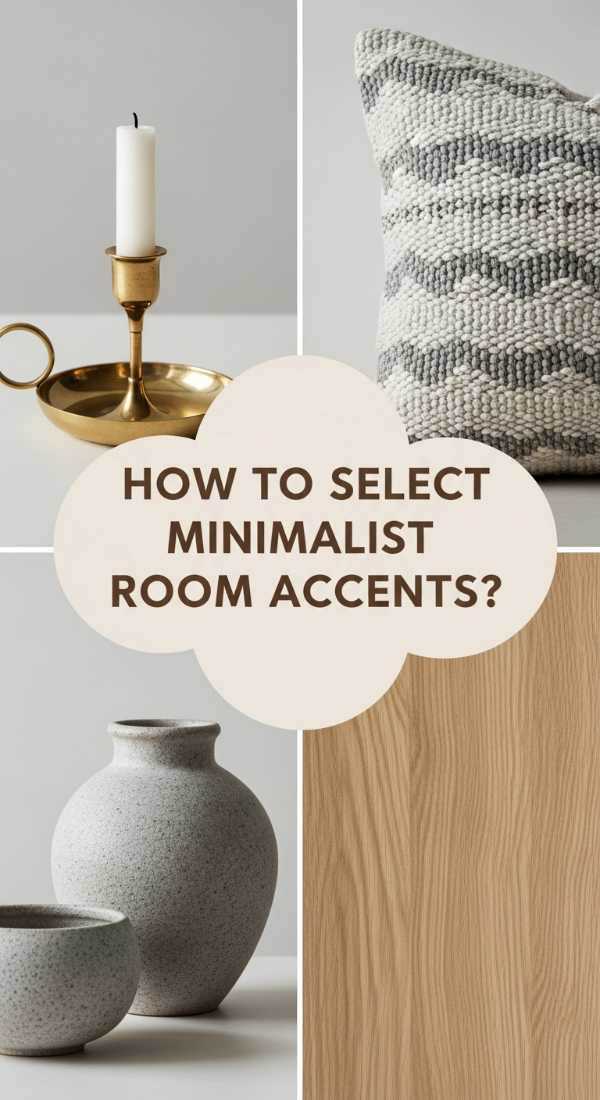
Why we love this
Elegance in minimalism is found in the ‘integrity’ of the materials. We love this because it’s an investment in quality over quantity. Instead of ten cheap trinkets, you have one heavy brass tray that patinas over time, or a hand-knotted silk pillow that catches the light. These accents act as the jewelry of the room—subtle, sophisticated, and enduring. They provide a sensory richness through weight and temperature, like the cool touch of marble or the warmth of hand-turned wood.
Essential Elements:
- Real marble coasters or trays
- Hand-thrown ceramic mugs
- Solid wood picture frames
- Linen napkins and cushion covers
- A single, high-quality clock or timepiece
How to make it
- **The Quality Sifting:** Hold every accent piece. If it feels light and ‘plastic,’ discard it. Elegant minimalism requires ‘weight.’ This is the ‘prep’ for a high-end feel.
- **The Patina Check:** Select materials that age well (brass, leather, wood). These ‘cook’ over time, getting better with use. Visual cue: Look for natural variations in the grain or color.
- **The Proportion Balance:** Ensure your accents are slightly ‘oversized’ for the surface they sit on. Small items look like clutter; large items look like ‘design.’
- **The Placement Timing:** Place one accent per surface. Step back. If the room feels ‘starved,’ add a second of a different material. If it feels ‘busy,’ you’re over-seasoned.
How to Enhance a Minimalist Cozy Sanctuary for Weekend Rest
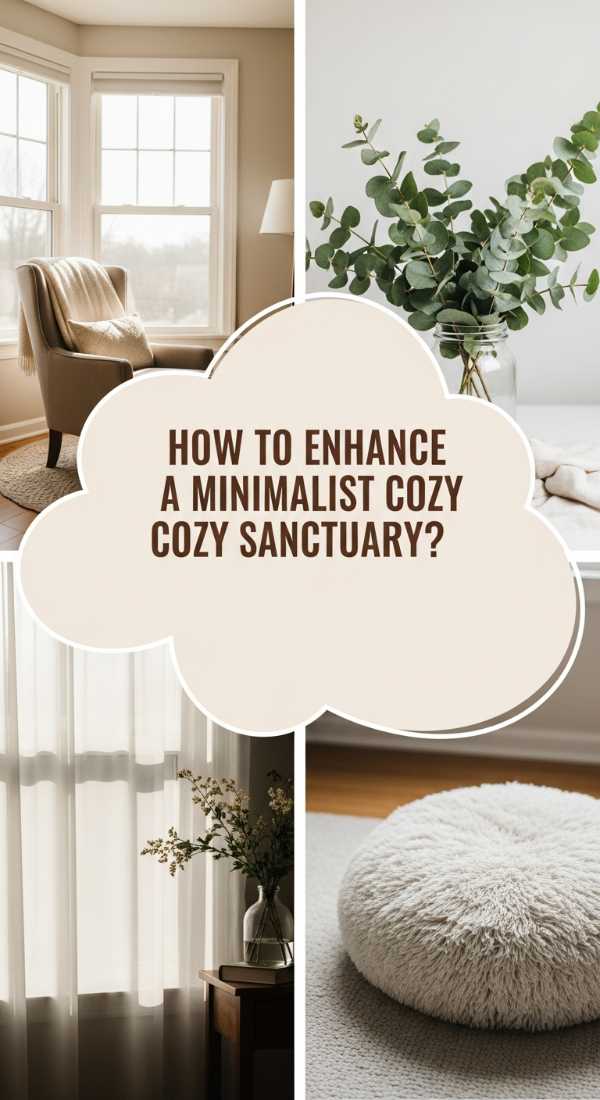
Why we love this
The weekend sanctuary is about the transition from ‘doing’ to ‘being.’ We love this because it’s a dedicated space for recovery. It combines the silence of a minimalist bedroom with the extreme softness of high-thread-count cotton and the grounding presence of indoor greenery. It’s the smell of lavender linen spray, the feel of a cool pillowcase, and the total absence of glowing blue lights. It’s a space designed specifically to facilitate the most restorative sleep and the slowest, sun-drenched mornings.
Essential Elements:
- Blackout curtains in a heavy linen blend
- White noise machine or soft-toned speaker
- Organic cotton bedding in muted tones
- Live plants (Snake plant or Peace Lily)
- A ‘no-tech’ wooden bedside table
How to make it
- **The Bedding Braise:** Layer your bed with a flat sheet, a duvet, and a quilted coverlet. The technique is the ‘hospital corner’ for the base and a ‘loose fluff’ for the top. Visual cue: The bed should look like a soft cloud.
- **The Oxygen Infusion:** Place one large leafy plant in the corner. This ‘freshens’ the air quality naturally. Timing: Water it on Friday evenings so it looks vibrant all weekend.
- **The Tech-Detox Prep:** Remove all chargers and screens from the immediate bedside area. Replace them with a single book and a glass of water on a stone coaster.
- **The Light Softening:** Switch your bulbs to ‘warm amber’ (2700K). This ‘simmers’ the room into a sleep-ready state the moment the sun goes down.
How to Create Room Decor Minimalist Masterpieces for Lasting Beauty
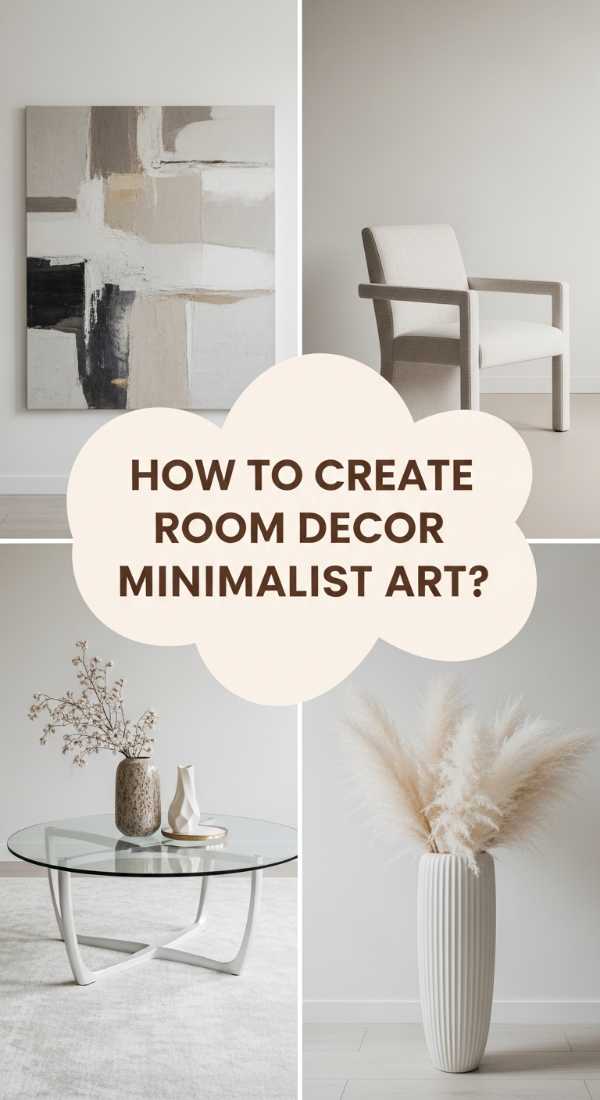
Why we love this
Creating a ‘masterpiece’ room is about the long game. We love this because it moves away from ‘fast furniture’ trends and toward a curated life. It’s the satisfaction of knowing that every piece in your room has a story, a purpose, and a place. The sensory joy comes from the harmony of the whole—the way the shadows fall in the afternoon, the solid ‘thunk’ of a well-made door, and the effortless beauty of a space that doesn’t need to be ‘redecorated’ every season because it was built on the foundations of classic, warm minimalism.
Essential Elements:
- One piece of custom or antique furniture
- Art that evokes personal emotion
- Architectural lighting (track or recessed)
- Natural flooring (hardwood or stone)
- Custom-built cabinetry or shelving
How to make it
- **The Long-Term Vision (Slow Cook):** Do not buy everything at once. Purchase your ‘hero’ piece first and live with it for a month. This ‘develops the flavor’ of the room.
- **The Symmetry Check:** Use ‘balanced asymmetry.’ If you have a tall plant on one side, put a medium chair and a small lamp on the other. Visual cue: The room should feel ‘level’ without being a mirror image.
- **The Lighting Architecture:** Install three levels of light: Task (reading), Ambient (overhead), and Accent (art lights). This ‘layers’ the room like a professional chef layers flavors.
- **The Edit (The Reduction):** Once the room is ‘finished,’ remove one item that you like but don’t love. This ‘concentrates’ the beauty of the remaining pieces for a lasting, masterpiece finish.
Embracing the Warm Edit
Cozy minimalism isn’t a destination; it’s a practice of mindfulness. It’s about choosing to live in a way that values your mental peace and physical comfort over the accumulation of ‘stuff.’ By following the ‘Warm Edit,’ you’ve created a home that doesn’t just look good on a grid—it feels good to your soul. Remember, the best homes are never truly ‘finished’; they evolve with you, always keeping that core balance of clarity and warmth.