
Have you ever walked into a room and felt your shoulders immediately drop two inches? That’s the power of a space designed with intention. In our fast-paced, high-decibel world, our homes shouldn’t just be places where we sleep; they should be sanctuaries that breathe with us. I remember when my living room was a chaotic mess of tech cables and mismatched furniture—I felt that same chaos in my mind every single morning. The moment I started integrating a Zen and yoga-inspired aesthetic, my entire daily rhythm shifted from frantic to flowing.
Creating a Zen home isn’t about stark minimalism or spending a fortune on designer bamboo; it’s about the sensory experience of your surroundings. It’s the way the morning light filters through a linen curtain, the grounding scent of sandalwood, and the physical sensation of soft cotton under your feet. Today, I’m sharing how you can curate these pockets of peace in every corner of your life, from your backyard to your home office, ensuring that every breath you take at home feels like a gentle reset.
How to Design a Calm Yoga Aesthetic for Daily Inner Peace
Why we love this
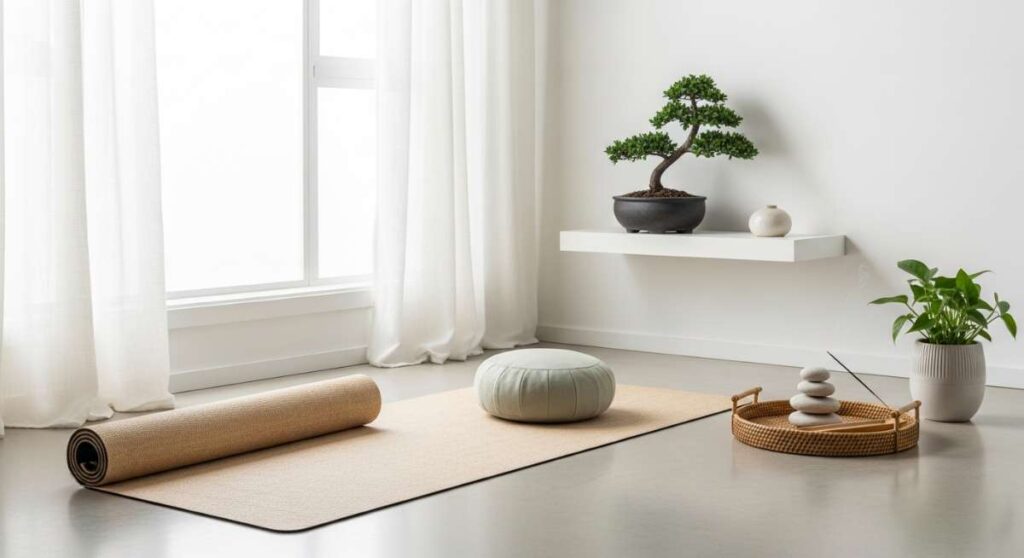
There is something deeply restorative about a dedicated yoga space that feels like an extension of your own breath. We love this aesthetic because it prioritizes tactile softness and visual silence, allowing the mind to detach from external stressors the moment you step onto the mat. Imagine the cool touch of a natural cork mat against your palms, the faint, earthy aroma of dried lavender wafting from a nearby bolster, and a palette of muted oatmeals and soft sages that soothe the eyes. It is a sensory envelope that transforms a simple workout into a sacred ritual of self-care.
Essential Elements:
- Natural fiber yoga mat (cork or jute)
- Woven floor cushions and buckwheat bolsters
- Sheer linen window treatments for diffused natural light
- A minimalist wooden shelving unit for props
- A single high-quality ceramic incense burner
How to make it
- Begin by clearing the floor place entirely; a calm aesthetic requires a literal and metaphorical foundation of openness. Use a soft-bristle broom to cleanse the area of dust, creating a fresh slate.
- Layer your lighting by removing harsh overhead bulbs. Install warm-toned smart bulbs or use floor lamps with rice paper shades to create a soft, shadowless glow that mimics the golden hour.
- Position your primary mat so it faces a window or a blank wall. Avoid facing mirrors or cluttered desks to minimize visual distractions during balance poses.
- Organize your props by color and texture. Place heavy bolsters at the bottom of your shelving and lighter items like straps and blocks at eye level, ensuring everything is within easy reach but neatly tucked away.
- Finish the space by introducing a ‘scent anchor.’ Light a stick of palo santo or high-grade sandalwood, letting the smoke curl through the room for three minutes before you begin your practice to signal to your nervous system that it is time to relax.
How to Create a Lush Meditation Garden for Ultimate Relaxation
Why we love this
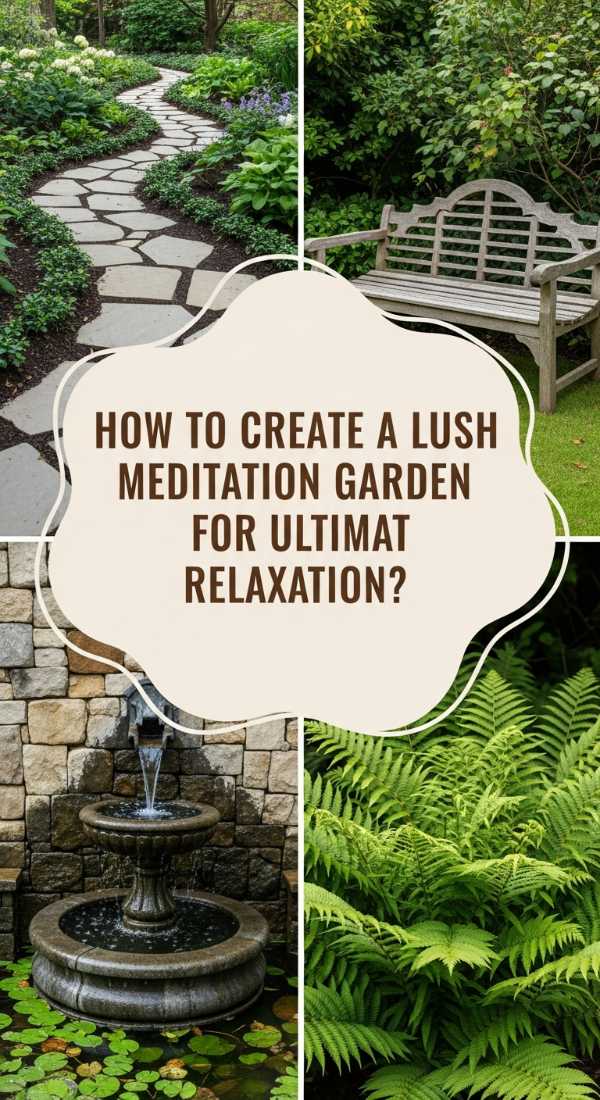
A lush meditation garden is the ultimate bridge between the soul and the earth. We are obsessed with this concept because it utilizes the rhythmic sounds of nature—the rustle of wind through ornamental grasses and the gentle trickle of water—to drown out the hum of modern life. Picture yourself seated on a smooth stone bench, surrounded by vibrant ferns and the sweet, intoxicating scent of jasmine blooming in the evening air. The texture of damp moss underfoot and the cool mist from a stone fountain create a micro-climate of absolute tranquility that recharges your spirit instantly.
Essential Elements:
- A variety of textural greenery (ferns, hostas, and Japanese maples)
- A recirculating stone water feature or fountain
- Natural stone pathways or stepping stones
- Weather-resistant outdoor meditation cushions
- Solar-powered warm fairy lights for evening ambiance
How to make it
- Select a secluded corner of your yard that receives dappled sunlight. Clear the area of weeds and debris, then level the ground using a rake to ensure a stable base for seating.
- Define the perimeter using ‘living walls.’ Plant tall, narrow evergreens or install a cedar lattice with climbing vines like clematis to create a sense of enclosure and privacy.
- Install the water feature as your central focal point. Ensure the pump is adjusted to a ‘trickle’ rather than a ‘splash’ to keep the sound frequency low and meditative.
- Lay down a path of smooth river stones or cedar wood chips. This provides a tactile transition as you walk into the garden, forcing you to slow your pace.
- Group your plants by ‘texture layers.’ Place large-leafed hostas at the back, feathery ferns in the middle, and soft creeping thyme near the seating area so you can touch the foliage while you meditate.
How to Build a Serene Meditation Space for a Quiet Mind

Why we love this
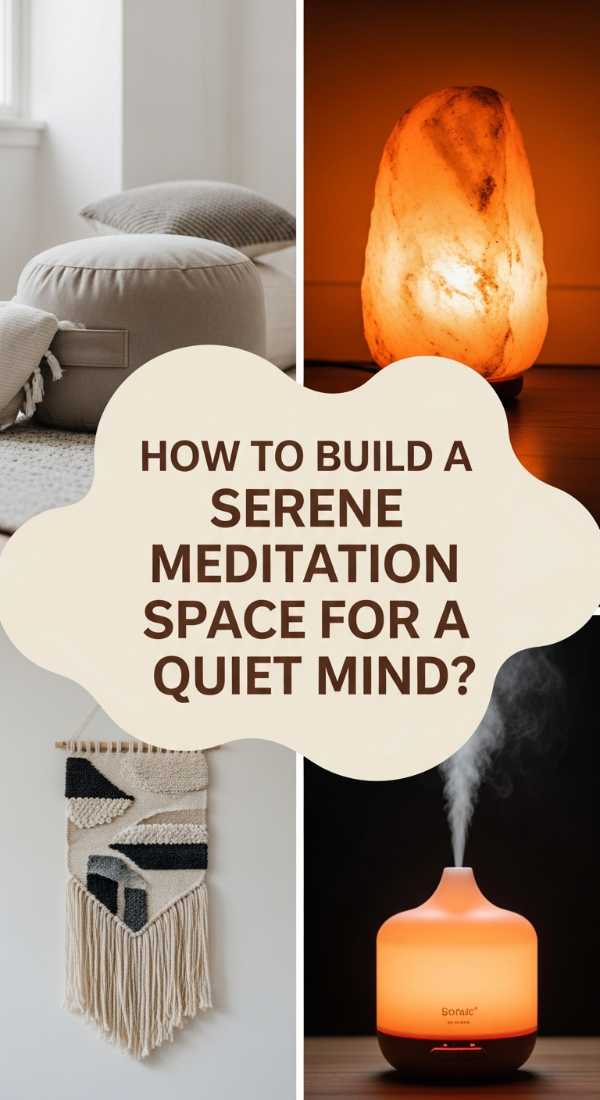
Building a serene meditation space is about crafting a sanctuary that acts as a physical ‘pause button’ for your thoughts. We love how this setup focuses on the absence of noise—both visual and auditory—to facilitate a deeper internal journey. Imagine a corner of your bedroom draped in soft cream textiles, where the air feels lighter and the light is always soft. The gentle hum of a Himalayan salt lamp provides a warm, peach-colored glow, while the plushness of a velvet zabuton supports your body so perfectly that you forget where you end and the room begins.
Essential Elements:
- A comfortable meditation cushion (Zafu) and floor mat (Zabuton)
- A small low-profile wooden altar or table
- A Himalayan salt lamp or dimmable amber lighting
- Sound machine or high-quality Bluetooth speaker for binaural beats
- Crystals like amethyst or celestite for energetic grounding
How to make it
- Identify a ‘dead corner’ in your home—an area with minimal foot traffic. Cleanse the space physically with a citrus-based cleaner and energetically with a chime or bell.
- Place your zabuton (the square floor mat) first to define the boundaries of the space. Center the zafu (circular cushion) on top, ensuring the height is sufficient to keep your hips above your knees for long-term comfort.
- Set up your ‘focus altar.’ This should be a small table at eye level when seated. Place a single candle, a bowl of water, or a meaningful photo here to give your gaze a place to rest during open-eyed meditation.
- Manage the acoustics by adding heavy rugs or sound-absorbing curtains. This creates a ‘quiet box’ effect, dampening echoes and external street noise.
- Test the ‘visual temperature.’ Sit in the space for five minutes. If any object pulls your attention away (like a stray charging cable), remove it or hide it behind a decorative screen until the visual field is perfectly balanced.
How to Style a Dreamy Meditation Aesthetic for Spiritual Growth
Why we love this
The ‘dreamy’ aesthetic leans into the ethereal side of mindfulness, using iridescent textures and celestial motifs to inspire a sense of wonder. We love this look because it transforms the mundane into the magical, making your daily practice feel like a cosmic event. Think of shimmering silk pillows in moonlit silver, wall hangings depicting the phases of the moon, and the hypnotic flicker of dozens of tea lights. It’s an environment that encourages the imagination to soar, filled with the delicate scent of white sage and the soft chime of crystal singing bowls that vibrate through your very core.
Essential Elements:
- Moon phase wall decor or celestial tapestries
- Iridescent or silk cushion covers
- String lights with frosted globes
- A collection of raw, unpolished quartz crystals
- A brass or copper singing bowl
How to make it
- Start with a ‘base layer’ of white or very light gray. Use white linens or a faux-fur rug to create a cloud-like foundation on the floor.
- Incorporate verticality by hanging a sheer canopy from the ceiling. Drape it over your seating area to create a ‘cocoon’ that feels separate from the rest of the room.
- Arrange your crystals in a grid pattern on a silver tray. Place clear quartz at the center to amplify the ‘dreamy’ energy and surround it with stones that have a pearlescent sheen.
- Use ‘fairy light’ strings to outline the architecture of the space—along the ceiling line or the edge of the floor—to create a weightless, floating sensation at night.
- Integrate a sound element like a wind chime near a vent or window. The occasional high-pitched ‘tink’ serves as a gentle reminder to stay present in your ‘dream’ space.
How to Master Zen Garden Ideas for a Peaceful Backyard
Why we love this
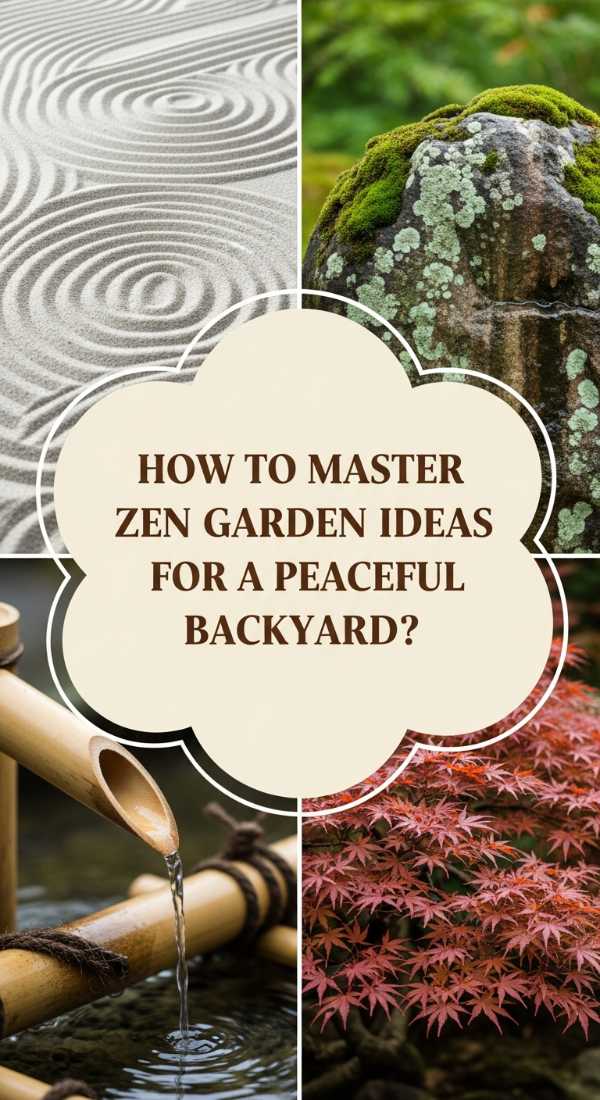
A traditional Zen garden, or Karesansui, is a masterpiece of controlled nature that offers a profound sense of order in a chaotic world. We love the rhythmic act of raking the gravel, which becomes a meditation in motion, and the stark beauty of weathered rocks representing islands in a sea of sand. The visual contrast between the crisp, white gravel and the dark, rain-slicked stones is breathtaking. It’s a dry landscape that evokes the vastness of the ocean and the stillness of the mountains, all within the privacy of your own back porch.
Essential Elements:
- Fine white gravel or decomposed granite
- Large, naturally weathered boulders or ‘character stones’
- A wooden Zen rake with wide tines
- Evergreen shrubs like boxwood or juniper for structure
- A low-profile wooden deck or ‘engawa’ for viewing
How to make it
- Excavate a shallow area of your backyard, about 3-4 inches deep. Line the bottom with heavy-duty landscape fabric to prevent weeds from disrupting your patterns.
- Place your ‘anchor stones’ first. These should be odd-numbered (groups of 3 or 5) and partially buried to look like they are naturally emerging from the earth. Choose stones with interesting moss or ‘faces.’
- Pour the gravel around the stones, filling the area to the brim. Use a flat board to level the surface perfectly before you begin any styling.
- Create ‘ripples’ using your Zen rake. Start from the edges of the stones and rake outward in concentric circles to mimic water displacement, then use long, straight lines for the ‘open sea’ areas.
- Maintain the ‘Ma’ (negative space). Do not overcrowd the garden with plants; keep the greenery to the edges to ensure the focus remains on the minimalist gravel landscape.
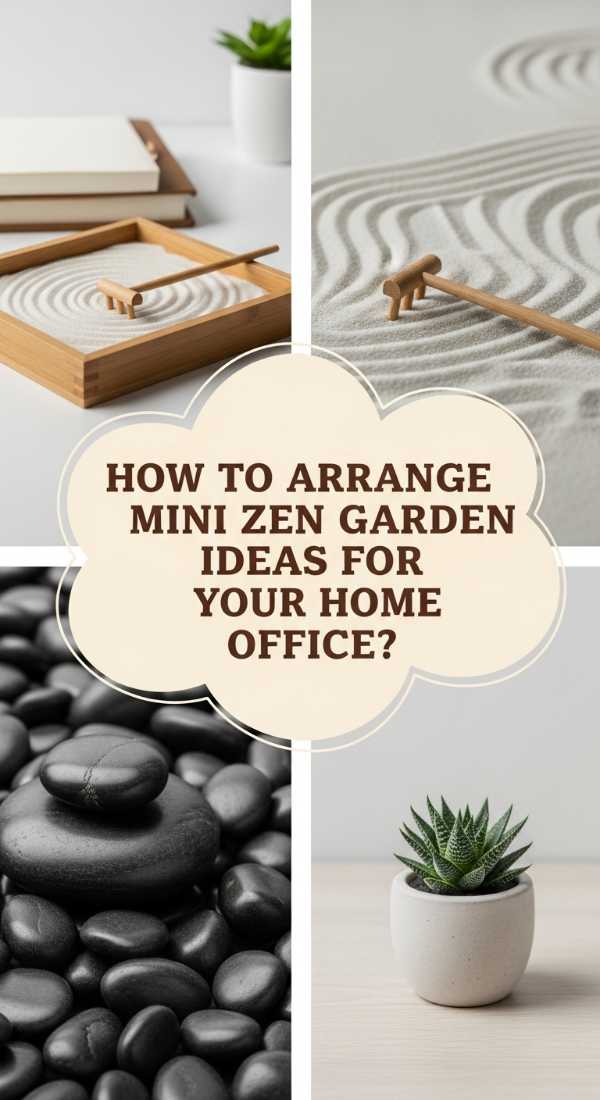
How to Arrange Mini Zen Garden Ideas for Your Home Office

Why we love this
The home office is often the epicenter of stress, which is why a mini Zen garden is a total game-changer for the professional headspace. We love these miniature landscapes because they offer a tactile micro-break during long Zoom calls. The feeling of the wooden rake dragging through the cool sand is incredibly grounding. These tiny gardens bring the grandeur of a Japanese temple right to your mahogany desk, featuring miniature pagodas, tiny air plants, and smooth pebbles that you can roll in your palm to release tension.
Essential Elements:
- A shallow wooden or ceramic tray
- Fine-grain sand (white or colored)
- Miniature garden tools (rake, stylus, smoothing tool)
- Small polished river stones
- One or two ‘air plants’ (Tillandsia) for a touch of life
How to make it
- Choose a tray that fits the scale of your desk without obstructing your mouse movement. A rectangular tray works best for long, flowing patterns.
- Fill the tray 3/4 full with sifted sand. Tap the sides of the tray gently to let the sand settle into a perfectly flat plane.
- Position your ‘focal stone’—a slightly larger pebble—off-center. This follows the principle of asymmetry, which is more pleasing to the eye and less ‘forced’ than a centered layout.
- Add a single air plant tucked into a corner. These don’t require soil, making them perfect for a sand garden; just mist it once a week away from the tray to keep the sand dry.
- Use the miniature rake to draw deep, intentional grooves. Practice ‘box breathing’ while you do this: inhale for four counts as you rake one line, hold for four, and exhale as you rake the next.
How to Cultivate a Healing Yoga Aesthetic for Body Harmony
Why we love this
A healing yoga aesthetic moves beyond just looks and dives deep into the ‘vibe’ of physical recovery and somatic ease. We love this approach because it emphasizes warmth and support—think heated floor mats, weighted blankets, and the soft amber glow of beeswax candles. The textures are purposefully soft to encourage the body to ‘melt’ rather than ‘push.’ It smells of eucalyptus and ginger, invigorating the senses while the body rests in restorative poses. It’s the ultimate setup for anyone dealing with chronic stress or physical fatigue.
Essential Elements:
- Extra-thick memory foam yoga mat
- Weighted eye pillows filled with flaxseed
- Infrared heating pad or space heater
- Beeswax or soy candles (scent-free or light herbal)
- Organic cotton blankets for layering
How to make it
- Temperature control is the first step. Aim for a room temperature of 75-78°F (24-25°C) to keep muscles pliable. Use a small, quiet space heater if the room is naturally drafty.
- Layer your ‘nesting’ area. Place your yoga mat down, then cover it with a soft cotton yoga blanket. This adds a layer of warmth and grip that feels much more ‘homey’ than plastic.
- Prepare your ‘props for recovery.’ Roll up two towels to serve as neck or knee supports and place your weighted eye pillow in a small bowl nearby so it stays clean.
- Lighting should be ‘low-horizon.’ Keep all light sources below waist level—candles on the floor or low lamps—to signal to the brain that the day is winding down.
- Integrate a ‘sound bath’ element. Set a speaker to play low-frequency ‘healing tones’ (432Hz) which are said to resonate with the body’s natural rhythms.
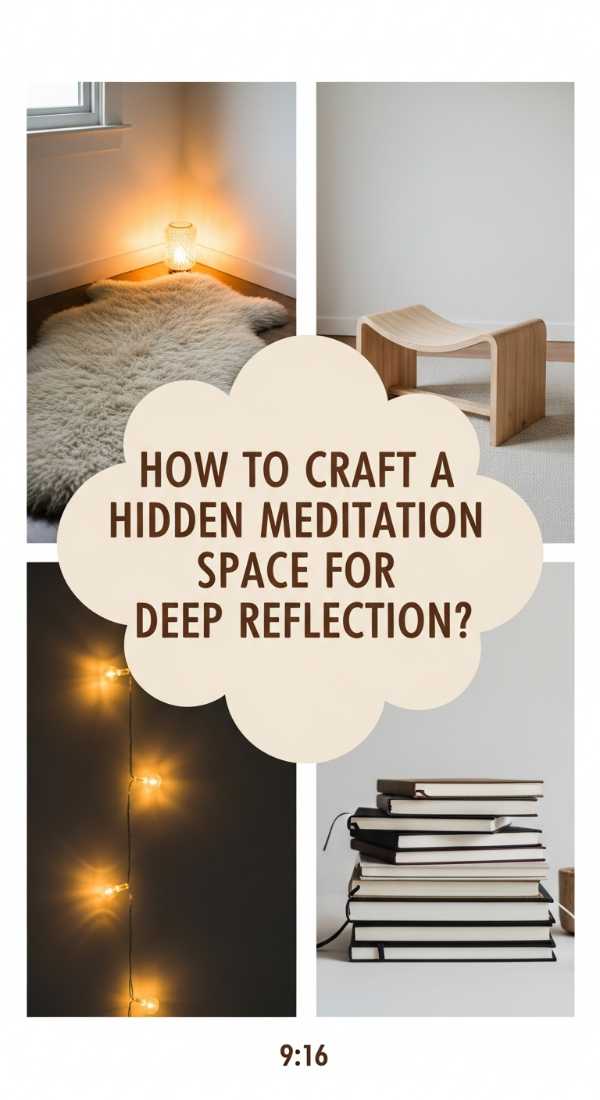
How to Craft a Hidden Meditation Space for Deep Reflection
Why we love this
There is a special kind of magic in a ‘hidden’ space—a secret nook that only you know about. We love this because it provides a psychological barrier between your public life and your inner world. Whether it’s a converted closet or a screened-off corner of an attic, these spaces feel like a warm hug. The air is still, the walls are adorned with personal mementos, and the lack of windows or distractions allows for a level of deep reflection that open spaces simply can’t provide. It’s your own personal ‘soul cave’ where you can be completely yourself.
Essential Elements:
- A decorative room divider or ‘Shōji’ screen
- A plush, oversized bean bag or floor chair with back support
- String lights or ‘battery candles’ for safety in tight spaces
- A journal and a high-quality fountain pen
- Small wall-mounted floating shelves for meaningful objects
How to make it
- Scout your home for an underutilized ‘niche.’ A walk-in closet, the space under a staircase, or even a wide hallway can be transformed. Remove all ‘utility’ items (like vacuum cleaners or coats) to break the association with chores.
- Insulate the space for comfort. If it’s a closet, add a thick rug that goes wall-to-wall. This makes the small footprint feel purposeful rather than cramped.
- Install the ‘threshold’—this is your room divider or a heavy velvet curtain. This physical act of closing the curtain behind you is the psychological trigger to enter a meditative state.
- Mount a small battery-operated sconce at shoulder height. In small spaces, shadows can feel oppressive, so a soft, diffused light source is essential for keeping the vibe ‘cozy’ rather than ‘dark.’
- Keep a ‘reflection kit’ inside: a journal for recording insights immediately after meditation and a small timer so you don’t have to check your phone.
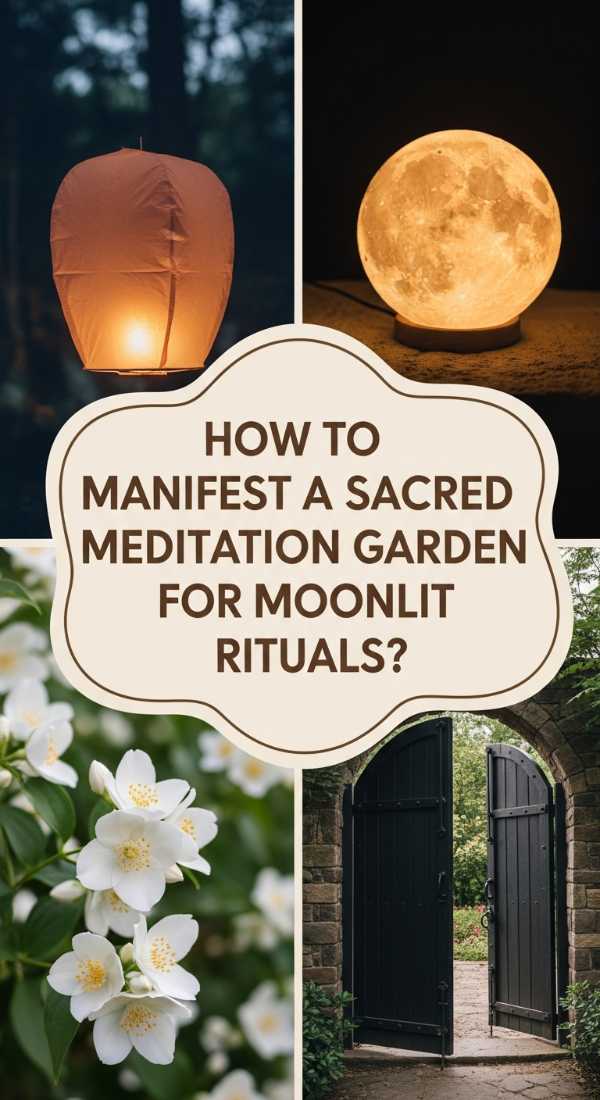
How to Manifest a Sacred Meditation Garden for Moonlit Rituals

Why we love this
For those who feel a deep connection to the lunar cycles, a moonlit meditation garden is pure enchantment. We love this aesthetic because it uses ‘night-blooming’ plants and reflective surfaces to catch the silver glow of the moon. Imagine the smell of Night-Blooming Cereus and the sight of white Moonflowers opening as the sun sets. The garden features silver-leafed plants like Lamb’s Ear that practically glow in the dark, and a central ‘moon bowl’ of water that reflects the stars above. It is a place for ritual, intention-setting, and profound nocturnal peace.
Essential Elements:
- Silver-foliage plants (Dusty Miller, Artemisia, or Lamb’s Ear)
- White-flowering plants (Gardenias, White Tulips, Moonflowers)
- A large, dark ceramic ‘reflection bowl’ filled with water
- Polished black pebbles to line the paths
- Quartz geode ‘markers’ along the garden edge
How to make it
- Design the garden in a circular shape to symbolize the moon. Use dark slate or black mulch for the ground cover to make the white flowers and silver leaves ‘pop’ under the night sky.
- Plant your ‘lunar stars.’ Position Moonflowers (Ipomoea alba) near a trellis; they will bloom specifically at night and release a heavy, sweet perfume that guides you to the garden in the dark.
- Set up the reflection bowl. Use a wide-mouthed vessel, paint the inside black if it isn’t already, and fill it with distilled water. Position it in a spot where it has an unobstructed view of the night sky.
- Use ‘uplighting’ sparsely. Hide small, low-voltage LED spotlights at the base of your silver-leafed plants. This creates a soft, ethereal glow that doesn’t overwhelm the natural moonlight.
- Place a weather-proof ‘ritual chair’ or mat at the southern edge of the circle, facing north, to align yourself with the earth’s magnetic field during your moonlit sessions.
How to Balance a Modern Yoga Aesthetic for a Stress Free Home
[IMAGE_10]
Why we love this
The modern yoga aesthetic is where ‘High Design’ meets ‘High Vibe.’ We love this look because it doesn’t require you to turn your living room into a temple; it seamlessly integrates mindfulness into a contemporary home. It’s about clean lines, matte finishes, and a ‘less is more’ philosophy. Think of a sleek, black oak console table holding a single sculptural branch, or a sofa draped in heavy, textured linen that feels architectural yet inviting. It is the perfect balance for the busy professional who wants a home that looks like a magazine spread but feels like a deep exhale.
Essential Elements:
- Matte black or white accent pieces
- Natural wood furniture with clean, ‘Scandi-Zen’ lines
- Large-scale abstract art with a limited color palette
- Hidden storage solutions to eliminate visual clutter
- High-quality air purifier with a sleek design
How to make it
- Adopt a ‘monochromatic plus one’ color scheme. Choose a base of soft whites and grays, then add exactly one natural element—like a light oak floor or a large green fiddle-leaf fig—to prevent the space from feeling sterile.
- Invest in ‘invisible’ storage. Choose coffee tables with hidden drawers and benches that open up to store yoga mats and props, keeping the ‘zen’ tools out of sight when not in use.
- Upgrade your textiles. Swap out cheap synthetics for heavyweight natural linen and wool. The ‘weight’ of these fabrics provides a sense of grounding and luxury that is essential to the modern aesthetic.
- Focus on ‘sculptural greenery.’ Instead of a dozen small plants, choose one large, architectural plant like a Dracaena or a large Bonsai tree. This creates a singular, powerful focal point that anchors the room.
- Incorporate tech-free zones. Designate the main seating area as a ‘digital sunset’ zone where phones are placed in a decorative wooden box, allowing the modern design to be enjoyed without the intrusion of screens.
Conclusion: Living the Zen Life
Creating a Zen and yoga aesthetic at home isn’t about achieving a picture-perfect showroom; it’s about the internal shift that happens when your environment supports your well-being. Whether you’ve carved out a tiny corner for a mini Zen garden or transformed your backyard into a moonlit sanctuary, these spaces serve as constant reminders to slow down, breathe, and return to yourself. Start small, focus on the textures and scents that personally resonate with you, and watch as your home transforms into a true vessel for peace. Namaste.