
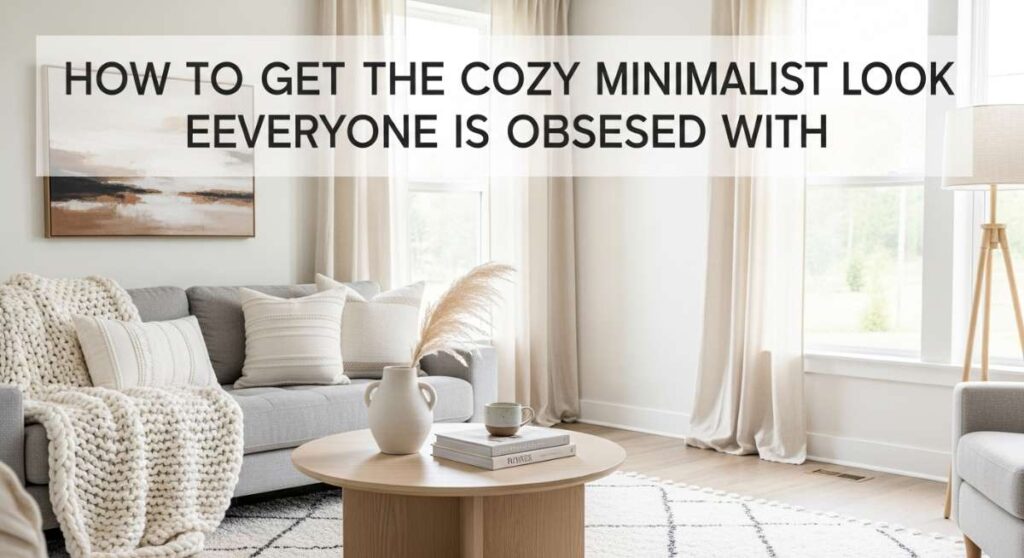
Have you ever walked into a room and felt an immediate wave of calm wash over you? Not the sterile, cold kind of minimalism that feels like a museum, but a space that feels like a warm hug? That, my friends, is the magic of the cozy minimalist look that has taken the internet by storm. It’s about stripping away the noise so you can actually hear your own thoughts, without sacrificing the plush comforts that make a house feel like a home.
For years, I thought I had to choose between being a ‘maximalist’ with pillows everywhere or a ‘minimalist’ living in a white box. But then I discovered the middle ground—the viral ‘Cozy Minimalist’ aesthetic. It’s a philosophy that values quality over quantity and texture over clutter. It’s about creating a sanctuary where every object has a purpose and a soul, and today, I’m sharing exactly how you can recreate this viral vibe in your own space.
How to Create a Cozy Minimalist Living Room for Ultimate Serenity
Why we love this
There is something deeply restorative about a living room that doesn’t demand your attention with bright colors or cluttered shelves. Imagine sinking into a deep, oat-colored sofa while the soft scent of sandalwood wafts through the air and the afternoon sun dances across a textured wool rug. This look focuses on a monochromatic palette that relies on the interplay of light and shadow, creating a tactile environment where your hands naturally want to graze over raw wood surfaces and soft linens, grounding your nervous system instantly.
Essential Elements:
- Low-profile modular sofa in cream or oatmeal.
- Hand-woven jute or high-pile wool rug.
- A single, oversized piece of abstract line art.
- Ceramic vases with dried eucalyptus or pampas grass.
- Natural wood coffee table with organic edges.
How to make it
- Begin by clearing the entire room to assess the ‘bones’ of the space; this mental reset is crucial for seeing the architectural potential without existing clutter.
- Select a neutral base color—think ‘Swiss Coffee’ or ‘Soft Greige’—and paint the walls to create a luminous, reflective backdrop that maximizes natural light.
- Position your largest piece of furniture, the sofa, facing the room’s natural focal point, ensuring there is at least 30 inches of walking space around it to maintain a sense of ‘airiness.’
- Layer in textures by adding two or three throw blankets in varying weights (bouclé, linen, and chunky knit) to the sofa, draping them purposefully but casually to avoid a rigid look.
- Introduce life through greenery by placing a tall, architectural plant like a Fiddle Leaf Fig in a corner to draw the eye upward and soften sharp corners.
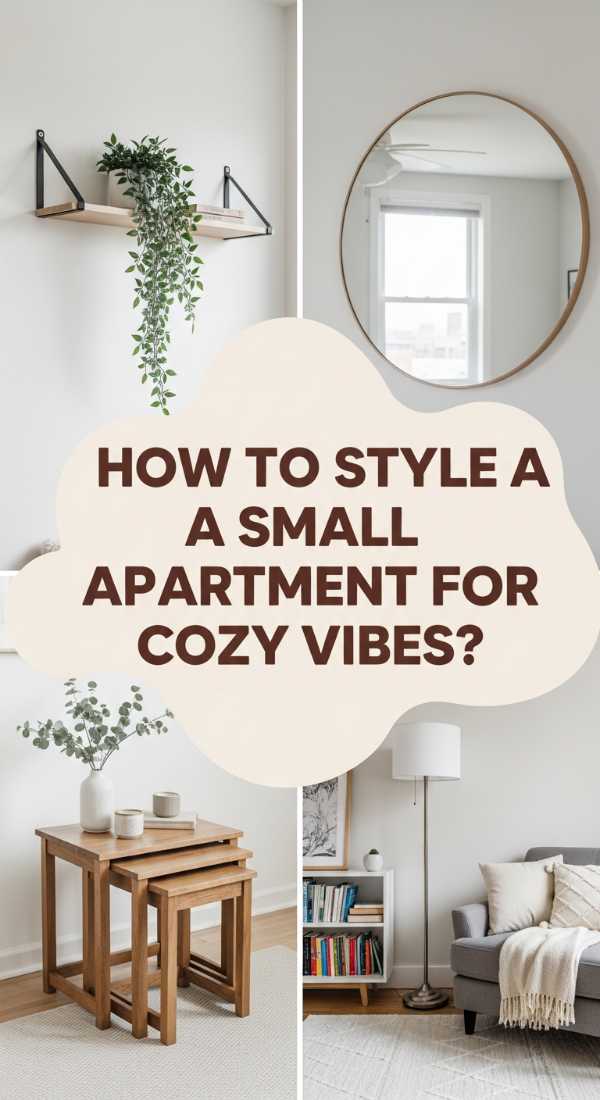
How to Style a Small Living Room Apartment for a Cozy Aesthetic
Why we love this
Small apartments often feel like they are closing in on us, but the cozy minimalist approach turns a ‘tight’ space into a ‘cocoon.’ By using a light-reflective palette and furniture with slim profiles, you create an environment that feels expansive yet intimate. The scent of a clean linen candle paired with the visual of a perfectly draped throw over a chair makes the space feel curated and intentional, proving that you don’t need a mansion to experience true luxury and relaxation.
Essential Elements:
- Leggy furniture (sofas and chairs with visible legs to see more floor).
- Large floor-to-ceiling mirrors to bounce light.
- Acrylic or glass coffee tables to reduce visual weight.
- Sheer linen curtains for privacy without blocking sunlight.
- Wall-mounted shelving to keep floors clear.
How to make it
- Identify the ‘dead zones’ in your apartment, such as corners or behind doors, and plan to keep these areas completely empty to provide visual ‘breathing room.’
- Install sheer floor-to-ceiling curtains at least 6 inches above the window frame to create the illusion of higher ceilings and a softer light diffusion.
- Choose a multi-functional ‘hero’ piece, like a storage ottoman, that provides comfort while hiding away unsightly electronics or extra linens.
- Arrange furniture in a ‘floating’ layout away from the walls; even two inches of space creates a sense of depth and prevents the room from feeling cramped.
- Add a single, large-scale mirror opposite your main light source to double the perceived square footage and brighten the dimmest corners of the room.
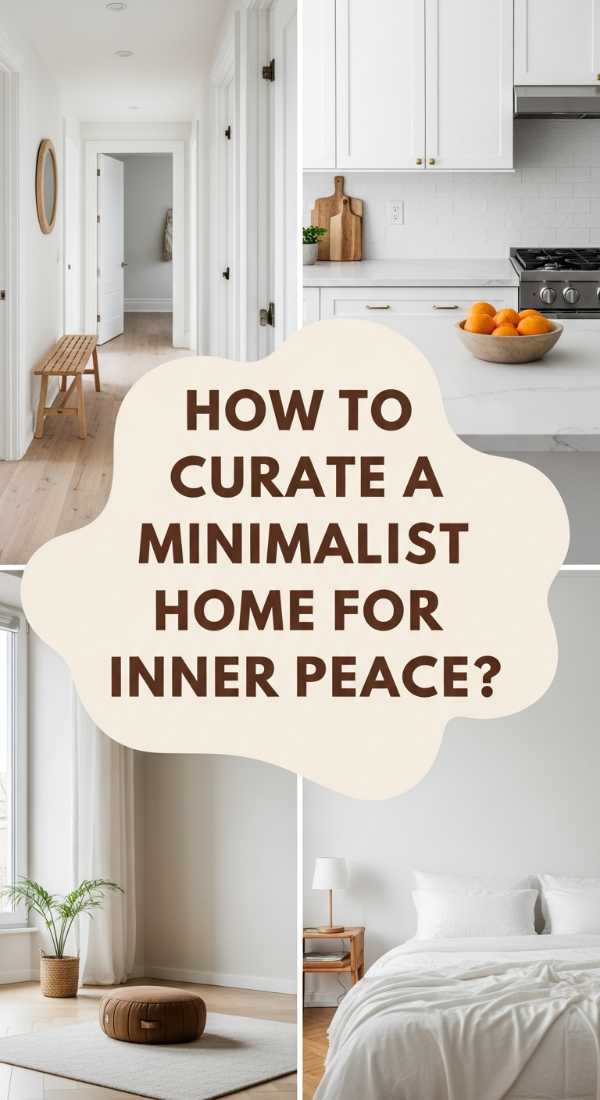
How to Curate a Minimalist Home for Daily Inner Peace
Why we love this
Curating a home for peace is an act of self-care that pays dividends every single morning when you wake up to a space that doesn’t feel like a to-do list. The minimalist home emphasizes the ‘nothingness’ between objects, allowing the eye to rest on smooth surfaces and natural materials. The subtle aroma of fresh lavender and the sound of soft acoustic music playing in a room with minimal echoes creates a sensory sanctuary that shields you from the chaotic pace of the outside world.
Essential Elements:
- Closed storage solutions to hide daily ‘visual noise.’
- A dedicated ‘tech-free’ zone with comfortable seating.
- Natural materials like stone, wood, and cotton.
- Warm-toned lighting (2700K bulbs) for a sunset glow.
- A signature home scent (diffuser or high-quality candle).
How to make it
- Conduct a ‘joy audit’ of every visible item in your main living areas, removing anything that evokes stress or feels like a chore to maintain.
- Invest in high-quality closed cabinetry or baskets that match your wall color to blend seamlessly into the background while housing everyday essentials.
- Swap out all ‘cool’ or ‘daylight’ LED bulbs for warm-toned versions to instantly transform the atmosphere from clinical to inviting as evening falls.
- Create a ‘peace corner’ by placing a single comfortable armchair next to a window, accompanied only by a small side table and a stack of your favorite books.
- Establish a daily ‘closing shift’ routine where you clear all flat surfaces before bed, ensuring you wake up to a fresh, balanced environment every morning.
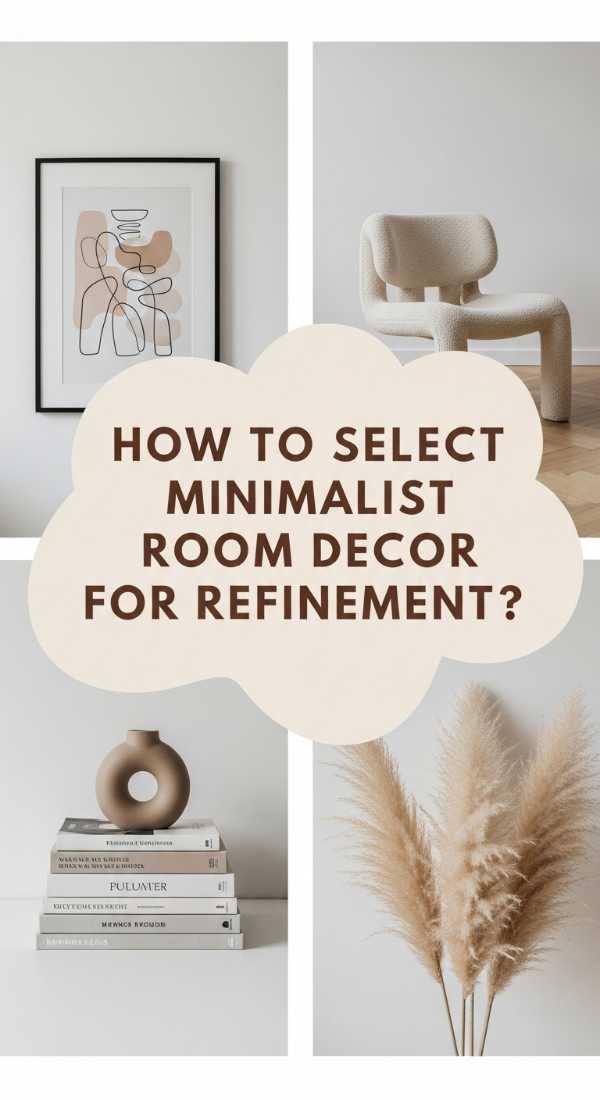
How to Select Minimalist Room Decor for a Refined Space

Why we love this
Refined minimalist decor is all about the ‘power of the one’—one stunning vase, one meaningful book, one perfect sculpture. This approach highlights the craftsmanship of each item, where you can appreciate the grain of the wood or the hand-thrown texture of a ceramic bowl. It feels sophisticated and high-end because nothing is competing for your attention; instead, each piece sits in its own spotlight, creating a gallery-like feel that is still warm and lived-in.
Essential Elements:
- Statement ceramics in matte finishes.
- Coffee table books with neutral spines.
- Organic-shaped mirrors or wall hangings.
- Trays made of marble or brass to group small items.
- High-quality textiles (linen, velvet, silk).
How to make it
- Select a ‘hero’ material—such as unpolished travertine or matte black metal—to repeat throughout the room to create a cohesive, designer-level look.
- Apply the ‘Rule of Three’ when styling surfaces, grouping items of varying heights (e.g., a tall vase, a medium book, and a small candle) for visual balance.
- Choose decor with organic, soft shapes rather than sharp angles to counteract the ‘coldness’ often associated with traditional minimalism.
- Use a decorative tray to ‘corral’ smaller items like remotes or coasters, which trick the eye into seeing one organized unit rather than multiple pieces of clutter.
- Rotate your decor seasonally; by storing half of your items and swapping them every few months, you keep the space feeling fresh without adding more ‘stuff.’
How to Master Cozy Minimalist Style for a Warm Welcome
Why we love this
The entryway sets the tone for your entire home life, and a cozy minimalist welcome is the ultimate transition from ‘busy’ to ‘calm.’ It’s the feeling of dropping your keys on a smooth wooden console and kicking off your shoes onto a soft, vintage-inspired runner. The warmth comes from the intentional use of natural light and a few high-touch elements that make the act of coming home feel like a special occasion every single day.
Essential Elements:
- A slim entryway console table in light oak.
- A woven basket for shoes or umbrellas.
- Wall hooks that double as sculptural elements.
- A small bowl for keys and daily essentials.
- A soft, low-pile runner rug in a neutral pattern.
How to make it
- Clear the floor of all shoes and bags by installing wall-mounted hooks or a dedicated bench with hidden storage to maintain a clear pathway.
- Place a small lamp with a warm bulb on the console table to provide a ‘glow’ that greets you, rather than using harsh overhead lighting.
- Incorporate a ‘scent station’ near the door using a reed diffuser with notes of citrus or sea salt to provide an immediate sensory transition.
- Position a round mirror above the console to reflect the light from the door and provide a final ‘check-in’ spot before you leave the house.
- Add a small touch of nature, like a single branch in a tall vase, to bring the outside in and soften the transition between the world and your home.
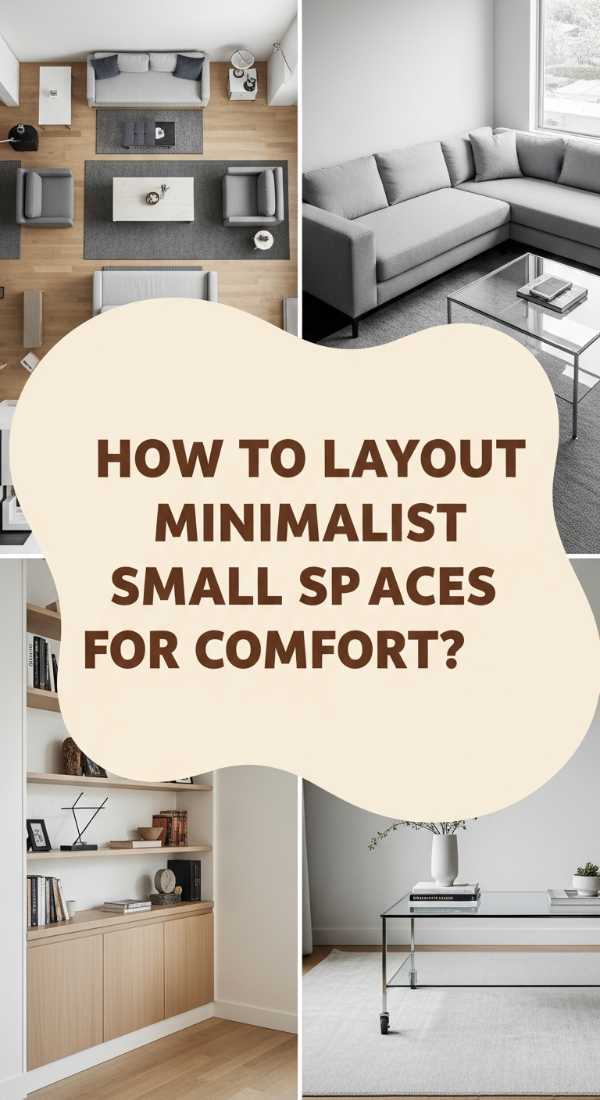
How to Layout Minimalist Living Room Small Spaces for Maximum Comfort
Why we love this
Layout is the secret sauce of minimalism; when done right, even the smallest room feels like a suite. We love this because it prioritizes the human experience—the flow of movement, the ease of conversation, and the comfort of the seat. A well-laid-out small space feels organized and ‘locked in,’ removing the anxiety of a room that feels ‘off’ or cluttered, and replacing it with a sense of architectural harmony and physical ease.
Essential Elements:
- Multifunctional furniture (nesting tables, sofa beds).
- Vertical wall space utilized for lighting (sconces).
- Furniture with open bases to show floor space.
- Defined ‘zones’ using rugs.
- Minimalist window treatments.
How to make it
- Map your floor plan by placing the largest seating element against the longest wall, but pulled out 3 inches to create a shadow line that adds depth.
- Use a large area rug to ‘anchor’ the seating area; ensure all furniture legs (at least the front ones) are touching the rug to define the space as a single ‘island.’
- Replace bulky floor lamps with wall-mounted swing-arm sconces to save floor space while providing targeted task lighting for reading.
- Choose a round coffee table to improve ‘traffic flow’ in tight quarters, preventing the bumped shins that often come with rectangular tables in small rooms.
- Keep the center of the room as clear as possible, focusing the ‘weight’ of the furniture on the perimeter to create an open, inviting void in the middle.
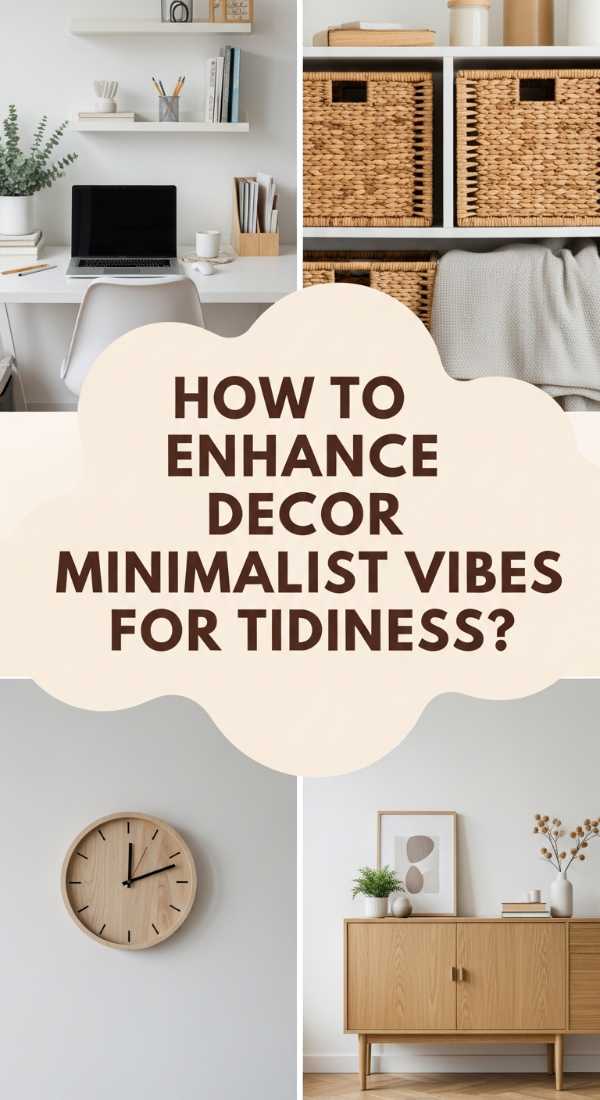
How to Enhance Decor Minimalist Vibes for a Tidy Sanctuary
Why we love this
A tidy sanctuary is the ultimate goal of the viral cozy minimalist movement. It’s about more than just cleaning; it’s about a visual rhythm where every item has its own ‘home.’ The vibe is elevated by the lack of friction—no searching for remotes, no piles of mail, just smooth surfaces and soft textures. It smells like fresh air and looks like a deep breath, providing a mental reset the moment you cross the threshold.
Essential Elements:
- Uniform storage containers in natural materials.
- Cable management boxes to hide wires.
- A dedicated ‘drop zone’ for mail and keys.
- Minimalist wall clocks or art.
- Consistent color palette across all visible items.
How to make it
- Standardize your storage by using identical baskets or bins on open shelving, which creates a ‘block’ of color that is much less distracting than varied items.
- Execute a ‘cable sweep’ by using zip ties or cord boxes to hide all black electronic wires, which are the primary culprits of visual clutter in modern homes.
- Implement a ‘one-in, one-out’ rule for decor items to ensure your surfaces never become overcrowded as you acquire new pieces.
- Designate a ‘hidden drawer’ for all items that don’t have a place, but clear it once a week to ensure it doesn’t become a permanent clutter trap.
- Use scent as a ‘tidy trigger’—light a specific candle only when the room is fully reset, conditioning your brain to associate that scent with a clean, peaceful space.
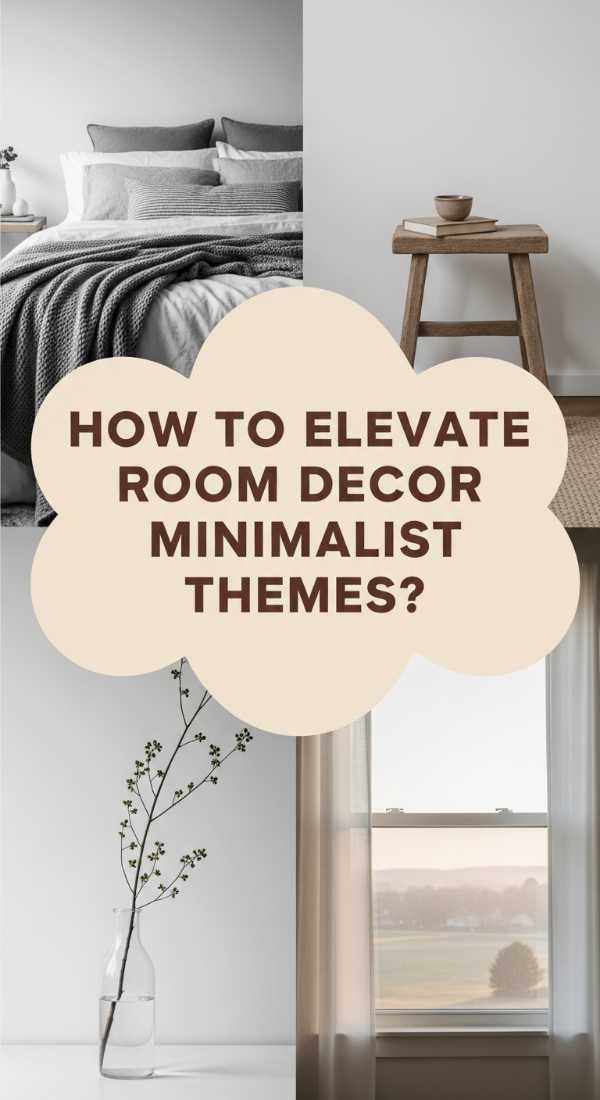
How to Elevate Room Decor Minimalist Themes for Visual Calm
Why we love this
Visual calm is achieved through the art of ‘tonal layering’—using different shades of the same color to create depth without chaos. We love this because it feels incredibly expensive and curated without requiring a lot of ‘stuff.’ The tactile contrast between a matte ceramic lamp and a glossy marble coaster, all in shades of white or beige, provides enough interest for the eye to remain engaged without feeling overwhelmed.
Essential Elements:
- Tone-on-tone color palettes (e.g., all shades of sand).
- Variation in material finishes (matte, gloss, rough, smooth).
- Negative space on walls and surfaces.
- Subtle architectural details (molding or limewash).
- High-quality, heavy-weight drapes.
How to make it
- Select your ‘anchor’ neutral color and find three variations of it: one shade lighter, one shade darker, and one with a slightly different texture.
- Apply ‘limewash’ paint to a single accent wall to add a soft, suede-like texture that creates visual interest without the need for additional wall decor.
- Curate your bookshelves by turning book spines inward or covering them in neutral paper to eliminate the distracting ‘rainbow’ of commercial covers.
- Layer your lighting by combining a ceiling pendant, a floor lamp, and a table lamp, all with the same warmth level, to eliminate harsh shadows.
- Incorporate one ‘living’ element that isn’t green, such as a piece of driftwood or a bowl of smooth river stones, to bring in an earthy, grounding energy.
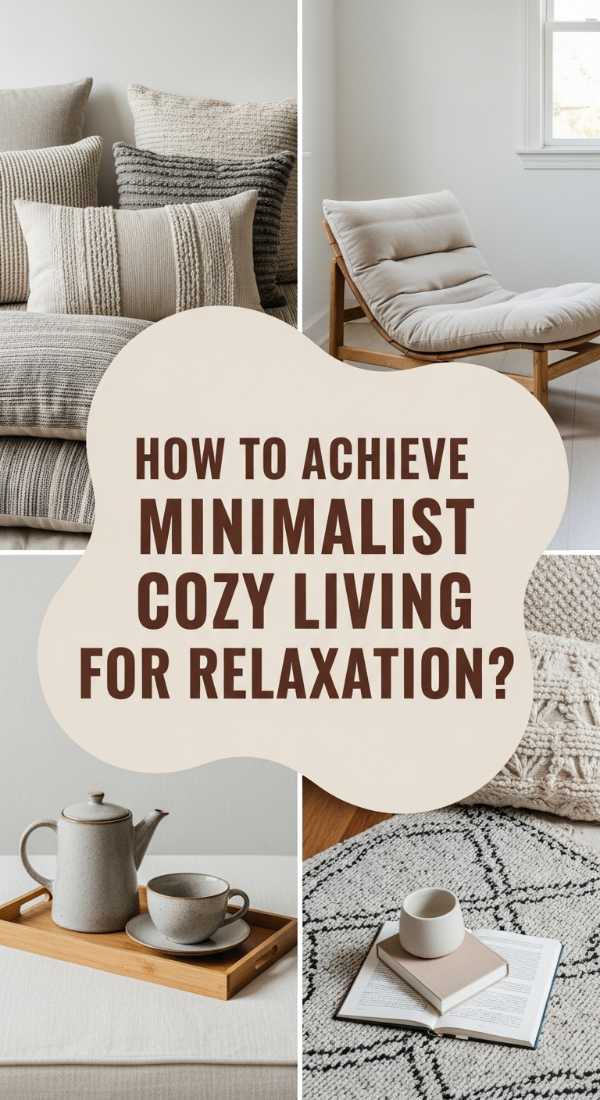
How to Achieve Minimalist Cozy Living for a Relaxed Lifestyle
Why we love this
This isn’t just a look; it’s a way of living that prioritizes slow mornings and peaceful evenings. It’s about the feeling of a heavy, high-quality ceramic mug in your hands and the softness of a 100% cotton robe. By removing the excess, you make room for the rituals that matter—the reading, the meditation, the conversation. It’s a lifestyle that feels intentional, where every item you own serves your happiness rather than your ego.
Essential Elements:
- A high-quality linen bedding set.
- Soft, dimmable ambient lighting.
- Comfortable, oversized floor cushions.
- A dedicated coffee or tea nook.
- Sound-dampening textiles (rugs and curtains).
How to make it
- Deconstruct your morning routine and place the necessary items (mug, tea, journal) in a beautiful, easily accessible, but uncluttered ‘ritual station.’
- Upgrade your most-touched items—your bedding, towels, and mugs—to the highest quality natural materials you can afford, as these provide the most ‘cozy’ ROI.
- Install dimmer switches on all main lights to allow you to transition the ‘mood’ of the home from functional day to relaxed evening with a simple slide.
- Remove all ‘visual stressors’ from the bedroom, including TVs and workout equipment, to protect the space as a sanctuary for sleep and relaxation.
- Practice ‘mindful acquisition’—wait 30 days before buying any new decor piece to ensure it truly fits your minimalist vision and lifestyle.
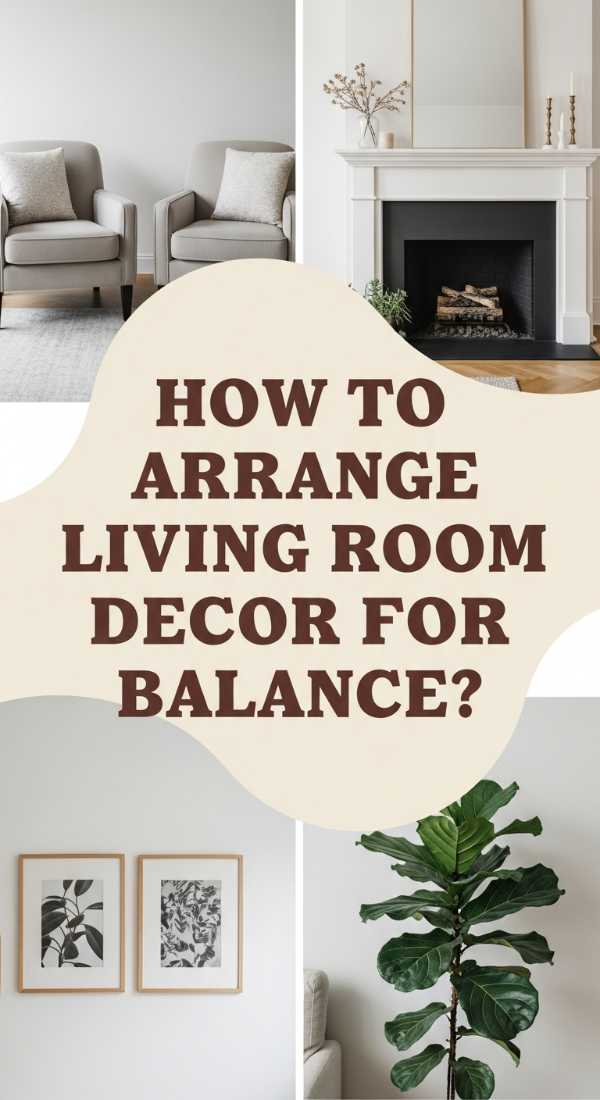
How to Arrange Living Room Decor Minimalist Style for Pure Balance
[IMAGE_10]
Why we love this
Balance is the final piece of the minimalist puzzle. It’s that ‘just right’ feeling where nothing feels lopsided or heavy. We love this because it creates a sense of equilibrium that mirrors our internal desire for stability. Using symmetry and careful placement of ‘visual weight,’ you create a room that feels like it was designed by a pro, where your eye flows effortlessly from one beautiful point to the next without hitting any ‘clutter bumps.’
Essential Elements:
- Symmetrical furniture arrangements (two chairs facing a sofa).
- Centrally aligned artwork or mirrors.
- Pairs of objects (two matching candles or vases).
- Clear ‘sightlines’ from one room to the next.
- Balanced distribution of color and texture.
How to make it
- Identify the ‘center line’ of your room (usually the fireplace or the main window) and arrange your largest furniture pieces symmetrically around this axis.
- Balance ‘visual weight’ rather than just size; a small, dark chair can balance a larger, light-colored sofa because of its intense color.
- Apply the ‘Rule of Thirds’ to your wall art, ensuring that the center of the piece is approximately 57 to 60 inches from the floor (eye level).
- Leave ‘white space’ on every surface; aim for 30-50% of your coffee table or shelf to be completely empty to highlight the items that *are* there.
- Step back and take a photo of the room; seeing the space in 2D often helps you spot imbalances in height or color distribution that you don’t notice in person.
Conclusion: Your Journey to a Calmer Home
Creating a cozy minimalist home isn’t a one-day project; it’s a gradual shift toward intentionality. By focusing on quality, texture, and the beauty of simplicity, you aren’t just decorating a room—you’re curating a life. Start with one corner, clear the clutter, and add back only what brings you peace. You’ll find that once your home begins to breathe, you will too.