

Coziness Meets Clarity: 7 Secrets to a Minimalist Living Space
Have you ever walked into a room and felt an immediate, audible ‘exhale’ resonate through your entire body? That is the magic of the cozy minimalist home. For years, I believed that to be a minimalist meant living in a sterile, white box with a single, uncomfortable chair. But as the sun dips below the horizon and the amber glow of a single candle catches the soft weave of a cashmere throw, I realize that true clarity comes from having just enough of what you love, and nothing that weighs you down. It’s about creating a sanctuary that smells like cedar and fresh rain, where every surface invites a touch rather than a chore.
We live in a world that is constantly screaming for our attention, but your home should be the place where the volume finally turns down. Transitioning to a cozy minimalist aesthetic isn’t just about throwing things away; it’s about a sensory curation of your life. It’s the feeling of cool linen against your skin on a Saturday morning and the visual peace of a clean line meeting a soft curve. Let’s dive into the secrets of blending the ‘less is more’ philosophy with the ‘more comfort’ reality, turning your living space into a high-vibe haven for your soul.
How to Design a Small Living Room for Maximum Serenity

Why we love this
Designing for serenity in a small space is like finding the perfect equilibrium in a delicate recipe; it requires a light touch and an eye for harmony. We love this approach because it transforms a cramped footprint into an expansive retreat where the air feels lighter and the mind feels sharper. Imagine the soft rustle of sheer curtains catching a breeze, the way light dances off a strategically placed mirror, and the tactile comfort of a low-profile sofa that doesn’t overwhelm the room. It’s about creating a visual ‘breathing room’ that allows you to focus on the moments that matter, wrapped in a cocoon of intentional quietude and understated elegance.
Essential Elements:
- Low-profile, slim-line furniture to preserve sightlines.
- Large-scale mirrors to double the perceived depth of the room.
- Sheer linen window treatments for soft, diffused natural light.
- A monochromatic color palette with varied textures (wool, wood, stone).
- Hidden storage solutions to keep surfaces completely clear.
How to make it
- Begin by ‘deglazing’ the room: Remove every single item from the floor and walls until you are left with a blank canvas. This allows you to see the raw proportions of the space without the ‘noise’ of previous clutter.
- Select your ‘base ingredient’: Choose a primary seating piece that sits low to the ground. This lowers the visual center of gravity, making the ceilings feel higher. Ensure the legs are visible rather than skirted to maintain a sense of ‘air’ underneath.
- Apply the ‘Mirror Glaze’: Position a large floor-length or wall-mounted mirror directly opposite your primary light source. This ‘simmers’ the natural light, bouncing it into the darkest corners and creating an illusion of an extra window.
- Layer your textures at a ‘low simmer’: Instead of adding color, add depth through touch. Place a chunky knit rug over wood floors, then layer a silk pillow on a canvas chair. This keeps the visual heat low while maximizing the sensory ‘flavor’ of the room.
- Final reduction: Walk through the space and remove one more item. If it doesn’t serve a functional purpose or spark immediate peace, it’s an unnecessary additive that will cloud the serenity of the final result.
How to Create a Cozy Minimalist Haven for Stress Relief
Why we love this
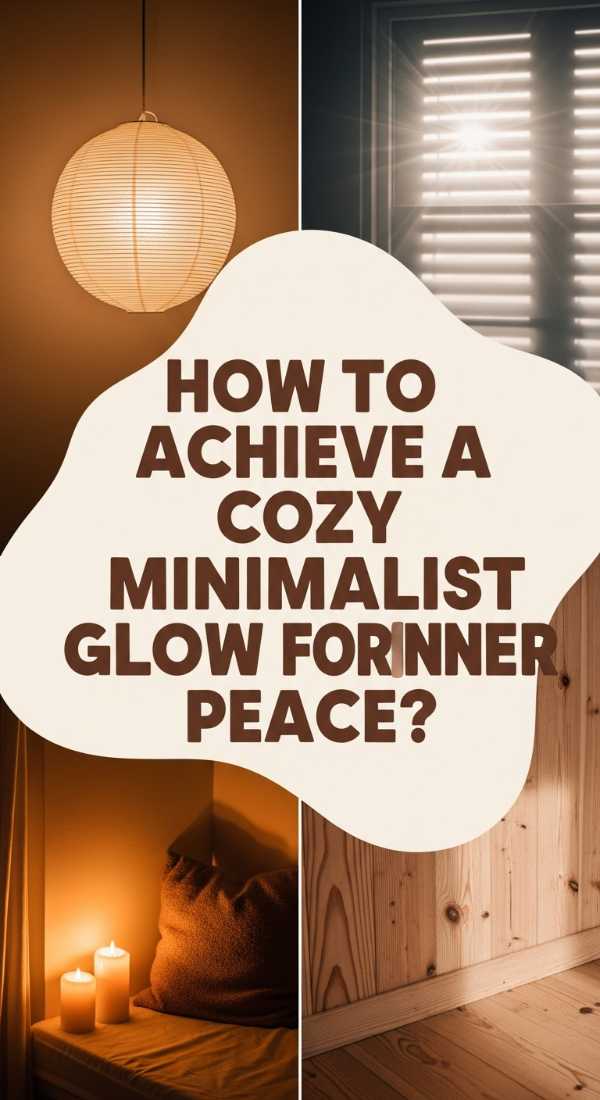
This method focuses on the home as a tool for nervous system regulation, turning your living area into a sensory ‘reset’ button. We love this because it prioritizes the scent of essential oils—think grounding sandalwood and bright bergamot—alongside the physical weight of a heavy, high-quality blanket that feels like a warm hug after a long day. There is a specific kind of luxury in a space that doesn’t demand anything from you; where the lighting is ‘baked’ to a warm, golden temperature and the silence is punctuated only by the soft crackle of a wood-wick candle. It’s a sanctuary designed specifically to lower your cortisol and invite a deep, restorative inhale.
Essential Elements:
- Dimmable, warm-toned lighting (2700K or lower).
- Weighted blankets in organic cotton or bamboo.
- Ultrasonic oil diffusers with grounding scents like cedarwood.
- Natural wood accents to bring an organic, ‘earthy’ feel indoors.
- A ‘tech-free’ zone designated by a beautiful ceramic tray for phones.
How to make it
- Calibrate your ‘heat levels’: Replace all cool-toned lightbulbs with warm-spectrum LEDs. Think of this as preheating your oven to a gentle warmth; you want the light to glow, not glare. Use floor lamps instead of overhead fixtures to create ‘pools’ of calm.
- Prepare the ‘Scent Base’: Set up a diffusion station. Professional tip: Start with 3 drops of frankincense for grounding and 2 drops of lavender for softness. Let this ‘marinate’ the air for 30 minutes before you plan to relax.
- Infuse the ‘Comfort Layer’: Drape a high-quality weighted blanket over your primary lounge spot. The weight should be roughly 10% of your body weight. Ensure the fabric is breathable to avoid ‘overcooking’ your body temperature during rest.
- Sift out the digital noise: Create a ‘landing pad’ for electronics. Use a dedicated wooden or ceramic bowl by the entryway. Placing your phone here serves as a ‘seal’ for your relaxation period, keeping the stress of the outside world out of your haven.
- Texture check: Run your hands over every surface. If anything feels sharp, cold, or synthetic, ‘season’ it by adding a soft textile or replacing it with an organic material like cork or sanded wood to maintain the ‘soft mood’ of the room.
How to Curate Minimalist Room Decor for a Peaceful Vibe

Why we love this
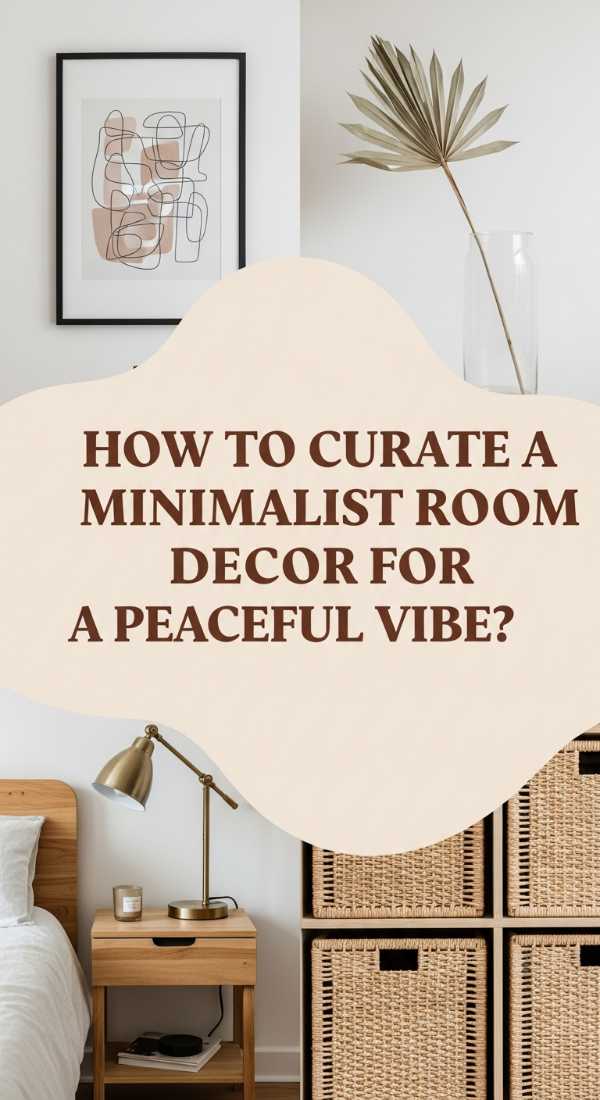
Curating decor in a minimalist way is an exercise in choosing ‘quality over quantity’ that rewards you with a home that feels like a curated gallery of your favorite memories. We love the way a single, perfectly shaped ceramic vase holding a dried eucalyptus branch can command more attention than a shelf full of knick-knacks. It’s the visual equivalent of a perfectly balanced broth—clear, intentional, and deeply satisfying. When you curate rather than collect, every object has the space to ‘breathe,’ allowing you to appreciate the craftsmanship of a hand-thrown bowl or the intricate grain of a reclaimed wood pedestal without the distraction of clutter.
Essential Elements:
- Statement ceramics with organic, imperfect shapes (Wabi-sabi).
- Dried botanicals or long-lasting greenery like Monstera leaves.
- Large-scale, minimalist line art with plenty of white space.
- Solid brass or matte black hardware for a subtle ‘bite’ of contrast.
- A single, high-quality coffee table book that reflects your passions.
How to make it
- Perform a ‘Visual Sift’: Gather every decorative object you own and place them on a table. Look for common threads in color, material, and ‘vibe.’ Discard or donate anything that feels ‘stale’ or out of alignment with your peaceful vision.
- Establish a ‘Focal Point’: Choose one hero object for each surface. On a mantel, this might be one large, textured painting. On a coffee table, one sculptural bowl. This prevents the eye from ‘overheating’ as it tries to process too many visual inputs at once.
- Use ‘Negative Space’ as an ingredient: Treat the empty areas on your shelves as if they were a vital component of the design. Aim for a 60/40 ratio of empty space to objects. This allows the remaining decor to ‘stand out’ and resonate.
- Balance the ‘Tones’: If you have a cool stone surface, ‘season’ it with a warm wooden object. If you have a soft, upholstered surface, add a sharp-edged metal tray. This ‘flavor profile’ of textures creates a sophisticated, professional-grade aesthetic.
- The ’24-Hour Rest’: After styling a shelf or table, leave it for 24 hours. Come back with fresh eyes to see if the composition feels ‘heavy.’ If it does, remove the smallest item to clarify the ‘aftertaste’ of the room’s design.
How to Style Living Room Decor for a Luxe Aesthetic

Why we love this
The luxe minimalist aesthetic is the ultimate ‘umami’ of home design—it’s rich, satisfying, and feels incredibly expensive without being showy. We love the juxtaposition of high-end materials like Carrara marble and velvet against the stark simplicity of a minimalist layout. It’s about the feeling of a heavy, brass handle under your hand and the way a silk-blend rug catches the light like a fine glaze. This style elevates the everyday, making your morning coffee feel like a five-star experience. It’s sophisticated, timeless, and proves that you don’t need a lot of ‘stuff’ to live a life that feels profoundly luxurious and curated.
Essential Elements:
- Premium materials: Marble, brass, velvet, and solid walnut.
- High-pile rugs in neutral tones for a ‘plush’ foundation.
- Oversized, minimalist light fixtures that act as functional sculpture.
- Tonal layering of creams, beiges, and soft greys.
- Fresh white flowers in a heavy glass or crystal vessel.
How to make it
- Set the ‘Foundation Layer’: Start with the largest textile, usually the rug. For a luxe feel, ensure it is oversized (the ‘sear’ of the room). It should be large enough for all furniture legs to rest comfortably upon it, creating a unified ‘base.’
- Add ‘High-Heat’ Accents: Integrate small amounts of reflective materials like polished brass or chrome. These act like finishing salt, catching the light and adding a ‘sparkle’ that makes the minimalist space feel intentional and high-end.
- Layer with ‘Velvet Consistency’: Introduce one or two pieces of high-density velvet in a tonal color. The way velvet absorbs and reflects light adds a ‘creamy’ depth to the room that cheaper fabrics simply cannot replicate.
- Incorporate ‘Sculptural Lighting’: Choose a chandelier or floor lamp with a bold, clean silhouette. Think of this as the ‘plating’—it’s the final touch that defines the entire look. Ensure the scale is slightly larger than you think you need for maximum impact.
- The ‘Gloss Finish’: Keep surfaces meticulously clean. In a luxe minimalist home, dust and fingerprints are the ‘burnt bits.’ Use a micro-fiber cloth daily to ensure your marble and metal surfaces maintain their high-shine, professional finish.
How to Elevate Apartment Living for the Modern Minimalist
Why we love this
Apartment living often feels like a puzzle, but the modern minimalist approach turns those constraints into a masterpiece of efficiency and style. We love the clever use of vertical space and the ‘multi-tasking’ nature of the furniture—a stool that doubles as a side table, or a bench that hides your winter linens. It’s about the ‘urban zen’ of looking out at a bustling city while feeling completely insulated in your own quiet, airy bubble. The aroma of freshly brewed espresso against a backdrop of clean lines and smart storage creates a lifestyle that feels light, mobile, and perfectly adapted for the modern world.
Essential Elements:
- Multifunctional furniture (nesting tables, storage ottomans).
- Vertical shelving units that draw the eye upward.
- Cohesive color story to ‘blur’ the lines between different zones.
- Wall-mounted lighting to save precious floor ‘real estate.’
- Indoor plants that thrive in indirect light, like Snake plants or Pothos.
How to make it
- Zone your ‘Prep Areas’: Even in a studio, define different areas for ‘rest,’ ‘work,’ and ‘nourishment.’ Use rugs or low bookshelves as ‘dividers’ to prevent the energy of each zone from bleeding into the next.
- Execute ‘Vertical Expansion’: When floor space is limited, ‘cook’ upwards. Install floating shelves that reach toward the ceiling. This draws the eye up, making the apartment feel like it has more ‘volume’ than it does square footage.
- ‘Blanch’ the Walls: Use a single, light-reflecting paint color for the entire apartment, including the trim. This ‘erases’ the visual boundaries of the rooms, making the entire space feel like one continuous, airy ‘reduction.’
- Curate ‘Smart Storage’: Every item must have a ‘home’ inside a cabinet or a beautiful basket. In a small apartment, ‘visual clutter’ is like over-seasoning a dish—it quickly becomes overwhelming. Use uniform containers to keep the ‘pantry’ of your life organized.
- Integrate ‘Living Accents’: Add greenery to corners that feel ‘cold.’ A tall plant in a minimalist pot provides a ‘freshness’ that softens the hard lines of apartment architecture, acting as the perfect ‘garnish’ for your space.
How to Master Minimalist Cozy Living for Better Focus
Why we love this
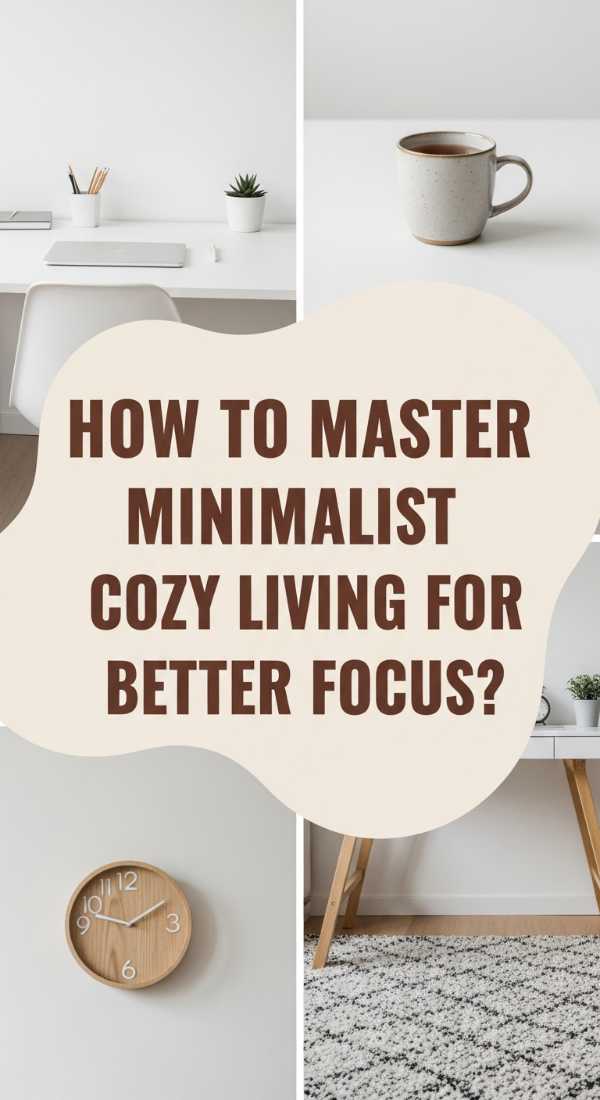
There is a profound connection between our physical environment and our cognitive ‘bandwidth.’ We love the masterfully organized minimalist home because it acts as a ‘clearing agent’ for the brain. When you remove the visual ‘background noise’—the piles of mail, the tangled cords, the mismatched decor—your focus becomes sharp and effortless. It’s the feeling of a crisp, cold morning where everything is visible and still. A cozy minimalist workspace, with its warm wood textures and lack of distractions, invites you into a ‘flow state’ where work feels less like a struggle and more like a meditative practice.
Essential Elements:
- A dedicated, clutter-free ‘Focus Zone’ or desk area.
- Hidden cable management systems to eliminate ‘visual tangles.’
- Neutral, non-distracting color palettes (soft greys, whites, oaks).
- Natural light optimization to maintain circadian rhythms.
- Analog tools like a high-quality paper planner or a single ceramic pen holder.
How to make it
- ‘Sear’ your workspace: Clear your desk entirely at the end of every day. This ‘prep work’ ensures that when you sit down the next morning, your brain starts with a ‘clean pan,’ ready for fresh ideas without the ‘char’ of yesterday’s tasks.
- Manage the ‘Tangles’: Use cable sleeves or under-desk trays to hide all wires. Visual cord clutter is a ‘bitter’ element that constantly pulls at your attention. Tucking them away ‘smooths’ the visual texture of the room.
- Optimize for ‘Natural Heat’: Position your desk near a window, but at a 90-degree angle to the light to prevent ‘glare.’ This provides the mental ‘vitamins’ of sunlight without the ‘burn’ of eye strain, keeping your focus levels steady.
- ‘Season’ with Sound: Use a white noise machine or a ‘lo-fi’ playlist. Just as a kitchen needs a fan to clear the air, your focus zone needs a ‘sonic filter’ to block out distracting household noises.
- The ‘One-In, One-Out’ Rule: For every new item you bring into your focus zone, one must be ‘removed.’ This prevents the ‘reduction’ of your workspace from becoming ‘watered down’ by unnecessary objects over time.
How to Select Minimalist Room Colors for a Soft Mood

Why we love this
Color is the ‘base stock’ of any interior design; it sets the entire flavor profile of your home. We love the ‘soft mood’ of a minimalist palette because it relies on the subtle nuances of undertones rather than the ‘shouting’ of bright pigments. Think of the soft, powdery finish of a sage green, the ‘buttery’ warmth of an oatmeal linen, or the ‘crispness’ of a cool, misty grey. These colors don’t just sit on the walls; they envelop you, creating a ‘soft-focus’ effect that makes every shadow look like art and every beam of light feel like a gift. It is the ultimate secret to a home that feels both modern and deeply, soulfully cozy.
Essential Elements:
- A palette of 3-5 ‘muted’ tones (e.g., Greige, Sage, Sand, Charcoal).
- Flat or Eggshell finishes to absorb light rather than reflect ‘glare.’
- Tonal layering where the walls, rug, and sofa are all variations of the same hue.
- Natural wood tones (Oak, Birch) to act as ‘warm’ neutrals.
- Black accents in very small ‘doses’ to provide grounding and definition.
How to make it
- Identify the ‘Base Stock’: Look at your largest source of natural light. If the light is ‘cool’ (North-facing), choose ‘warm’ neutrals like cream to balance the ‘temperature.’ If the light is ‘warm’ (South-facing), you can ‘cool it down’ with soft greys.
- ‘Sample’ the Light: Paint large swatches on different walls and watch them ‘simmer’ throughout the day. A color that looks like ‘pearl’ at noon might look like ‘mud’ at 4 PM. This 24-hour ‘reduction’ is essential for getting the mood right.
- Apply ‘Tonal Seasoning’: Once your wall color is set, choose furniture that is 2 shades darker or lighter. This creates ‘depth’ without introducing ‘noise,’ ensuring the room feels rich and layered rather than flat.
- Avoid ‘Artificial Additives’: Stay away from high-saturation colors that don’t occur in nature. Stick to ‘earth-derived’ pigments. These ‘organic ingredients’ are much easier for the human eye to process, leading to a more ‘digestible’ and peaceful environment.
- The ‘Linen Test’: Bring in a piece of unbleached linen or a light oak board. If your wall color ‘clashes’ with these natural elements, your ‘flavor profile’ is off. A perfect minimalist color should always ‘marry’ perfectly with the raw materials of nature.
Conclusion: Your Journey to a Clarified Home
Creating a cozy minimalist home is not a destination, but a continuous practice of choosing peace over possessions. It’s about the ‘slow-cooked’ process of finding exactly what makes you feel centered and letting go of the rest. As you implement these secrets, you’ll find that your home becomes more than just a place to sleep—it becomes a reflection of your internal clarity. So, light that candle, fluff that linen pillow, and enjoy the beautiful, resonant silence of a space that is finally, perfectly, you.