
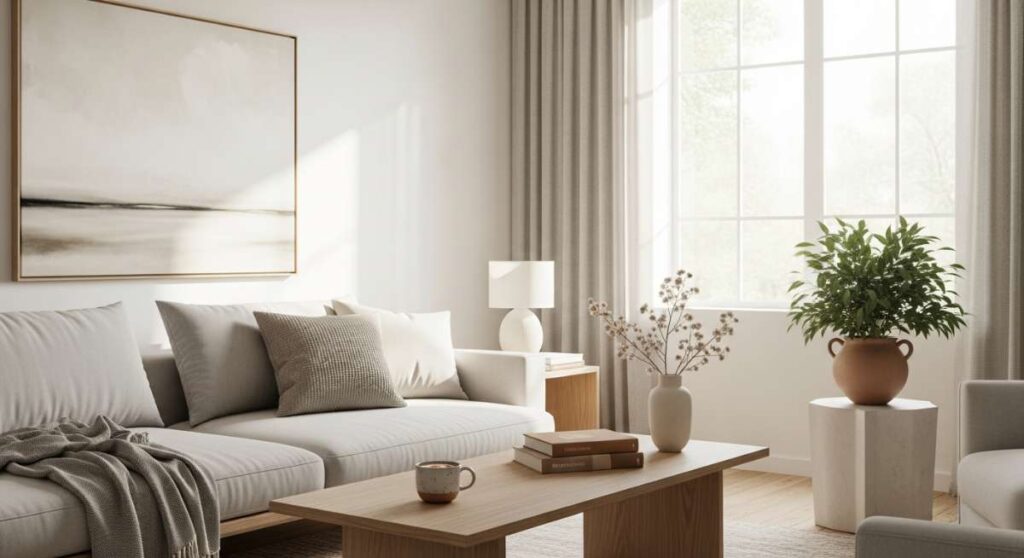
Have you ever walked into a room and felt an immediate, audible exhale escape your lungs? Not because the room was empty, but because every single item in it seemed to whisper a gentle invitation to rest. For years, I thought minimalism meant white walls, cold floors, and a life devoid of personality—a sterile gallery where you’re afraid to set down a coffee mug. But then I discovered Warm Minimalism, and my entire perspective on home changed.
Warm minimalism isn’t about subtraction for the sake of emptiness; it’s about curation for the sake of soul. It’s the art of stripping away the noise so that the things that truly matter—the softest wool throw, the scent of cedarwood, the way the golden hour light hits a handmade ceramic vase—can finally be heard. It is about creating a sanctuary that feels as light as air but as grounded as the earth itself.
In this guide, we are going to walk through the intentional steps of transforming your living space into a cozy, minimalist haven. We’ll treat each corner of your home like a carefully prepared recipe, blending textures, tones, and light to cook up an atmosphere of total serenity. Let’s dive into the sensory experience of a home that finally feels like a deep breath.
How to Curate a Cozy Minimalist Living Room for Total Serenity
Why we love this
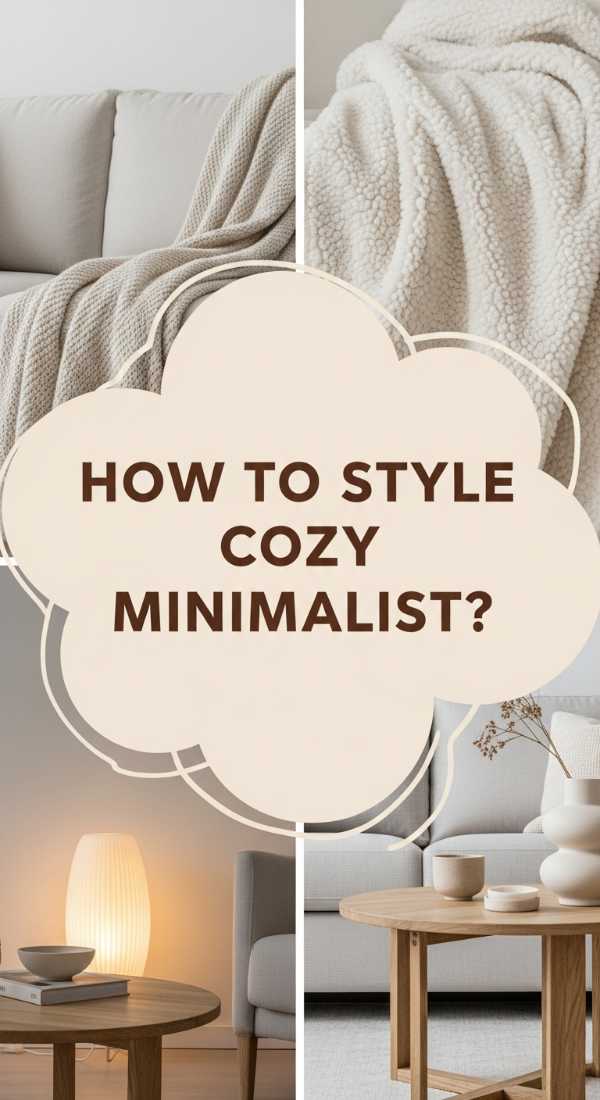
We love this approach because it transforms a standard living area into a tactile retreat that engages every sense. Imagine the faint, earthy aroma of a soy-wax candle mingling with the crispness of fresh linen, while your eyes rest on a palette of oat, cream, and soft taupe. It’s the feeling of sinking into a high-quality sofa and feeling the friction of organic cotton against your skin, providing a sense of safety and stillness that blocks out the chaotic digital world outside. It isn’t just a room; it’s a restorative experience designed to lower your heart rate the moment you cross the threshold.
Essential Elements:
- A neutral, oversized plush sofa in a natural fabric.
- Hand-thrown ceramic vessels in varying heights.
- Dimmable floor lamps with warm-toned bulbs (2700K).
- A single, high-quality wool or jute area rug.
- Minimalist wall art featuring soft, organic shapes.
How to make it
- Begin by clearing the entire room of small decorative objects to create a blank canvas, allowing you to see the architectural bones of the space.
- Position your largest piece of furniture, the sofa, toward the natural light source, ensuring there is a 12-inch clearance from walls to allow the room to “breathe.”
- Layer in a single large-scale rug that extends at least 6 inches beyond the edges of your furniture to anchor the space and provide a soft acoustic buffer.
- Introduce three decorative elements of varying heights on a central surface, such as a coffee table, using the “rule of three” to create visual interest without clutter.
- Install warm-toned lighting at three different levels (eye level, floor level, and tabletop) to eliminate harsh shadows and create a soft, golden glow throughout the evening.
How to Style a Small Living Room Ideas Apartment Cozy Aesthetic for Spacious Living
Why we love this
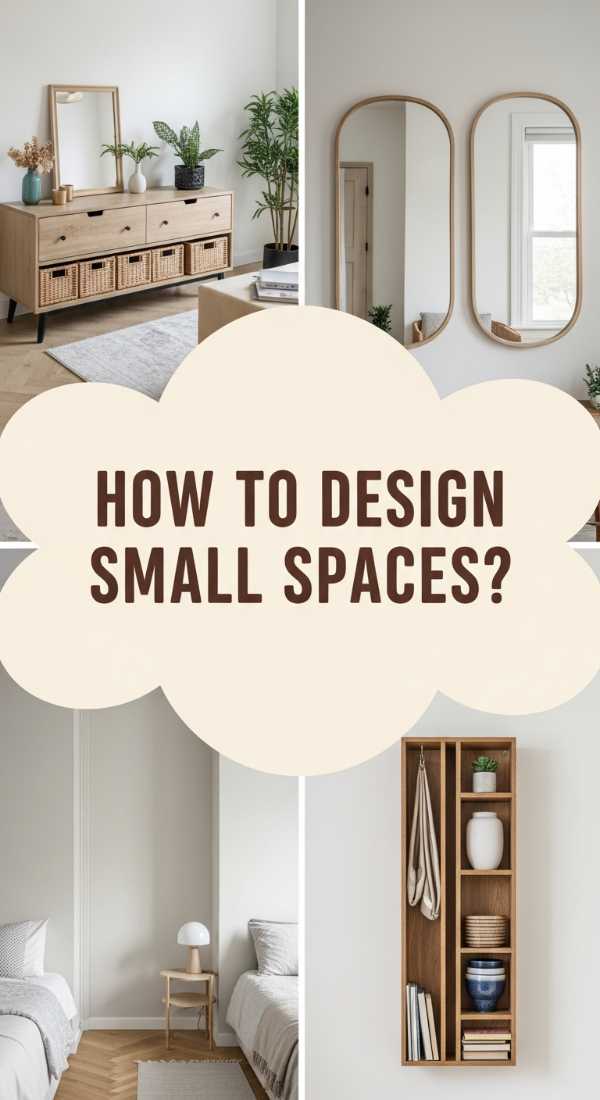
There is a unique magic in turning a compact apartment into a spacious-feeling sanctuary through the clever use of light and scale. This aesthetic prioritizes “visual weightlessness,” where furniture seems to float, and the air feels unburdened by heavy shadows or crowded corners. You’ll love the feeling of waking up in a small space that breathes, where the scent of morning coffee feels more concentrated and the touch of a velvet armchair offers a luxurious, jewel-box intimacy. It’s about maximizing the “flavor” of your home without overstuffing the pot, creating a functional masterpiece in a limited footprint.
Essential Elements:
- Legged furniture to show more floor space.
- Mirrors placed opposite windows to double the light.
- Multi-functional nesting tables.
- Sheer linen curtains for diffused natural light.
- A monochromatic color palette to blur room boundaries.
How to make it
- Select a “hero” piece of furniture that scales perfectly to the wall length, avoiding oversized pieces that swallow the floor plan.
- Mount shelving or storage units high on the walls to draw the eye upward, creating the illusion of taller ceilings and more vertical volume.
- Apply a fresh coat of warm-white paint to the walls and ceiling to unify the surfaces and reflect the maximum amount of natural light.
- Place a large mirror directly across from your primary window; adjust the angle until it captures the most pleasant outdoor view, effectively “opening” the wall.
- Choose furniture with exposed legs (mid-century or scandi-style) to ensure the floor remains visible underneath, which tricks the brain into perceiving more square footage.
How to Select Minimalist Room Decor for a Refined Sanctuary
Why we love this
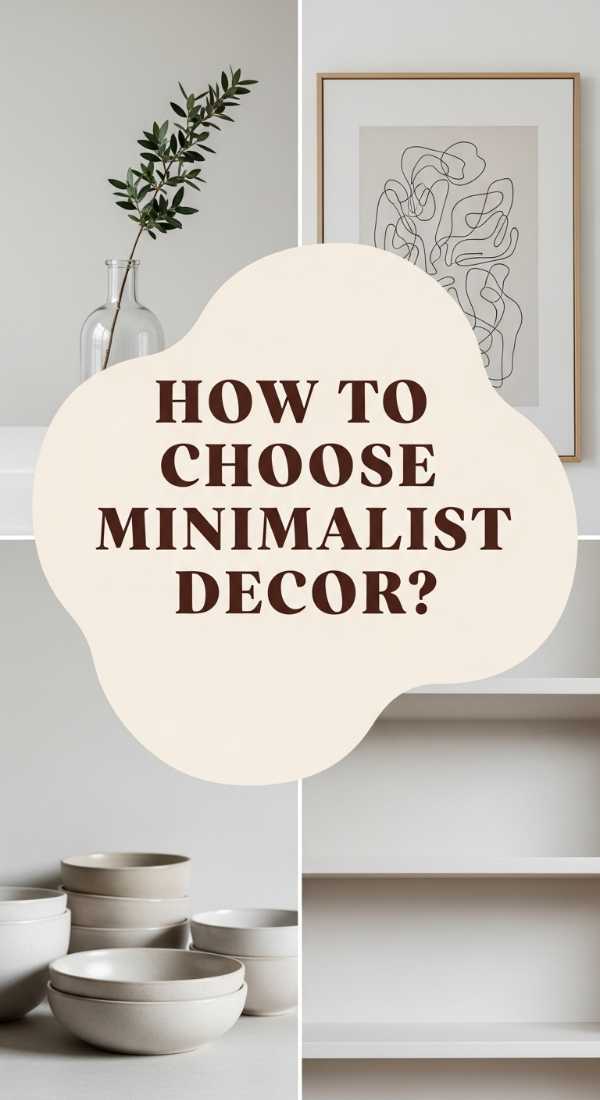
Selecting decor with a minimalist mindset is like choosing the finest organic ingredients for a simple meal; every item must stand on its own merit. We love this because it removes the guilt of “stuff” and replaces it with the joy of craftsmanship. You’ll appreciate the cool, smooth touch of a marble tray or the rough, honest grain of a reclaimed wood bowl. There’s a quiet dignity in owning fewer things that are made better, creating a refined atmosphere where your mind can finally stop scanning for clutter and start focusing on the beauty of a single, well-placed object.
Essential Elements:
- Natural stone accents (marble, travertine, or limestone).
- Hand-carved wooden bowls or trays.
- Textured glass vases with a single botanical branch.
- High-gsm cotton or linen decorative pillows.
- Coffee table books with neutral spines.
How to make it
- Audit your current decor and remove any item that doesn’t serve a functional purpose or evoke a strong, positive emotional response.
- When purchasing new items, prioritize natural materials like stone, wood, and metal, which age gracefully and add “earthy” textures to the room.
- Group small items on a tray to keep them organized and prevent them from looking like “scattered” clutter on flat surfaces.
- Choose one “statement” piece for the room, such as a large-scale sculpture or a designer lamp, to act as the focal point of the refined aesthetic.
- Maintain a strict color story; ensure every new decorative piece fits within your chosen 3-4 shade palette to ensure visual harmony.
How to Master Decor Minimalist Balance for a Calming Atmosphere

Why we love this
Mastering balance is the secret sauce to making a minimalist room feel like a home rather than a museum. It creates a rhythmic flow where the eye moves gently from one soft texture to the next without being jarred by asymmetry or heaviness. We love the way a balanced room feels physically lighter; it’s like a perfectly tuned instrument where the “silence” (empty space) is just as important as the “notes” (furniture). This balance promotes a sense of psychological equilibrium, making your home a true decompression chamber after a long, busy day.
Essential Elements:
- Symmetrical furniture layouts.
- Balanced lighting on both sides of a room.
- A mix of hard and soft textures (e.g., metal vs. wool).
- Negative space (empty areas) on walls and surfaces.
- Consistent height transitions between furniture pieces.
How to make it
- Identify the “center line” of your room (usually the fireplace or the main window) and arrange furniture to create a sense of mirrored weight on either side.
- Balance a heavy sofa with two lighter, airy armchairs opposite it to distribute the visual load of the room evenly.
- Distribute “texture” throughout the space; if you have a stone coffee table, balance it with a soft fabric rug and plush pillows to prevent the room from feeling too cold.
- Deliberately leave one-third of your shelving space empty; this “negative space” allows the eye to rest and prevents the brain from feeling overstimulated.
- Use “weighty” objects low to the ground (like heavy floor cushions) and lighter, more delicate objects higher up (like thin-framed art) to ground the room’s energy.
How to Source Room Decor Minimalist Essentials for an Elegant Home
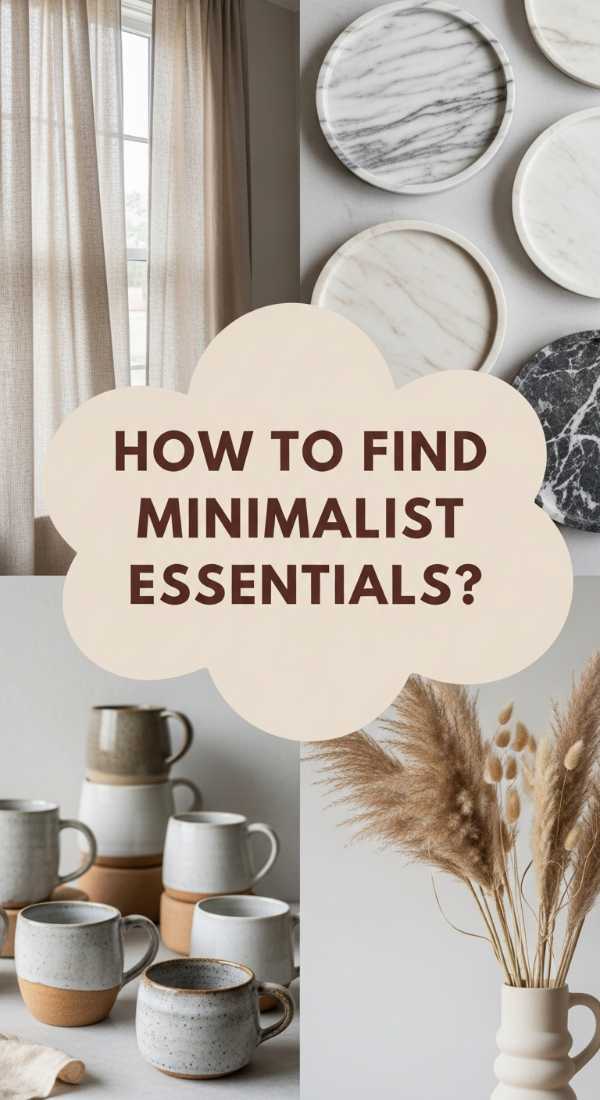
Why we love this
The hunt for the perfect minimalist essential is a slow-living dream. It’s about moving away from fast-fashion home decor and toward pieces that have a story, a scent of the workshop, and a weight that screams quality. We love this process because it encourages intentionality; you aren’t just “buying,” you are “collecting.” The result is an elegant home that feels curated over time, where every linen napkin or brass candle snuffer feels like a deliberate choice. It creates an atmosphere of quiet luxury that doesn’t need to shout to be noticed.
Essential Elements:
- Artisanal pottery and ceramics.
- Organic, sustainably sourced textiles (linen, hemp, wool).
- Vintage or secondhand wood furniture with a patina.
- Solid brass or matte black hardware.
- Dried botanicals like eucalyptus or pampas grass.
How to make it
- Research local artisans or small-batch makers who prioritize sustainable materials and traditional craftsmanship for your core pieces.
- Visit vintage markets to find one-of-one wooden pieces; look for “patina”—the natural wear and tear that adds warmth and history to a minimalist space.
- Check fabric compositions before buying; always opt for 100% natural fibers like linen or cotton, which drape better and feel superior to synthetic blends.
- Build your collection slowly, one piece per month, ensuring each item has a dedicated place and purpose before bringing it home.
- Focus on “sensory essentials”—invest in high-quality candles or essential oil diffusers that match the visual elegance of your home with a signature scent.
How to Build a Cozy Minimalist Haven for Quiet Mornings

Why we love this
There is nothing quite like a morning in a cozy minimalist haven, where the only sounds are the whistling kettle and the soft rustle of sheets. We love this setup because it turns the first hour of your day into a sacred ritual. The lack of visual clutter means your mind isn’t immediately jumping to your to-do list. Instead, you can focus on the warmth of your ceramic mug in your hands, the softness of a chunky knit throw, and the slow progression of sunlight across the floor. It is a space designed specifically for being, rather than doing.
Essential Elements:
- A dedicated “nook” with a comfortable lounge chair.
- A low-profile side table for tea or coffee.
- A high-quality waffle-weave throw blanket.
- Soft, indirect morning light (sheer blinds).
- A small tray for a journal and a pen.
How to make it
- Designate a specific corner of your home as a “no-tech zone,” reserved exclusively for reading, journaling, or quiet contemplation.
- Place a comfortable chair near a window facing the sunrise; add a lumbar pillow to ensure you can sit comfortably for at least 30 minutes.
- Set up a “morning station” on a nearby surface with a beautiful tray containing your favorite mug, a selection of teas, and a candle.
- Layer a thick, high-pile rug under the chair to keep your feet warm and provide an extra layer of acoustic insulation from the rest of the house.
- Keep the decor in this area extremely sparse—perhaps just one piece of art that inspires peace—to ensure the focus remains on your internal state.
How to Layer Minimalist Cozy Textures for Maximum Comfort

Why we love this
Texture is the “flavor” of minimalism. Without it, a room is bland; with it, a room becomes a rich, multi-dimensional experience. We love layering textures because it allows you to keep a monochrome color palette while adding immense depth and warmth. Think of the contrast between a smooth leather chair and a chunky, hand-knit wool blanket, or the way a velvet pillow sits against a linen sofa. These layers create a “huggable” environment that feels physically and visually soft, wrapping you in comfort without the need for bright colors or busy patterns.
Essential Elements:
- Bouclé or sherpa accent pillows.
- Chunky knit wool throws.
- Linen bedspreads or sofa covers.
- Woven seagrass or jute baskets.
- Velvet or suede touches.
How to make it
- Start with a base of “flat” textures, such as a smooth cotton sofa or a flat-weave rug, to provide a clean foundation.
- Apply the “rule of three” for textures: combine something rough (jute), something soft (velvet), and something organic (linen) in every seating area.
- Drape a heavy knit throw over the arm of a chair at a 45-degree angle to create a casual, lived-in look that invites someone to sit down.
- Mix the scale of your textiles; pair a large-scale woven basket with a fine-weave linen curtain to create visual contrast.
- Add a “touch of life” with a soft-leafed plant like a Fern or a Fiddle Leaf Fig, which adds a natural, living texture to the room’s composition.
How to Arrange Living Room Decor Minimalist Styles for Better Flow
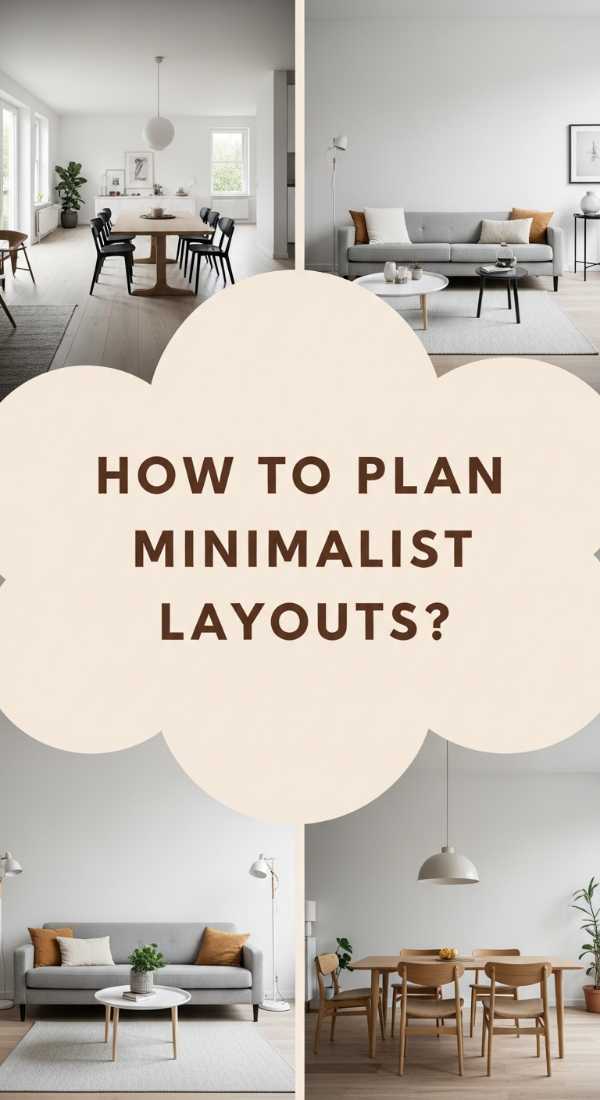
Why we love this
A well-arranged minimalist room feels like a gentle stream—there are no obstacles, and everything moves with a natural, effortless grace. We love this because it honors the way we actually move through our homes. You’ll notice the ease of walking from the entryway to the sofa without dodging coffee tables or tripping over rugs. This “flow” creates a psychological sense of freedom and control, ensuring that your home supports your movement rather than restricting it. It turns a living space into a functional dance of form and utility.
Essential Elements:
- Wide walkways (at least 30 inches of clear space).
- Furniture pulled away from walls (“floating” the layout).
- Circular or oval coffee tables to prevent “sharp” edges.
- Clear sightlines from one end of the room to the other.
- Logical grouping of furniture based on activity.
How to make it
- Map out the “traffic paths” in your room and ensure there is a clear, unobstructed 3-foot wide path between the main entry and exit points.
- Pull your sofa and chairs at least 4-6 inches away from the walls; this creates shadows behind the furniture that add depth and make the room feel more expansive.
- Choose a round coffee table if you have a tight space; the lack of corners prevents the flow from feeling “blocked” and is safer for movement.
- Ensure all seating is angled slightly toward a central point (like a fireplace or a view) to encourage conversation and create a cohesive “zone.”
- Keep the floor as clear as possible; use wall-mounted storage or floating shelves to keep the “ground plane” open, which enhances the feeling of flow.
How to Optimize Minimalist Living Room Small Spaces for Modern Functionality
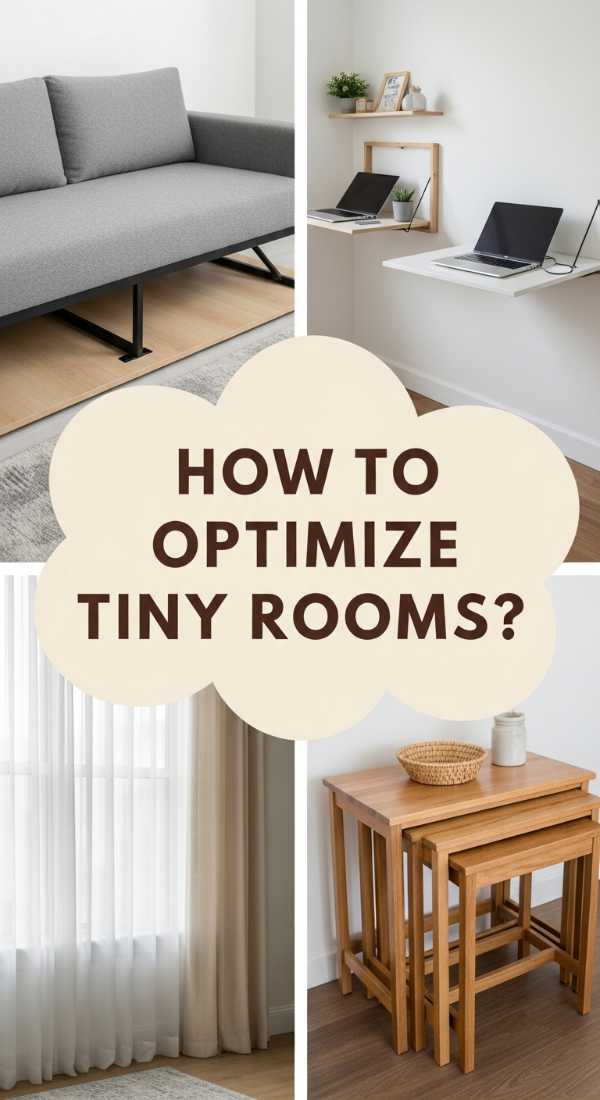
Why we love this
Optimizing a small space is the ultimate exercise in “less but better.” We love this because it forces you to be ingenious with every square inch, leading to a home that is highly efficient and surprisingly high-tech yet cozy. It’s the satisfaction of a hidden desk that tucks away at night, or a storage ottoman that hides your favorite blankets. This approach creates a “smart sanctuary” where functionality is baked into the design, allowing you to live a modern, busy life without the clutter that usually comes with it. It’s small-space living with big-room luxury.
Essential Elements:
- Wall-mounted desks or drop-leaf tables.
- Furniture with hidden storage compartments.
- Vertical shelving units that reach the ceiling.
- Integrated cable management systems.
- Lightweight furniture that can be easily moved.
How to make it
- Audit every piece of furniture for “dual-purpose” capability; if a coffee table doesn’t have storage or can’t serve as a seat, consider replacing it.
- Install a wall-mounted “hub” for electronics and chargers to keep cables hidden and surfaces clear of tangled wires.
- Use vertical space by installing shelves above door frames or high on walls for items you don’t use daily, keeping the eye-level area clear.
- Select “ghost” furniture (acrylic or glass) for end tables to provide functionality without taking up any visual space in the room.
- Implement a “one-in, one-out” rule for any new household item to ensure your optimized small space never returns to a state of clutter.
How to Transform a Minimalist Home for a Mindful Lifestyle
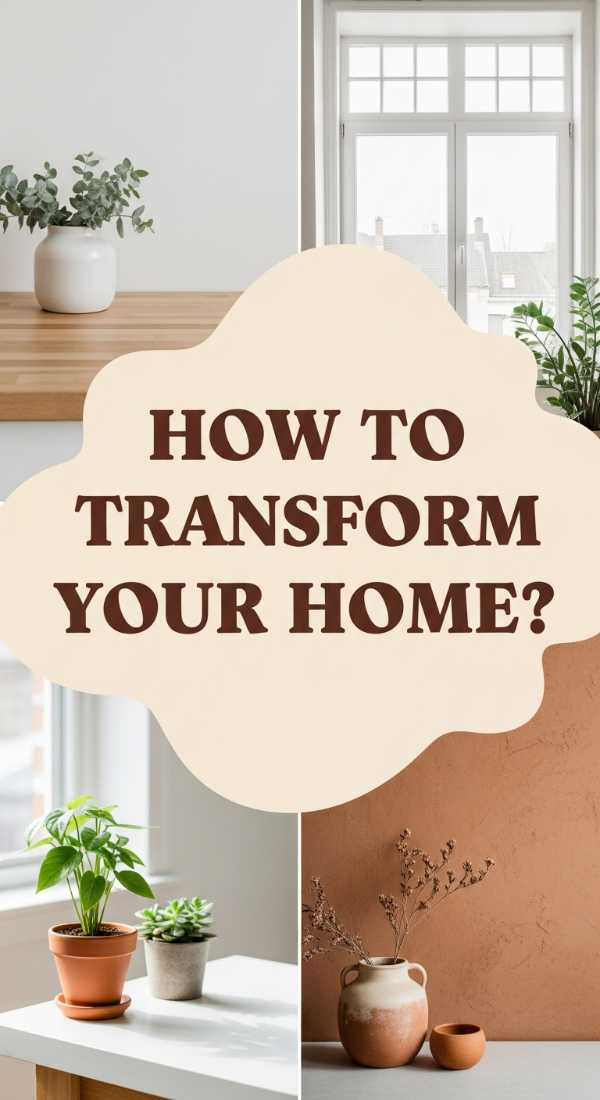
Why we love this
This is the ultimate evolution of warm minimalism: when your home becomes a reflection of your internal peace. We love this because it shifts the focus from aesthetics to ethics and mindfulness. Every object in a mindful home has a reason for being there, whether it’s a bowl that holds your keys or a candle that signals the end of the workday. This environment fosters a deeper connection to the present moment, making it easier to breathe, meditate, and enjoy the simple pleasures of life. It’s not just a decorating style; it’s a way of living with intention and grace.
Essential Elements:
- A dedicated meditation or stretching area.
- Art that reflects nature or peaceful landscapes.
- Natural light management (blackout vs. sheer).
- Non-toxic, organic cleaning and scent products.
- A “clutter-free” entryway to transition from the outside world.
How to make it
- Create a “transition ritual” at your entryway; install a beautiful wood hook for your bag and a stone tray for your keys to ceremonially leave the world behind.
- Switch all your home scents to natural essential oils or beeswax candles, avoiding synthetic fragrances that can disrupt a mindful atmosphere.
- Organize your home based on “rituals” (e.g., a coffee ritual, a reading ritual) rather than just rooms, ensuring the tools for each are accessible but hidden.
- Set a “digital sunset” timer for your home lighting; have the lights dim and warm up automatically at 8:00 PM to signal to your body that it’s time to rest.
- Spend 5 minutes every evening “resetting” your space—plumping pillows and clearing surfaces—so you can wake up to a fresh, mindful sanctuary every morning.
Conclusion: Embracing the Slow Glow
Warm minimalism isn’t a destination you reach; it’s a lifestyle you cultivate. By choosing quality over quantity, texture over pattern, and light over clutter, you are building a home that does more than just house your things—it nourishes your soul. Your sanctuary is now a place where every object has a purpose and every corner offers a breath of fresh air. Take it slow, enjoy the process of curating your space, and remember that the most important element of any home is the peace of mind of the people living inside it. Welcome home to your cozy, clutter-free haven.