

How to Create a Viral-Worthy Simple Food Board on a Budget
There is something absolutely magical about the moment spring arrives and our lawns are dotted with those vibrant, sunny pops of yellow. While most people see weeds, a savvy lifestyle blogger sees the ultimate secret ingredient for a viral-worthy, budget-friendly food board. Foraging your own backyard is not just a trend; it’s a way to reconnect with nature while creating a stunning, artisanal aesthetic that looks like it cost a fortune at a high-end bistro.
Today, I’m showing you how to take the humble dandelion and transform it into a culinary masterpiece. We aren’t just making one dish; we are crafting a ‘Foraged Gold’ board that features everything from floral jellies to earthy ‘coffee.’ It’s rustic, it’s sustainable, and honestly, the bright colors are going to make your social media feed absolutely explode with engagement. Grab your harvesting basket, and let’s turn these golden blooms into something spectacular.
How to make dandelion salad?

Why we love this
There is a sophisticated bitterness to fresh dandelion greens that rivals the most expensive radicchio or arugula found in gourmet markets. When tossed with a bright citrus vinaigrette, the leaves offer a crisp, refreshing crunch that wakes up the palate and pairs beautifully with creamy cheeses. The aroma is reminiscent of a fresh meadow after a rainstorm, and the visual of the tender, jagged leaves arranged on a wooden board provides that perfect ‘earthy-chic’ vibe we all crave.
Ingredients
- 4 cups young dandelion leaves (harvested before flowers bloom for less bitterness)
- 1/2 red onion, thinly sliced
- 1/4 cup toasted walnuts
- 1/2 cup crumbled goat cheese or feta
- Dressing: 3 tbsp olive oil, 1 tbsp lemon juice, 1 tsp honey, salt, and pepper
How to make it
- Begin by thoroughly washing your harvested greens in a large bowl of cold water at least three times to ensure every grain of soil is removed; the jagged edges tend to trap dirt.
- Spin the greens completely dry in a salad spinner; moisture is the enemy of a good salad as it prevents the dressing from adhering to the leaves.
- In a small glass jar, combine the olive oil, fresh lemon juice, honey, and a pinch of sea salt, shaking vigorously until the mixture emulsifies into a cloudy, golden liquid.
- Place the dried leaves in a large wooden bowl and drizzle half the dressing over them, using your hands to gently massage the greens for 30 seconds to soften the fibers and distribute the flavor.
- Top the greens with the razor-thin onion slices, crunchy walnuts, and the creamy cheese, then drizzle the remaining dressing just before serving to maintain the structural integrity of the delicate leaves.
How to brew dandelion tea?

Why we love this
Sipping on dandelion tea is like drinking a cup of warm, liquid sunshine. The aroma is incredibly light and floral, with a hint of honeyed sweetness that lingers in the air as the steam rises from your favorite ceramic mug. It has a silky mouthfeel and a delicate, pale yellow hue that looks stunning in clear glassware, making it the perfect centerpiece for a cozy, wellness-focused food board that emphasizes detoxing and natural healing.
Ingredients
- 2 cups fresh dandelion flower heads (petals only)
- 4 cups filtered water
- 1 slice of fresh ginger (optional)
- Raw honey or agave to taste
- Fresh lemon slices for garnish
How to make it
- Prepare the flowers by carefully removing the yellow petals from the green base (the sepals), as the green parts can introduce an unwanted bitterness to the delicate floral tea.
- Rinse the yellow petals in a fine-mesh sieve under cool running water to remove any tiny insects or dust particles.
- Bring your filtered water to a gentle boil in a kettle or pot, then remove from heat and let it sit for 30 seconds to reach an ideal steeping temperature of about 190°F.
- Place the petals and the ginger slice into a heat-proof glass teapot and pour the hot water over them, allowing the infusion to steep for 5 to 7 minutes until the water turns a soft primrose color.
- Strain the tea through a fine-mesh strainer into individual cups, stir in your desired amount of honey, and float a thin lemon slice on top for a bright, acidic finish.
How to fry dandelion fritters?

Why we love this
Imagine a savory, golden-brown nugget that is light as air on the inside and perfectly crispy on the outside—that is the dandelion fritter. When these hit the hot oil, they release a nutty, popcorn-like aroma that is absolutely intoxicating. The contrast between the crunch of the batter and the tender, slightly sweet flower head inside creates a sensory experience that feels like high-end fair food, making them the ultimate crowd-pleaser for any budget-friendly gathering.
Ingredients
- 20-30 large, freshly picked dandelion flower heads (stems removed)
- 1 cup all-purpose flour
- 1 tsp baking powder
- 1/2 tsp garlic powder
- 1 cup sparkling water (cold)
- Vegetable oil for frying
- Flaky sea salt for finishing
How to make it
- Submerge the flower heads in a bowl of salted cool water for 10 minutes to ensure they are clean, then lay them face down on a paper towel to dry completely; they must be dry to ensure the batter sticks.
- In a medium bowl, whisk together the flour, baking powder, and garlic powder, then slowly pour in the ice-cold sparkling water, whisking gently until just combined (a few lumps are okay—this creates the airy texture).
- Heat approximately one inch of vegetable oil in a heavy-bottomed skillet over medium-high heat until it reaches 350°F; you can test this by dropping a bit of batter in—it should sizzle and float immediately.
- Holding the flower by the base of the green sepals, dip it into the batter until fully coated, let the excess drip off, and carefully lower it into the hot oil.
- Fry the fritters for about 2 minutes per side until they reach a deep golden-brown hue, then remove with a slotted spoon to a wire rack and sprinkle immediately with flaky sea salt while the oil is still glistening.
How to cook dandelion jelly?
Why we love this
Often referred to as ‘Poor Man’s Honey,’ this jelly is a shimmering, translucent amber spread that captures the essence of a spring meadow. Its texture is smooth and gelatinous, melting effortlessly onto a warm biscuit or a slice of crusty sourdough. The flavor is a sophisticated blend of honey, lemon, and a subtle clover-like finish that is so unique, guests will be begging for the recipe before they’ve even finished their first bite.
Ingredients
- 2 cups dandelion petal ‘tea’ (concentrated infusion)
- 2 tbsp lemon juice
- 1 package (1.75 oz) powdered fruit pectin
- 3 cups granulated sugar
- Sterilized canning jars
How to make it
- Create your base by steeping 2 cups of packed dandelion petals in 3 cups of boiling water overnight, then straining and squeezing the petals to extract exactly 2 cups of dark yellow liquid.
- Pour the dandelion liquid and lemon juice into a large heavy-bottomed pot and whisk in the powdered pectin until completely dissolved.
- Bring the mixture to a full rolling boil over high heat (a boil that doesn’t stop when stirred), then quickly pour in all the sugar at once.
- Continue stirring constantly as the mixture returns to a full rolling boil, and let it boil vigorously for exactly one minute to ensure the pectin activates correctly.
- Remove from heat, skim off any foam with a metal spoon, and ladle the hot jelly into sterilized jars, leaving 1/4 inch of headspace before sealing and processing in a water bath for 10 minutes.
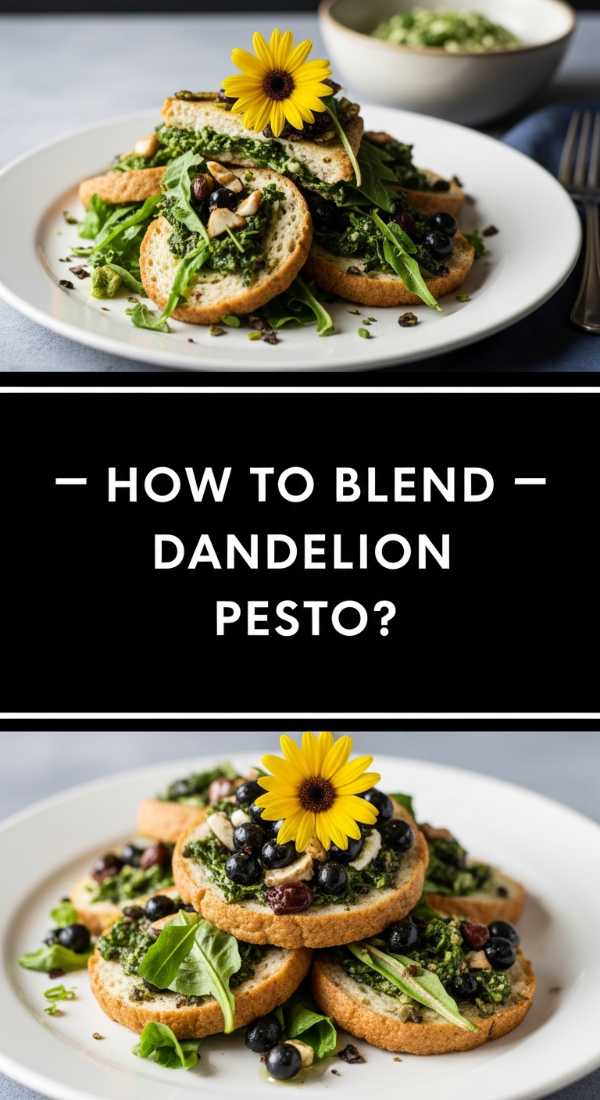
How to blend dandelion pesto?

Why we love this
This pesto is a vibrant, emerald-green powerhouse that brings a bold, herbaceous punch to your food board. It’s significantly more complex than traditional basil pesto, offering a peppery bite that is beautifully balanced by the richness of the nuts and the salty tang of Parmesan. The aroma of fresh garlic and olive oil mingling with the wild greens is enough to make anyone’s mouth water, and its thick, spreadable texture makes it perfect for dipping or smearing on crostini.
Ingredients
- 2 cups packed young dandelion leaves
- 2 cloves garlic, peeled
- 1/2 cup toasted pine nuts or walnuts
- 1/2 cup grated Parmesan cheese
- 1/2 cup extra-virgin olive oil
- Squeeze of lemon juice, salt, and pepper
How to make it
- If your dandelion leaves are older and potentially more bitter, blanch them in boiling water for 30 seconds and immediately plunge them into an ice bath to lock in the green color and mellow the flavor.
- Place the (dried) leaves, garlic, and nuts into a food processor and pulse 10-12 times until the ingredients are coarsely chopped and uniform in size.
- Add the Parmesan cheese and pulse a few more times to incorporate.
- While the motor is running on a low setting, slowly drizzle the olive oil through the feed tube in a steady stream to create a smooth, creamy emulsion.
- Finish by stirring in a squeeze of lemon juice and seasoning with salt and pepper to taste; the acid from the lemon is crucial for brightening the deep earthy notes of the wild greens.
How to make dandelion syrup?

Why we love this
Dandelion syrup is the ultimate DIY luxury for your breakfast spread or cocktail hour. It has a viscous, silky consistency that coats a spoon beautifully and a deep golden color that glows in the light. The flavor is intensely floral and sweet, much like a wildflower honey but with a thinner, more pourable texture that makes it ideal for drizzling over pancakes or stirring into a gin-based floral cocktail for a truly viral ‘foraged’ drink aesthetic.
Ingredients
- 2 cups dandelion petals (no green parts)
- 2 cups water
- 2 cups granulated sugar
- 2 thick slices of lemon
- 1/2 vanilla bean, split (optional)
How to make it
- Combine the water, dandelion petals, and lemon slices in a saucepan and bring to a simmer over medium heat for about 15 minutes to create a potent floral infusion.
- Remove the pan from the heat and allow the mixture to steep for at least 4 hours (or overnight in the fridge) to maximize the depth of the floral notes.
- Strain the infusion through a cheesecloth, squeezing firmly to get every drop of golden liquid, then pour the liquid back into a clean saucepan.
- Add the sugar and the split vanilla bean, then simmer over low heat for 30 to 45 minutes, stirring occasionally, until the liquid reduces and thickens into a syrup consistency.
- Allow the syrup to cool completely before transferring to a glass bottle; it will continue to thicken as it cools to room temperature.
How to sauté dandelion greens?

Why we love this
There is something incredibly comforting and rustic about a pan of greens sautéed until tender and glistening with garlic butter. This dish transforms the wild ‘weed’ into a sophisticated side that feels right at home on a Mediterranean-style food board. The greens lose their harsh bite and become savory and silky, while the aroma of toasted garlic provides a warm, inviting base that makes this one of the most crave-able ways to eat foraged greens.
Ingredients
- 1 large bunch of dandelion greens (rinsed and chopped)
- 2 tbsp butter or olive oil
- 3 cloves garlic, minced
- Pinch of red pepper flakes
- Lemon wedges and sea salt
How to make it
- Prepare the greens by removing any tough lower stems and chopping the leaves into 2-inch ribbons.
- Heat the butter or olive oil in a large skillet over medium heat until the butter begins to foam or the oil shimmers.
- Add the minced garlic and red pepper flakes, sautéing for about 60 seconds until the garlic is fragrant and just beginning to turn a pale golden color; be careful not to burn it as it will become bitter.
- Add the dandelion greens to the pan—they will look like a lot, but they will wilt significantly—and use tongs to toss them in the garlic oil.
- Sauté for 5 to 8 minutes, stirring frequently, until the greens are tender and have turned a deep, dark emerald green; finish with a generous squeeze of fresh lemon and a sprinkle of sea salt to balance the flavors.
How to brew dandelion wine?

Why we love this
Known as ‘sunshine in a bottle,’ dandelion wine is a tradition that dates back centuries, and for good reason. It’s a dry, crisp, and incredibly aromatic beverage that captures the fleeting essence of spring. The fermentation process transforms the simple floral sugars into a complex, golden elixir that tastes like a cross between a dry sherry and a mead. Serving this from a vintage carafe on your food board adds an air of old-world mystery and artisanal skill that is sure to fascinate your followers.
Ingredients
- 1 gallon dandelion petals (tightly packed, no green)
- 1 gallon boiling water
- 3 lbs granulated sugar
- 2 lemons and 2 oranges (juiced and zested)
- 1 packet wine yeast
How to make it
- Place the cleaned petals in a large, sterilized primary fermentation bucket and pour the boiling water over them, stirring well and letting them steep for 2 days.
- Strain the liquid through a cheesecloth into a large pot, discarding the petals, and add the sugar, citrus juices, and citrus zests.
- Bring the mixture to a brief boil to ensure the sugar is fully dissolved, then let it cool until it reaches 70-75°F (room temperature).
- Stir in the wine yeast according to the packet instructions, cover the bucket with a clean cloth, and let it ferment in a dark place for about 2 weeks until the bubbling slows down.
- Siphon the wine into a glass carboy with an airlock and let it age for at least 6 months to allow the flavors to mellow and the wine to clear before bottling.
How to fry dandelion roots?

Why we love this
While the flowers get all the glory, the roots are a hidden treasure. When sliced thin and fried, they become these wonderful, earthy ‘chips’ that have a flavor profile somewhere between a parsnip and a roasted chestnut. They offer a fantastic textural contrast to the softer elements on your board, and their dark, caramelized appearance adds a beautiful, grounded aesthetic that screams ‘farm-to-table’ in the most authentic way possible.
Ingredients
- 10-15 large dandelion roots (scrubbed very clean)
- 1/2 cup cornstarch
- 1 tsp smoked paprika
- Salt to taste
- Neutral oil for frying (like grapeseed or canola)
How to make it
- After harvesting the roots, soak them in warm water for 20 minutes and use a stiff brush to scrub away every bit of dirt; peel them slightly if the skin is very thick or woody.
- Slice the roots into very thin coins or julienne strips using a sharp knife or a mandoline; the thinner they are, the crispier they will become.
- Toss the root slices in a bowl with cornstarch and smoked paprika until they are evenly coated, shaking off any excess powder.
- Heat 1/2 inch of oil in a skillet over medium-high heat until it reaches 360°F.
- Fry the roots in small batches for 3-4 minutes until they are dark golden and crispy, then drain on paper towels and season with salt immediately.
How to roast dandelion coffee?
[IMAGE_10]
Why we love this
For those who love the ritual of coffee but want to skip the caffeine, roasted dandelion root is a revelation. The aroma as it roasts is deeply comforting—smelling like dark chocolate and toasted grains. Once brewed, it has a rich, dark color and a full-bodied bitterness that is remarkably similar to a chicory-style coffee. It adds a sophisticated, dark element to your food board, especially when served alongside cream and foraged sweets.
Ingredients
- Large batch of dandelion roots (washed and chopped)
- Filtered water
- Optional: Cinnamon stick or cardamom pods
How to make it
- Clean your dandelion roots thoroughly and chop them into uniform, pea-sized pieces to ensure even roasting.
- Spread the pieces in a single layer on a baking sheet and roast in an oven preheated to 300°F for 2 to 3 hours, stirring every 30 minutes, until they are dark brown and snap easily when bent.
- Once cooled, grind the roasted root pieces in a standard coffee grinder until they reach a medium-coarse consistency.
- To brew, use about 1 tablespoon of ground root per cup of water; place the grounds in a small pot of water and simmer for 5-10 minutes (this is a decoction, which extracts more flavor than a standard drip method).
- Strain the dark liquid into a mug and serve black or with a splash of cream and a drizzle of the dandelion syrup you made earlier for a double-dandelion treat!
Conclusion: Your Backyard Bounty Awaits
Creating a viral-worthy food board doesn’t require a massive budget or a trip to a specialty grocery store; sometimes, it just requires a change in perspective. By taking the ‘weeds’ in your backyard and treating them with the respect of a gourmet ingredient, you can create a spread that is beautiful, delicious, and incredibly shareable. Whether you’re sipping on dandelion wine or snacking on crispy fritters, you’re participating in a beautiful tradition of living off the land. I can’t wait to see your foraged boards—don’t forget to tag me in your photos!