
Clean Lines, Clear Mind: Why Office Aesthetics Matter More Than You Think
Have you ever sat down at your desk, coffee in hand, and felt a wave of anxiety wash over you before you’ve even opened your laptop? It’s a common feeling, and often, it’s not the workload that’s the culprit—it’s the space itself. Our environments are a direct reflection of our internal mental state, and when we work in a space that feels cluttered, dark, or disjointed, our focus tends to follow suit. I discovered this the hard way after months of working from a kitchen chair, but everything changed once I started treating my office like a sanctuary.
Aesthetics aren’t just about ‘pretty’ things; they are about functionality and psychological comfort. When we curate our workspace with intention, we are telling our brains that our work is valuable and that our peace of mind is a priority. Whether you’re carving out a tiny nook in a studio apartment or designing a high-end executive suite, the right aesthetic choices can turn a grueling workday into a creative flow session. Let’s dive into how you can transform your space into a powerhouse of productivity and style.
How to Design an Office With a Murphy Bed for Effortless Guest Transitions
Why we love this
There is a profound sense of satisfaction in a room that hides a secret, and the Murphy bed office is the ultimate design chameleon. We love the tactile experience of smooth, warm wood cabinetry that feels solid to the touch and the way it scent-profiles the room with a faint hint of cedar or oak. When the bed is tucked away, the room feels airy and expansive, allowing the mind to wander freely; yet, with a gentle pull, the space transforms into a cozy, velvet-soft sanctuary for guests that feels intentional rather than improvised.
Essential Elements:
- Vertical or horizontal Murphy bed mechanism
- Integrated folding desk or side shelving
- High-quality memory foam mattress
- Recessed LED lighting for the headboard
- Neutral, high-thread-count linens
How to make it
- Begin by precisely measuring your wall height and floor clearance, ensuring you have at least 6 feet of open space in front of the unit for the bed to descend safely without hitting furniture.
- Select a high-grade plywood or solid wood Murphy bed kit; if using a kit, ensure all hardware is heavy-duty steel to prevent squeaking or sagging over time.
- Secure the mounting header to at least three wall studs using 3-inch lag bolts; this is the most critical safety step to ensure the weight of the bed doesn’t pull the unit off the wall.
- Assemble the bed frame on the floor, tightening every bolt to 90% before a final pass with a torque wrench to ensure absolute structural integrity and a silent operation.
- Install the piston or spring lift mechanism, adjusting the tension until the bed can be lowered with a single hand but remains firmly in place when closed.
- Finish by integrating a slim-profile desk on the outer face of the bed cabinet, using hidden hinges so that your workspace neatly tucks underneath the bed when it is lowered for guests.
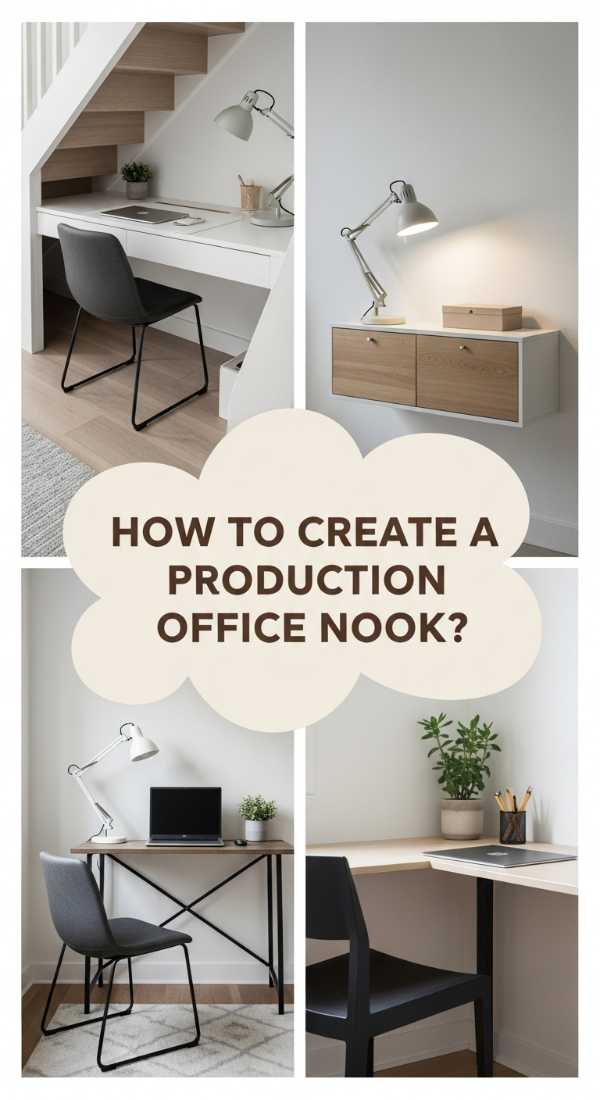
How to Create an Office Nook for Maximum Productivity in Tiny Spaces
Why we love this
The office nook is a masterclass in ‘hygge’—that Danish concept of cozy contentment—where every inch of space is used with surgical precision. We love the feeling of being cocooned in a small, well-lit corner where the world falls away, leaving only you and your tasks. The aroma of a fresh candle flickering on a floating shelf, the cool touch of a marble-topped slim desk, and the visual peace of a monochromatic color palette create a micro-environment that signals instant focus to the brain.
Essential Elements:
- Wall-mounted floating desk
- Vertical pegboard or grid organizer
- Ergonomic stool or low-profile chair
- Clip-on task lighting
- Mirrored accents to create depth
How to make it
- Identify an underutilized ‘dead space’ in your home, such as an alcove, the space under a staircase, or a deep closet where the doors can be removed to open up the area.
- Install a floating desk at a standard height of 29-30 inches, using heavy-duty brackets rated for at least 100 lbs to prevent the desk from bouncing while you type.
- Paint the interior of the nook a color two shades lighter than the surrounding room to visually push the walls back and make the tiny space feel significantly larger.
- Mount a vertical organizational system like a pegboard from floor to eye-level, allowing you to store supplies vertically and keep the precious desk surface completely clear.
- Use a cord management box and adhesive clips to route all cables along the back edge of the desk and down the corner of the wall, eliminating the ‘visual noise’ of tangled wires.
- Position a warm-spectrum LED task lamp at a 45-degree angle to your monitor to reduce eye strain and create a warm, inviting glow that defines the nook’s boundaries.
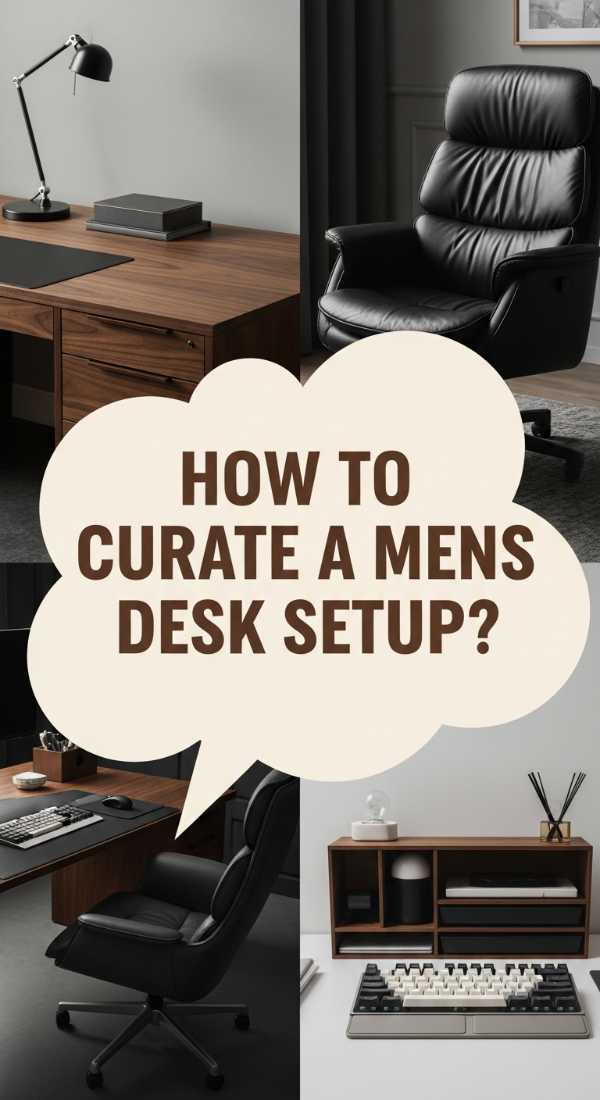
How to Curate a Mens Desk Setup Office for Ultimate Professional Focus

Why we love this
A well-curated men’s desk setup is all about the harmony of ‘heavy’ materials—the weight of a solid walnut desktop, the pebbled texture of a full-grain leather desk mat, and the satisfying mechanical click of a custom keyboard. It’s a sensory experience that feels grounded and authoritative, where the scent of coffee blends with the subtle musk of leather. This setup doesn’t just look professional; it feels like a cockpit designed for high-performance navigation through a complex workday.
Essential Elements:
- Solid wood desk (Walnut or Oak)
- Large leather desk pad
- Mechanical keyboard with tactile switches
- Ultrawide monitor with a matte finish
- Black metal desk lamp with an adjustable arm
How to make it
- Start with a 60-inch to 72-inch solid wood tabletop, sanding it with 220-grit sandpaper and applying a matte polyurethane finish to protect the wood while maintaining a natural, non-reflective look.
- Center a high-quality leather desk mat (at least 30×15 inches) to define the primary work zone and provide a warm, comfortable surface for your forearms during long typing sessions.
- Configure your monitor setup using a gas-spring monitor arm mounted to the back of the desk; this lifts the screen to eye level and clears the space underneath for a cleaner aesthetic.
- Select a mechanical keyboard with ‘Brown’ or ‘Blue’ switches for tactile feedback, and pair it with a wireless ergonomic mouse to reduce wrist fatigue and cable clutter.
- Place a single high-impact decorative item, like a vintage watch stand or a heavy brass paperweight, to add a personal touch of luxury without distracting from the primary work area.
- Organize cables using a bottom-mounted wire tray, ensuring that only one main power cable is visible, leading discreetly to the wall outlet.
How to Prep Office Lunch Ideas for a Healthy Midday Energy Boost
Why we love this
There is nothing quite like the vibrant, crunch-filled joy of a perfectly prepped office lunch that looks as good as it tastes. Imagine a glass container filled with layers of emerald kale, ruby-red cherry tomatoes, and creamy avocado, topped with a zesty lemon-tahini dressing that smells like sunshine. It’s a ritual that rewards your future self with sustained energy, avoiding the heavy salt and grease of takeout, and making you feel light, refreshed, and ready to tackle the afternoon hours.
Essential Elements:
- Quinoa or brown rice base
- Roasted chickpeas or grilled chicken
- Cruciferous greens (Kale, Spinach)
- Pickled red onions and feta cheese
- Glass airtight meal prep containers
How to make it
- Batch-cook your grains (quinoa or farro) on Sunday evening, fluffing them with a fork and letting them cool completely before sealing to prevent them from becoming soggy.
- Roast your protein—such as chickpeas seasoned with smoked paprika or chicken breast with lemon zest—at 400°F until the edges are crispy and caramelized, providing a deep umami flavor.
- Prep a ‘sturdy’ salad base by massaging kale with a teaspoon of olive oil and salt; this breaks down the tough fibers, making it tender and easier to digest while sitting in the fridge.
- Layer your ingredients in a glass container: put the dressing at the very bottom, followed by the heavy grains, then the proteins, and finally the delicate greens on the very top.
- When ready to eat, give the container a vigorous shake to distribute the dressing, or flip it onto a plate so the dressing cascades over the fresh greens.
- Include a small ‘energy booster’ side, like three dark chocolate-covered almonds or a handful of berries, to satisfy a sweet craving without causing a blood-sugar spike.
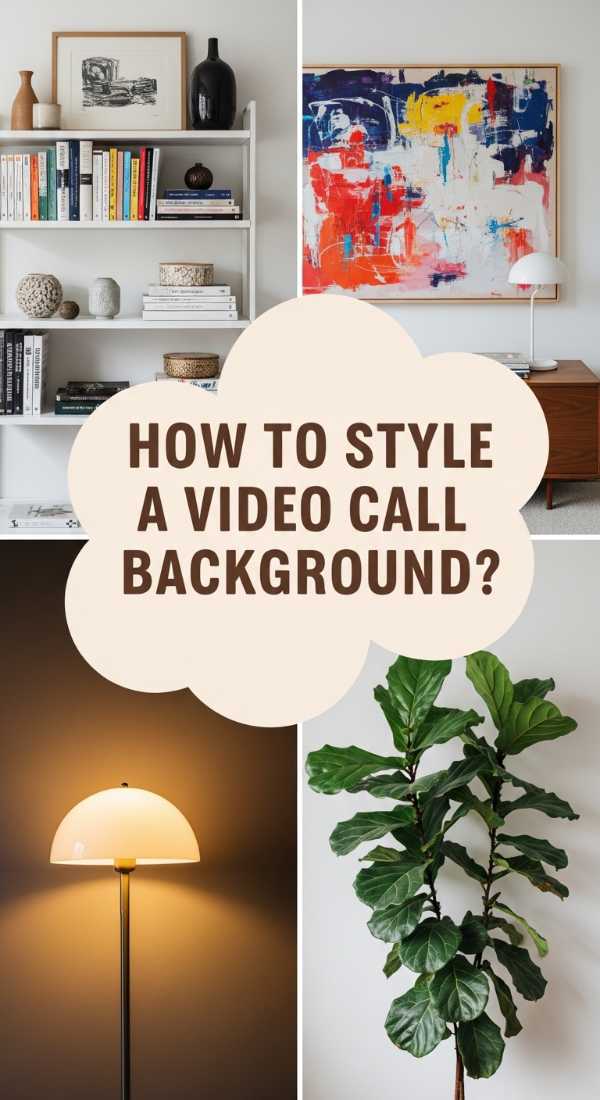
How to Style an Office Background for Professional Video Calls

Why we love this
In the digital age, your office background is your business card, and we love the crisp, intentional authority of a perfectly styled ‘Zoom wall.’ It’s about the balance of depth and light—the soft bokeh of a background lamp, the intellectual appeal of a curated bookshelf, and the fresh life that a snake plant brings to the frame. When your background is styled correctly, you feel more confident, knowing that you are projecting a professional, composed image that speaks before you even say a word.
Essential Elements:
- Bookshelf with color-coordinated or minimalist spines
- Soft-box lighting or a large ring light
- A statement indoor plant (Monstera or Fiddle Leaf Fig)
- Framed art with non-reflective glass
- A clean, neutral wall color (Soft Grey or Off-White)
- High-quality external webcam (1080p or 4K)
How to make it
- Position your desk so that you are facing a window; natural light should hit your face directly to eliminate harsh shadows under the eyes and nose.
- Set up your ‘hero’ background about 4 to 6 feet behind your chair to create a natural sense of depth and a slight blurring effect that looks high-end on camera.
- Curate your bookshelf by removing paperbacks with busy covers and replacing them with hardcover books or decorative objects like a minimalist clock or a small ceramic vase.
- Install a ‘fill light’ at a 45-degree angle to your face and a ‘backlight’ or ‘hair light’ behind you to separate your silhouette from the background, making you pop in the frame.
- Ensure the top of your webcam is at eye level; if using a laptop, prop it up on a stack of books or a dedicated stand so the camera isn’t looking up your nose.
- Review the frame for ‘tangents’—ensure there isn’t a plant or a lamp appearing to grow out of the top of your head by adjusting the camera angle slightly left or right.
How to Decorate Bloxburg Office Ideas for a Dreamy Virtual Workspace
Why we love this
Building in Bloxburg is a digital escape that allows us to manifest our ‘dream’ office without the constraints of a real-world budget. We love the crisp, pixel-perfect aesthetic of a blush-and-gold office, where the ‘glow’ of the computer screen reflects off marble floors and customized lighting. It’s a space of pure creative expression, where you can arrange tiny virtual succulents and perfectly aligned wall art to create a sanctuary that feels organized and inspiring every time you log in.
Essential Elements:
- Customized ‘L’ shaped desk using basic shapes
- Linen-textured wallpaper in soft pastels
- Integrated floor-to-ceiling windows
- High-tier gaming PC and multi-monitor setup
- Custom decals for aesthetic wall art
How to make it
- Start by building a room that is at least 4×4 tiles, choosing a ‘Linen’ or ‘Plaster’ texture for the walls in a soft ‘White’ or ‘Cloud Grey’ to create a clean, modern base.
- Use the ‘Basic Shapes’ tool to construct a custom desk that fits the room perfectly; resize cubes into thin slabs for the desktop and use cylinders for slim, mid-century modern legs.
- Place a large ‘Picture Window’ on the wall facing the desk to bring in the maximum amount of virtual sunlight, which boosts the ‘mood’ stats of your character.
- Search the Bloxburg Decal library for keywords like ‘Aesthetic Office’ or ‘Minimalist Art’ and apply the codes to simple frames to give the walls a personalized, high-end feel.
- Add ‘Atmospheric Lighting’ by placing small recessed lights under the custom shelving, and change the light color to a warm ‘Institutional Glow’ for a cozy, realistic vibe.
- Finish by layering a ‘Large Area Rug’ under the desk and chair, using a ‘Diamond’ or ‘Chevron’ pattern to add visual texture and break up the floor space.
How to Hide an Office With a Murphy Bed for Seamless Interior Flow
Why we love this
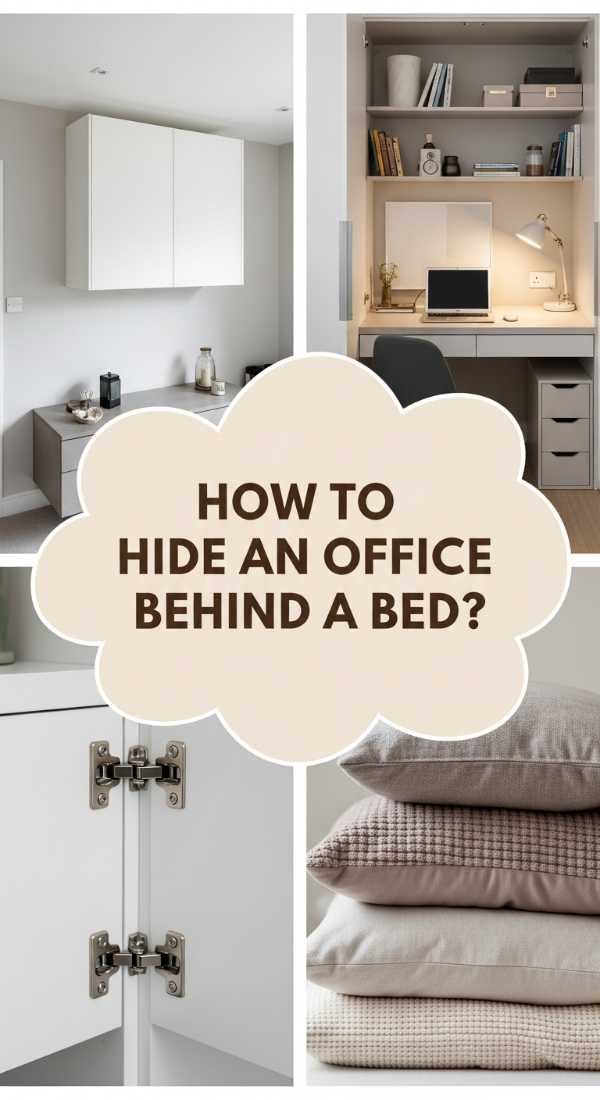
The magic of the ‘hidden’ office lies in the ability to completely disconnect from the workday the moment the clock strikes five. We love the visual silence of a room where the computer, monitors, and stacks of paper simply vanish behind elegant cabinetry. It creates a seamless transition from a high-stakes work environment to a peaceful living or guest room, where the only thing you see is the beautiful grain of the wood and the clean lines of the furniture.
Essential Elements:
- Bi-fold or pocket doors for the desk area
- Built-in cable management within the cabinetry
- Automatic ‘Kill Switch’ for electronics when closed
- Ventilation slots in the cabinet top
- Silent-close hydraulic hinges
How to make it
- Design a custom cabinetry unit where the Murphy bed occupies the center and two side cabinets house a fold-away desk and shelving system.
- Incorporate ‘Pocket Doors’ for the desk section; these doors slide back into the unit when open, so they don’t block the room’s walkways while you are working.
- Install a power strip with a master switch inside the cabinet, allowing you to turn off all monitors and peripherals with one click before closing the doors to prevent overheating.
- Cut 1-inch ventilation holes in the back or top of the desk cabinet to allow heat from your CPU or laptop to escape, ensuring your hardware stays cool even in a confined space.
- Use magnetic latches or ‘push-to-open’ hardware on the cabinet doors to eliminate the need for handles, creating a perfectly flush, ‘invisible’ look when the office is hidden.
- Line the interior of the desk cabinet with acoustic felt panels; this provides a soft texture for the workspace and helps dampen sound when you are on calls.
How to Optimize an Office Nook for Calm Creative Flow
Why we love this
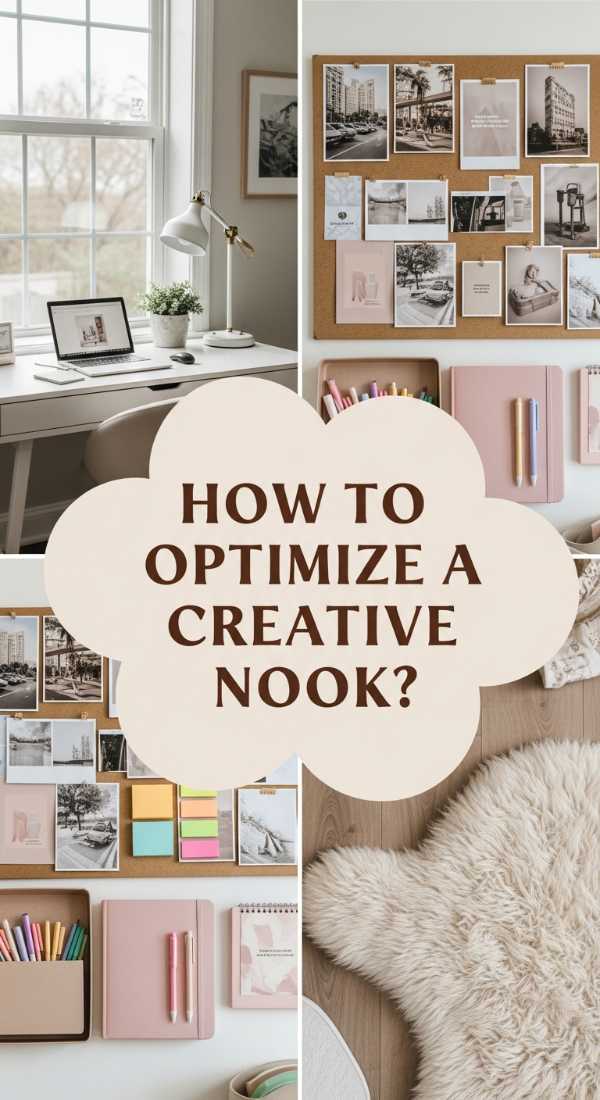
When a nook is optimized for creative flow, it becomes a sanctuary of soft textures and muted colors that quiet the noise of the outside world. We love the tactile warmth of a chunky knit rug under our feet, the gentle hum of a small essential oil diffuser puffing out eucalyptus-scented mist, and the way a single, perfectly placed piece of art can spark a thousand ideas. It’s a space that doesn’t demand your attention but rather holds it gently, allowing for deep, uninterrupted thought.
Essential Elements:
- Acoustic wall panels (felt or cork)
- Dimmable warm-spectrum lighting
- Small essential oil diffuser
- Comfortable task chair with lumbar support
- Inspiration board (physical or digital)
How to make it
- Cover the main wall of your nook with hexagonal cork tiles or felt panels; this softens the acoustics of the room, reducing echoes and making the space feel more private.
- Swap out standard ‘cool white’ bulbs for ‘warm white’ (2700K) smart bulbs that can be dimmed to 30-40% brightness during creative brainstorming sessions to lower cortisol levels.
- Place an essential oil diffuser on a small side-shelf at shoulder height; use Rosemary for focus or Lavender for stress reduction, letting the subtle aroma fill the micro-space.
- Choose a chair with a mesh back for breathability or a velvet-tufted chair for sensory comfort, ensuring it has adjustable armrests to keep your shoulders relaxed.
- Install a small floating ‘ledge’ shelf instead of a deep bookshelf; use it to display one or two rotating ‘objects of inspiration’ like a beautiful stone, a ceramic bowl, or a favorite quote.
- Keep a physical notebook and a high-quality pen (like a fountain pen or a heavy brass rollerball) on the desk at all times to encourage analog brainstorming away from the screen.
How to Elevate a Mens Desk Setup Office for Luxury Executive Vibes
Why we love this
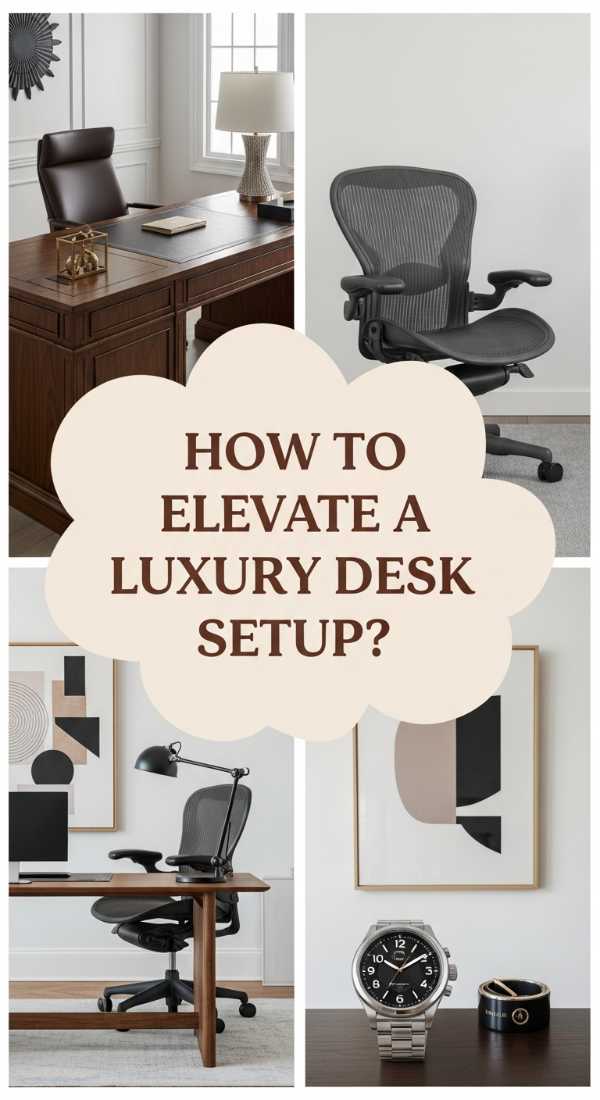
The luxury executive setup is the pinnacle of office aesthetics, where every object is a statement of quality and success. We love the richness of dark, polished mahogany or obsidian-stained ash, the cool weight of a brass desk lamp, and the soft, buttery feel of a premium Italian leather chair. This is a space that commands respect, smelling faintly of expensive cologne and old books, providing a sensory experience that makes you feel powerful and prepared for any high-level decision.
Essential Elements:
- Large executive desk in dark hardwood
- Premium leather ergonomic chair
- Brass or gold-toned desk accessories
- Designer table lamp (e.g., Artemide or Flos)
- High-pile wool area rug
How to make it
- Select a desk with a ‘waterfall’ edge or a thick, 2-inch slab top to create a sense of permanence and gravitas; dark stains like Espresso or Midnight Ash work best for this vibe.
- Invest in a ‘heritage’ leather chair that will patina over time; look for features like polished aluminum bases and top-grain leather that feels supple to the touch.
- Layer a 100% wool rug in a deep charcoal or navy blue underneath the desk; the thick pile provides a luxurious feel and acts as a high-end acoustic treatment for the room.
- Incorporate ‘Material Contrast’ by pairing the dark wood desk with bright metal accents; a brass tray for pens and a gold-framed glass monitor stand provide the necessary ‘sparkle.’
- Use a leather-bound desk blotter that matches your chair, creating a cohesive visual link between the furniture and the workspace.
- Add a single, high-quality piece of tech-art, like a nixie tube clock or a minimalist wireless charging pad made of marble, to blend modern utility with classic luxury.
How to Curate Office Background Aesthetics for Instant Online Authority
[IMAGE_10]
Why we love this
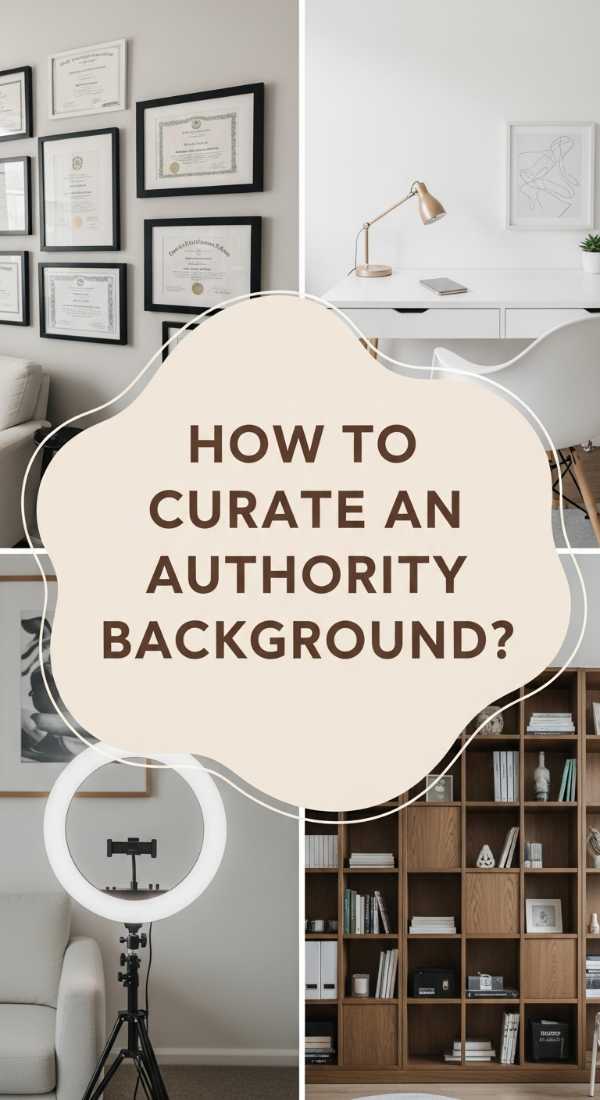
Curating for authority is about creating a visual language of competence and taste. We love the symmetry of a perfectly framed background—the way a pair of matching sconces or a centered piece of bold abstract art creates an immediate sense of order. It’s a clean, high-contrast look that feels expensive and intentional, using textures like linen and brushed metal to convey a sense of ‘curated life.’ When people see this background, they don’t just see an office; they see a leader.
Essential Elements:
- Symmetrical furniture layout
- Bold, high-contrast wall art
- Architectural lighting (sconces or uplights)
- Minimalist decorative objects (geometry-focused)
- Clean, uncluttered surfaces
How to make it
- Paint the background wall a bold, sophisticated color like Navy, Forest Green, or Charcoal to provide a high-contrast backdrop that makes your face stand out.
- Place two identical bookshelves or cabinets on either side of your desk to create ‘Visual Symmetry,’ which is psychologically associated with stability and reliability.
- Hang one large-scale piece of art (at least 36×48 inches) directly behind your head; ensure it is hung low enough to be fully visible within the camera’s frame.
- Use ‘Uplighting’ by placing small LED spotlights on the floor behind your furniture, aiming them at the wall to create a ‘glow’ that adds dramatic architectural interest.
- Minimize small trinkets; instead, choose three ‘hero’ objects—like a large white coral piece, a stack of thick art books, or a designer vase—and space them according to the ‘rule of thirds.’
- Check your ‘Headroom’ in the camera frame; you should have about two inches of space between the top of your head and the top of the video box to maintain a commanding presence.
Conclusion: Your Space, Your Success
At the end of the day, your office is more than just a place where you answer emails—it’s the launchpad for your dreams and the container for your daily focus. By investing time into the aesthetics of your workspace, whether through a hidden Murphy bed, a curated men’s desk setup, or a perfectly styled video background, you are investing in your own mental clarity. Clean lines truly do lead to a clear mind. Take one small step today to elevate your environment, and watch how your productivity—and your peace—begin to soar.