

Soulful Serenity: Aesthetic Rituals for a Balanced Modern Life
In the relentless hum of our digital age, where every notification feels like a tiny tug on our nervous systems, the quest for peace has moved from a luxury to a vital necessity. I remember a Tuesday last October when the rain was drumming against the glass, and my living room felt more like a warehouse of chores than a home; it was then I realized that my environment wasn’t just a place I lived, but a mirror of my internal state. We all deserve a sanctuary that doesn’t just look beautiful on a grid, but feels like a deep, restorative exhale for the soul.
Creating a Zen-inspired lifestyle isn’t about stark minimalism or expensive renovations; it’s about the intentional curation of textures, scents, and rituals that invite the mind to settle. By blending the fluid grace of a yoga aesthetic with the grounded stillness of a meditation garden, we can build pockets of grace into our daily routines. Today, I’m sharing my heart-centered guide to transforming your physical world into a temple of tranquility, where every corner whispers an invitation to be present, grounded, and entirely yourself.
How to Curate a Yoga Aesthetic for Ultimate Daily Calm

Why we love this
There is something profoundly transformative about stepping into a space that feels like a warm embrace, where the air is heavy with the scent of palo santo and the visual noise of the world simply fades away. We love this aesthetic because it celebrates the ‘soft life’ through tactile layers like waffle-knit organic cotton, sustainable cork textures, and a palette of muted sage and oatmeal that mimics the natural world. It creates a sensory bridge between your hectic morning commute and the sacred stillness of your mat, ensuring that your environment supports your spirit long before you begin your first sun salutation.
Essential Elements:
- High-quality sustainable cork or rubber yoga mat in earthy tones.
- Floor cushions upholstered in natural linen or hemp.
- A curated ‘scent station’ with essential oils and a ceramic diffuser.
- Low-profile wooden shelving for organized props and rolled blankets.
- Warm, dimmable ambient lighting or salt lamps.
How to make it
- Begin by clearing the floor plane completely to remove visual ‘friction’; a clear floor signals to the brain that there is space for movement and growth.
- Layer your textures by placing a soft jute rug beneath your mat to define the ‘practice zone,’ ensuring the rug extends at least 6 inches beyond the mat edges for a grounded visual anchor.
- Set the lighting ‘temperature’ to roughly 2700K (warm white) using smart bulbs, which mimics the golden hour and triggers the body’s natural relaxation response.
- Arrange your props according to frequency of use, placing heavy bolsters at the bottom of your stack and lightweight straps or eye pillows on top for a balanced, top-down visual hierarchy.
- Introduce a living element, such as a large-leafed Monstera or a cluster of Snake Plants, to act as a natural air purifier and a vibrant, green focal point that breathes life into the stillness.
How to Design a Meditation Garden for Total Inner Peace
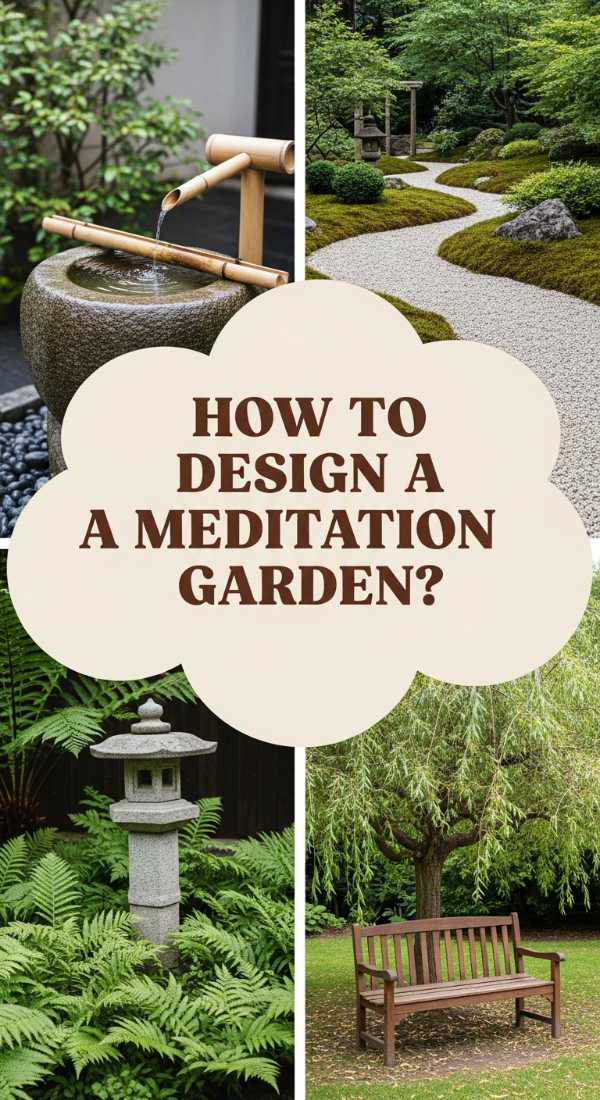
Why we love this
Stepping into a well-designed meditation garden is like entering a living poem, where the crunch of fine gravel beneath your feet and the rhythmic trickle of a stone fountain create a natural metronome for your breath. We adore the way a garden sanctuary allows the senses to expand, catching the spicy scent of blooming jasmine on a breeze and watching the way shadows play across weathered granite. It offers a unique form of ‘forest bathing’ at home, where the textures of moss, wood, and water conspire to lower your heart rate and remind you that you are an integral part of the earth’s timeless rhythm.
Essential Elements:
- A central focal point, such as a stone Buddha or an abstract sculpture.
- A water feature for acoustic masking of neighborhood noise.
- Privacy screening using bamboo fencing or tall ornamental grasses.
- A dedicated seating area with weather-resistant meditation cushions.
- Native plants that attract pollinators like bees and butterflies.
How to make it
- Identify a secluded corner of your yard that receives dappled sunlight; full shade can feel damp, while full sun can be too harsh for midday reflection.
- Install a stone or gravel base using ‘decomposed granite’ or ‘pea gravel’ at a depth of 3 inches to create a permeable, textured surface that drains well and feels solid underfoot.
- Position your water feature so the sound is audible but not overwhelming; a gentle spill over a flat stone provides the best ‘white noise’ effect for deep focus.
- Plant a ‘living wall’ using fast-growing evergreen shrubs like Boxwood or Yew to create a physical barrier that blocks out the visual clutter of the surrounding world.
- Place a sturdy, flat-topped ‘meditation stone’ or a low wooden bench in the center, ensuring it is level and stable so your body can fully relax without the fear of tilting or shifting.
How to Style a Mini Zen Garden for Instant Stress Relief

Why we love this
The mini Zen garden is the ultimate tactile ‘pause button’ for a cluttered mind, offering a small-scale landscape that you can reshape and refine with your own hands. We love the rhythmic, meditative quality of raking fine white sand into perfect concentric circles, a process that demands focus and rewards you with a sense of order and peace. The cool touch of smooth river stones and the tiny, delicate sprigs of moss provide a sensory delight that fits perfectly on a coffee table or a bedside stand, acting as a visual reminder that even the largest chaos can be managed one small grain at a time.
Essential Elements:
- A shallow wooden or ceramic tray with clean lines.
- Ultra-fine white silica sand or crushed quartz.
- A miniature wooden rake and smoothing tool.
- A selection of dark, unpolished river stones or volcanic rocks.
- A single piece of preserved moss or a tiny succulent.
How to make it
- Fill your tray with approximately 1 inch of sand, ensuring it is distributed evenly to the edges; use a straight-edge tool to level the surface until it is perfectly flat.
- Choose an odd number of stones (three or five) of varying sizes to represent ‘islands’ or mountains, following the traditional Japanese ‘Iwagumi’ layout for natural balance.
- Place the largest stone first as your ‘anchor,’ then nestle the smaller stones around it to create a sense of movement and perspective within the small frame.
- Hold the rake firmly but with a relaxed wrist, and draw deep, continuous lines in the sand, circling the stones to mimic the appearance of water ripples around land.
- Reset your garden daily by gently shaking the tray or using a flat tool to smooth the sand, symbolizing the start of a fresh day and a clear, unburdened mind.
How to Create a Meditation Space for Better Morning Focus
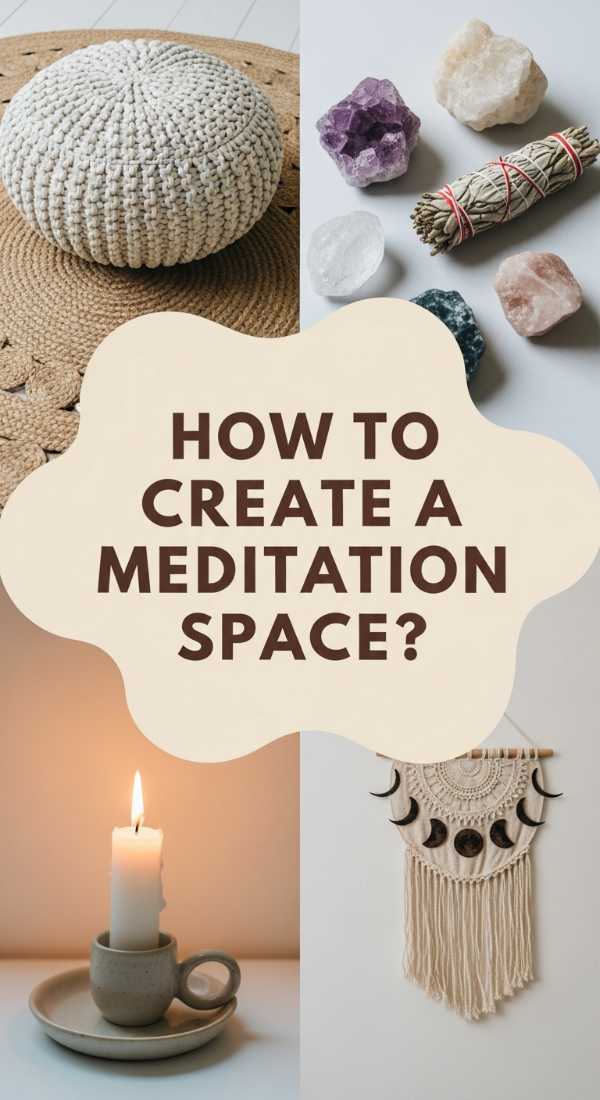
Why we love this
There is a sacred quietude in the early hours that deserves a dedicated home within your house, a place where the light hits the floor just right as you sip your first tea. We love this morning-focused space because it acts as a cockpit for your consciousness, featuring soft textures like sheepskin rugs and the grounding aroma of sandalwood that signals to your brain it’s time to wake up gently. It’s a physical manifestation of your commitment to yourself, ensuring that before you give your energy to the world, you have anchored yourself in a space that feels deeply personal and visually serene.
Essential Elements:
- A comfortable zabuton and zafu set for ergonomic seated support.
- A low wooden altar table or reclaimed wood stool.
- A brass incense burner or a handmade ceramic candle holder.
- A small journal and high-quality pen for morning reflections.
- A light-filtering linen curtain to soften harsh morning glare.
How to make it
- Choose a location near an east-facing window to take advantage of the natural circadian cues provided by the rising sun, which helps regulate your internal clock.
- Place your zafu (round cushion) atop a zabuton (square mat) to protect your knees and ankles from the hard floor; the cushion should be firm enough to keep your hips above your knees.
- Organize your altar with ‘the five elements’: a candle (fire), a bowl of water (water), a plant (wood/earth), a bell (metal), and open space (ether) for a complete energetic balance.
- Adjust your window treatments so that light is diffused; sheer linen panels are ideal as they allow the glow to enter while maintaining complete privacy from the outside.
- Keep your journal within arm’s reach so you can transition from meditation to reflection without standing up, maintaining the ‘theta’ brainwave state for as long as possible.
How to Master a Meditation Aesthetic for Deeper Mental Clarity
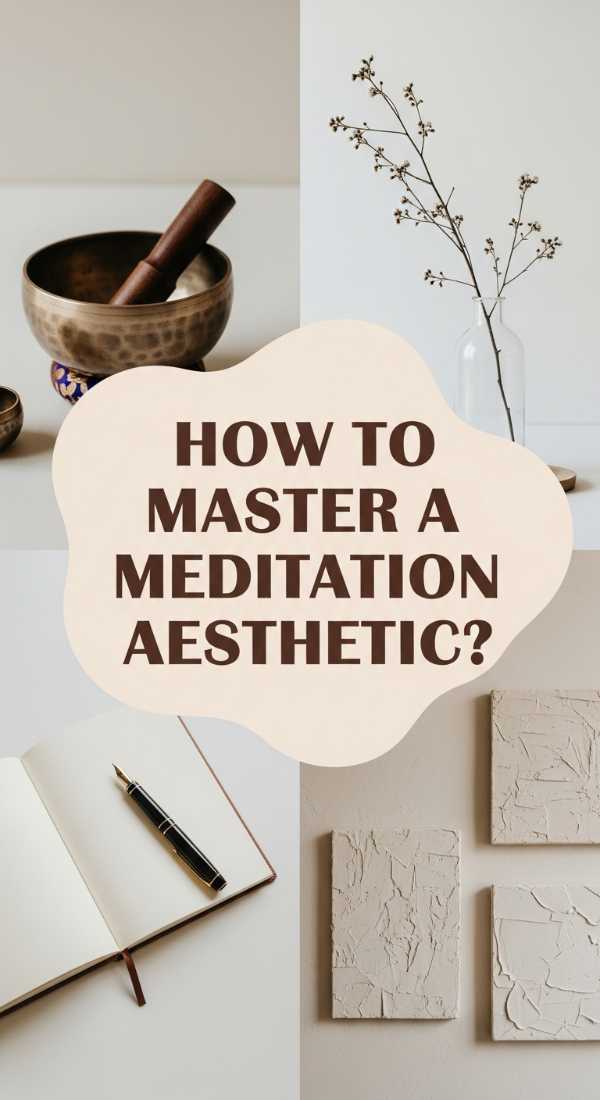
Why we love this
Clarity begins with the removal of the unnecessary, and a masterfully styled meditation aesthetic serves as a visual ‘cleansing’ for a cluttered psyche. We love the sophisticated interplay of monochromatic tones—think charcoal, slate, and bone—that create a sophisticated backdrop where the mind can finally rest without being snagged by bright colors or busy patterns. It’s about the luxury of space and the quality of light; imagine the soft glow of a hidden LED strip reflecting off a matte-finish wall, creating a depth of field that feels infinite and incredibly calming to the eyes.
Essential Elements:
- A monochromatic color palette (whites, greys, or deep blacks).
- Matte finishes on all surfaces to reduce glare and reflections.
- Hidden or indirect lighting to create a ‘glow’ rather than shadows.
- A single, high-quality piece of art with a minimal or abstract design.
- Acoustic panels or heavy drapes to dampen echoing sounds.
How to make it
- Select a primary ‘base color’ for the walls and large furniture; use varying shades of the same hue to add depth without introducing the complexity of multiple colors.
- Apply matte or ‘eggshell’ paint to the walls to eliminate distracting reflections from windows or lamps, which can pull focus during open-eyed meditation.
- Install LED light strips behind a headboard or along a floating shelf to create ‘cove lighting,’ ensuring the light source is never directly visible to the eye.
- Choose furniture with ‘clean’ lines—no ornate carvings or visible hardware—to maintain a streamlined visual flow that doesn’t ‘catch’ the eye as you scan the room.
- Incorporate ‘negative space’ by leaving at least one wall almost entirely bare; this acts as a visual ‘breath,’ giving your eyes a place to rest when you aren’t focused on a specific object.
How to Plan Zen Garden Ideas for Eternal Outdoor Serenity
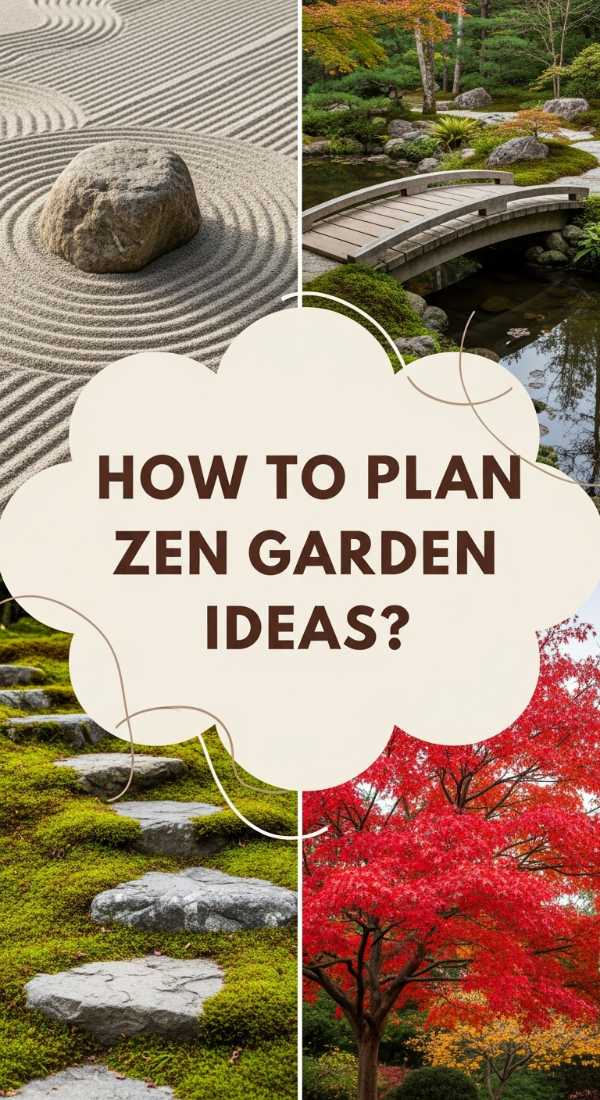
Why we love this
An outdoor Zen garden is a legacy of peace that evolves with the seasons, offering a different kind of beauty whether it’s dusted in snow or vibrant with spring rain. We love the intentionality of ‘Karesansui’ (dry landscapes), where rocks and sand are used to represent mountains and oceans, inviting a philosophical contemplation of nature’s grand scale within a small backyard. The combination of structural evergreens and the sound of wind through bamboo creates a multi-sensory experience that feels grounded, ancient, and perfectly aligned with the slow movement of the natural world.
Essential Elements:
- Large, weathered boulders to represent mountains or strength.
- Fine white gravel or sand for the ‘water’ elements.
- Structural plants like Japanese Maples or ‘Cloud-Pruned’ pines.
- A stepping-stone path (nobedan) to guide the viewer’s journey.
- A simple wooden gate or ‘Torii’ to mark the entrance to the sacred space.
How to make it
- Sketch a ‘master plan’ on paper first, focusing on asymmetrical balance; in Zen design, odd numbers and irregular placements feel more natural and ‘alive’ than perfect symmetry.
- Dig out the garden area to a depth of 4 inches and lay down a heavy-duty weed barrier fabric to ensure your sand or gravel stays pristine and unmixed with soil.
- Position your largest boulders first, burying them about 1/3 deep into the ground so they look like they are ‘growing’ out of the earth rather than just sitting on top.
- Spread your gravel evenly over the fabric, using a heavy-duty garden rake to create large-scale patterns; for outdoor gardens, larger gravel (6-10mm) is better as it won’t blow away in the wind.
- Prune your trees and shrubs using the ‘thinning’ method, removing enough branches so that a bird can fly through them; this creates the ‘airy’ look essential for Zen aesthetics.
How to Craft a Mini Zen Garden for Absolute Desktop Harmony
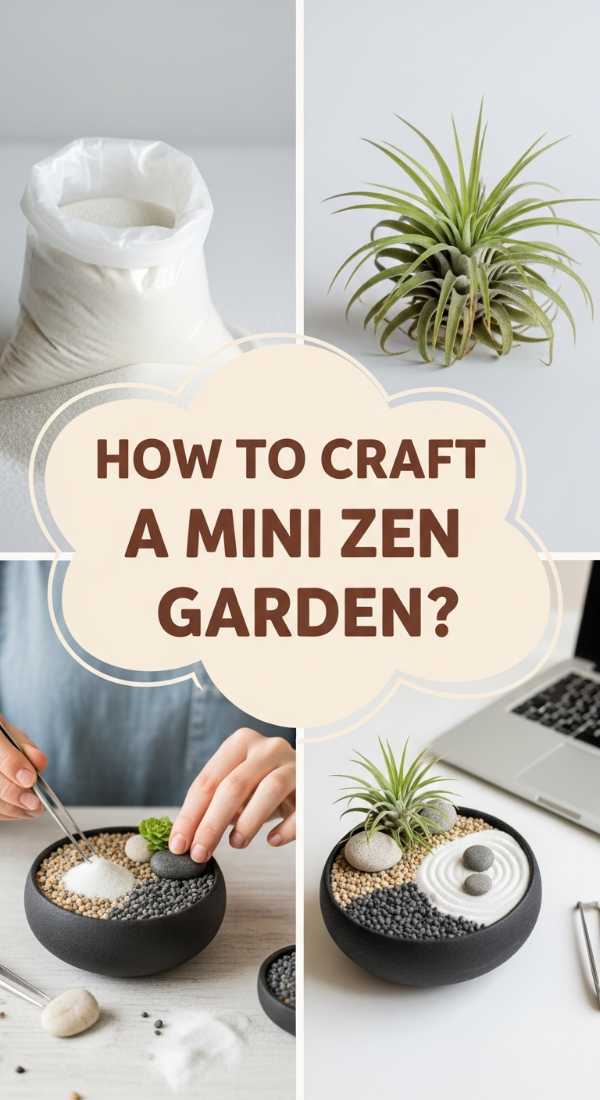
Why we love this
Our desks are often the front lines of stress, making a mini Zen garden the perfect ‘peace-keeping’ tool for the modern professional. We love the juxtaposition of a sleek, high-tech computer monitor next to a handmade ceramic tray filled with earth and stone; it’s a tactile grounding wire that pulls you back to the present moment during a long Zoom call. The process of arranging tiny pebbles or smoothing a small patch of sand provides a much-needed ‘micro-break’ for the brain, allowing for a creative reset that can’t be found in a digital app.
Essential Elements:
- A small, low-profile tray (wood, concrete, or ceramic).
- Clean, dust-free white sand or fine black volcanic sand.
- Miniature wooden rake and a small styling brush.
- Small semi-precious stones like amethyst or clear quartz for energy.
- A tiny air plant (Tillandsia) that requires no soil.
How to make it
- Wipe down your desktop to create a clean ‘canvas’ for your tray; ensure the tray is placed on the side of your non-dominant hand to avoid accidental spills while working.
- Pour in your sand, leaving about half an inch of ‘lip’ at the top of the tray to prevent grains from spilling onto your keyboard during raking sessions.
- Arrange your stones in a ‘triad’ formation in one corner, leaving the majority of the sand clear for active raking and pattern making.
- Use the small styling brush to clean any sand off the edges of the tray or the tops of the rocks, maintaining a sharp, high-contrast look that feels professional and intentional.
- Commit to a ‘one-minute ritual’ before starting your workday: rake three long lines in the sand to symbolize your three main goals for the day, grounding your productivity in peace.
How to Build a Meditation Garden for Lasting Spiritual Growth
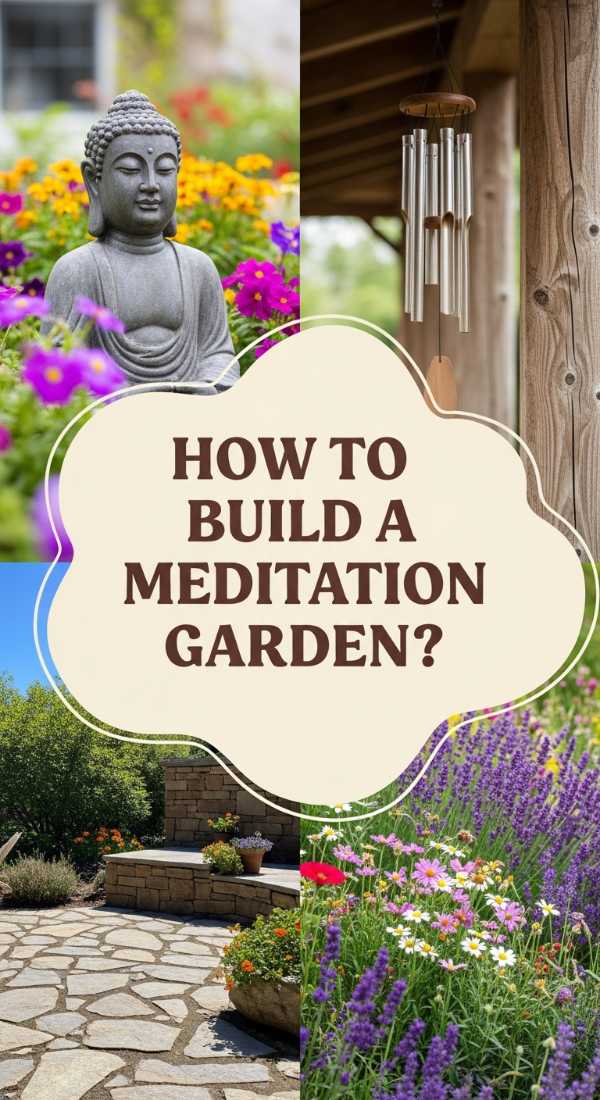
Why we love this
A garden built for spiritual growth is more than just a beautiful space; it’s a living laboratory for the soul where every plant and path has a deeper meaning. We love the inclusion of ‘sensory plants’ like soft lamb’s ear and fragrant rosemary, which engage the body and pull the mind away from abstract worries and into the physical present. It’s a place where you can plant your intentions literally and figuratively, watching them grow alongside the perennials and finding wisdom in the cycles of blooming, shedding, and dormant rest that define a flourishing life.
Essential Elements:
- A circular or labyrinth-style path for walking meditation.
- A ‘reflection pool’ or a simple bowl of still water to represent clarity.
- A dedicated ‘altar’ stump or stone for offerings of flowers or herbs.
- Fragrant herbs like lavender, sage, and mint for sensory grounding.
- Comfortable, weather-proof seating that supports an upright posture.
How to make it
- Design a simple walking path using flat flagstones, spacing them about 18 inches apart to encourage a slow, deliberate pace where each step is a conscious movement.
- Create a ‘transition zone’ at the entrance using a different texture—like a cedar wood bridge or a patch of thick moss—to signal the shift from ‘regular life’ to ‘sacred space.’
- Plant your fragrant herbs near the seating area so that their scent is released whenever you brush against them, creating a natural aromatherapy field during your meditation.
- Position a reflection pool in a spot that catches the sky; use a dark-colored container (black or deep navy) to make the water look like a mirror for the clouds and stars.
- Install a low-voltage, warm-toned spotlight directed at your central focal point, allowing you to use the garden for ‘Trataka’ (candle gazing or fixed-point gazing) even after sunset.
How to Adopt a Yoga Aesthetic for More Mindful Living

Why we love this
Adopting a yoga aesthetic is about more than just what you wear on the mat; it’s a lifestyle choice that favors quality over quantity and comfort over trend. We love the ‘yoga-off-the-mat’ look because it utilizes breathable, sustainable fabrics like Tencel and hemp that feel incredible against the skin and move with the body’s natural flow. It’s an aesthetic of authenticity, where a simple linen tunic and a pair of handmade mala beads become a uniform of presence, reminding you to breathe deeply and move gently through every interaction, whether you’re at the grocery store or a high-stakes meeting.
Essential Elements:
- A wardrobe of high-quality basics in natural, breathable fibers.
- Handmade jewelry with meaning, such as rudraksha or sandalwood beads.
- Functional yet beautiful accessories like a canvas yoga mat bag.
- A commitment to ‘warm’ materials in the home like wood and wool.
- A clutter-free ‘entryway ritual’ station for shoes and bags.
How to make it
- Audit your closet and remove any synthetic fabrics that feel ‘static-y’ or restrictive; replace them with three high-quality pieces made of organic cotton or linen that can be layered.
- Choose a ‘signature scent’ for your home and person—such as frankincense or cedarwood—to create a consistent sensory anchor that reinforces your calm aesthetic wherever you go.
- Organize your ‘daily carry’ items in a minimalist bag with dedicated pockets, so you never have to ‘rummage,’ which creates a sense of frantic energy and stress.
- Incorporate ‘living’ textures into your home decor, such as a hand-woven wool throw or a live-edge wooden coffee table, to maintain a connection to the earth’s raw beauty.
- Practice ‘visual hygiene’ by keeping surfaces 70% clear; this ensures that the eye can move smoothly through a room without being ‘snagged’ by piles of mail or random objects.
How to Organize a Meditation Space for Complete Relaxation
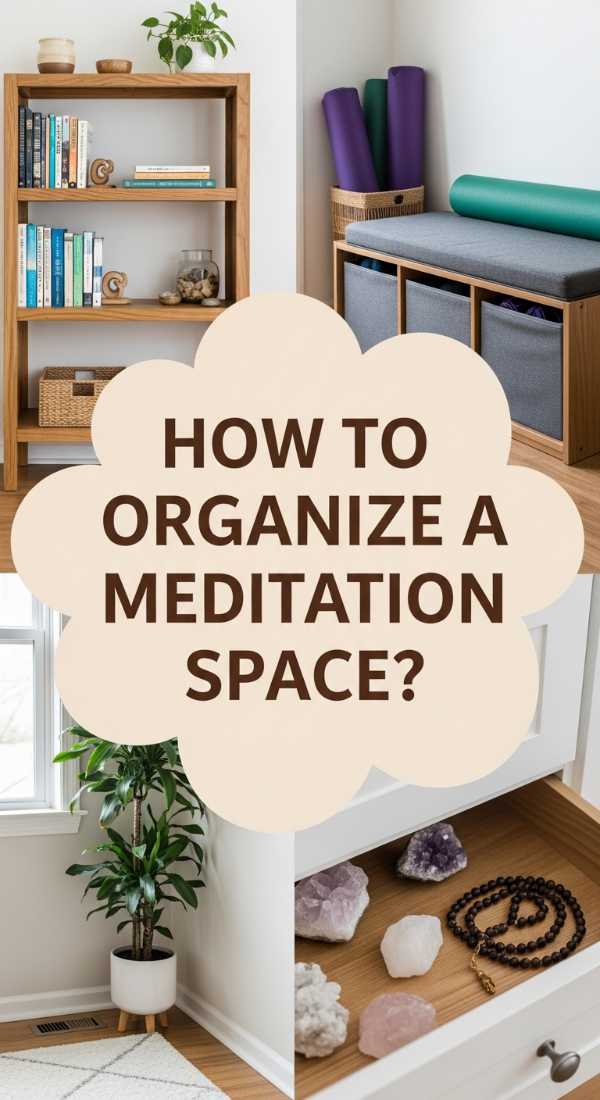
Why we love this
An organized space is an organized mind, and there is a deep, resonant joy in having a meditation nook where everything has a specific, intentional place. We love this approach because it removes the ‘decision fatigue’ that often prevents us from starting our practice; when your cushions are fluffed, your incense is ready, and your space is clear, the barrier to entry vanishes. It’s the ultimate form of self-care—preparing a space today that your future self will find welcoming, tidy, and ready for deep, uninterrupted relaxation.
Essential Elements:
- Storage baskets made of seagrass or wicker for hidden props.
- A wall-mounted shelf for books and candles to save floor space.
- Cord organizers to hide any electronics or lamp wires.
- A dedicated ‘tech-free’ zone marked by a physical boundary.
- A soft tray for holding small items like matches and crystals.
How to make it
- Empty the designated space completely and deep-clean the floor and walls; a truly relaxed space must be physically clean as well as visually organized.
- Group ‘like with like’—put all your candles in one area and all your cushions in another—to create ‘stations’ that make the space feel purposeful and well-planned.
- Use vertical space for storage; a floating shelf at eye-level can hold a single inspiring photo or a candle, keeping the floor area open for movement and breath.
- Hide all ‘visual noise’ like electrical cords or chargers behind furniture or inside decorative boxes; nothing breaks a meditative state faster than a tangled black wire.
- Set a ‘reset ritual’ where you spend 30 seconds after each session straightening your cushions and clearing any debris, ensuring the space is always ready to welcome you back.
Conclusion
Designing a life centered on serenity isn’t a one-time project, but a beautiful, ongoing practice of listening to what your soul needs. Whether you are raking the sand in a tiny desktop garden or stepping onto a cork mat in a sun-drenched room, these aesthetic rituals serve as anchors in the storm of modern life. By intentionally curating our environments to reflect our inner desire for peace, we don’t just change the look of our homes—we change the quality of our days. Remember, your sanctuary is a living thing; let it grow, shift, and breathe along with you. Here’s to finding your own soulful serenity, one intentional breath at a time.